
Fine motor skills (writing numbers) Math Worksheets for Ages 3-7
20 filtered results
Difficulty Level
Grade
Age
-
From - To
Subject
Activity
Standards
Discover our engaging Fine Motor Skills Math Worksheets designed for children aged 3-7! These printable activities focus on helping young learners develop their fine motor skills through writing numbers. With a variety of fun exercises, children will practice essential handwriting techniques, enhance their hand-eye coordination, and build confidence in their math abilities. Our worksheets are perfect for classrooms or homeschooling settings, providing an interactive way to stimulate learning. Encourage your child's development while making numbers enjoyable! Explore our collection today and watch your little ones thrive as they master their numerals with creativity and joy. Perfect for early math education!
Favorites
With answer key
Interactive
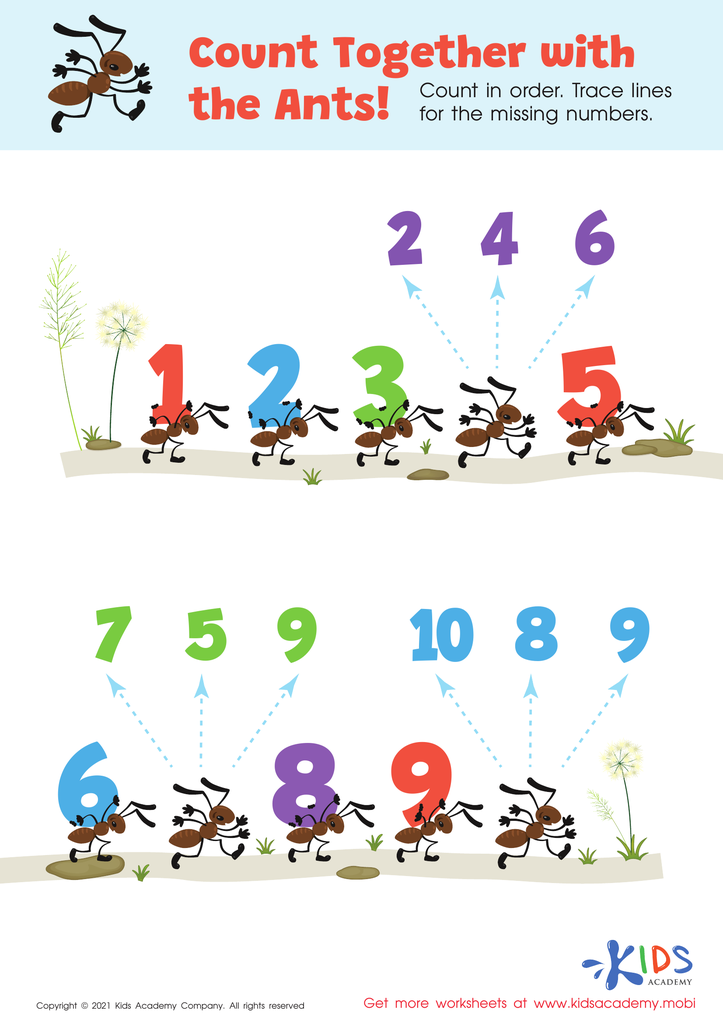
Count Together with the Ants Worksheet
Rather than letting kids get too deep in online games, keep them engaged with learning worksheets. Ask them to identify the insect in the picture, then count the ants. Help them trace lines to the missing numbers. It's simple and straightforward for young children to comprehend.
Count Together with the Ants Worksheet
Worksheet
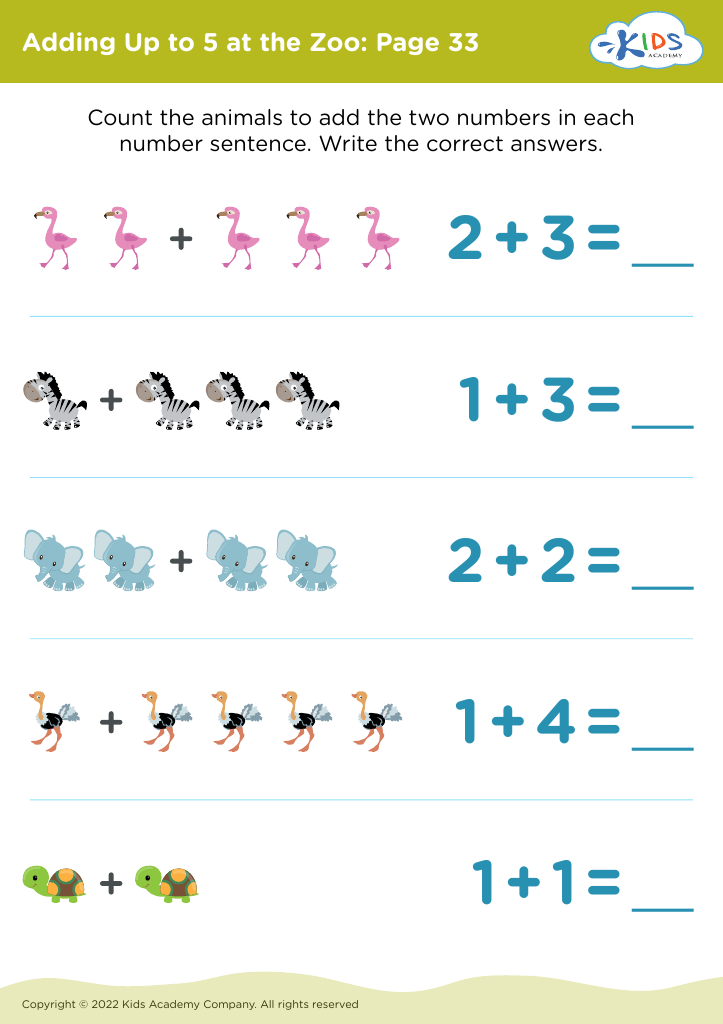
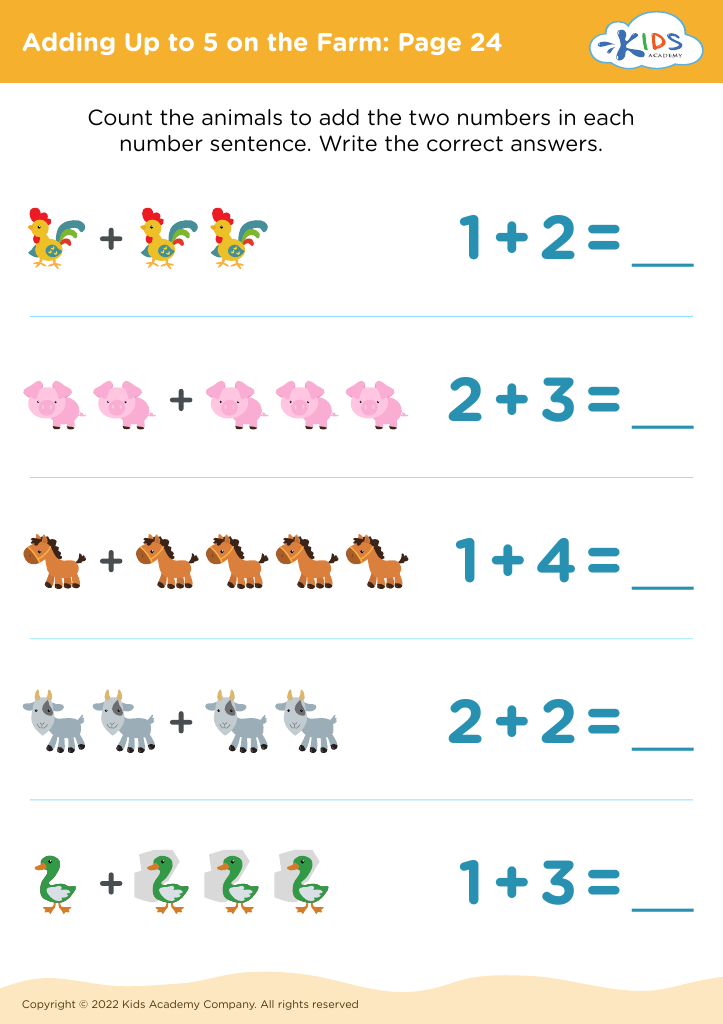
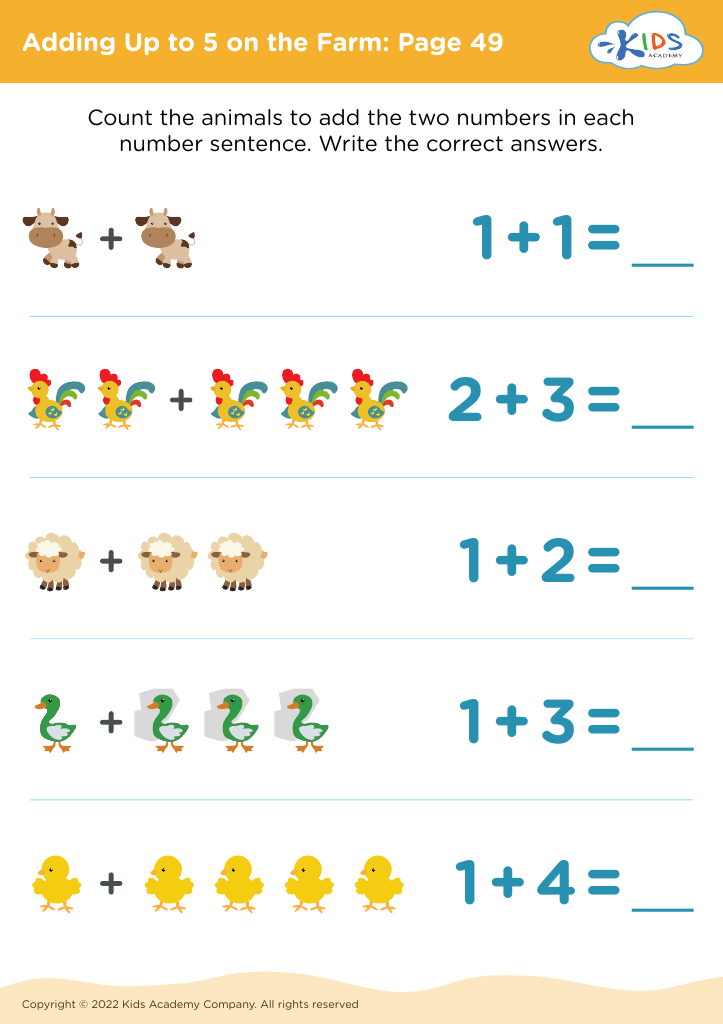
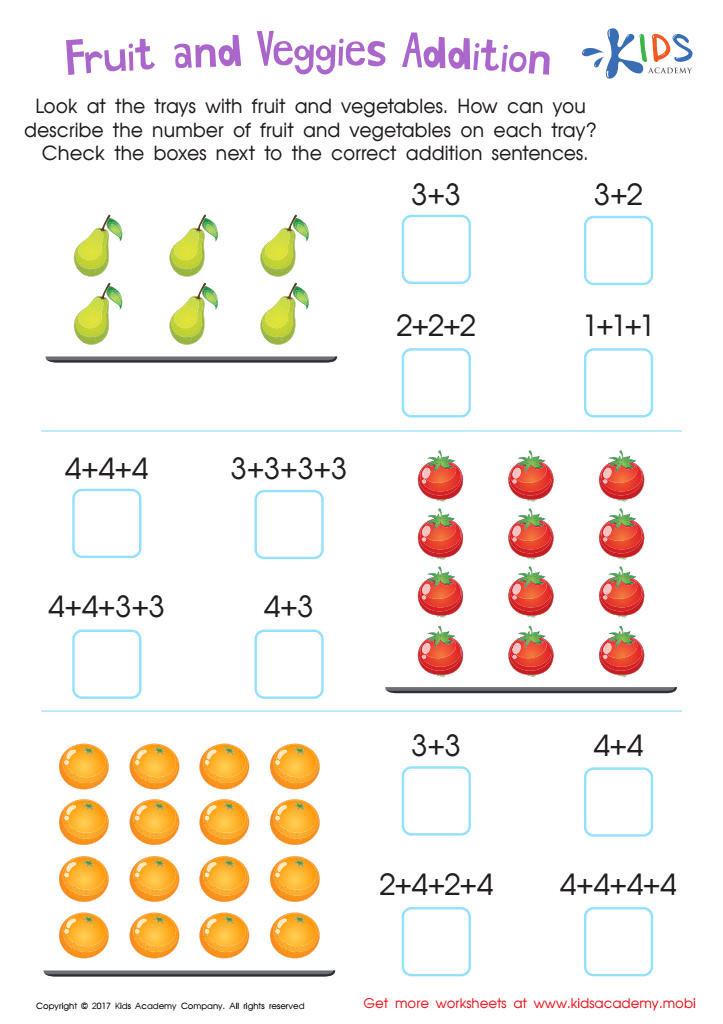
Fruit and Veggies Worksheet
It promotes problem-solving and analytical skills as kids match pictures to correct addition sentences. Help your child go beyond simple addition with this PDF worksheet!
 Assign to My Students
Fruit and Veggies Worksheet
Worksheet
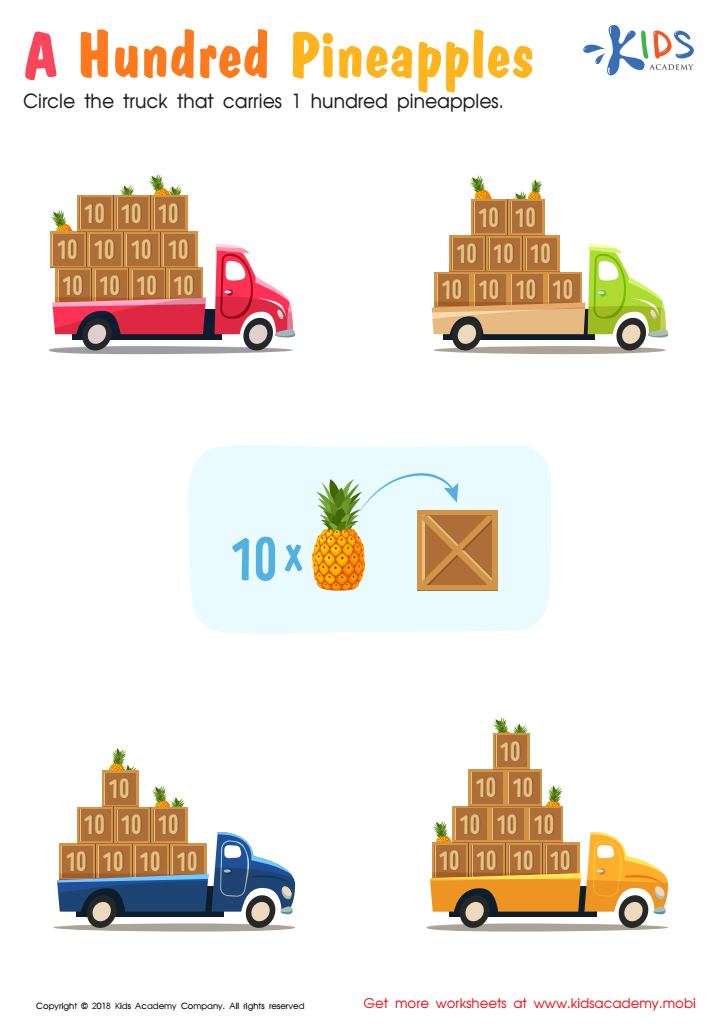
A Hundred Pineapples Worksheet
Can your child count in tens? Show them how to count 100 boxes in stacks of tens. A worksheet can help them understand the concept. Ask them to count boxes of pineapples in stacks of tens and circle the truck with 100 pineapples.
A Hundred Pineapples Worksheet
Worksheet
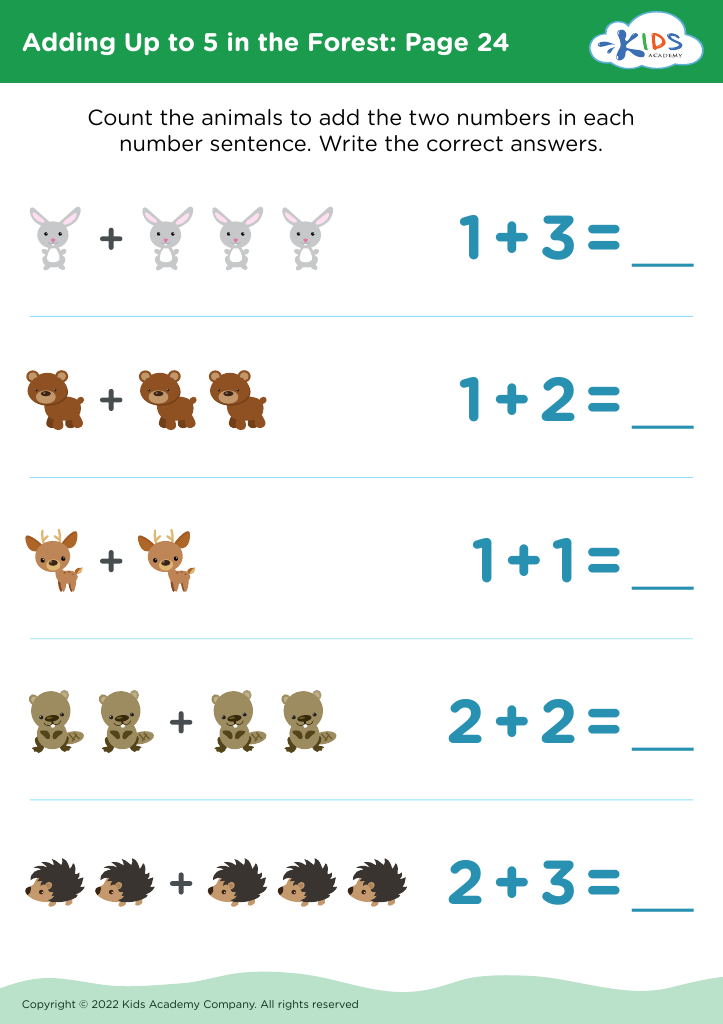
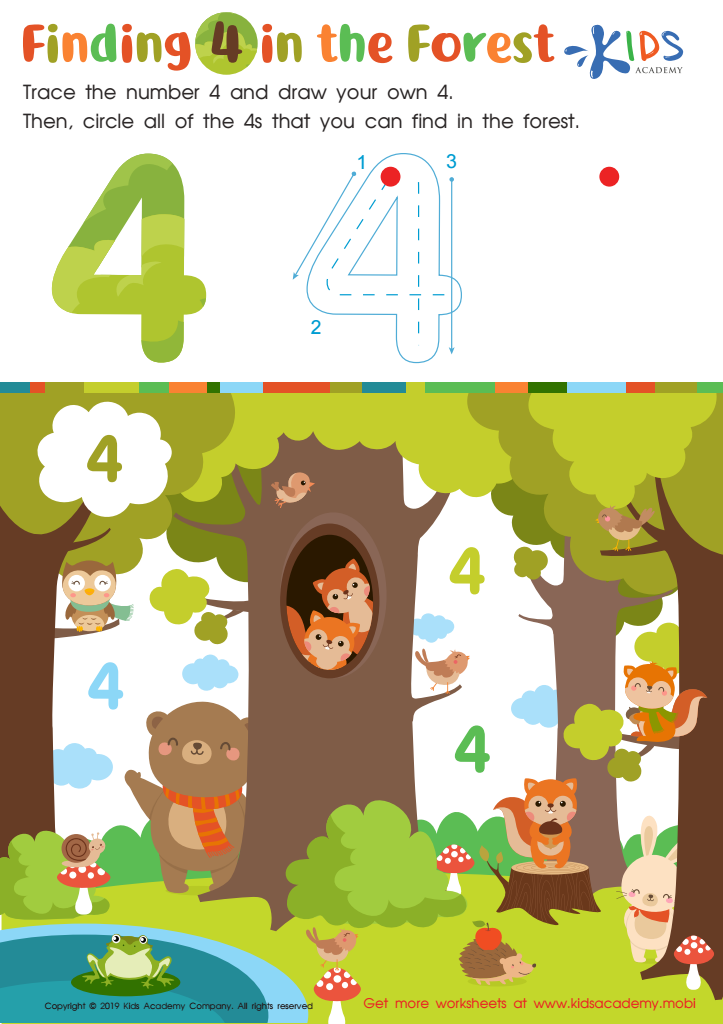
Finding 4 in the Forest Worksheet
Before starting, have your kids count as high as they can. Ask them to identify the setting and point out the 4s. Trace 4 and draw your own. Help your kids circle all the 4s they can find in the forest. How far can they count? How well did they find the hidden 4s?
Finding 4 in the Forest Worksheet
Worksheet
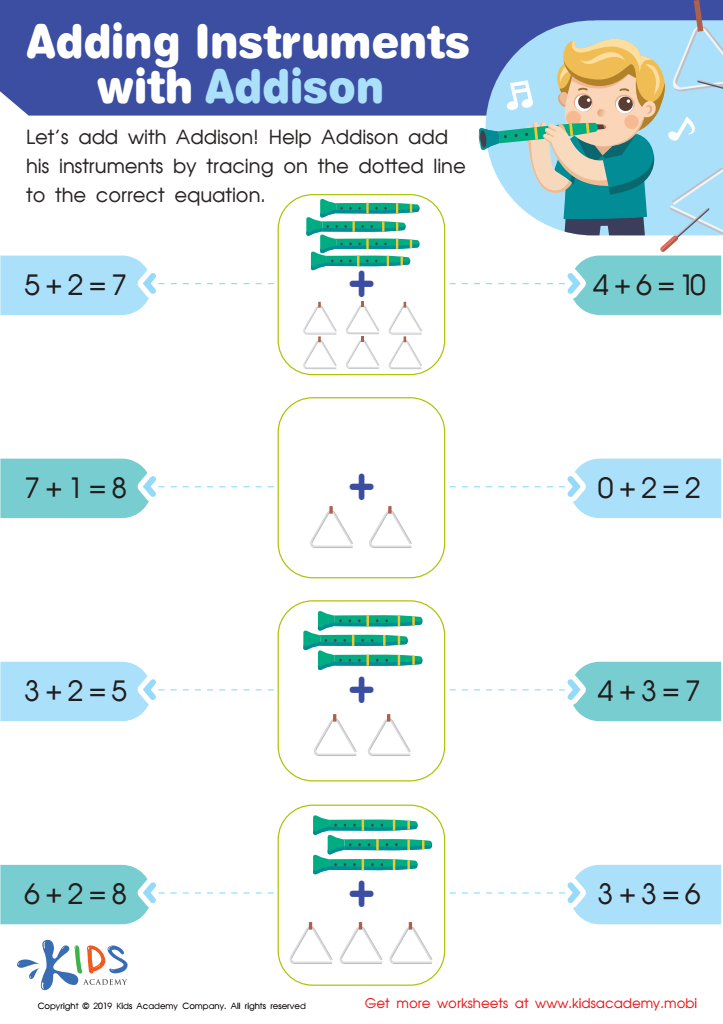
Adding Instruments with Addison Worksheet
Your math stars will enjoy assisting Addison as he adds his instruments. This worksheet has 10 basic addition problems with pictures of instruments to aid children. They match the pics and sentences, then connect them to the correct problem using the lines. A fun way to learn and practice addition!
Adding Instruments with Addison Worksheet
Worksheet
Join Kids Academy for Free
Who is primarily going to use this learning content?








Fine motor skills are crucial for young children's overall development and learning, particularly in the areas of writing and math. For children ages 3-7, honing these skills is essential for their ability to form letters and numbers correctly, which directly influences their literacy and numeracy abilities.
Strong fine motor skills improve handwritten work quality, enabling children to transition from drawing to writing numbers clearly, accurately, and efficiently. This foundational writing practice reinforces number recognition and promotes confidence in math tasks. Additionally, developing these skills enhances hand-eye coordination, necessary for numerous daily activities.
Moreover, engaging children in fine motor activities such as drawing, threading beads, or playing with clay can create joyful, interactive experiences that support cognitive and emotional growth. Teachers and parents can facilitate targeted activities that encourage fine motor practice, such as practicing number formations using various materials.
When teachers and parents prioritize the development of fine motor skills, they easily integrate meaningful learning experiences that foster math comprehension alongside writing. By nurturing fine motor skills in math, they set children on the path to become proficient learners who approach academic challenges with confidence and enthusiasm. Thus, investing time and resources into these skills pays dividends in children's future educational success.








