Following directions Math Worksheets for Ages 3-7
3 filtered results
-
From - To
Unlock your child's mathematical potential with our "Following Directions Math Worksheets for Ages 3-7." These engaging activities help kids master essential math skills while enhancing their ability to follow instructions. Tailored for young learners, our worksheets blend fun tasks with interactive challenges to practice counting, shapes, and simple arithmetic. They not only boost math proficiency but also foster critical thinking and listening skills. Perfect for both classroom and at-home learning, these worksheets are designed to keep kids motivated and excited about math through colorful graphics and imaginative scenarios. Start this educational journey today and watch your child's confidence and abilities soar!
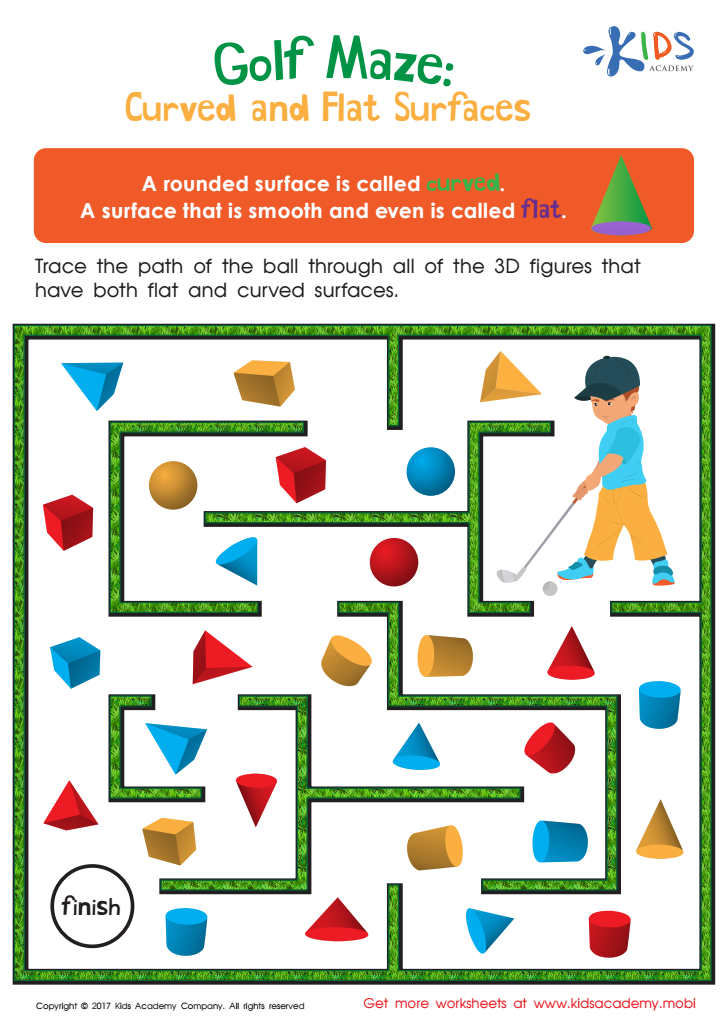
Golf Maze: Curved and Flat Surfaces Worksheet
 Assign to My Students
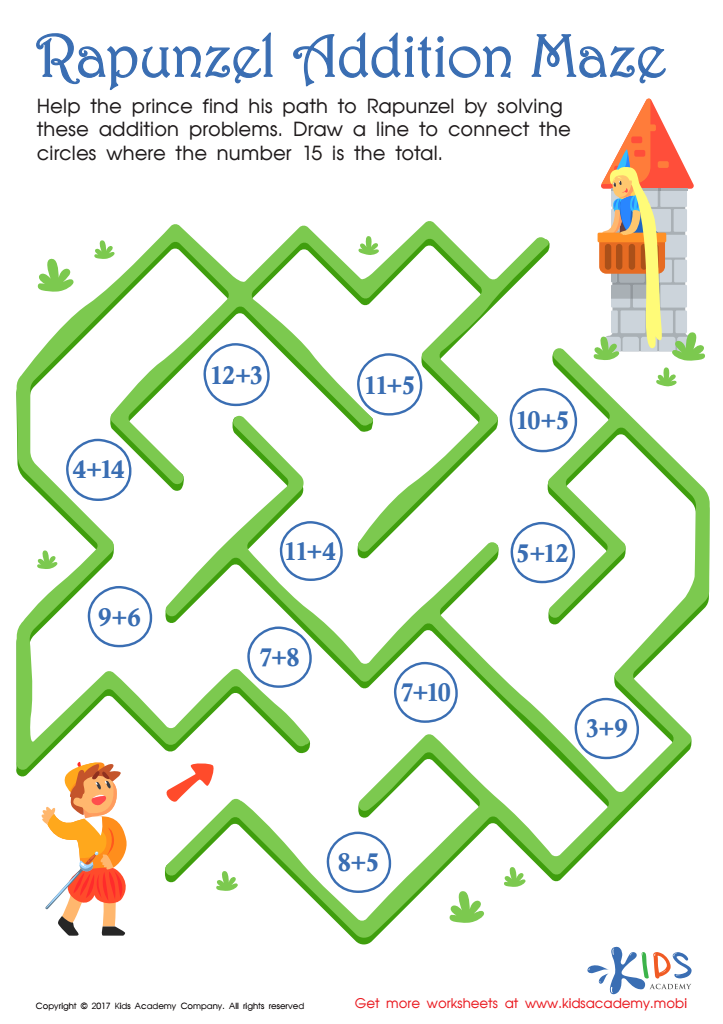
Rapunzel Addition Maze Worksheet
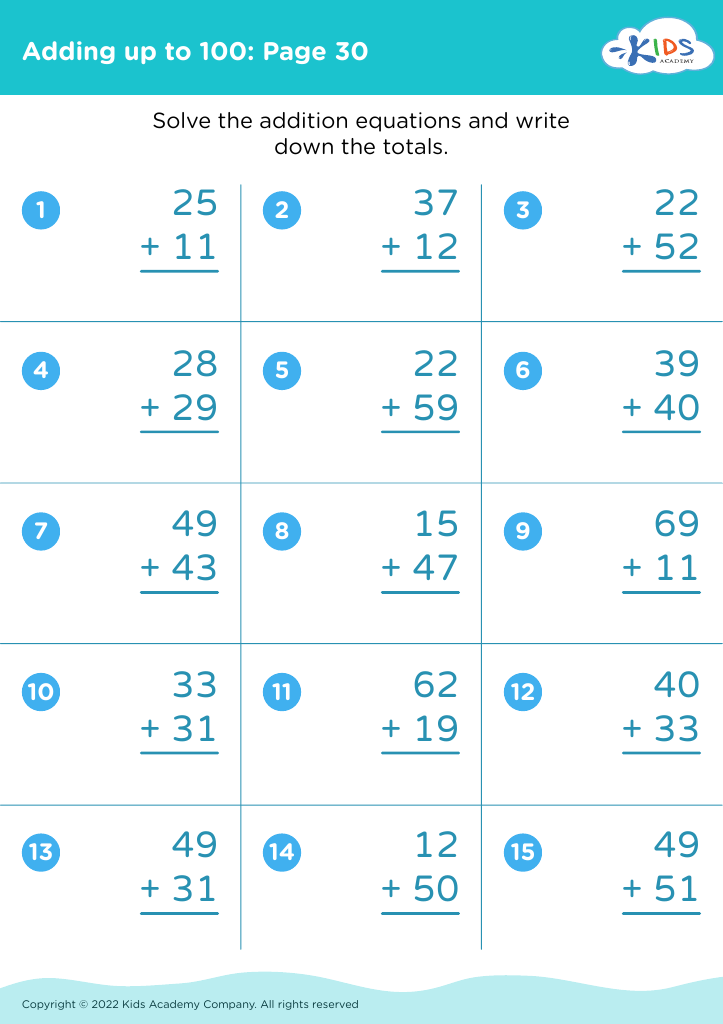








Following directions in math is essential for young children aged 3-7 as it lays the foundation for their academic and life skills. At this stage, children's brains are developing rapidly, and acquiring the ability to understand and follow directions helps them build cognitive skills necessary for higher-level thinking.
In math, following directions develops critical problem-solving skills and orderly thinking. It helps children learn to approach tasks methodically, making complex problems more manageable as they progress in their education. For example, in counting activities, recognizing shapes, or simple arithmetic problems, following instructions carefully ensures they grasp the fundamental concepts, setting them for future learning.
Moreover, this skill is crucial in real-life situations, enhancing a child’s ability to follow multi-step directions, organize tasks, and manage time effectively. It helps improve their listening capabilities and fosters better communication between themselves, peers, and adults.
For parents and teachers, emphasizing the importance of following directions cultivates patience, attention to detail, and perseverance among young learners. In a broader sense, these skills contribute to well-rounded personal development and social adaptability.
Ultimately, prioritizing following directions in early math ensures children gain a sturdy foundation not only in academic disciplines but also in essential life skills that will serve them throughout their lives.








