Fractions understanding Math Worksheets for Ages 3-7
3 filtered results
-
From - To
Boost your child's fraction skills with engaging and interactive worksheets designed for ages 3-7 at Kids Academy! Our fun, age-appropriate activities make learning fractions a breeze, helping young learners grasp fundamental concepts like halves, thirds, and quarters. Each worksheet combines colorful visuals with hands-on practice to keep children motivated and make complex ideas approachable. Perfect for parents and teachers, these resources offer a solid foundation in fractional thinking, setting the stage for future math success. Explore our collection and watch your child's confidence in math grow as they master the art of fractions through play and practice!
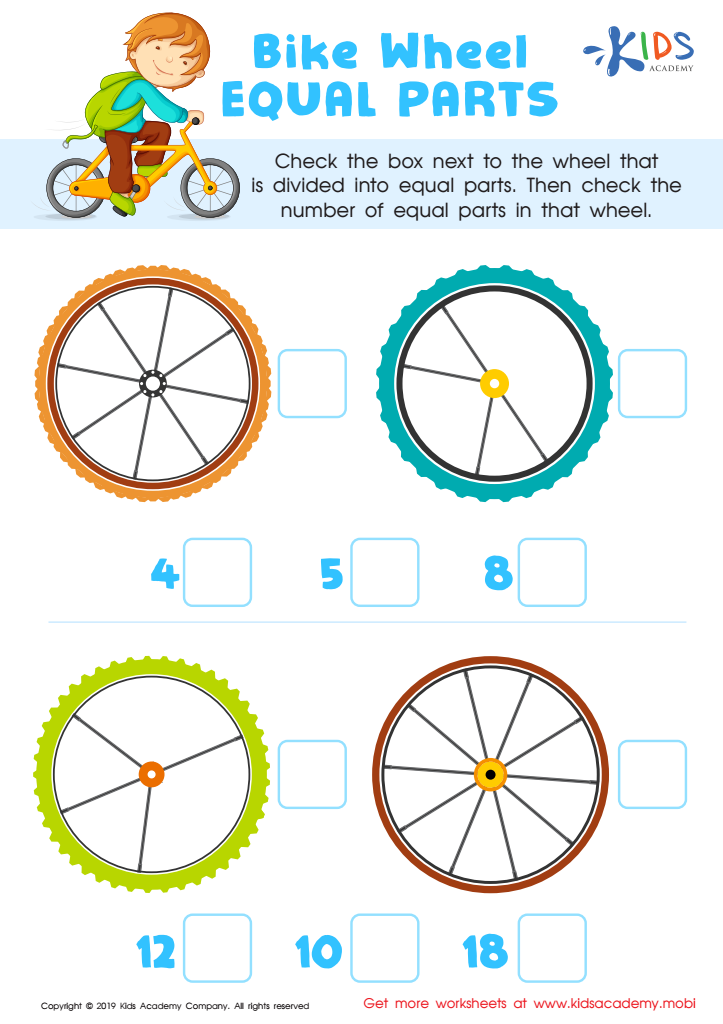
Bike Wheel Equal Parts Worksheet
 Assign to My Students
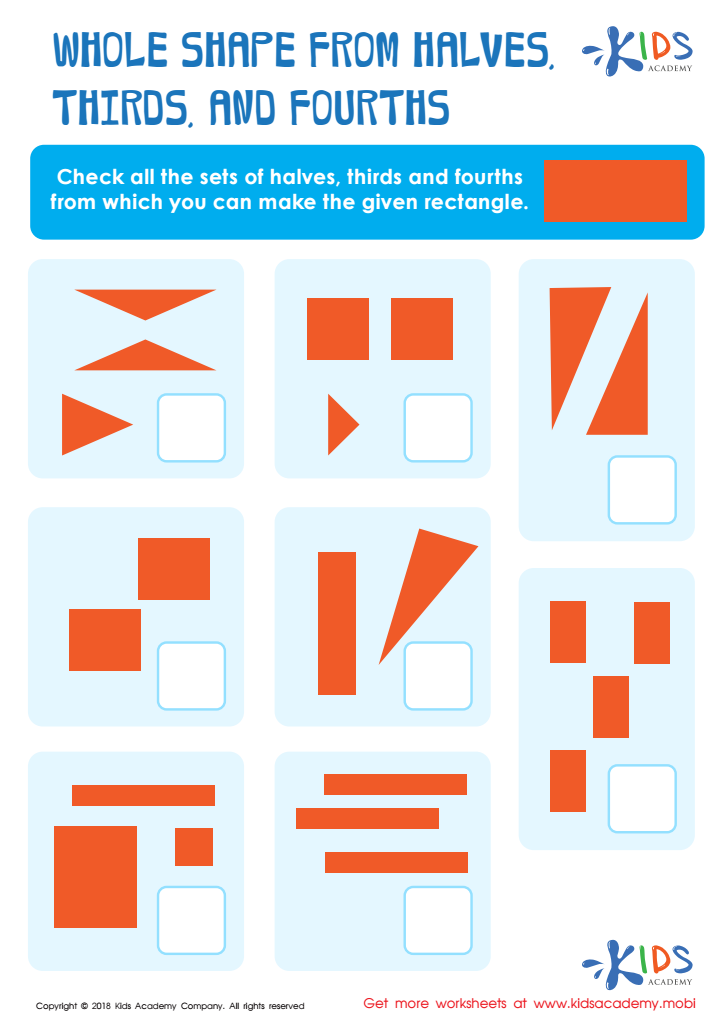
Whole Shape from Halves, Thirds and Fourths Worksheet





Understanding fractions is crucial for young learners aged 3-7 because it lays the foundation for numerous mathematical concepts they will encounter in later grades. At this developmental stage, children are particularly receptive to grasping fundamental ideas through concrete experiences, making it an ideal time to introduce the basics of fractions.
Firstly, fractions help children understand parts of a whole, a concept that is applicable in everyday life—from sharing a pizza to splitting time among activities. This practical application helps solidify their comprehension through real-world connections. Early exposure to the idea that numbers can represent parts of a set or a division of whole objects prepares them for more complex mathematical operations such as addition, subtraction, multiplication, and division of fractions.
Moreover, an early introduction to fractions enhances critical thinking and problem-solving skills as children learn how to break down problems into smaller parts. These skills contribute to their overall cognitive development, encouraging logical reasoning and analytical thinking.
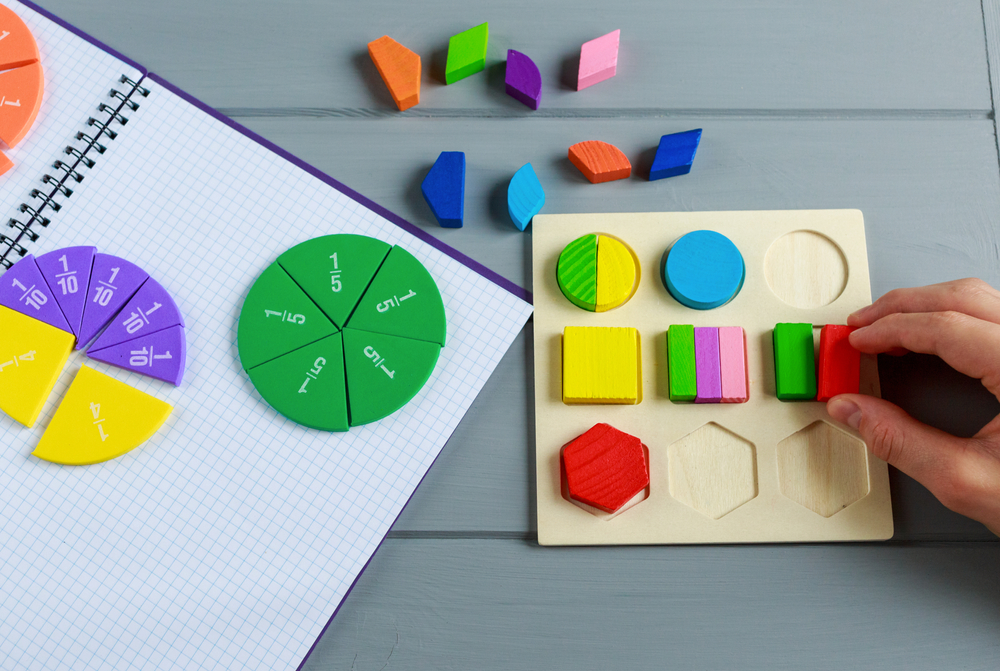
For educators and parents, focusing on fractions can make math more engaging and less intimidating for children. Fun activities, games, and visual aids—such as cutting fruits or using fraction circles—transform abstract concepts into tangible, understandable bits. This nurtures a positive attitude toward math, combating the common fear of numbers from a young age. By fostering an early, robust understanding of fractions, parents and teachers build a strong math foundation essential for future academic success.








