Historical Knowledge Math Worksheets for Ages 3-7
5 filtered results
-
From - To
Discover an engaging collection of Historical Knowledge math worksheets designed specifically for children aged 3-7. These worksheets blend essential math skills with captivating historical themes, making learning both fun and educational. Little learners will explore numbers, counting, and basic operations while immersing themselves in history through interactive activities. Perfect for homeschooling or enhancing classroom lessons, our worksheets foster critical thinking and creativity. Designed with vibrant visuals and age-appropriate content, these resources encourage young minds to connect math with historical events and figures. Equip your child with foundational math skills while sparking an interest in history. Explore our collection and watch them thrive!
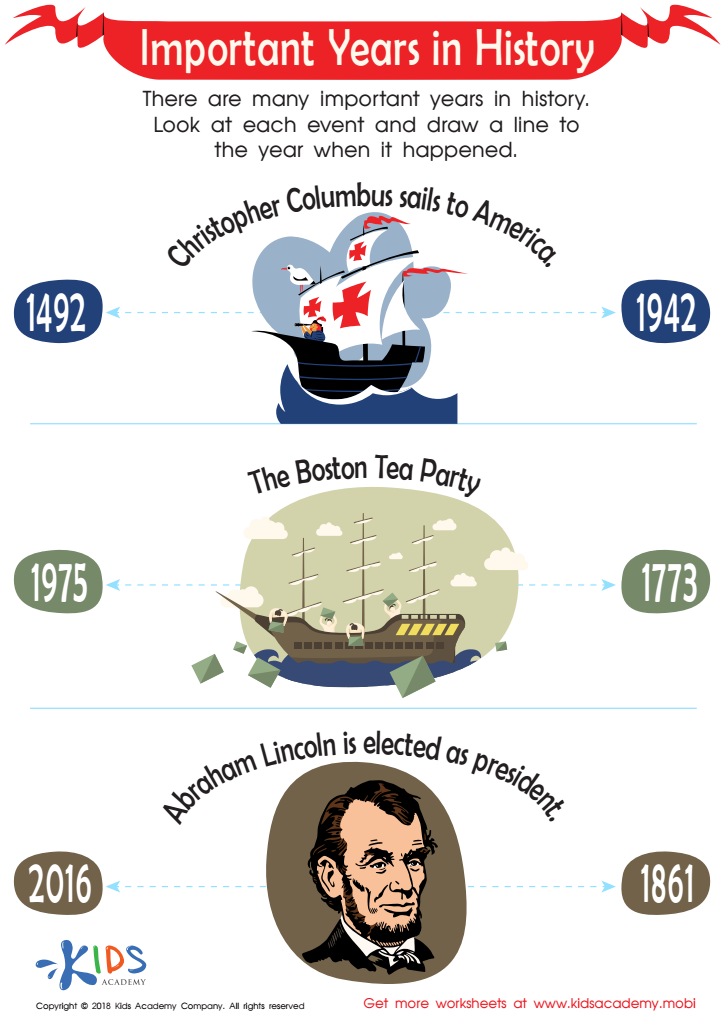
Important Years in History Worksheet
 Assign to My Students
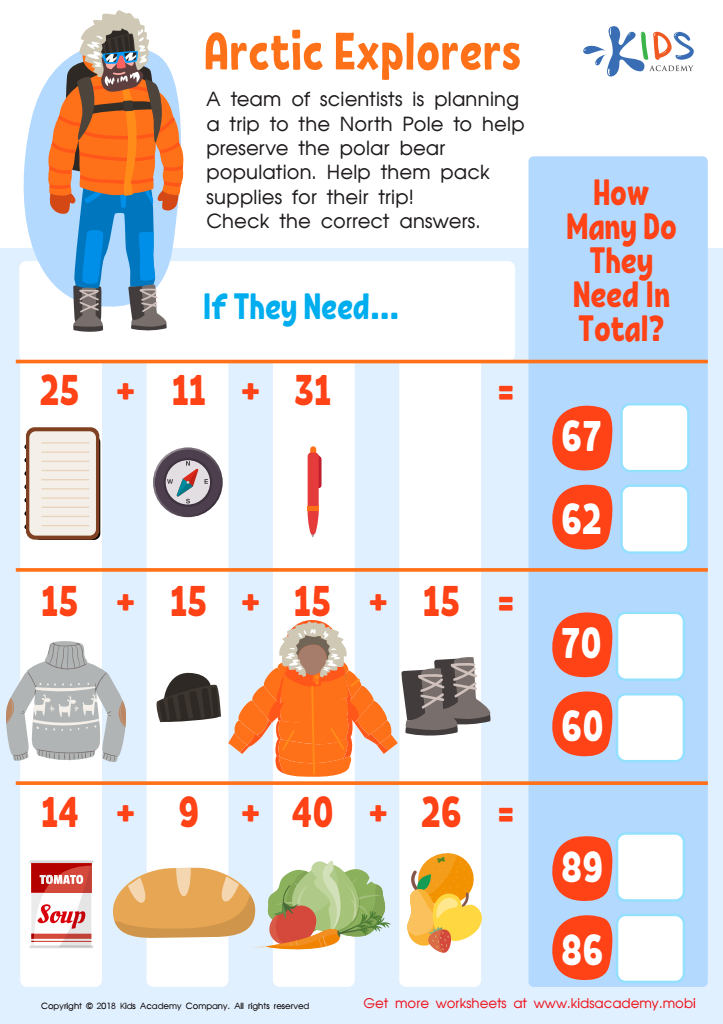
Arctic Explorers Worksheet
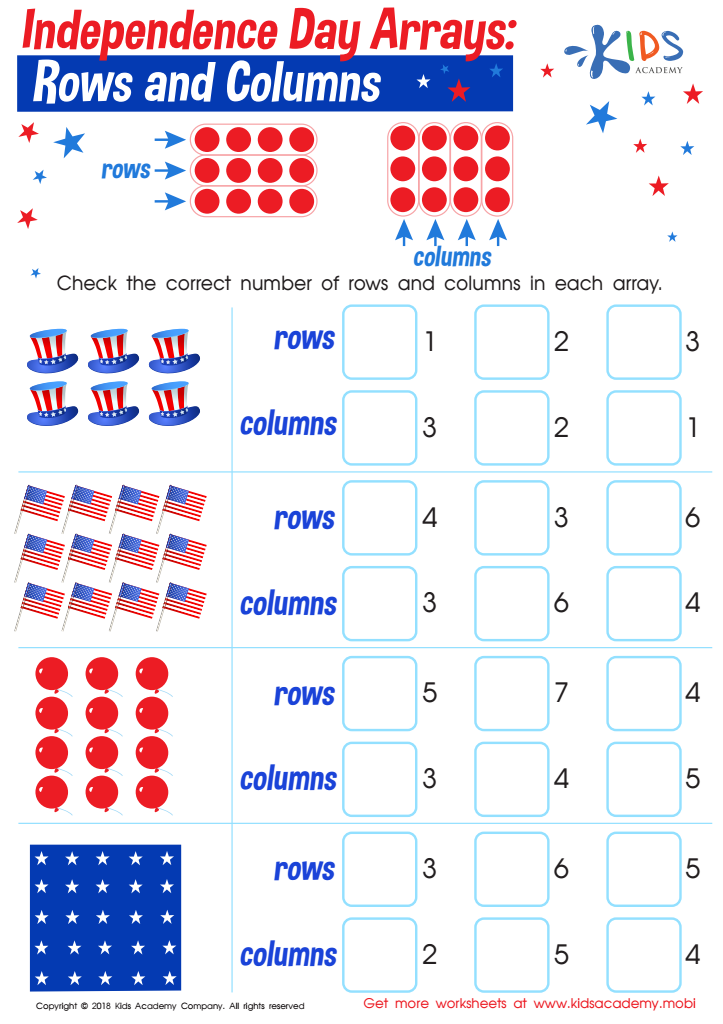
Independence Day Arrays: Rows and Columns Worksheet
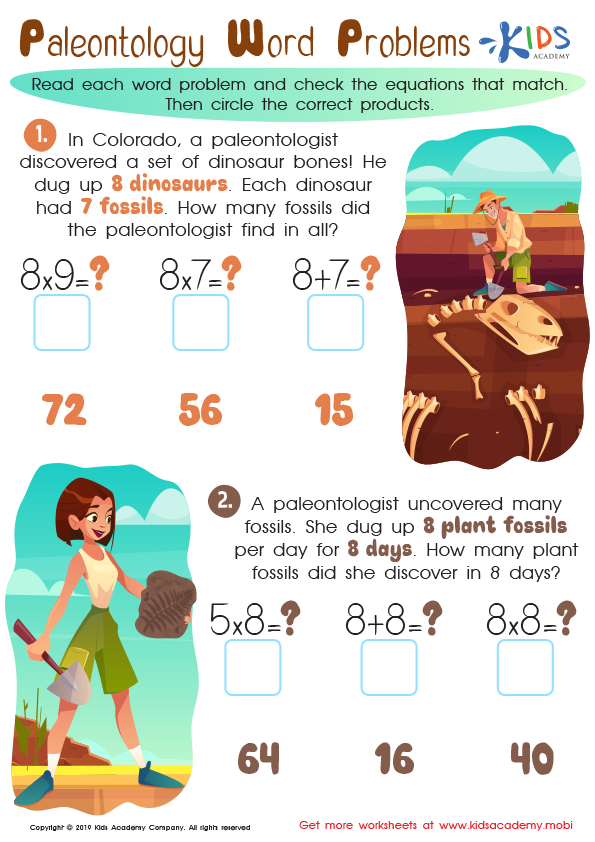
Archeology Word Problems Worksheet
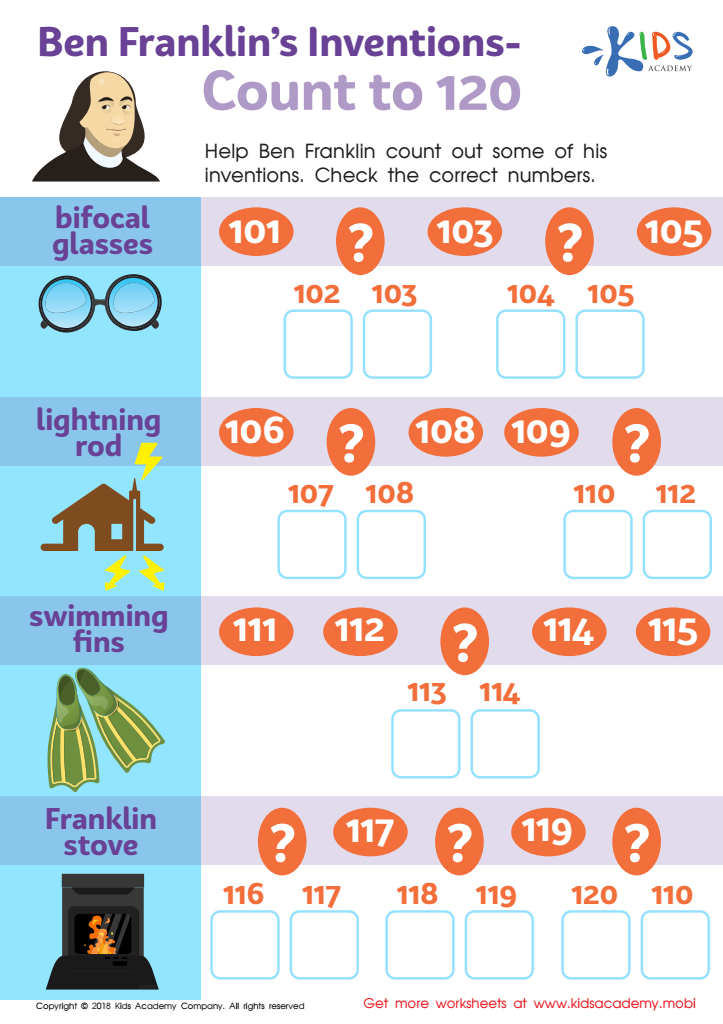
Ben Franklin’s Inventions – Count to 120 Worksheet








Parents and teachers should care about historical knowledge in math for children aged 3-7 because it lays a strong foundation for critical thinking and contextual understanding. Introducing young learners to historical math concepts enhances their appreciation for numbers beyond mere computation, bridging history, culture, and the evolution of mathematical ideas.
Understanding mathematical history encourages curiosity and engagement. For instance, exploring how ancient civilizations used mathematics for trade, architecture, or astronomy helps children relate to math on a personal level, sparking interest in both the subject and the broader narrative of human progress. Furthermore, it's essential for nurturing culturally responsive teaching; children can see their heritage reflected in math development, fostering a sense of belonging and identity.
Early exposure to the connections between math and history also promotes problem-solving skills. Engaging children with stories of mathematicians from diverse backgrounds allows them to recognize that math is not only about testing and grades. It is a creative and evolving field. This holistic approach can ultimately help young learners grow into not just proficient mathematicians, but imaginative thinkers who appreciate the cultural significance and historical context of what they are learning.








