Improve comprehension Math Worksheets for Ages 3-7
4 filtered results
-
From - To
Enhance your child's math skills with our "Improve Comprehension Math Worksheets" designed for ages 3-7! These engaging worksheets provide fun and interactive exercises that focus on developing essential math comprehension abilities. Tailored for early learners, they promote critical thinking and problem-solving through practical questions and colorful visuals. Children will explore numbers, shapes, patterns, and basic operations while building confidence in their math abilities. Our worksheets aim to strengthen foundational skills, ensuring kids not only learn mathematical concepts but also apply them in real-life scenarios. Perfect for both home and classroom settings, these resources encourage a love for learning in young minds!
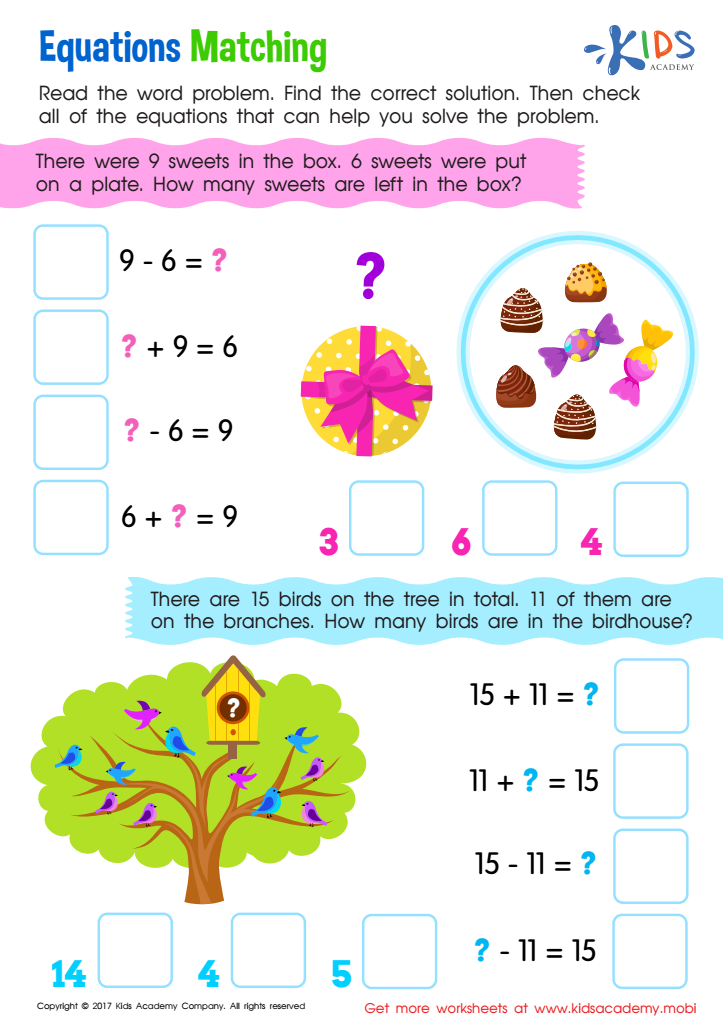
Equations Matching Word Problems Worksheet
 Assign to My Students
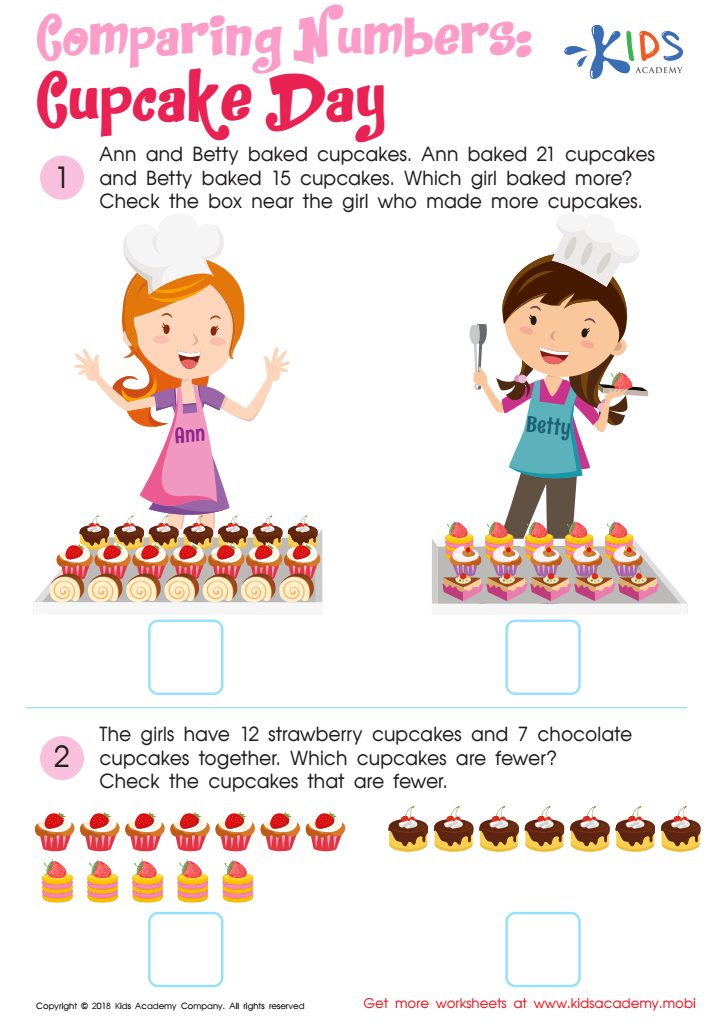
Cupcake Day Worksheet







Improving math comprehension for ages 3-7 is crucial for a child's overall development and success in future learning. During these early years, children develop foundational skills that influence their academic journey. Math comprehension at this stage not only involves understanding numbers and basic operations but also helps build critical thinking and problem-solving abilities.
When parents and teachers prioritize math comprehension, they foster a positive attitude towards mathematics, reducing anxiety and promoting confidence. Engaging children in hands-on activities, such as counting toys or measuring ingredients during cooking, helps them relate math to real-life experiences, making it more relevant and exciting.
Moreover, strong math skills are closely linked to success in other subjects, including science and reading. Understanding patterns and logical thinking enhances their ability to comprehend complex concepts and improves their analytical skills. Additionally, the skills acquired from early math learning set a solid groundwork for future academic achievements, such as higher-order math concepts and literacy skills.
Ultimately, investing time and resources into improving math comprehension in young learners not only enriches their educational experience but also equips them with essential skills for life, paving the way for confident, capable learners.








