Improve math skills Math Worksheets for Ages 3-7
17 filtered results
-
From - To
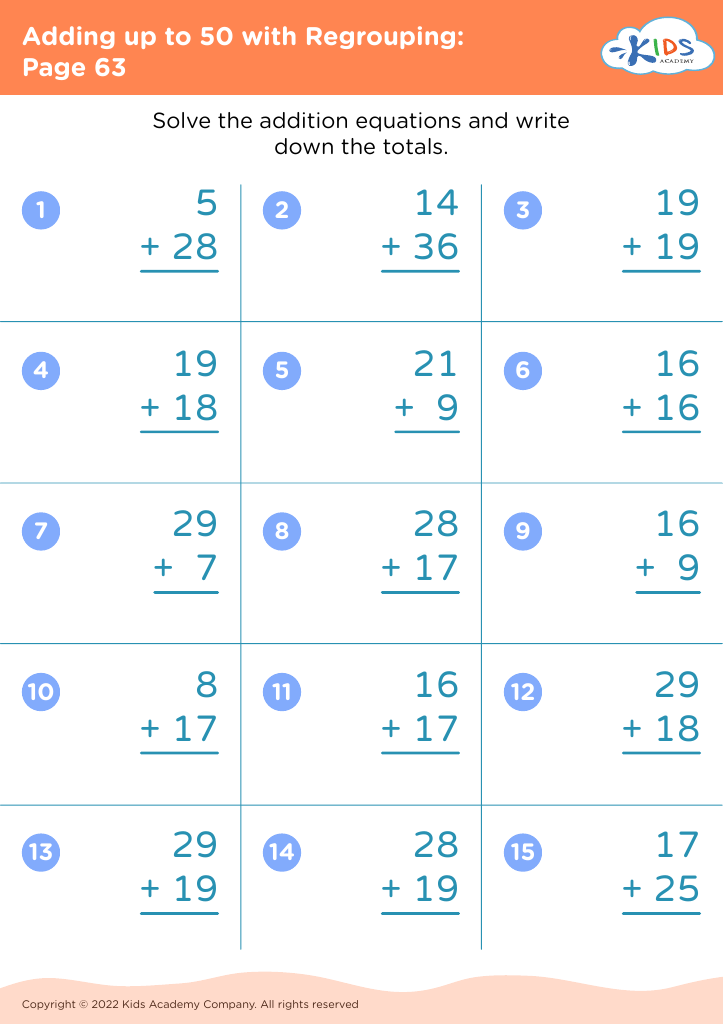
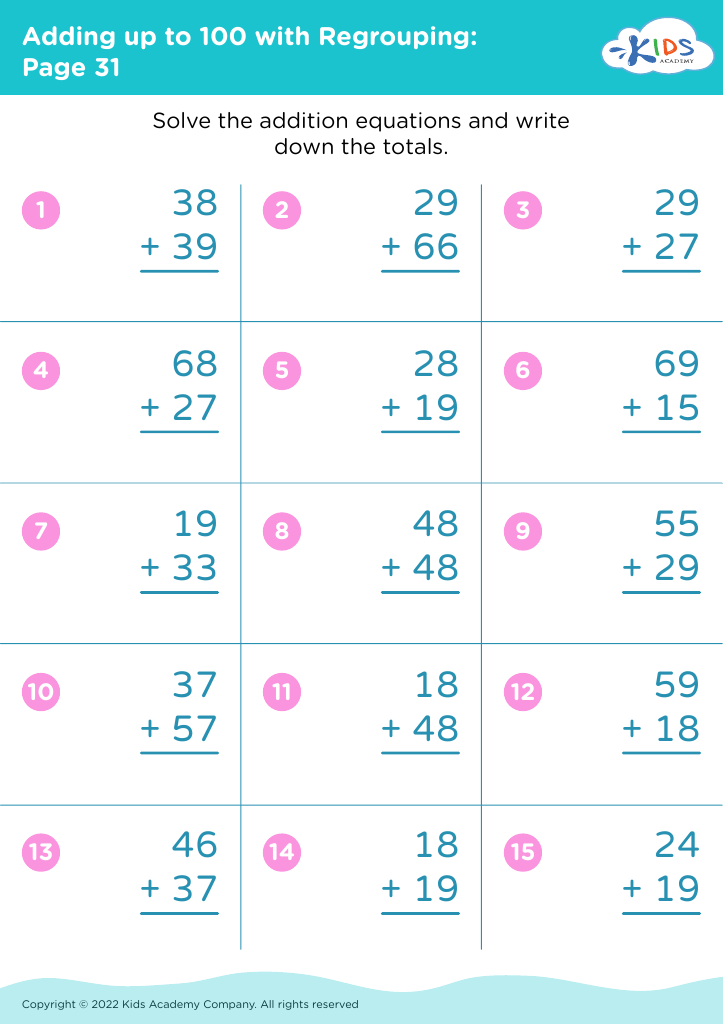
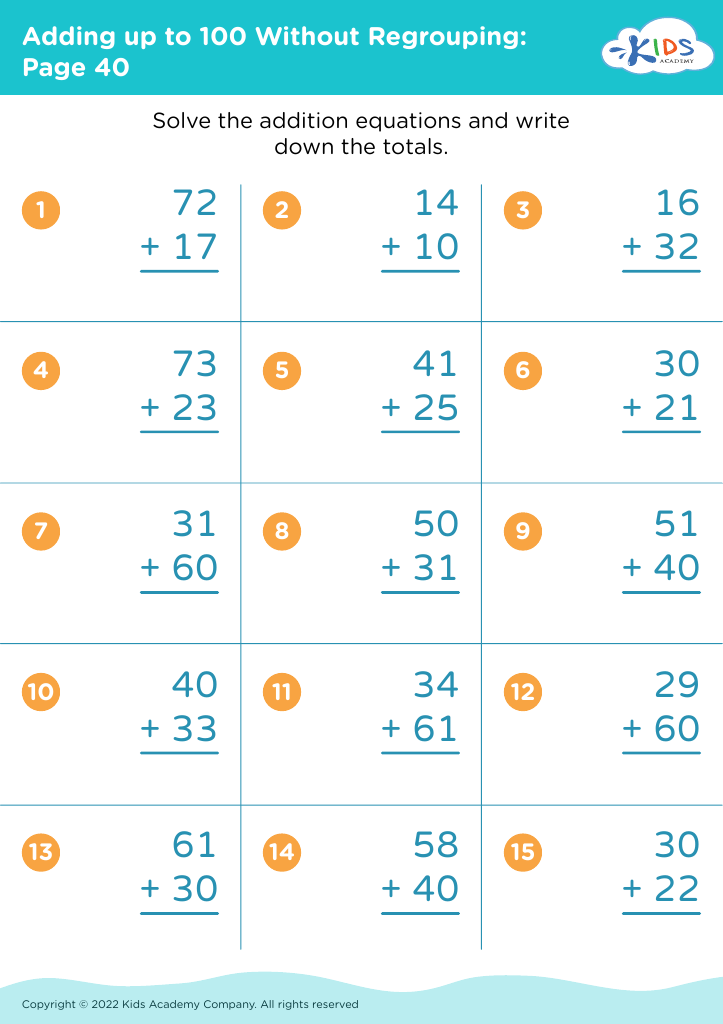
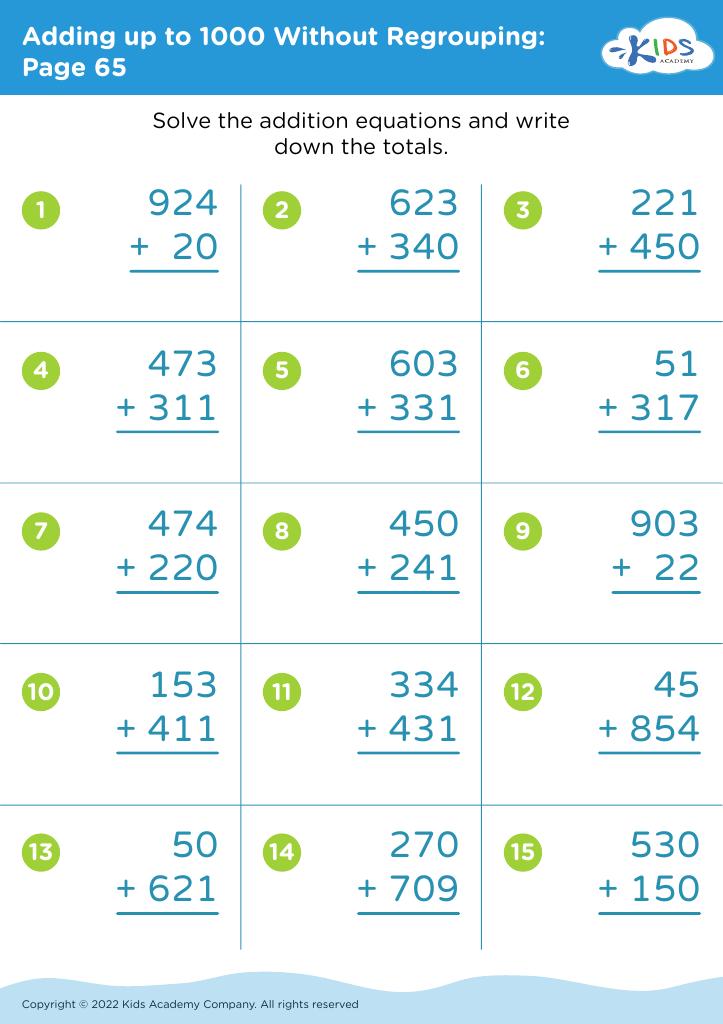
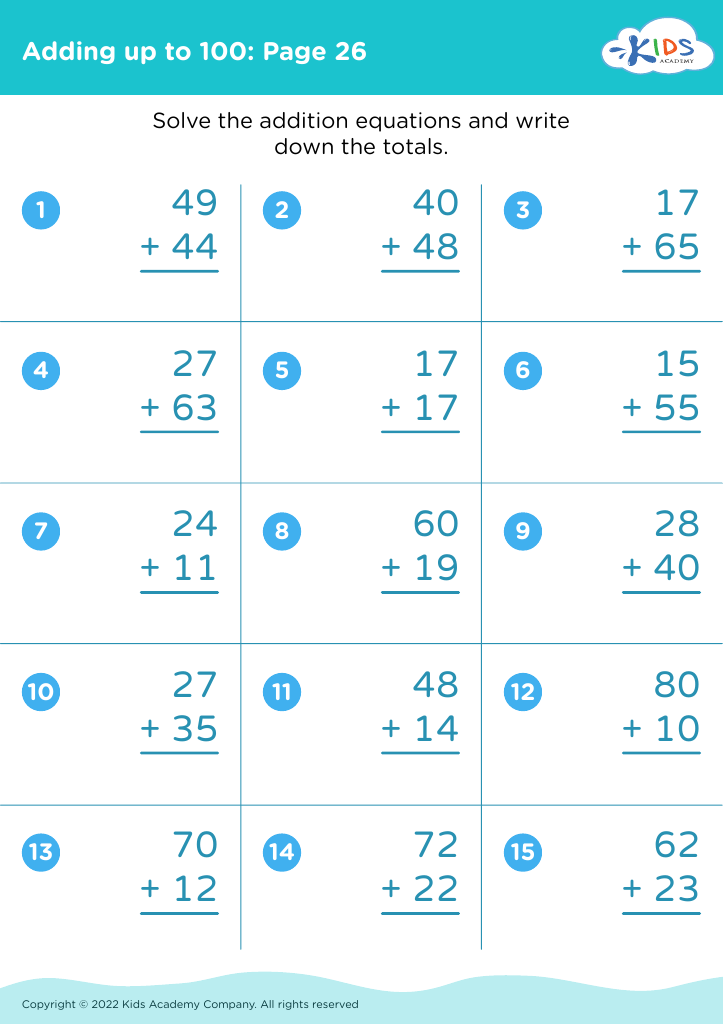
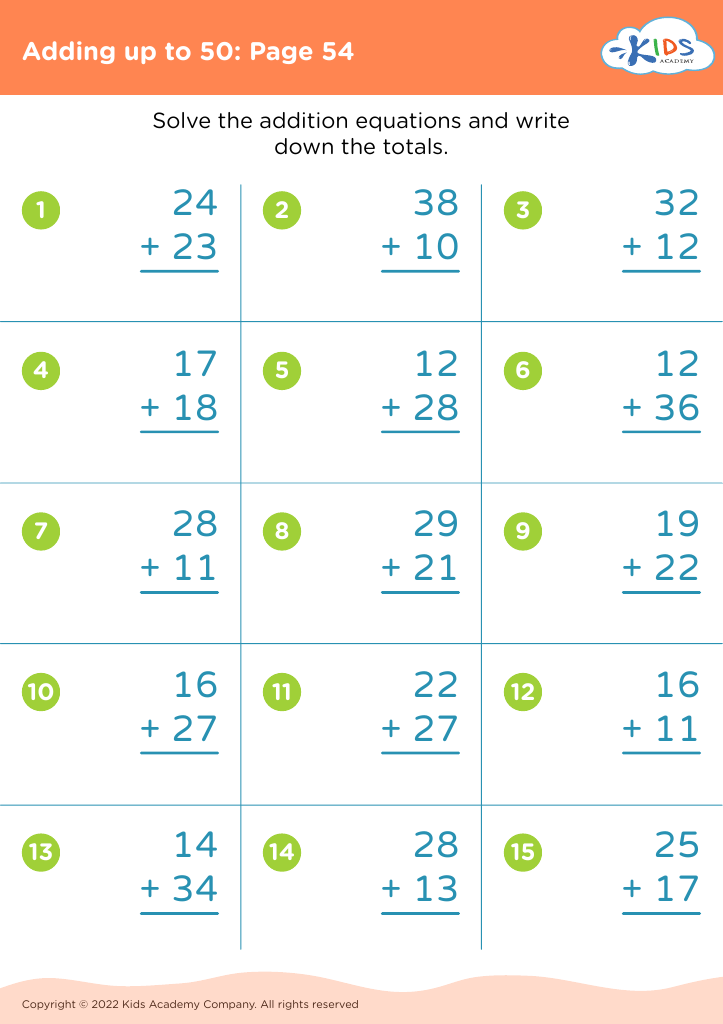
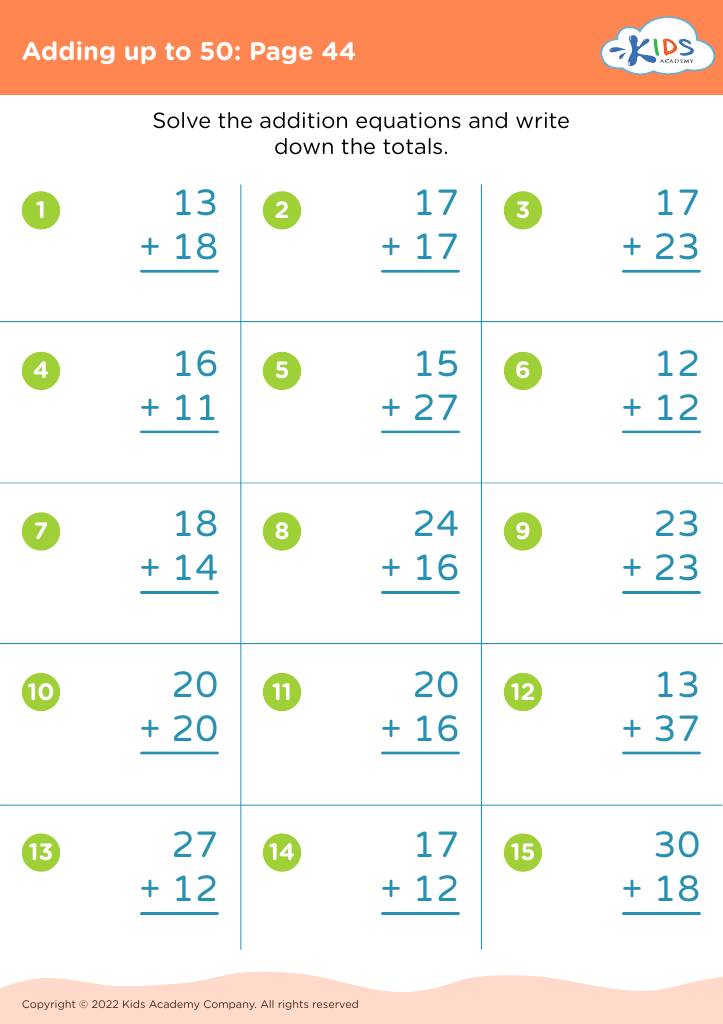
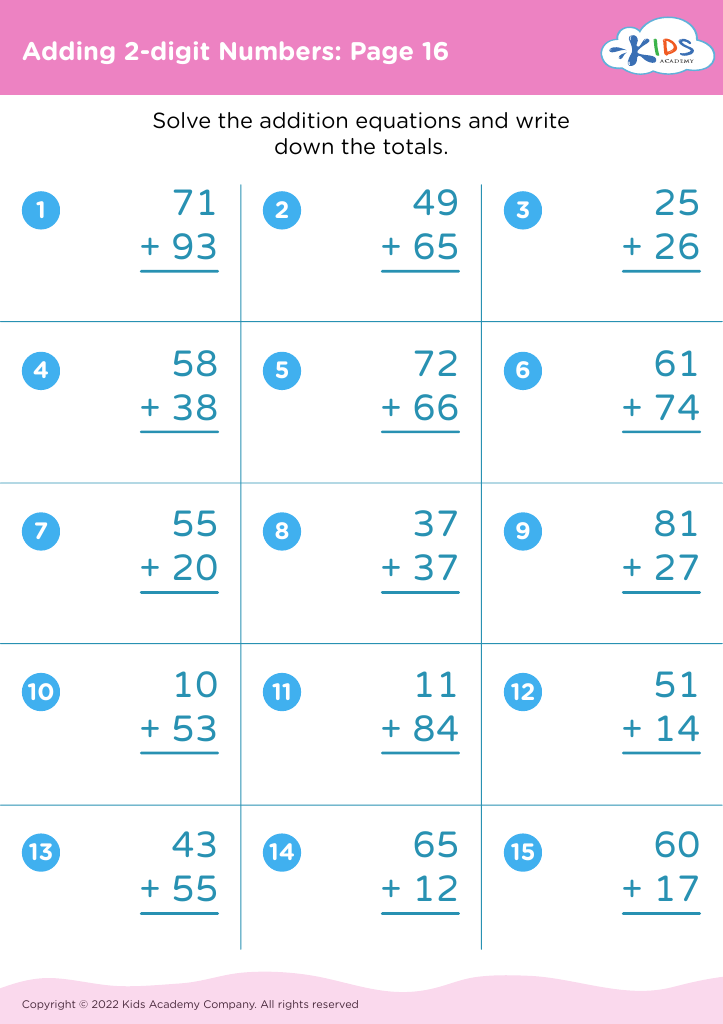
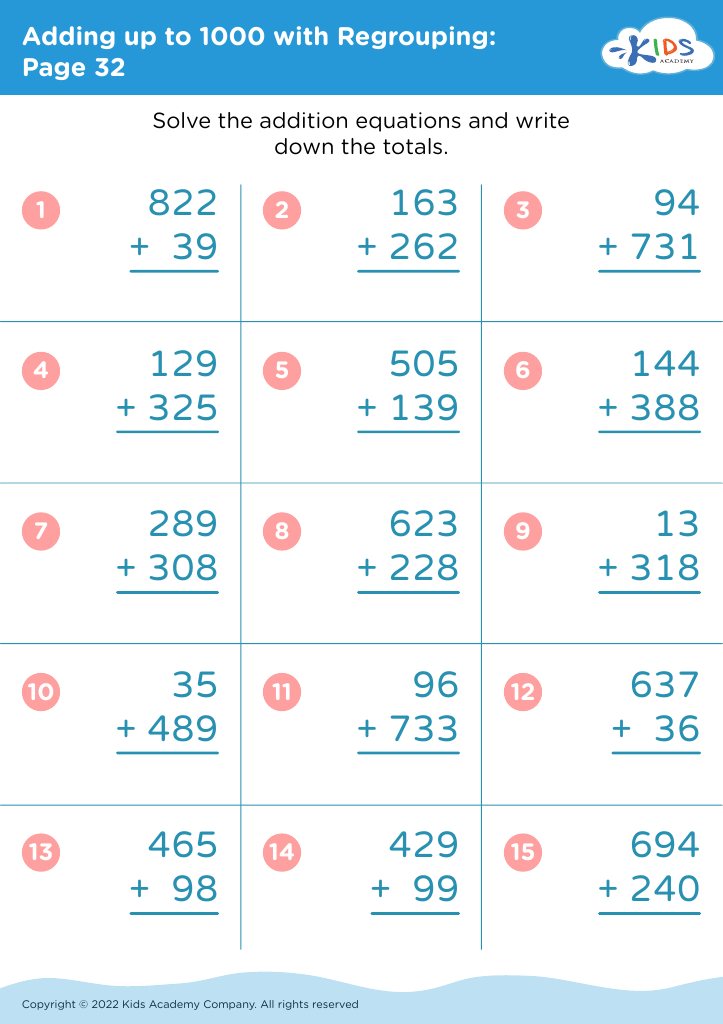
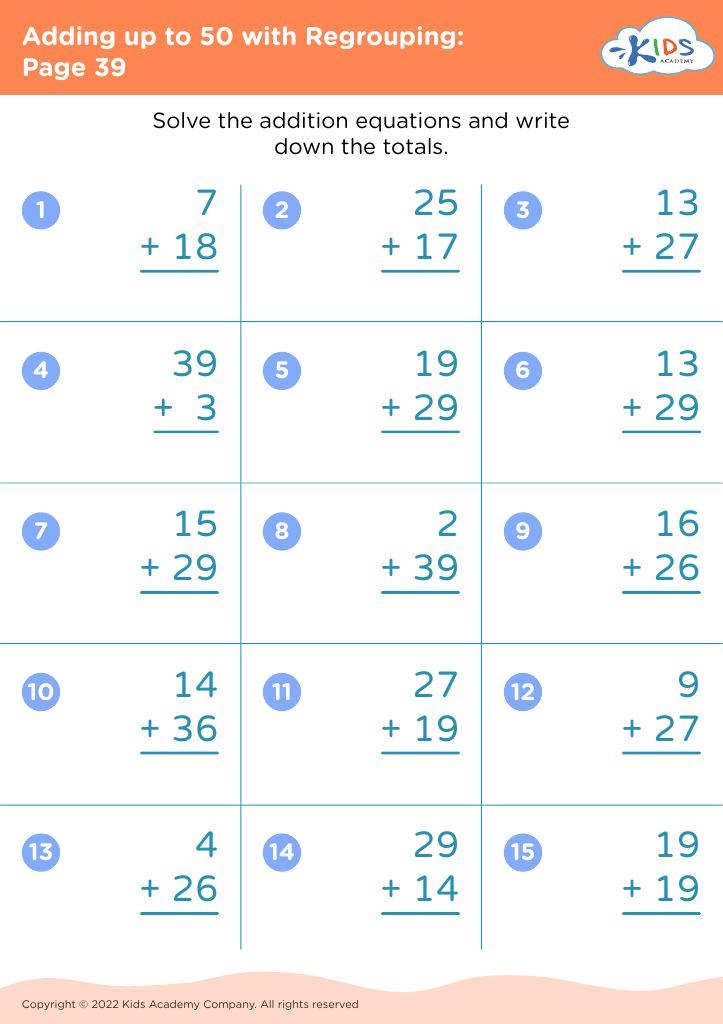
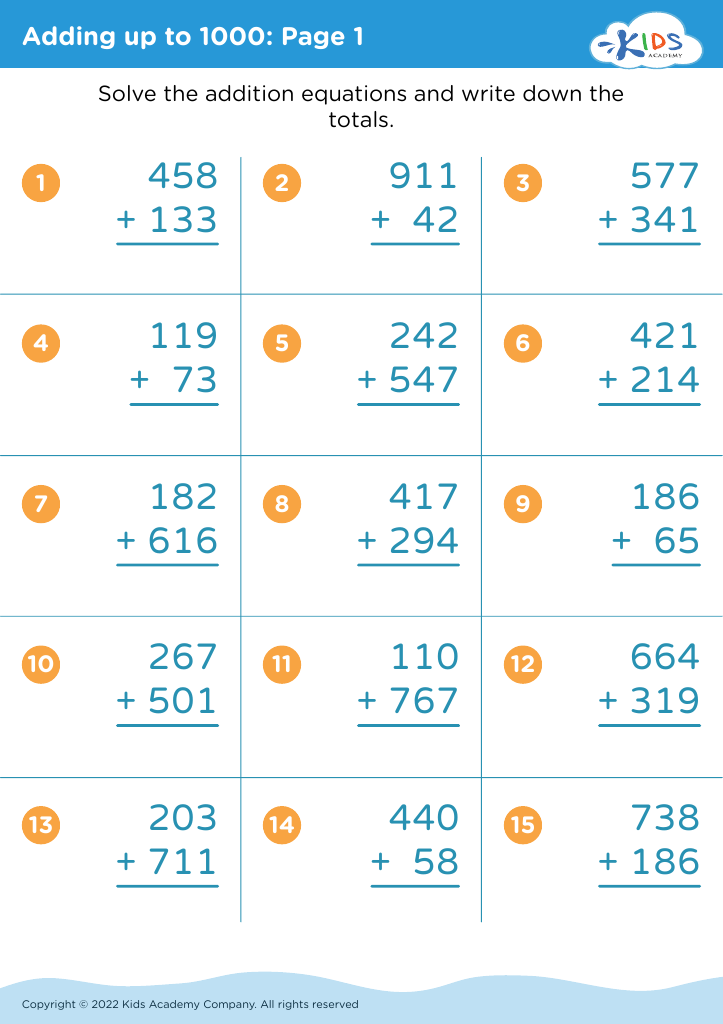
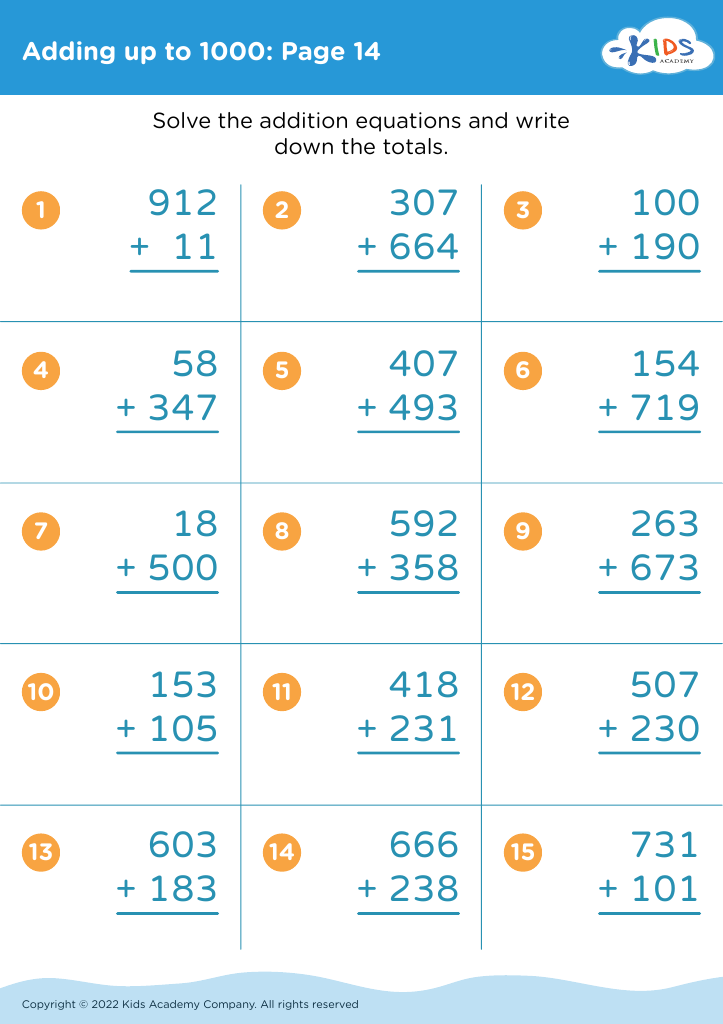
Boost your child’s math skills with our engaging math worksheets designed for ages 3-7! Our user-friendly resources provide fun and interactive activities that cover essential early math concepts, from counting and number recognition to simple addition and subtraction. Tailored specifically for young learners, these worksheets foster a love for math through colorful illustrations and playful exercises. Each worksheet encourages critical thinking and problem-solving, making learning enjoyable. With easy access to printable content, parents and educators can effortlessly integrate math practice into daily routines. Help your child build a strong foundation in math and gain confidence with our effective and enjoyable worksheets today!
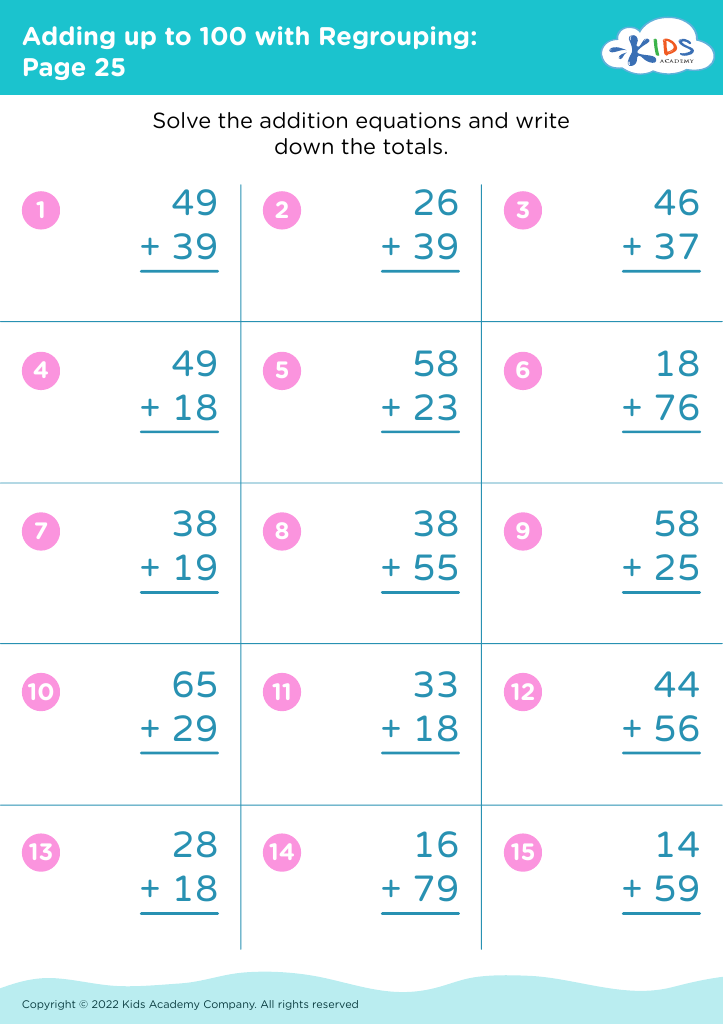
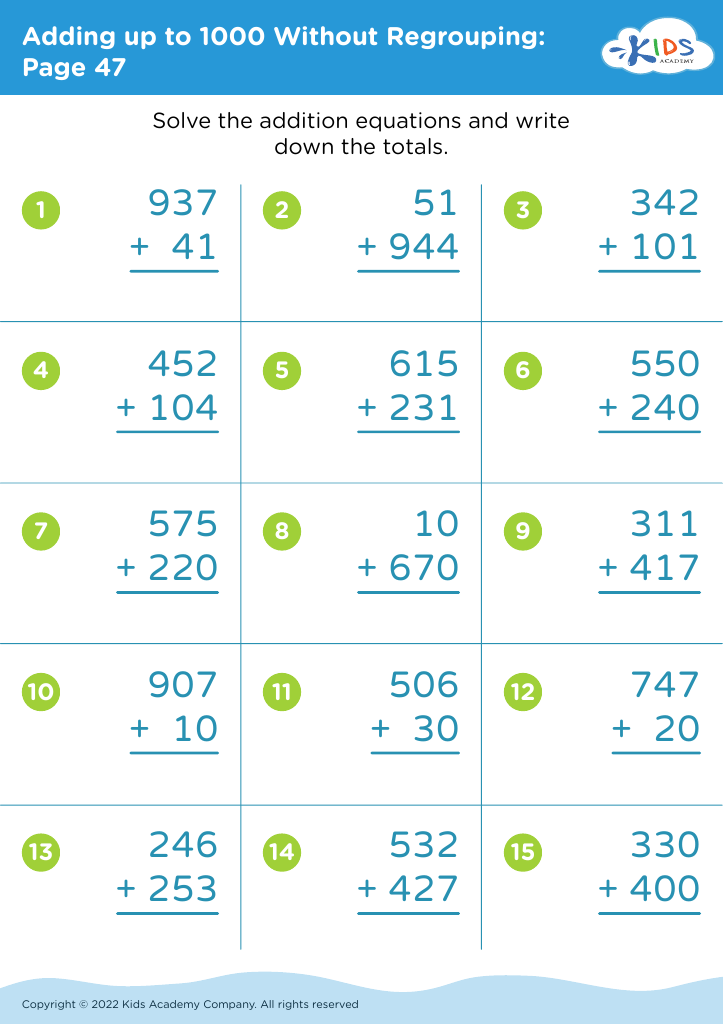
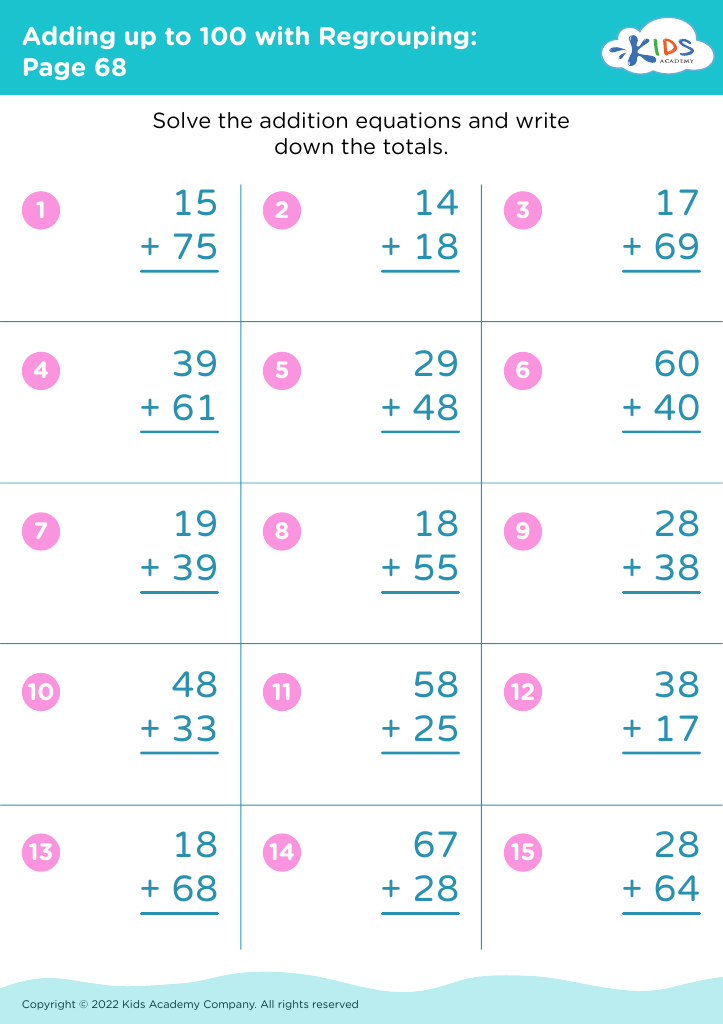
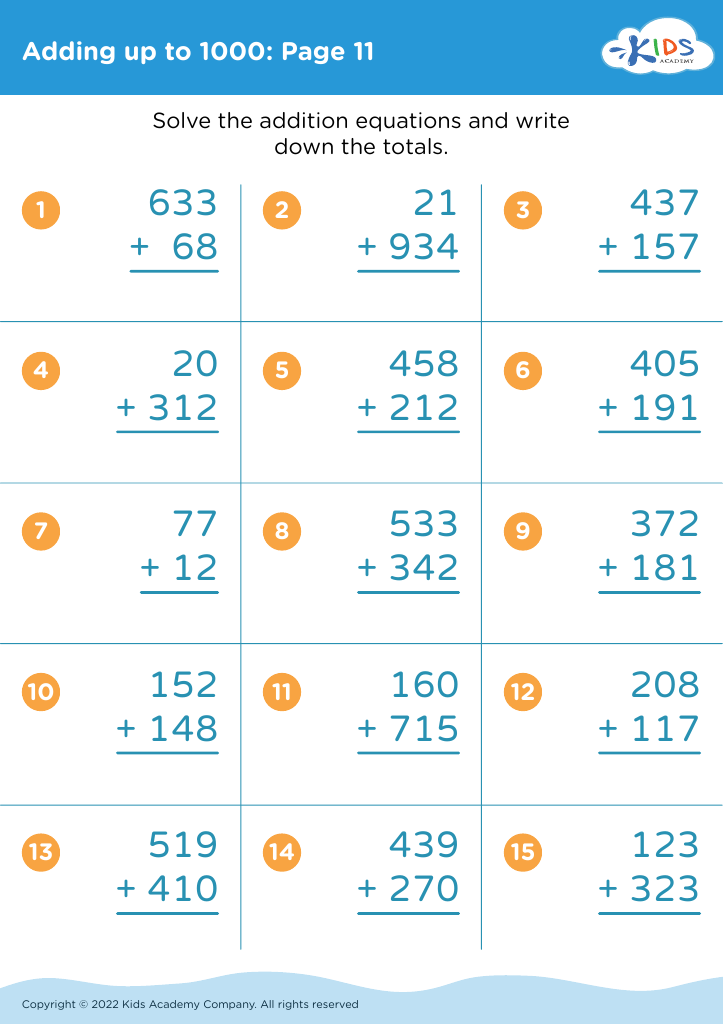
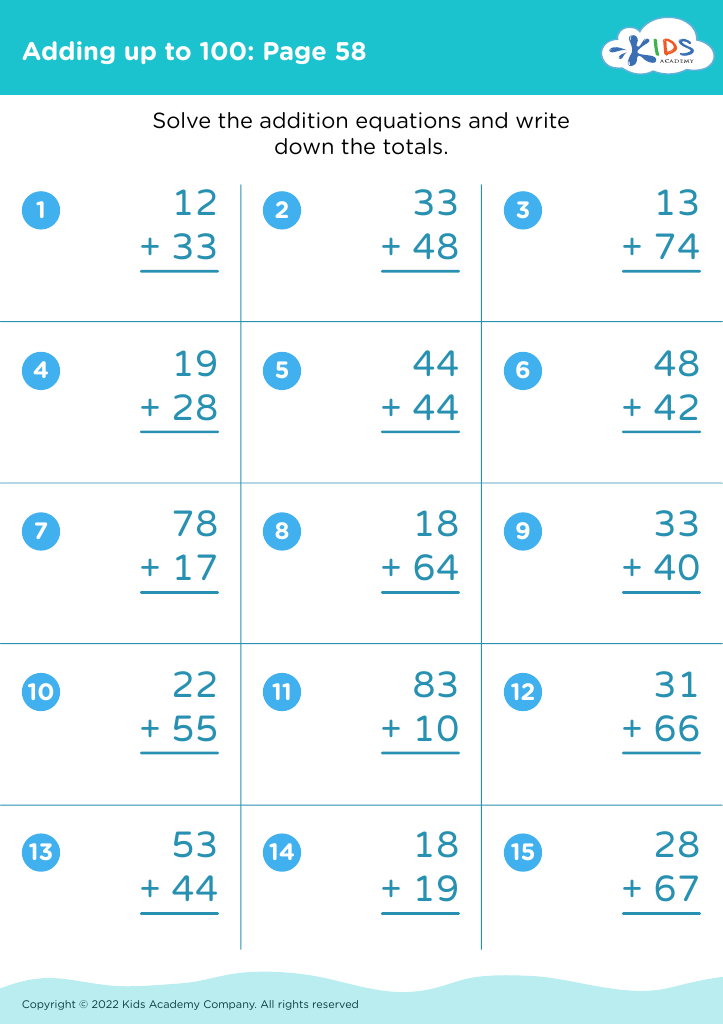








Parents and teachers play a crucial role in shaping young children's mathematical abilities, and improving math skills for ages 3-7 lays a foundational framework that supports future academic success. Early exposure to math fosters a positive attitude towards learning and enhances problem-solving skills, critical thinking, and logical reasoning.
During these formative years, children's brains absorb information rapidly, making it an essential period for mathematical development. Engaging activities such as counting games, pattern recognition, and simple addition or subtraction introduce basic concepts in a fun and interactive way. These experiences improve not only math skills but also boost confidence, which is vital for overall learning.
Moreover, strong math skills are linked to better performance in STEM fields and increased opportunities in the modern job market. By nurturing these skills early, parents and teachers equip children with the tools necessary for overcoming academic challenges, as math often underpins other subjects, including science and economics.
Additionally, fostering a supportive environment emphasizes the importance of persistence and resilience, teaching children that mastery takes time and practice. In summary, investing in early math skill development is essential for cultivating lifelong learners who thrive in an increasingly complex world.








