
Improving mathematical skills Math Worksheets for Ages 3-7
5 filtered results
Difficulty Level
Grade
Age
-
From - To
Subject
Activity
Standards
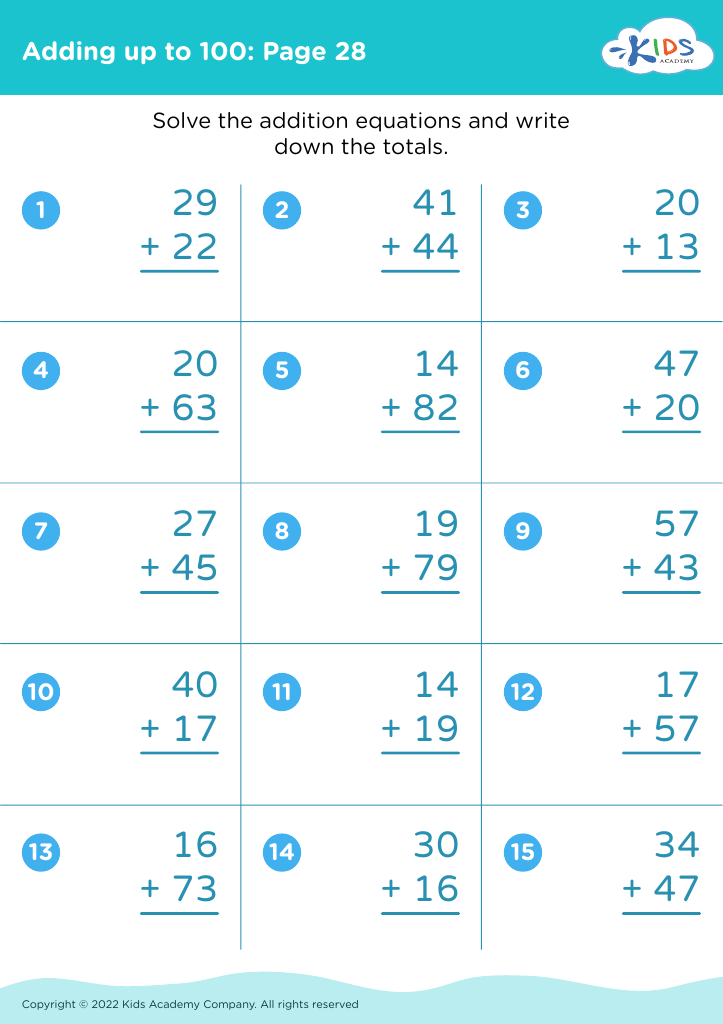
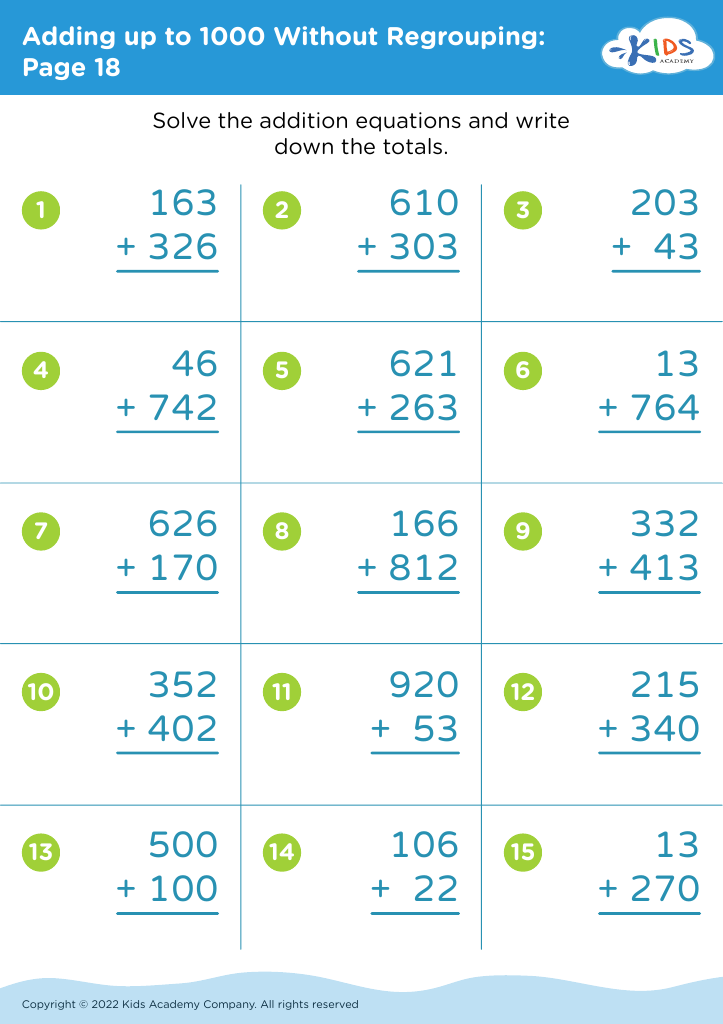
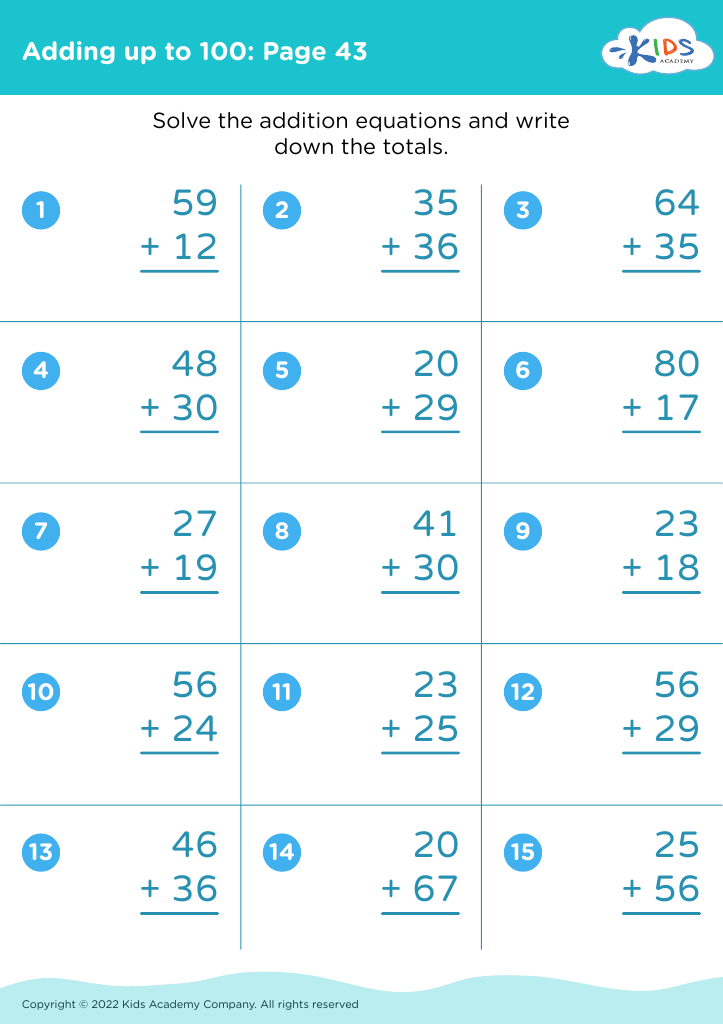
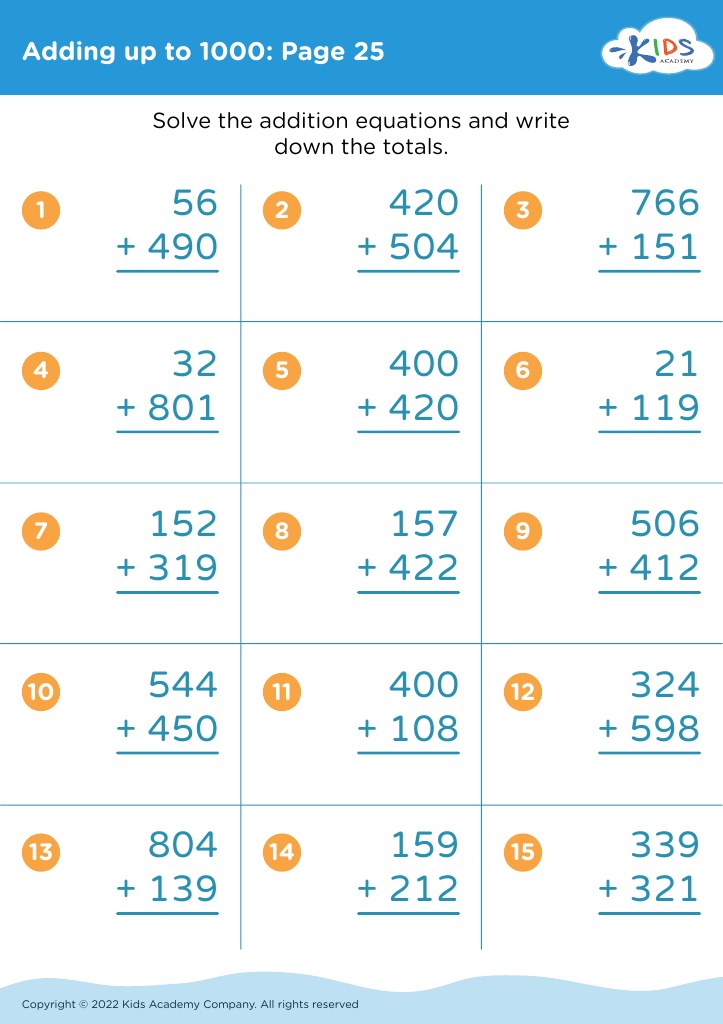
Enhance your child's early math skills with our expertly designed math worksheets for ages 3-7. Our activities focus on building a strong foundation in counting, addition, subtraction, patterns, and more through engaging and age-appropriate exercises. Each worksheet is crafted to boost children's confidence, ignite their curiosity, and foster a lifelong love for learning math. Ideal for preschoolers and early elementary students, our printable resources seamlessly blend fun and education, making math an enjoyable adventure. Join countless parents and educators who trust our tools to support their young learners' mathematical journeys!
Favorites
With answer key
Interactive
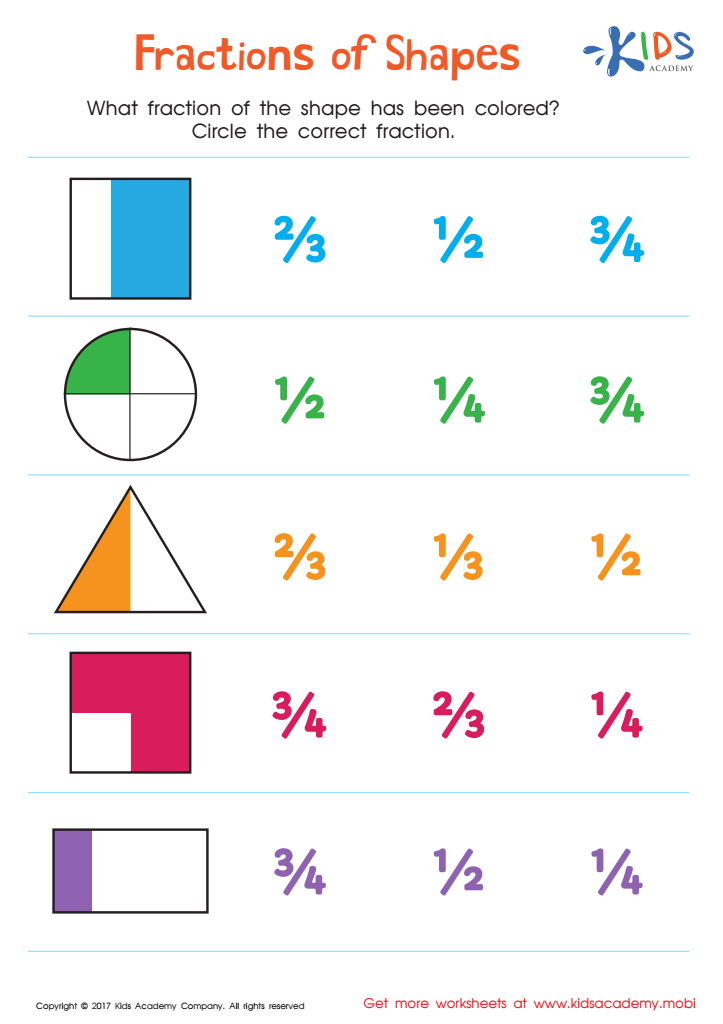
Fractions of Shapes: Math Concept Worksheet
Fractions can be tricky, but with pictures to illustrate them, they become much easier to understand. Our fractions of shapes worksheet is a great way to help children visualize fractions and gain a better understanding of them.
 Assign to My Students
Fractions of Shapes: Math Concept Worksheet
Worksheet
Join Kids Academy for Free
Who is primarily going to use this learning content?








Parents and teachers should prioritize improving mathematical skills for children aged 3-7 because early math proficiency is a strong predictor of future academic success and problem-solving abilities. At this age, children’s brains are incredibly receptive to new information and experiences, marking a crucial period for cognitive development.
Introducing basic math concepts early lays a solid foundation for more advanced reasoning and logical thinking later on. Skills like counting, recognizing numbers, understanding shapes, and basic addition and subtraction can enhance a child's ability to approach problems methodically and think critically. Furthermore, many daily activities involve some form of math, making these skills intensely practical.
Early math education also fosters confidence and enthusiasm for learning. When young learners grasp concepts early, they tend to approach other academic challenges with greater self-assurance. Integrating math into playful activities and everyday routines encourages a positive attitude towards the subject, counteracting any anxiety they might develop later.
Moreover, numerous studies suggest that early math skills are linked to higher future achievements not only in mathematics but also in reading and other areas. As a result, investing time and effort into cultivating a strong mathematical foundation during these formative years positions children for long-term academic and life success, ensuring they have the necessary tools to navigate a complex and data-driven world.








