Math skills development Math Worksheets for Ages 3-7
4 filtered results
-
From - To
Boost your child’s math skills with our engaging, fun, and educational Math Worksheets for Ages 3-7! Tailored to young learners, these printable worksheets cover essential math concepts such as counting, addition, subtraction, shapes, and patterns. Our expertly crafted activities not only foster a love for math but also enhance critical thinking and problem-solving abilities. Perfect for preschool and early elementary children, these resources support both classroom learning and at-home practice. Visit Kids Academy to explore our collection and watch your child confidently tackle math challenges while having a great time!
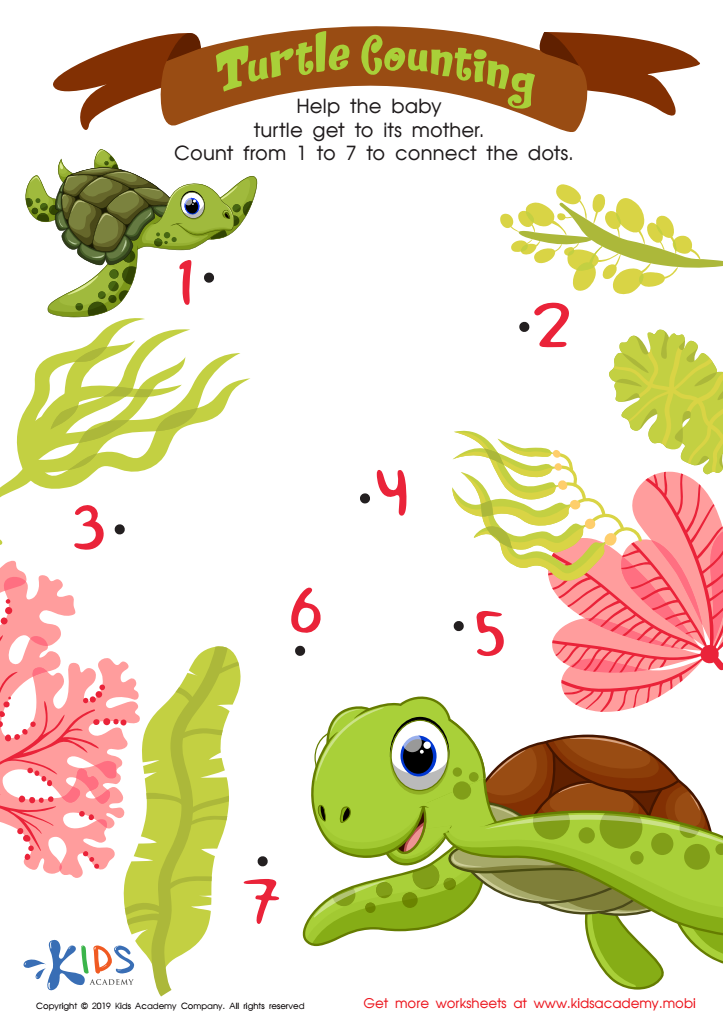
Turtle Counting Worksheet
 Assign to My Students
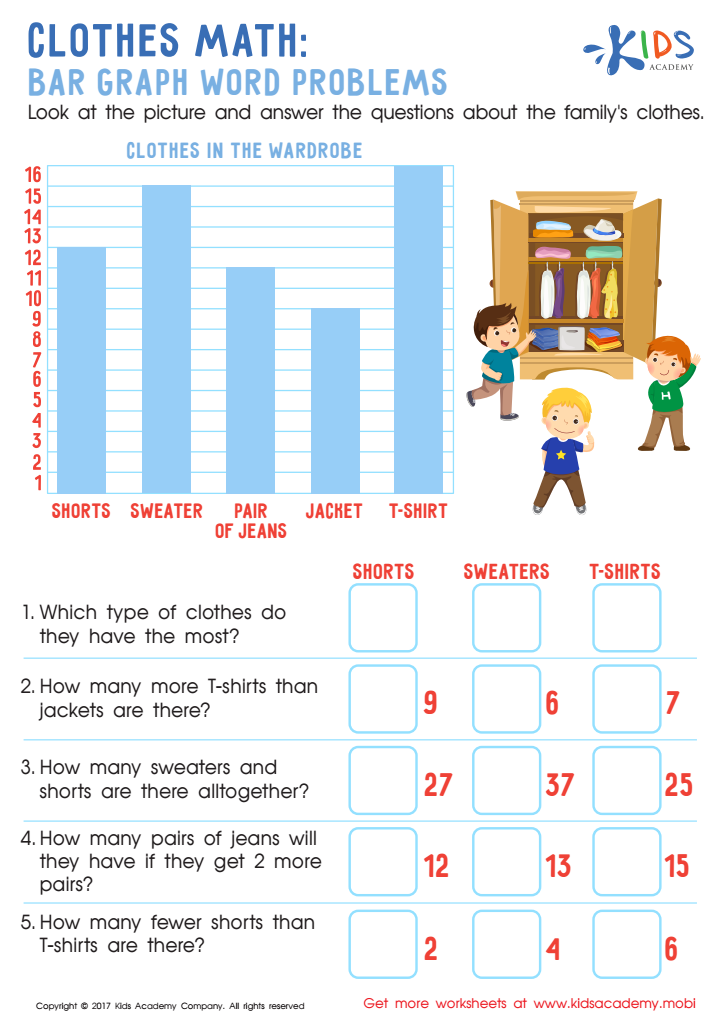
Clothes Math: Bar Graph Word Problems Worksheet
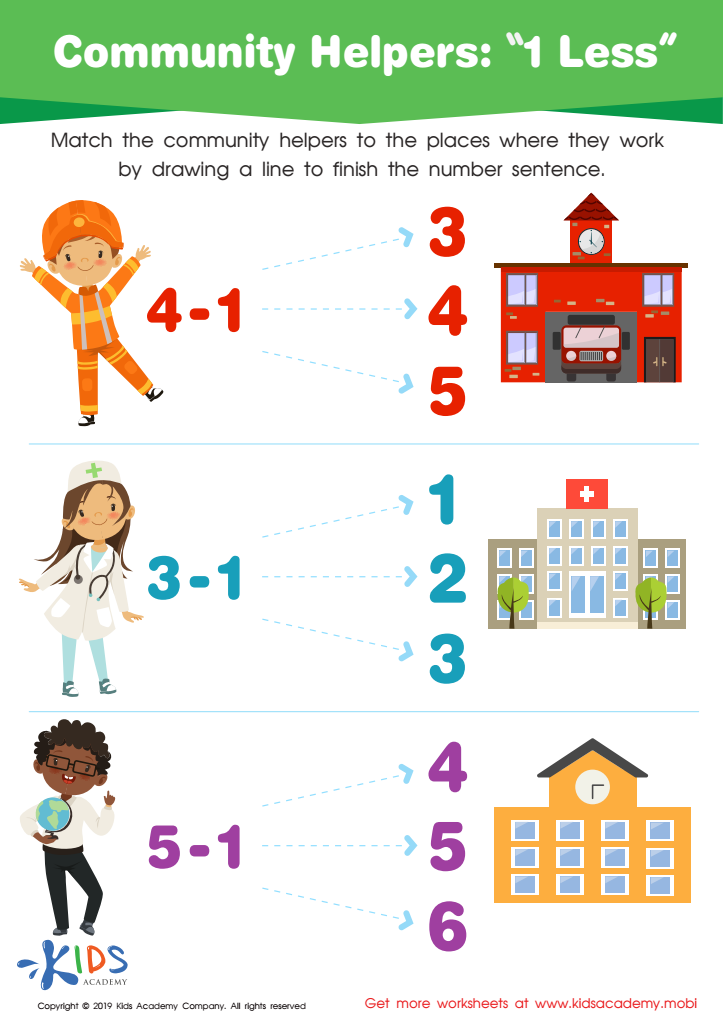
Community Helpers: 1 less Worksheet
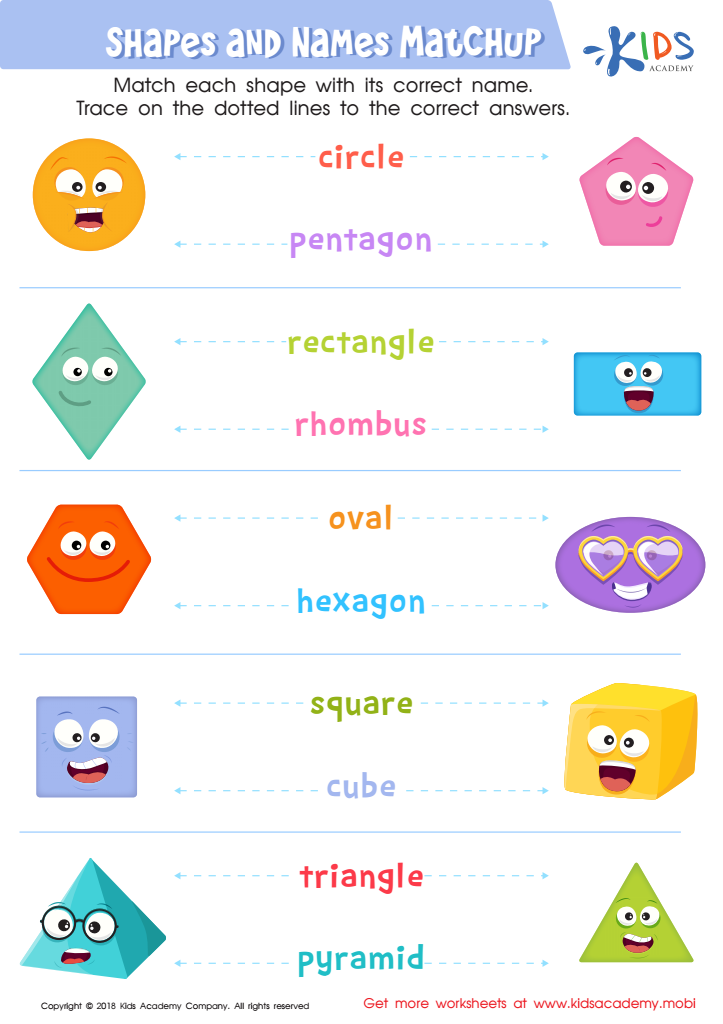
Shapes and Names Matchup Worksheet






Math skills development for young children aged 3-7 is crucial for several reasons, making it essential for parents and teachers to prioritize it. Firstly, foundational math skills lay the groundwork for future academic success. Early math proficiency is a strong predictor of later achievement in school, not just in math, but across various subjects. At this young age, children's brains are highly receptive to learning, making it an ideal time to introduce basic concepts such as counting, shapes, and patterns through engaging and playful activities.
Secondly, early math education promotes cognitive development. It encourages logical thinking, problem-solving, and the ability to make connections between different ideas. These skills are not limited to math; they are fundamental cognitive processes that help children in all areas of learning and everyday life.
Furthermore, developing math skills at a young age fosters a positive attitude towards the subject. Children who are introduced to math through fun and interactive methods are more likely to enjoy it and feel confident in their abilities. This positive experience can reduce math anxiety and build a strong foundation of self-assuredness that carries into later schooling.
Lastly, early math skills are practical and applicable in everyday life. Understanding basic math concepts helps children make sense of the world around them, from measuring ingredients for a recipe to recognizing patterns in nature. Therefore, nurturing math skills in early childhood sets children up for a lifetime of learning and practical competence.








