
Number counting Math Worksheets for Ages 3-7
4 filtered results
Difficulty Level
Grade
Age
-
From - To
Subject
Activity
Standards
Explore our engaging Number Counting Math Worksheets designed specifically for children aged 3-7! These worksheets provide a fun and interactive way for young learners to develop essential counting skills. With bright visuals and age-appropriate activities, kids can easily grasp the foundations of number recognition, counting, and basic math concepts. From counting objects to connecting numbers with their quantities, our worksheets cater to various learning styles and help enhance problem-solving abilities. Perfect for parents and educators, these resources will inspire a love for math while ensuring that every child builds confidence in their counting skills. Start counting your way to success today!
Favorites
With answer key
Interactive
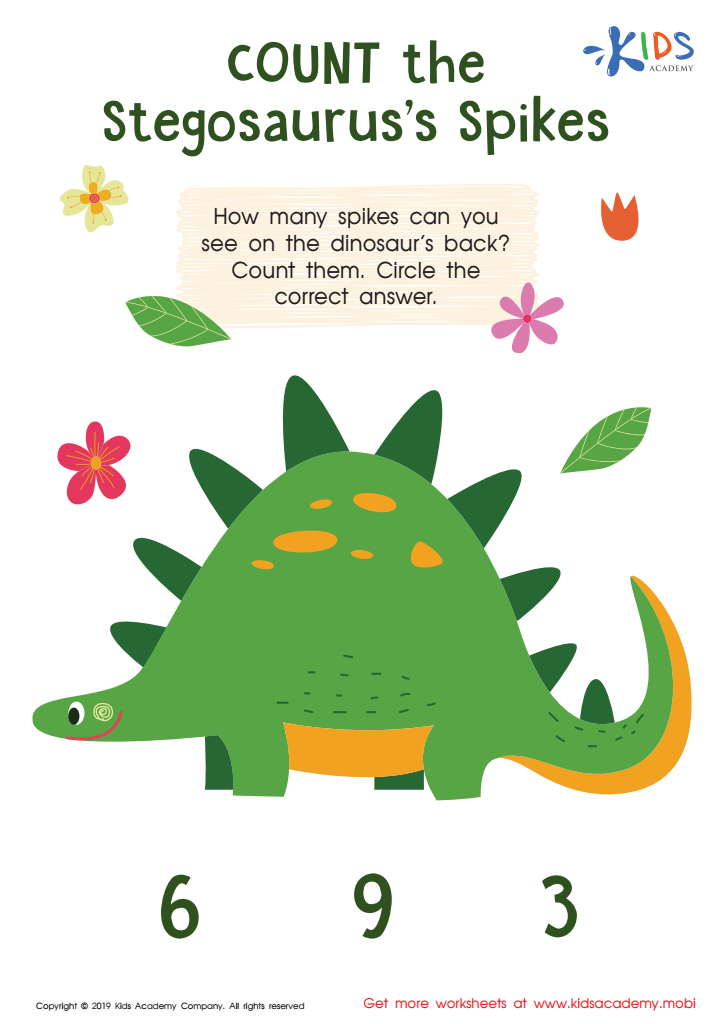
Count the Stegosaurus's Spikes Worksheet
Dinosaurs walked the earth long before humans, meaning no contact was made before they became extinct. Scientists have used research and diggings to find out about these animals, even giving them names. In this worksheet, help your students count the spikes on the stegosaurus and circle the correct answer.
 Assign to My Students
Count the Stegosaurus's Spikes Worksheet
Worksheet
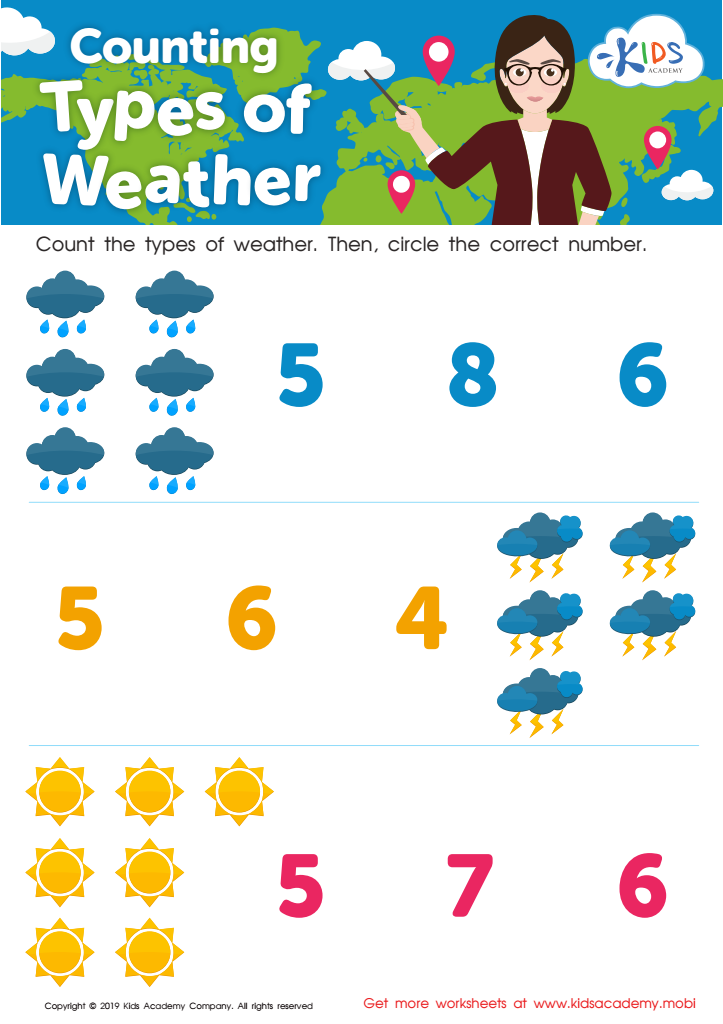
Counting Types of Weather Worksheet
Have your students look outside and tell you the weather today. Get kindergartners thinking by asking them to name different types of weather. Point to each one in the picture and get them to tell you what it is. Then, have them count the types and circle the number.
Counting Types of Weather Worksheet
Worksheet
Join Kids Academy for Free
Who is primarily going to use this learning content?








Number counting is a fundamental skill that lays the groundwork for a child's future learning in mathematics and critical thinking. For children ages 3-7, developing number counting skills is essential because it enhances their cognitive abilities and supports their overall academic development.
Firstly, counting helps children understand the concept of quantity. When they learn to count, they begin to grasp that numbers represent specific amounts, which is crucial for everyday situations, such as sharing and problem-solving.
Secondly, counting builds numerical fluency, enabling children to tackle more complex mathematical concepts later on, such as addition, subtraction, and understanding place value. Early mastery of counting facilitates a smooth transition into formal education.
Moreover, engaging parents and teachers in counting activities fosters a supportive learning environment, making math fun and approachable. This positive reinforcement encourages a lifelong enthusiasm for learning.
Finally, children's numerical skills also impact their social development. Through group counting games and cooperative activities, they cultivate collaboration and communication skills.
In summary, parental and teacher involvement in number counting during ages 3-7 significantly contributes to children's cognitive growth, readiness for advanced mathematics, and social interaction skills, ultimately laying a solid foundation for their educational journey.








