
Practical application Math Worksheets for Ages 3-7
7 filtered results
Difficulty Level
Grade
Age
-
From - To
Subject
Activity
Standards
Discover our engaging Practical Application Math Worksheets designed specifically for children ages 3-7! These worksheets are crafted to help little learners connect mathematical concepts to real-world scenarios, fostering comprehension and problem-solving skills. With fun and interactive activities, children will explore topics such as counting, addition, subtraction, and measurement through relatable everyday examples. Our user-friendly format encourages independent learning while supporting parents and educators in nurturing young mathematicians. Perfect for at-home practice or classroom use, these worksheets make math both enjoyable and practical. Start inspiring your child’s mathematical journey today with our specially designed resources!
Favorites
With answer key
Interactive
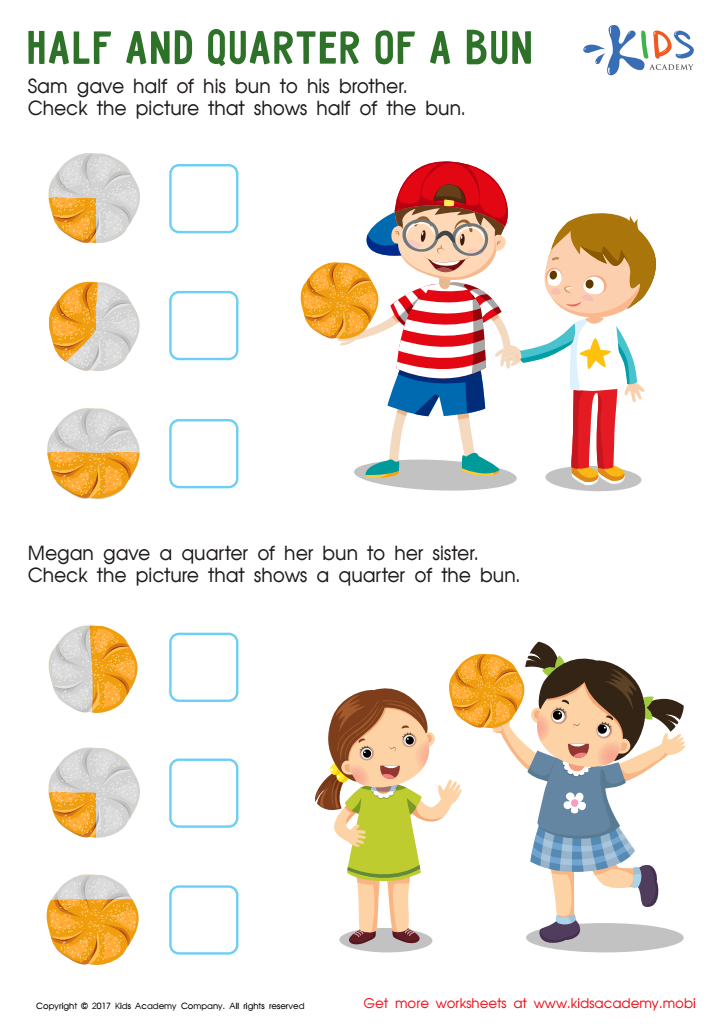
Half and Quarter of a Bun Worksheet
This worksheet introduces Sam, his brother and Megan, her sister, who are sharing buns. Show kids the picture of half and quarter to help them understand. Ask if they know what half and quarter of a shape is before progressing. Help them check the picture showing half and quarter of a bun.
 Assign to My Students
Half and Quarter of a Bun Worksheet
Worksheet
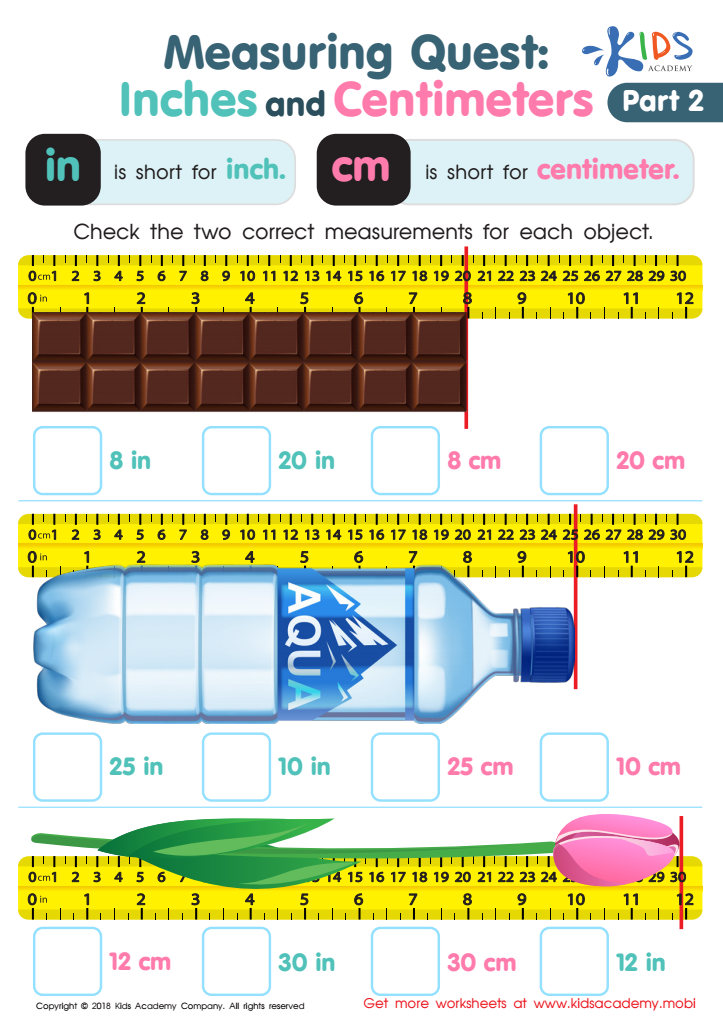
Measuring Quest: Inches and Centimeters - Part 2 Worksheet
This worksheet teaches kids how inches and centimeters measure up. It features rulers with centimeter measurements at the top, and inches at the bottom. Kids must choose the correct measurement for each object among the options provided.
Measuring Quest: Inches and Centimeters - Part 2 Worksheet
Worksheet
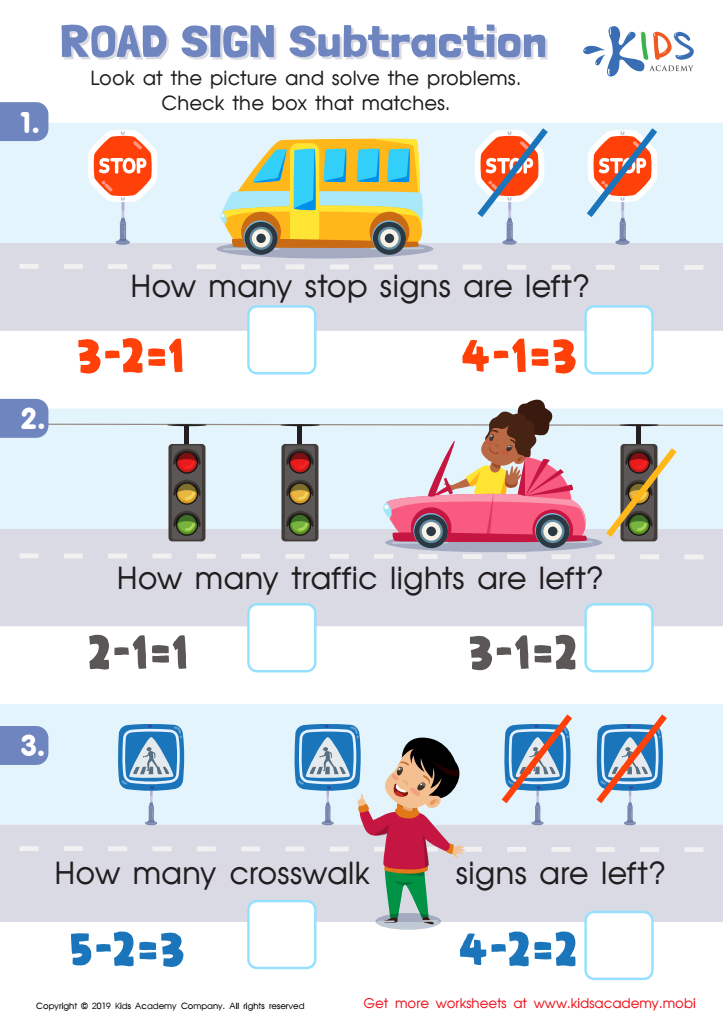
Road Sign Subtraction Worksheet
Help your kindergartners tackle addition and subtraction with fun tips. Show them the picture, have them solve the problems, then help them check the box that matches. With practice and guidance, they'll soon be ready for more complex math!
Road Sign Subtraction Worksheet
Worksheet
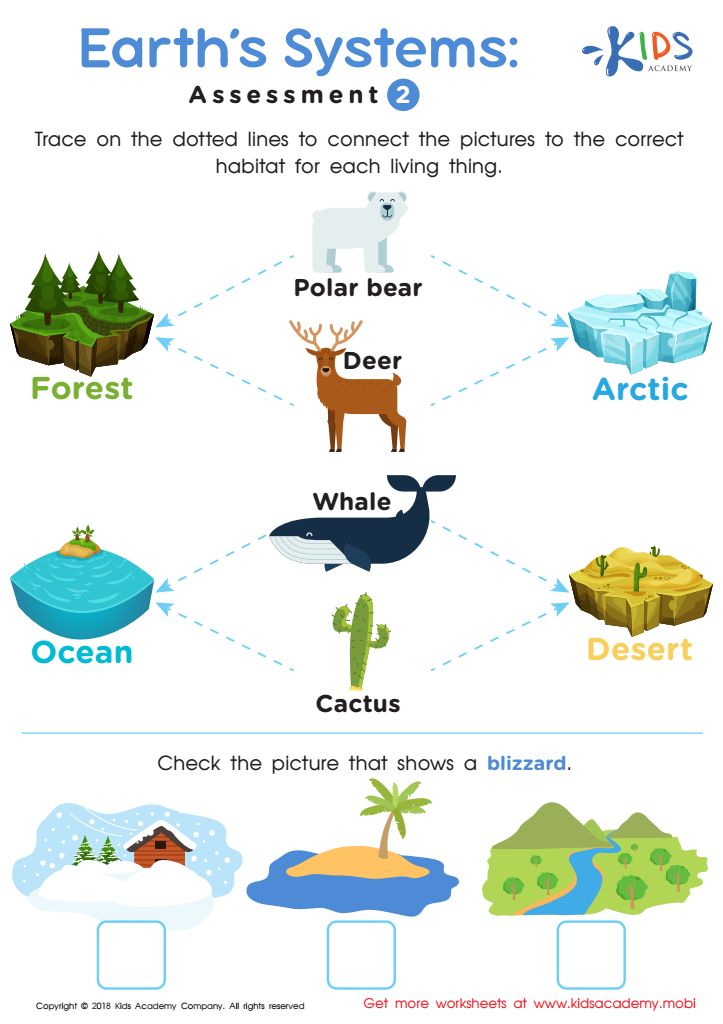
Earth's Systems: Assessment 2
Kids will love this free printable worksheet to assess their knowledge of habitats and the living creatures found in them. They'll trace the dotted lines to connect the pictures of plants and animals to their respective habitat and identify the type of weather depicted. No, polar bears don't live in the ocean, but they do like to swim in icy waters! With this fun activity, your little learner will master earth science basics.
Earth's Systems: Assessment 2
Worksheet
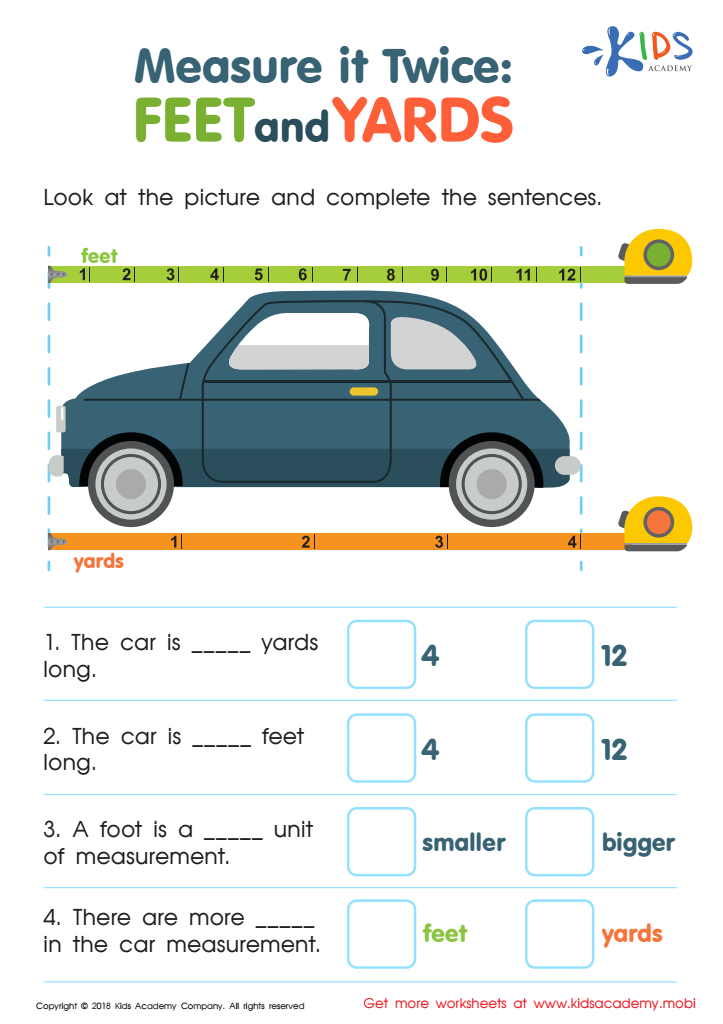
Measure It Twice: Feet and Yards Worksheet
A car is pictured with a metric ruler in feet at the top and a yard ruler at the bottom. Get your child to look at the picture and complete sentences about it; for example, how many yards long is the car? Is a foot a bigger or smaller unit of measurement? It'll teach them that 1 yard is equal to 3 feet.
Measure It Twice: Feet and Yards Worksheet
Worksheet
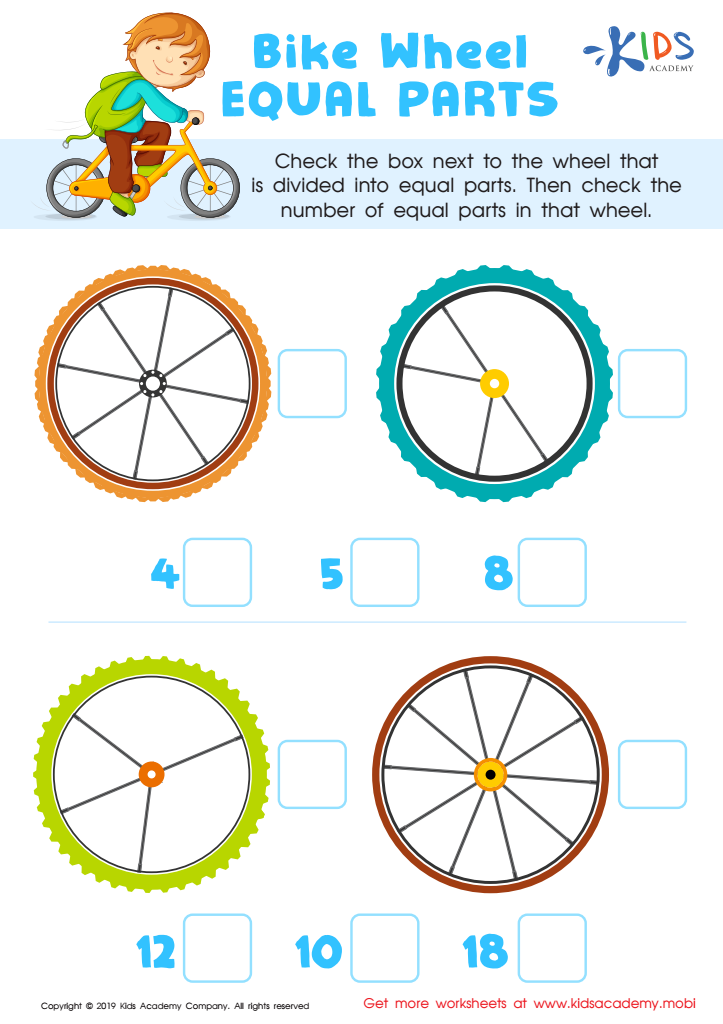
Bike Wheel Equal Parts Worksheet
Help your kids have fun while they learn! Ask them to identify the object in the picture with four wheels. Guide them to count the spokes, then check the box on the wheel with equal parts. Lastly, check how many equal parts the wheel is divided into.
Bike Wheel Equal Parts Worksheet
Worksheet
Join Kids Academy for Free
Who is primarily going to use this learning content?






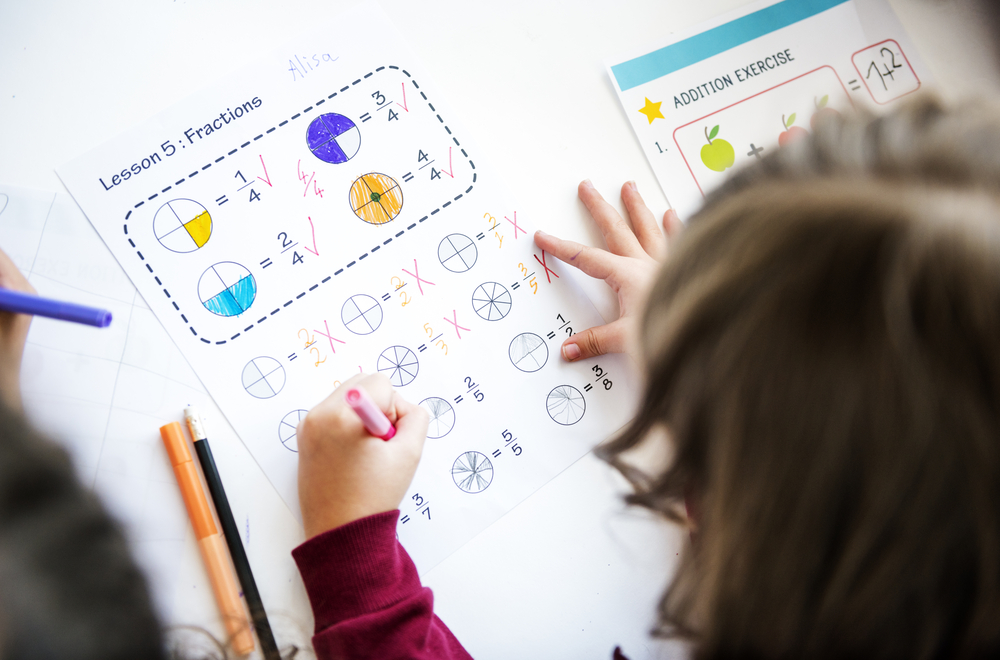
Practical application of math for children ages 3-7 is crucial in fostering a strong mathematical foundation and promoting everyday problem-solving skills. During these formative years, children are naturally curious and eager to explore concepts through hands-on experiences. Incorporating math into practical situations, such as counting objects, measuring ingredients for a recipe, or organizing toys, helps reinforce mathematical concepts in a meaningful way.
When parents and teachers engage children in real-life math applications, they make learning relevant and enjoyable. This approach not only strengthens number sense and basic arithmetic skills but also encourages critical thinking and cognitive development. For instance, sorting and classifying objects provides an early introduction to patterns, while simple addition and subtraction tasks in play can make abstract concepts tangible.
Moreover, practical math nurtures essential skills such as communication, collaboration, and perseverance. Children learn to express their thoughts, work with others, and tackle challenges. By embedding math into daily life, parents and teachers instill a sense of confidence and curiosity in young learners, laying the groundwork for positive attitudes towards math as they advance in their education. Ultimately, practical application makes math accessible, relevant, and fun, fostering lifelong math skills.








