Recognize shapes Math Worksheets for Ages 3-7
9 filtered results
-
From - To
Unlock the world of shapes with our engaging "Recognize Shapes Math Worksheets" designed specifically for children aged 3-7! These colorful and interactive worksheets help young learners identify, understand, and classify various shapes in a fun and educational way. From circles to triangles and squares, each activity encourages critical thinking and enhances visual recognition skills. Perfect for preschool and early grade classrooms, our worksheets are easy to print and feature captivating illustrations that motivate kids to explore and learn. Foster a love for math and shape recognition in your child today, setting a solid foundation for their future learning adventures!
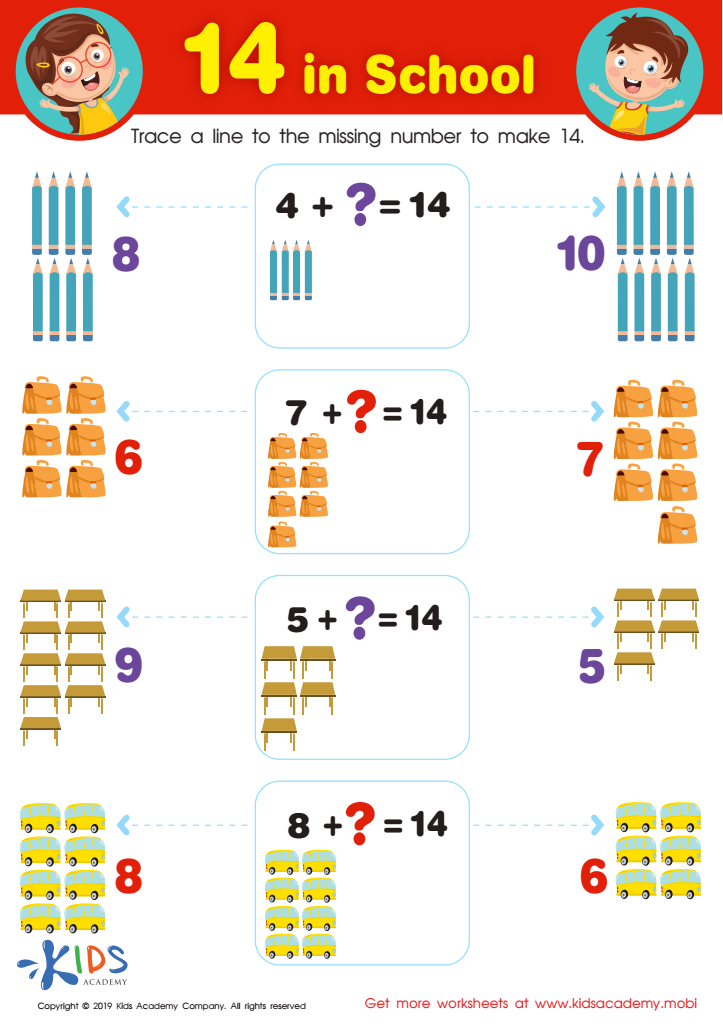
14 in School Worksheet
 Assign to My Students








Recognizing shapes is a foundational skill in early mathematics that significantly contributes to a child's cognitive development. For children aged 3 to 7, the ability to identify and understand shapes is crucial as it lays the groundwork for more complex mathematical concepts. Parents and teachers should care about this because shape recognition enhances visual perception and spatial awareness, both necessary for problem-solving and critical thinking.
Additionally, recognizing shapes helps children relate to the world around them. Through hands-on activities, they learn to categorize and differentiate objects, which improves their observation skills and promotes curiosity. Shape recognition also fosters creativity; when children understand shapes, they can engage in art and design activities more effectively, allowing for self-expression and imaginative play.
Moreover, embedding shape recognition into daily routines — through games, storybooks, and everyday objects — can make learning fun and interactive. Recognizing shapes is not merely an academic exercise; it builds confidence in mathematical abilities and sets the stage for future learning in geometry and other areas of math. Thus, nurturing this skill opens doors to lifelong learning and equips children with the tools they need for success in all areas of life.








