Reinforce math concepts Math Worksheets for Ages 3-7
3 filtered results
-
From - To
Enhance your child's mathematical understanding with our specially designed Math Worksheets for ages 3-7. These engaging printables effectively reinforce essential math concepts through fun and interactive activities. Tailored to fit young learners' needs, our worksheets cover counting, shape recognition, basic addition and subtraction, patterns, and more. Each worksheet aims to build a strong foundation for future math success. Perfect for preschool and early elementary students, our resources make learning math enjoyable and rewarding. Foster early math skills and boost your child's confidence with these expertly crafted math worksheets. Discover the path to a bright mathematical future at Kids Academy!
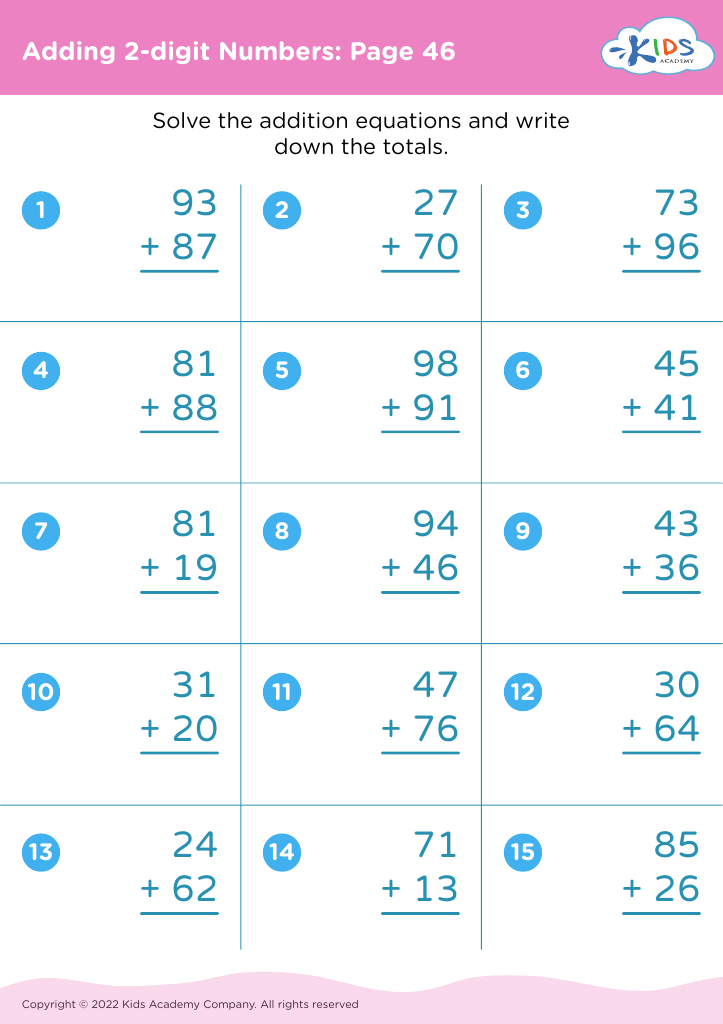
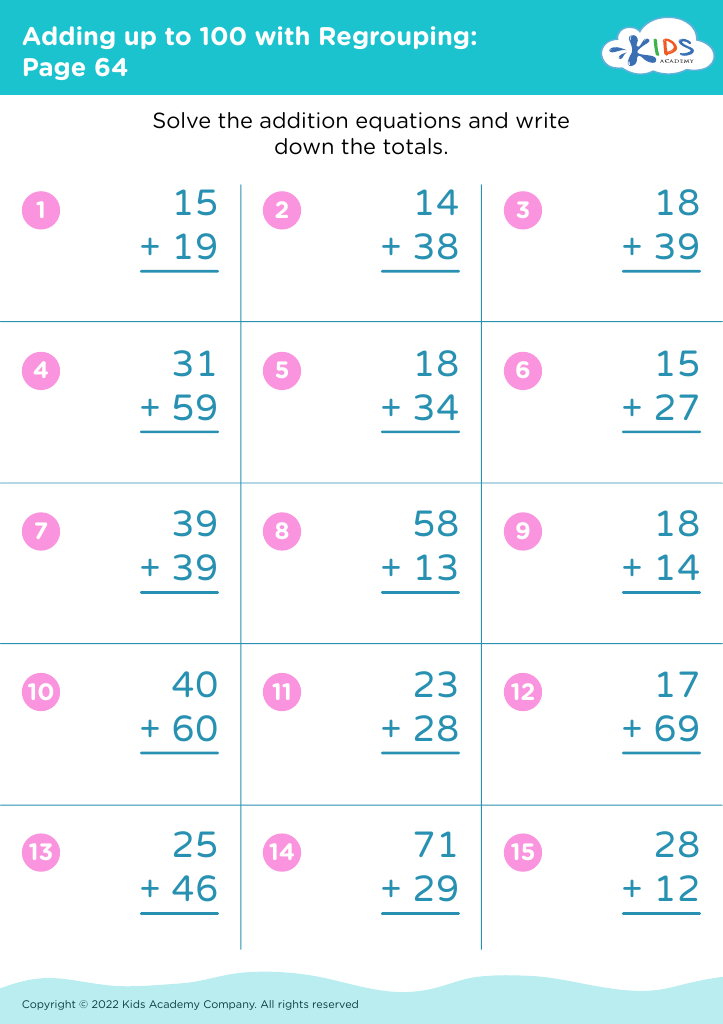
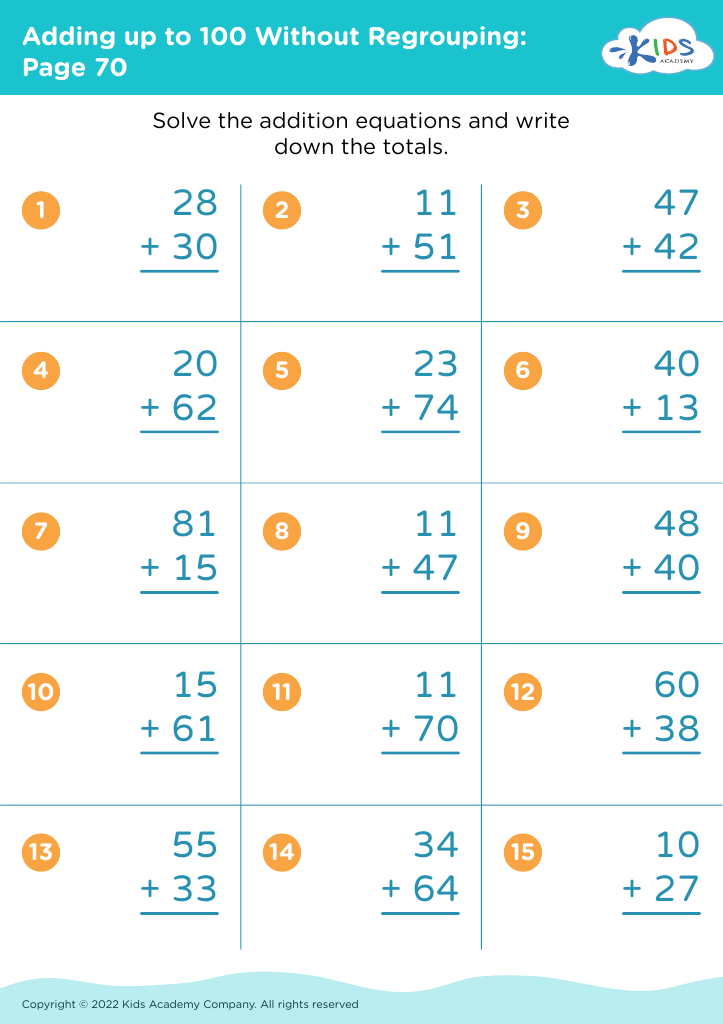








Reinforcing math concepts in children aged 3-7 is crucial for building a robust foundation that supports their academic growth and everyday life skills. At this age, children's brains are highly plastic and primed for learning; introducing mathematical concepts early capitalizes on their natural curiosity and capacity for absorbing new information.
Math teaches logical thinking, problem-solving, and critical reasoning—skills essential for academic success and important in daily decision-making. Early exposure to math concepts, such as counting, recognizing shapes, and understanding basic addition and subtraction, paves the way for more complex mathematical learning in later years. Furthermore, children who grasp these fundamental concepts early commonly exhibit more confidence and less anxiety toward the subject as they advance in school.
Integrating math into daily routines makes learning engaging and fun. Activities like sorting toys by color, measuring ingredients while cooking, or playing counting games can seamlessly incorporate math into children's lives. This hands-on, contextual learning prepares them for formal education by making abstract ideas more concrete.
Investing in early math education is not just about academic proficiency; it fosters a lifelong love for learning and equips children with skills they'll use throughout their lives. Therefore, both parents and teachers play a pivotal role in nurturing this growth, ensuring children have the tools and confidence to succeed.








