Solving word problems Math Worksheets for Ages 3-7
5 filtered results
-
From - To
Unlock your child's potential with our engaging "Solving Word Problems" Math Worksheets designed for ages 3-7! These interactive worksheets, available at Kids Academy, help young learners develop critical thinking and problem-solving skills through fun and relatable scenarios. Each activity encourages kids to apply basic math concepts while fostering literacy by reading and interpreting word problems. Perfect for at-home practice or classroom use, our worksheets offer step-by-step guidance and cute illustrations to keep children motivated. Enhance your child's analytical skills and confidence in math today—explore our diverse range of worksheets tailored specifically for early learners!
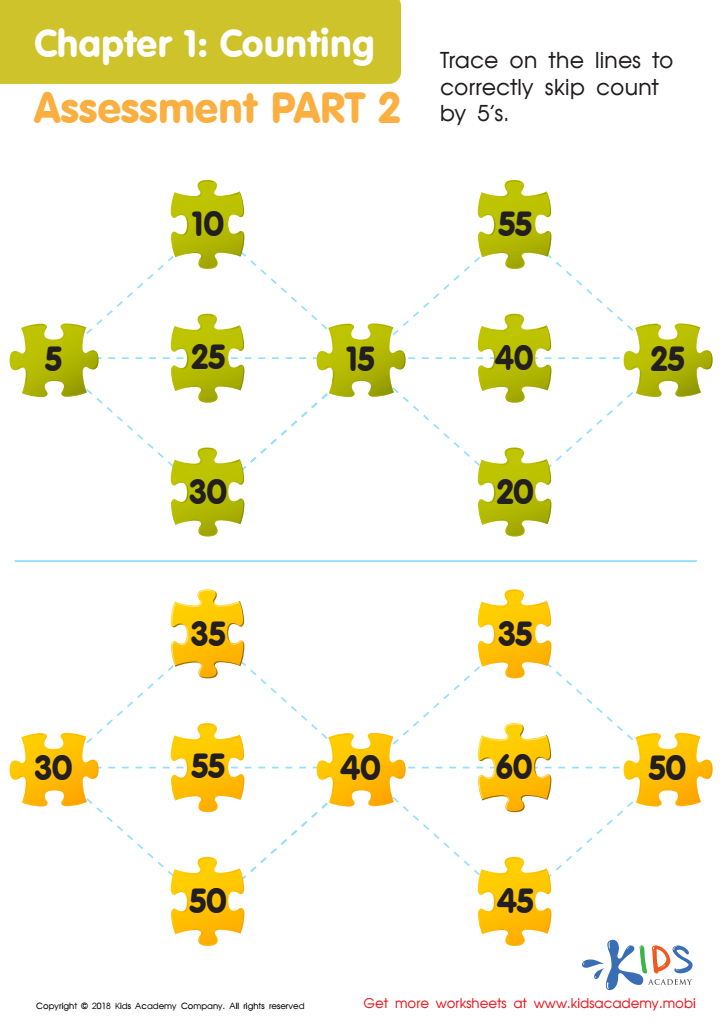
Counting: Assessment 2 Worksheet
 Assign to My Students
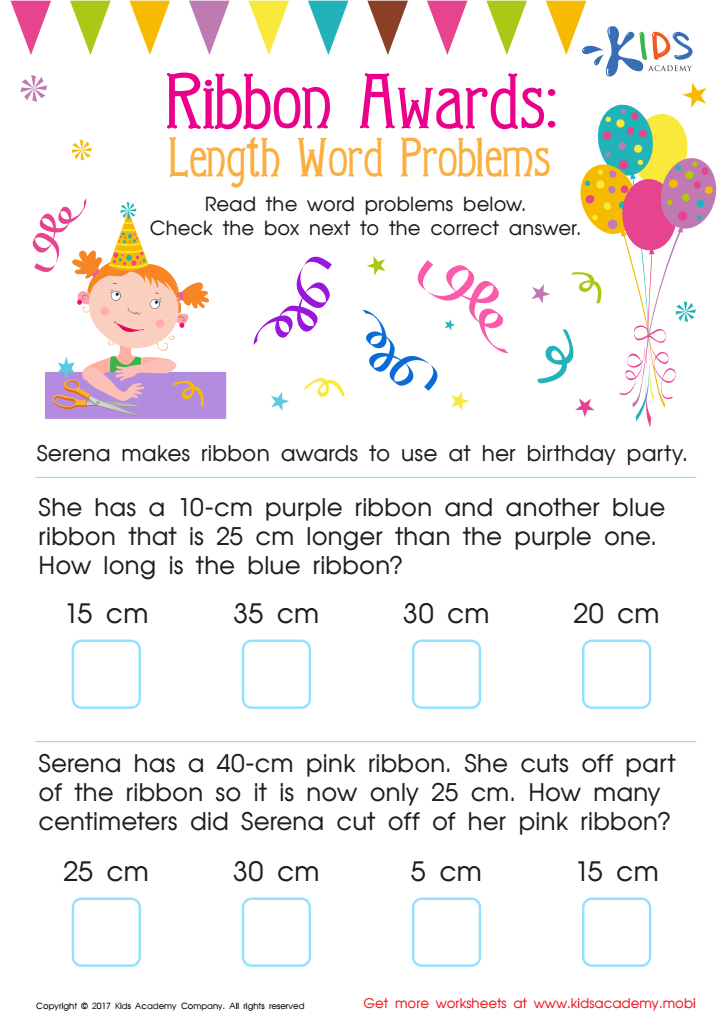
Length Word Problems Worksheet
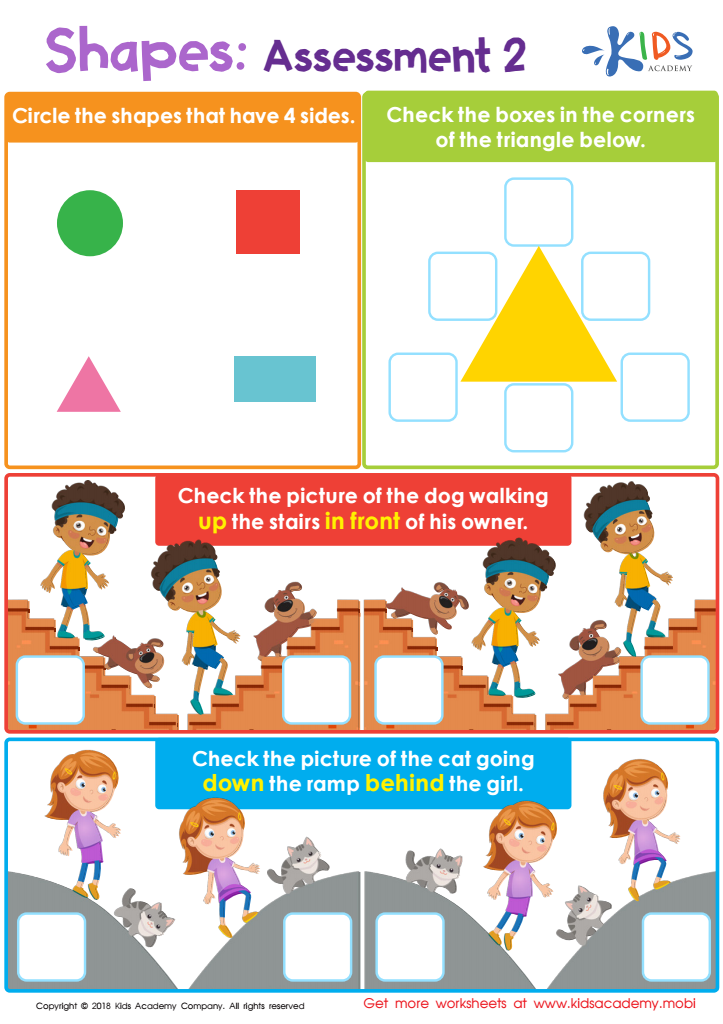
Shapes: Assessment 2 Worksheet
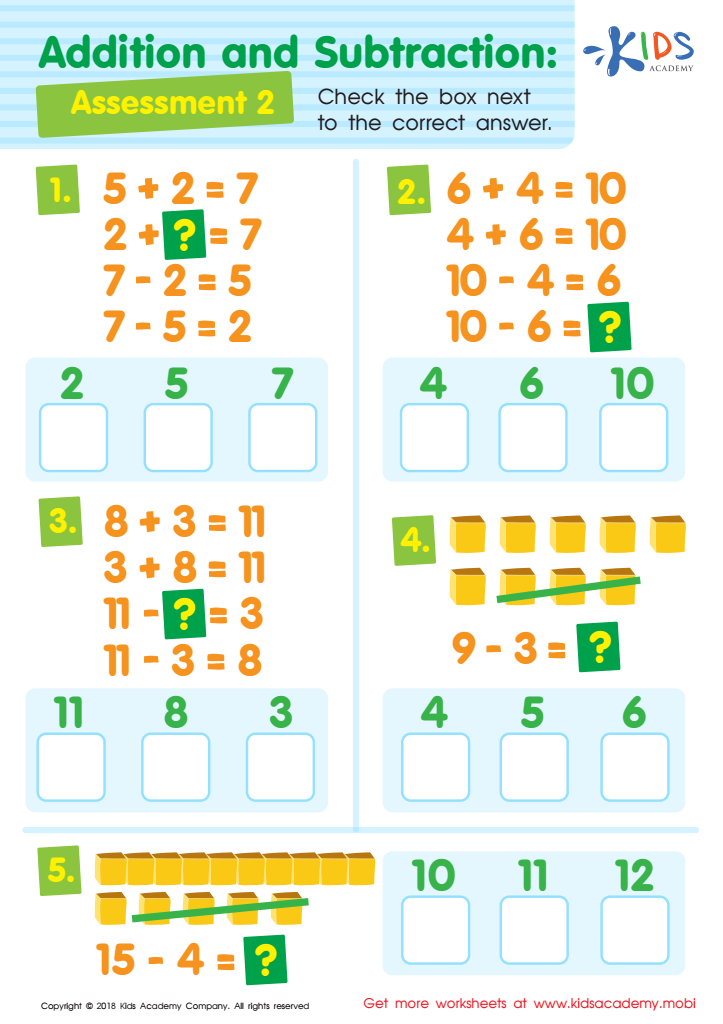
Addition and Subtraction Assessment 2 Worksheet








Solving word problems is crucial for children ages 3-7, and both parents and teachers should prioritize this skill for several reasons. First, word problems enhance critical thinking and cognitive development. At this age, children start to connect mathematical concepts with real-life scenarios, enabling them to understand the practical applications of math. This builds a foundation for problem-solving skills that will benefit them throughout their academic journey.
Additionally, engaging with word problems promotes language skills. Children learn to interpret phrases and sentences to decode what is being asked mathematically. This dual focus on math and literacy aids in developing communication skills and expanding vocabulary.
Moreover, addressing word problems nurtures emotional intelligence. Students often encounter challenges in finding solutions, and navigating these hurdles helps them build resilience and persistence. When parents and teachers encourage discussions around word problems, they foster a supportive environment where children can learn from mistakes and gain confidence.
In summary, solving word problems is vital as it promotes critical thinking, enhances language skills, and supports emotional resilience. Therefore, parents and teachers should embed word problems into learning activities to aid holistic development in young children.








