
Sorting abilities Math Worksheets for Ages 3-7
3 filtered results
Difficulty Level
Grade
Age
-
From - To
Subject
Activity
Standards
Discover our engaging Sorting Abilities Math Worksheets designed specifically for children ages 3-7. These fun, interactive worksheets help kids develop critical early math skills by focusing on sorting objects by various attributes such as size, color, and shape. Our printable resources make learning enjoyable while fostering problem-solving abilities and logical thinking. Perfect for both classroom and at-home use, our sorting worksheets support young learners in mastering foundational concepts essential for future math success. Download now and watch your child’s confidence and enthusiasm for math grow with these carefully crafted educational activities.
Favorites
With answer key
Interactive
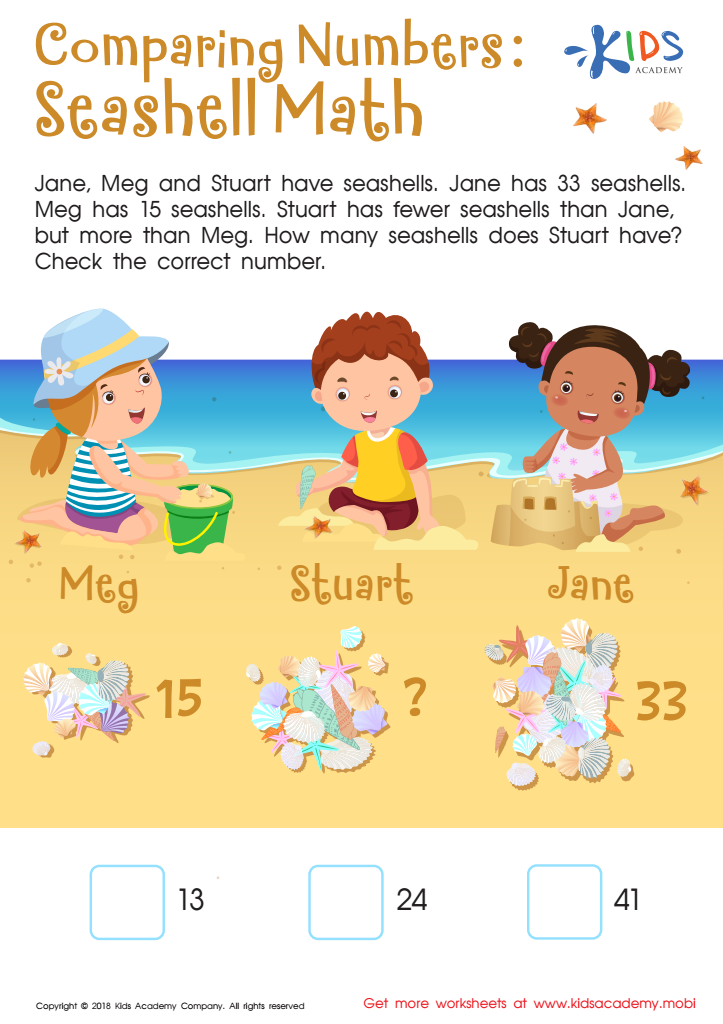
Seashell Collectors Worksheet
Bring beach fun into math with this printable worksheet! Carefully read the text with your child and figure out how many seashells Stuart has - more than Meg's, less than Jane's. Forget boring indoor math; your child won't want to miss out on this fun activity!
 Assign to My Students
Seashell Collectors Worksheet
Worksheet
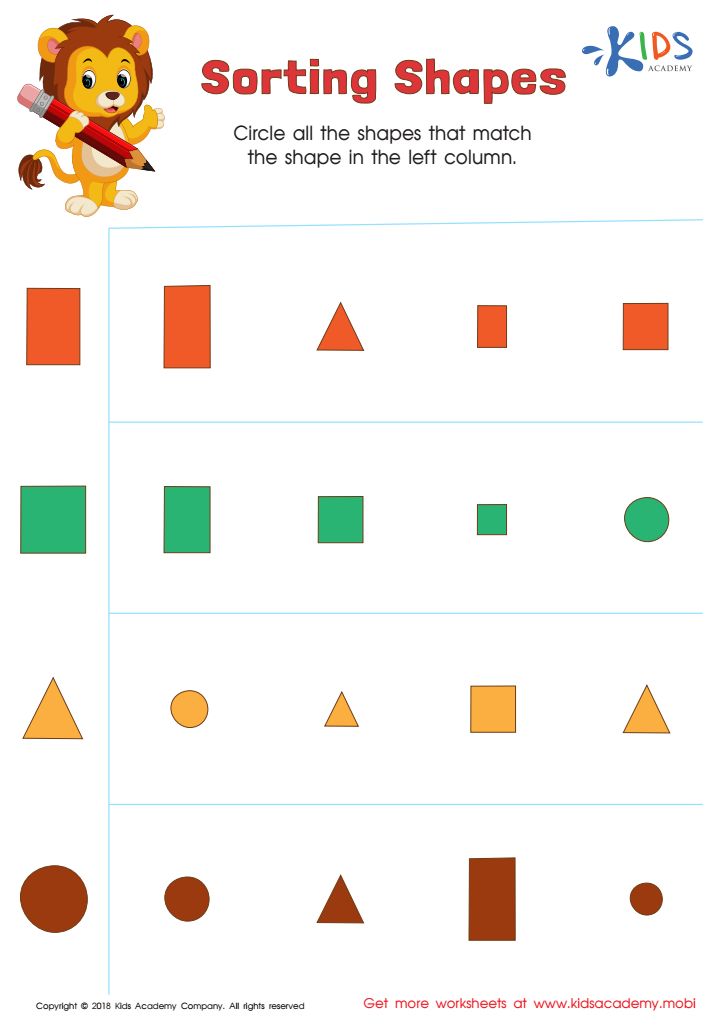
Sorting Shapes - Part 2 Worksheet
Tired of dull worksheets? Look no further than Kids Academy's colorful shape-sorting worksheet! It's perfect for challenging your toddler's problem-solving skills. Print the free PDF page and let your child practice the basics of geometry. Have them work down the left column, circling the shapes on the right that match. It's a great way to form a strong foundation in early learning.
Sorting Shapes - Part 2 Worksheet
Worksheet
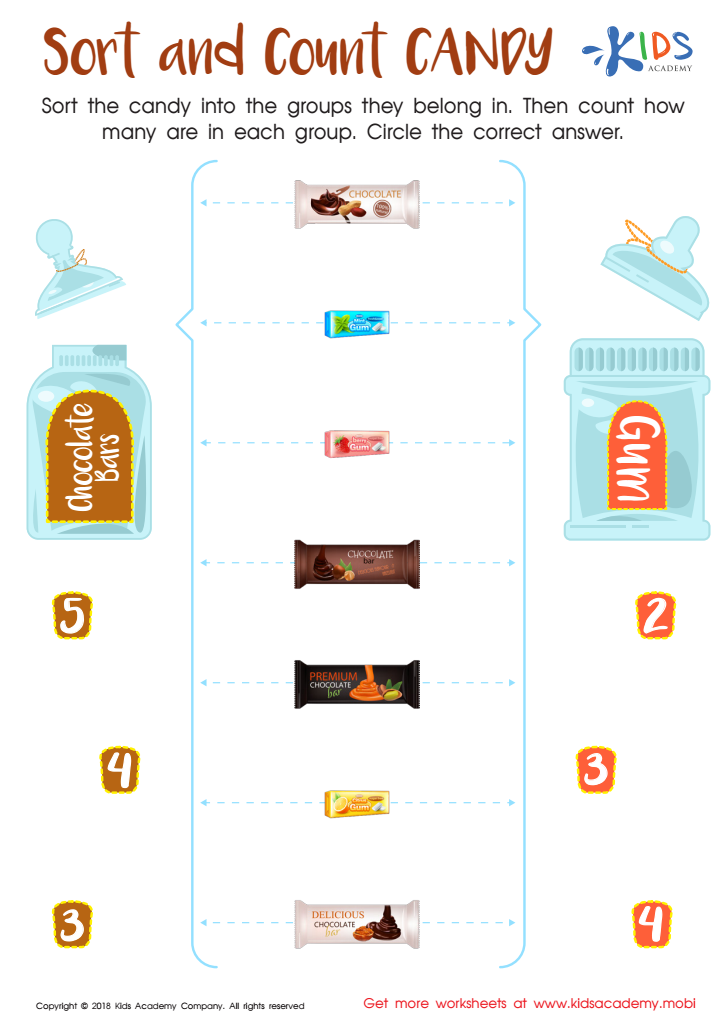
Sort and Count Candy Worksheet
Sort chocolate and candy with your kids! Help them use recognizable items and pictures to sort, practice counting with one-to-one representation, and develop their fine motor skills with the traceable lines. Download this free worksheet to get started. Yum!
Sort and Count Candy Worksheet
Worksheet
Join Kids Academy for Free
Who is primarily going to use this learning content?







Sorting abilities in young children, ages 3 to 7, play a crucial role in their cognitive and mathematical development. When parents and teachers emphasize sorting activities, they're laying a strong foundation for later skills in math, science, and even language. Sorting teaches children how to categorize items based on different attributes like color, size, shape, or type. This helps them understand patterns, an essential aspect of recognizing relationships and making predictions.
For instance, when sorting objects by color, children start to classify and differentiate, honing their observational skills. These activities inherently boost critical thinking as children determine which items belong together and which don’t. It encourages logical reasoning and decision-making, crucial skills for problem-solving in any academic discipline.
Moreover, sorting reinforces vocabulary and language development. Terms like "same," "different," "group," and "category" become part of a child’s lexicon, enabling them to articulate their thoughts more clearly and interact meaningfully with peers and adults.
The physical act of sorting also supports fine motor skills and hand-eye coordination. Picking up, grasping, and placing objects boosts their dexterity and precision.
In summary, nurturing sorting abilities in early childhood equips children with foundational cognitive and motor skills, making it an essential area of focus for parents and teachers alike.








