Understanding adjectives Math Worksheets for Ages 3-7
6 filtered results
-
From - To
Discover our engaging "Understanding Adjectives Math Worksheets" designed for children ages 3 to 7! These interactive worksheets help young learners grasp the concept of adjectives while enhancing their math skills. With fun exercises and vibrant illustrations, kids will enjoy identifying and comparing different characteristics, such as size, shape, and color. Our thoughtfully crafted activities promote vocabulary development and critical thinking, making learning both effective and enjoyable. Perfect for classroom settings or at-home practice, these worksheets foster essential skills that lay the foundation for future academic success. Introduce your child to the exciting world of adjectives in a mathematics context today!
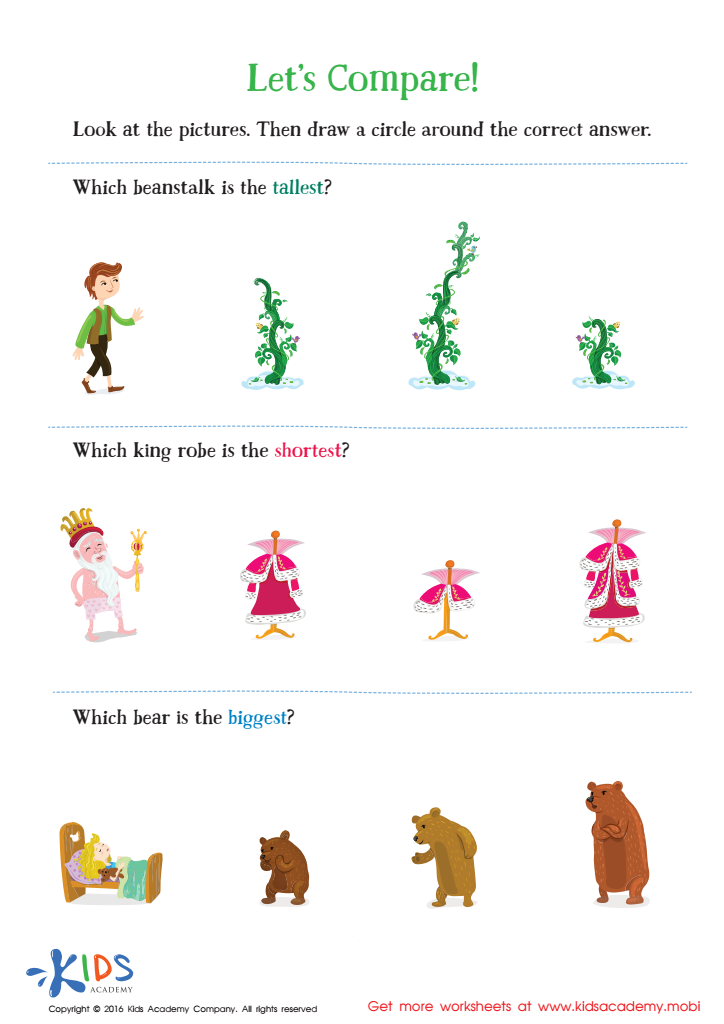
Fairy Tale Worksheet: Let's Compare
 Assign to My Students







Understanding adjectives is a crucial aspect of early childhood education, particularly for children aged 3-7. At this age, children are developing their language skills, and incorporating adjectives into their vocabulary enhances their ability to describe the world around them. For parents and teachers, teaching adjectives fosters better communication by allowing children to express their thoughts and emotions more effectively.
Adjectives help define and modify nouns, which in turn enriches storytelling and creative expression. As children learn to use adjectives, they not only expand their vocabulary but also gain critical thinking skills. For example, when describing a “big red ball,” children begin to differentiate between sizes, colors, and characteristics, strengthening their observational skills.
Moreover, understanding adjectives can enhance math skills. Contextual math problems often involve descriptive words which are essential for grasping concepts like "more," "less," or "fewer." This foundational language skill bridges literacy and numeracy, supporting cognitive development across multiple subjects.
In summary, parents and teachers should prioritize teaching adjectives because they are essential for communication, creativity, and cognitive development, providing children with the necessary tools for academic success and effective interpersonal interactions throughout their lives.








