Understanding equations Math Worksheets for Ages 3-7
7 filtered results
-
From - To
Unlock a world of mathematical magic with our "Understanding Equations Math Worksheets" designed especially for ages 3-7 at Kids Academy! Boost your little ones' problem-solving abilities by introducing them to foundational concepts in a fun and engaging way. Our expertly crafted worksheets incorporate colorful visuals and relatable scenarios to help young minds grasp the basics of equations effortlessly. Each worksheet is tailored to foster critical thinking and build confidence in early math skills. Ideal for both homeschool settings and classroom environments, make learning equations a delightful adventure for your budding mathematicians today!
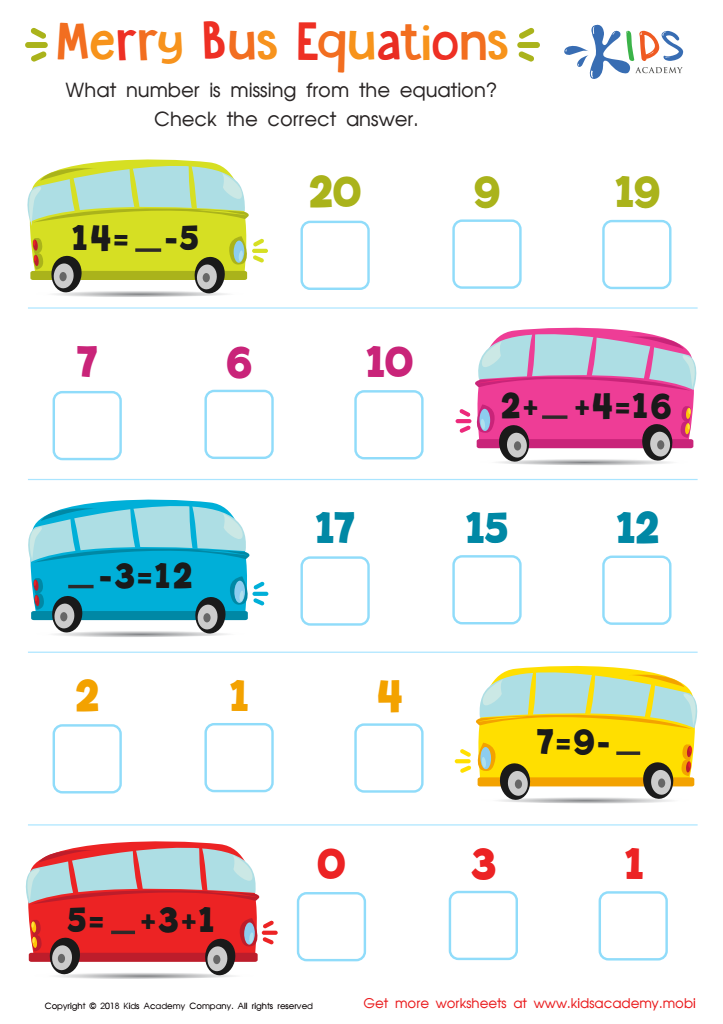
Merry Bus Equations Worksheet
 Assign to My Students
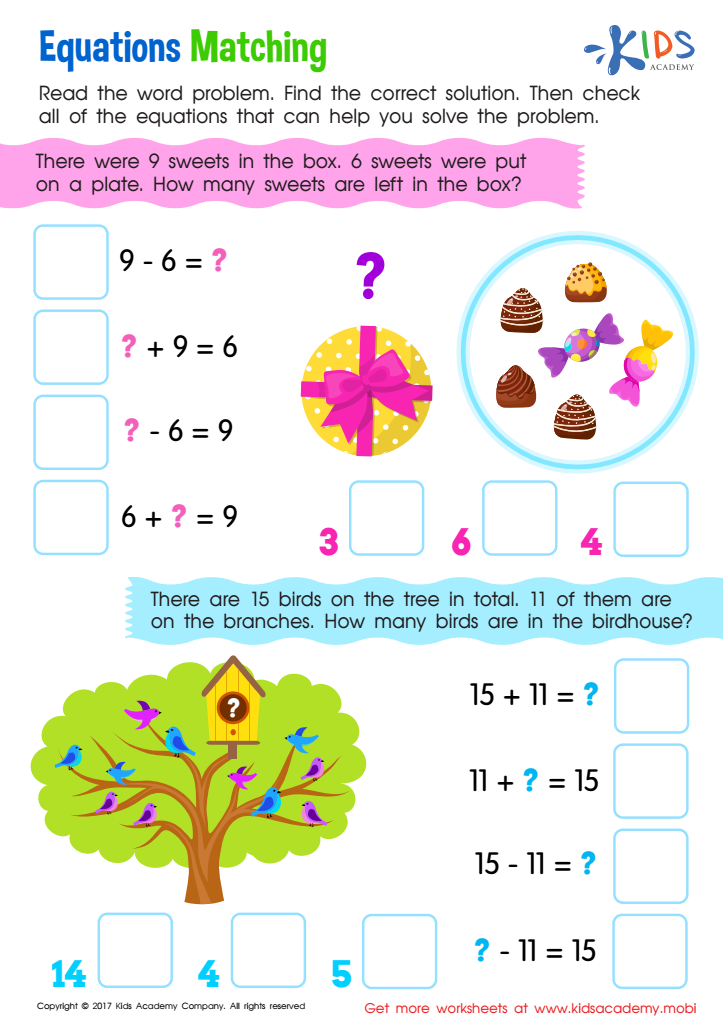
Equations Matching Word Problems Worksheet
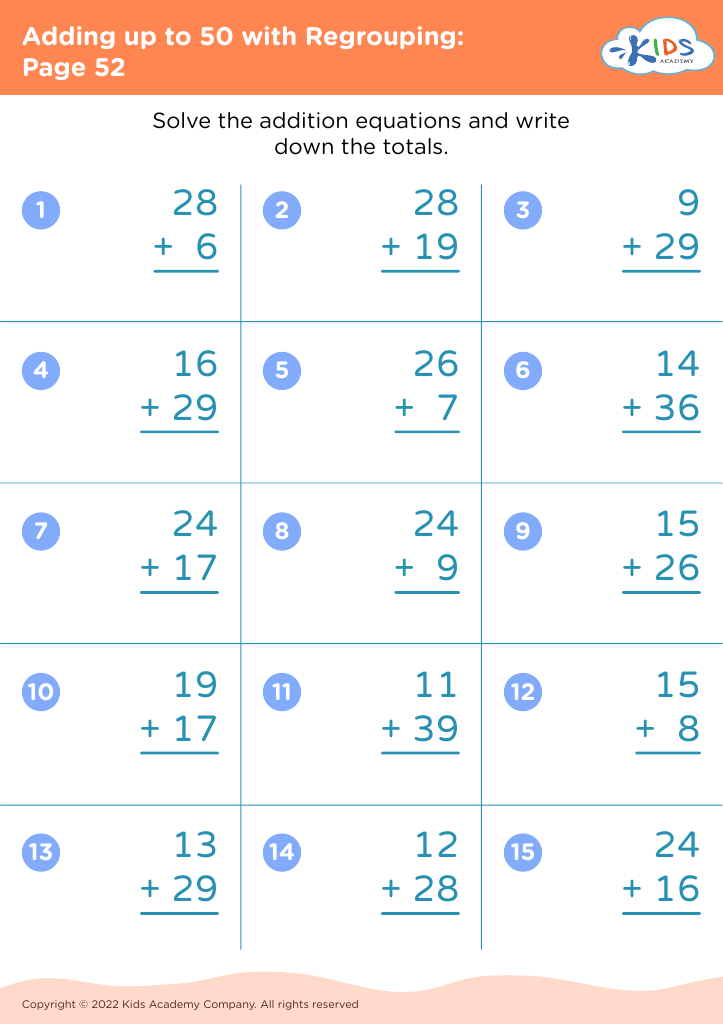
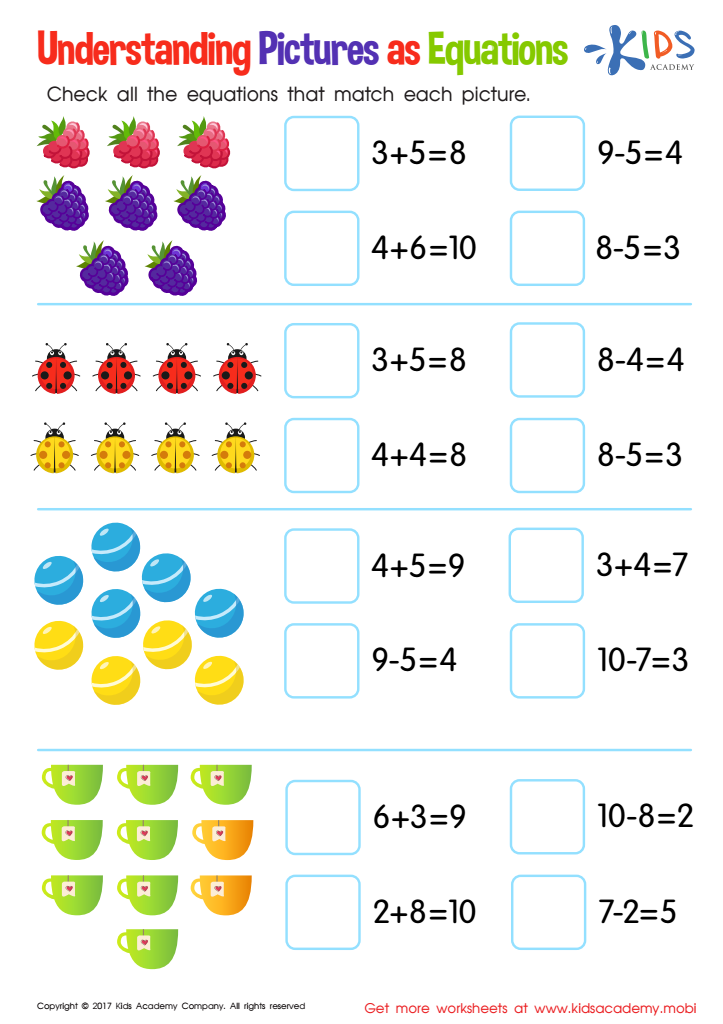
Understanding Pictures as Equations Worksheet
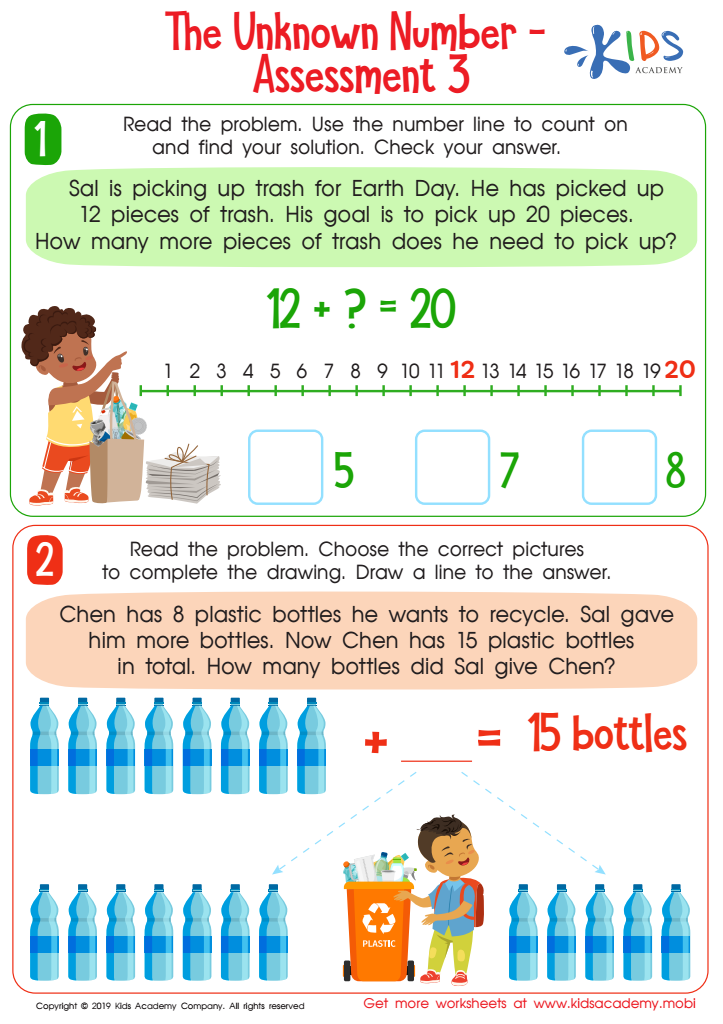
The Unknown Number - Assessment 3 Worksheet








Introducing young children, ages 3-7, to basic math concepts, including the foundations of equations, is crucial for several reasons. Firstly, early exposure fosters a positive attitude towards math. Children who engage with math early on often develop confidence and a willingness to tackle more complex problems later in life. When parents and teachers present math in a fun and relatable manner, it demystifies the subject, turning it into an enjoyable part of learning rather than a daunting challenge.
Secondly, understanding basic mathematical equations enhances logical thinking and problem-solving skills. These skills are not only crucial in math but are equally valuable in everyday decision-making and understanding the world. Early math experiences give children a framework to identify patterns, reason logically, and think critically—skills that are transferrable to other subjects and life situations.
Equations at this stage might simply be understanding that groups of objects can be combined (addition) or separated (subtraction) to show fundamental principles. Additionally, it reinforces attention to detail and the ability to follow steps to solve problems—important traits for academic success.
Overall, parents and teachers should understand that early math education lays the groundwork for educational achievement, developing both cognitive and socio-emotional skills, and setting the stage for a lifelong positive relationship with learning and numbers.








