Understanding habitats Math Worksheets for Ages 3-7
3 filtered results
-
From - To
Nurture young minds with our "Understanding Habitats Math Worksheets for Ages 3-7." These engaging worksheets blend foundational math skills with the exploration of different animal habitats. Perfect for curious early learners, our worksheets cover counting, patterns, shapes, and basic arithmetic through the lens of nature. Kids will enjoy colorful illustrations and diverse activities that reinforce both math and scientific understanding. Support your child's learning journey by introducing them to the fascinating world of habitats while building essential math skills in a fun, interactive way. Discover the perfect blend of education and enjoyment with Kids Academy's resources!
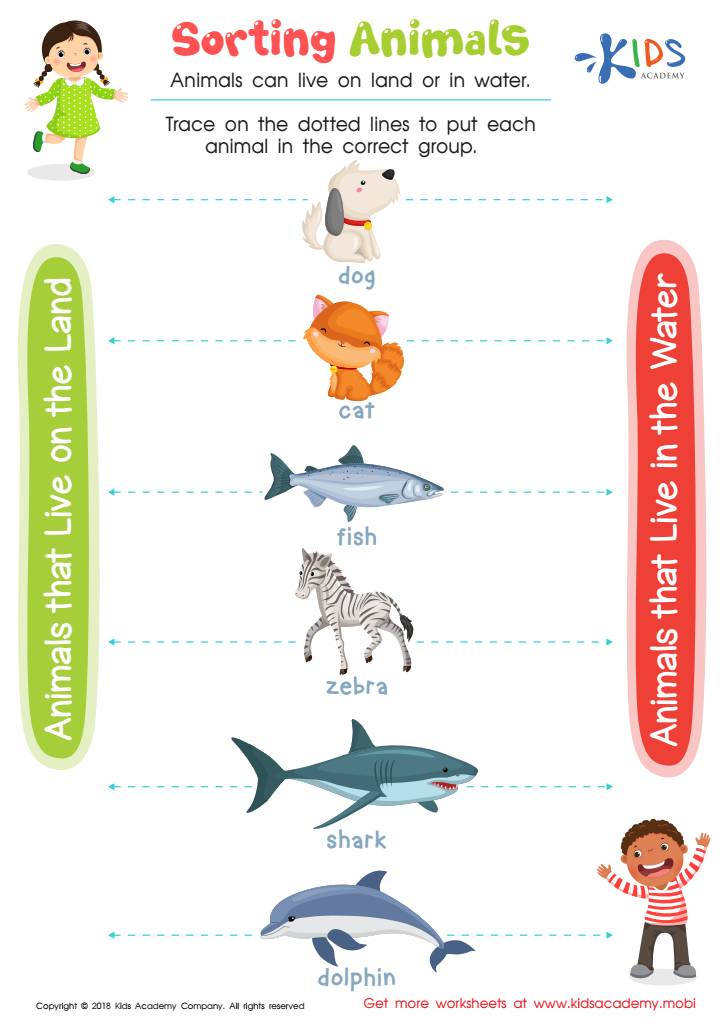
Sorting Animals Worksheet
 Assign to My Students
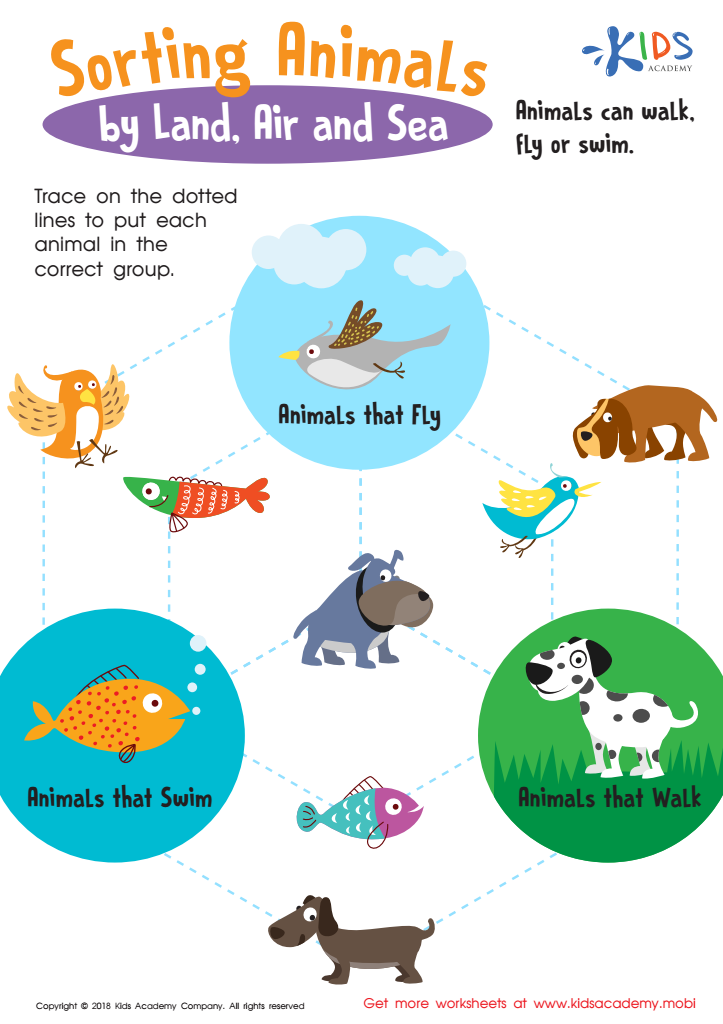
Sorting Animals by Land, Air and Sea Worksheet








Understanding habitats is essential for children ages 3-7 as it lays the foundation for various educational skills across subjects, particularly math. At this crucial developmental stage, children are naturally curious about the world around them. Integrating habitat concepts helps in making math relatable and engaging.
For instance, sorting animals into different habitats introduces young learners to categorization, a fundamental math skill. Identifying which animals belong in forests, oceans, or deserts links directly to early science and math concepts of grouping and classifying. Counting the number of animals in each habitat can help children practice basic counting skills and understand number sense.
Furthermore, understanding sizes, shapes, and measurements within the context of habitats can reinforce spatial awareness and geometry skills. Comparing the size of animals within various habitats can aid in grasping comparative and superlative concepts – bigger, smaller, taller, shorter – essential for early math development.
Additionally, introducing children to the variety of ways different creatures live fosters empathy and global awareness, enriching their social skills. This interdisciplinary approach ensures children are not only being prepared academically but also being developed as well-rounded individuals. Parents and teachers focusing on habitats create an environment that encourages a child's natural curiosity, supports their academic growth, and instills a love for learning.








