Understanding number relationships Math Worksheets for Ages 3-7
9 filtered results
-
From - To
Unlock the world of mathematics for young learners with our "Understanding Number Relationships" math worksheets, designed specifically for ages 3-7. These engaging and interactive activities help children grasp essential mathematical concepts, such as greater than, less than, and equal to. By using colorful visuals and relatable examples, our worksheets make learning fun and accessible. Tailored to fit each child's developmental stage, these resources foster foundational skills that pave the way for future success in math. Encourage exploration and build confidence in numerical understanding with our thoughtfully crafted printable worksheets, perfect for both home and classroom use. Start your child's math journey today!
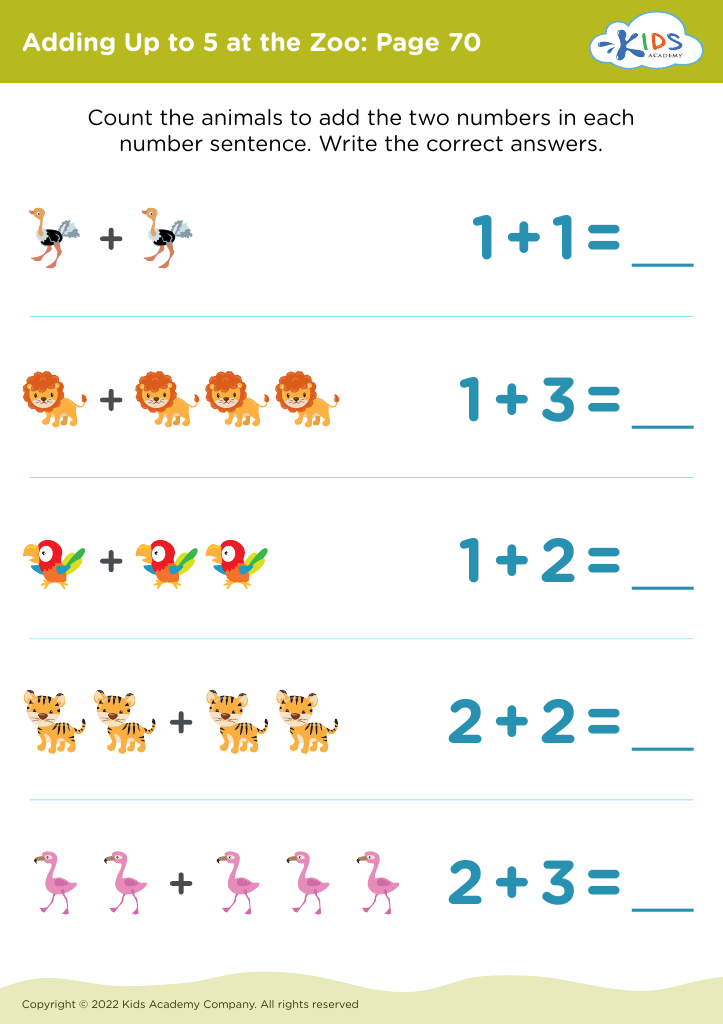
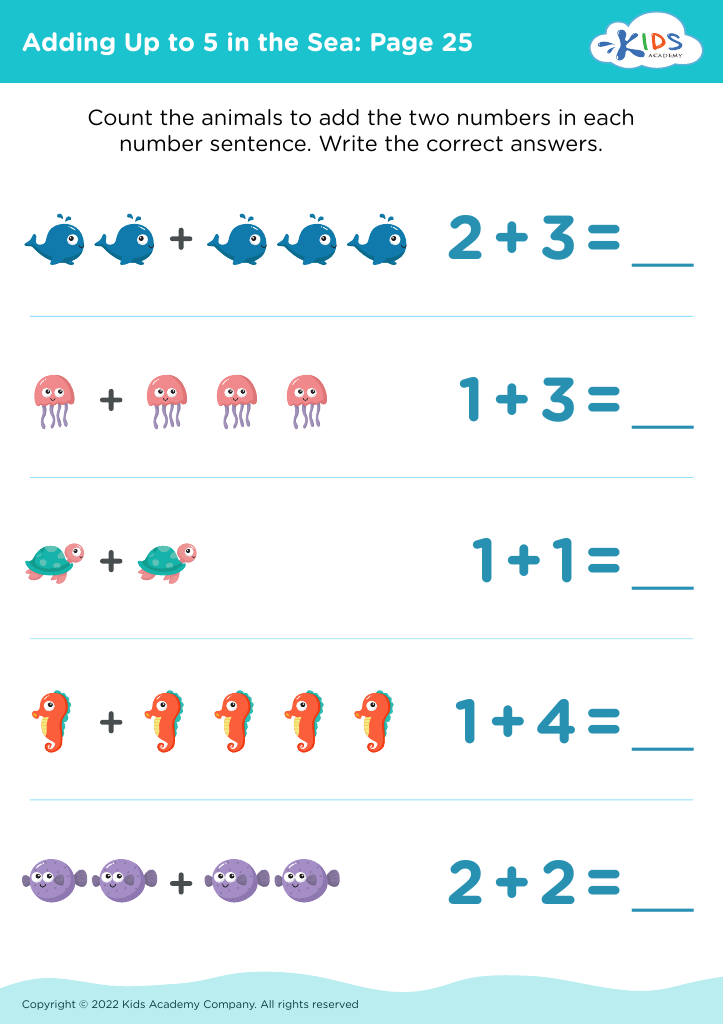
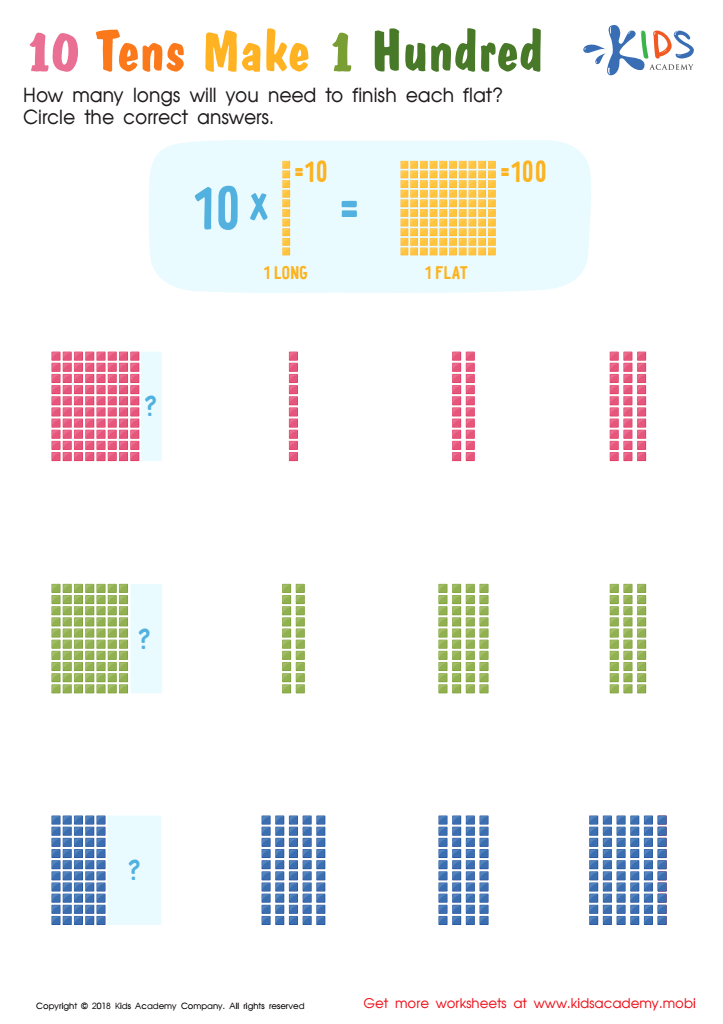
10 Tens Make 1 Hundred Worksheet
 Assign to My Students
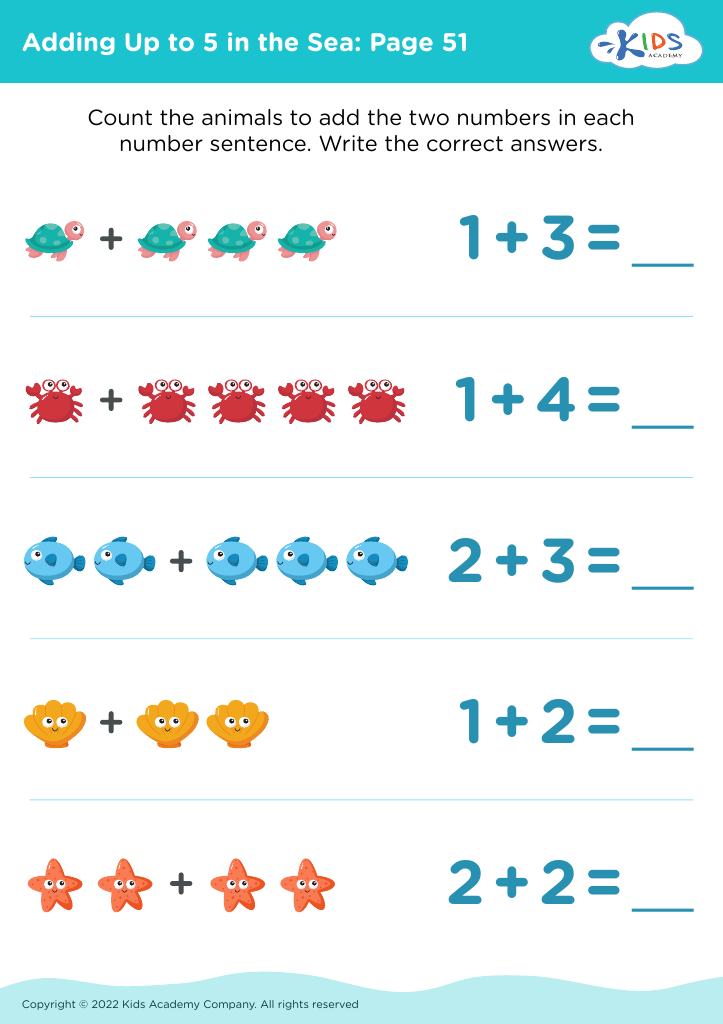
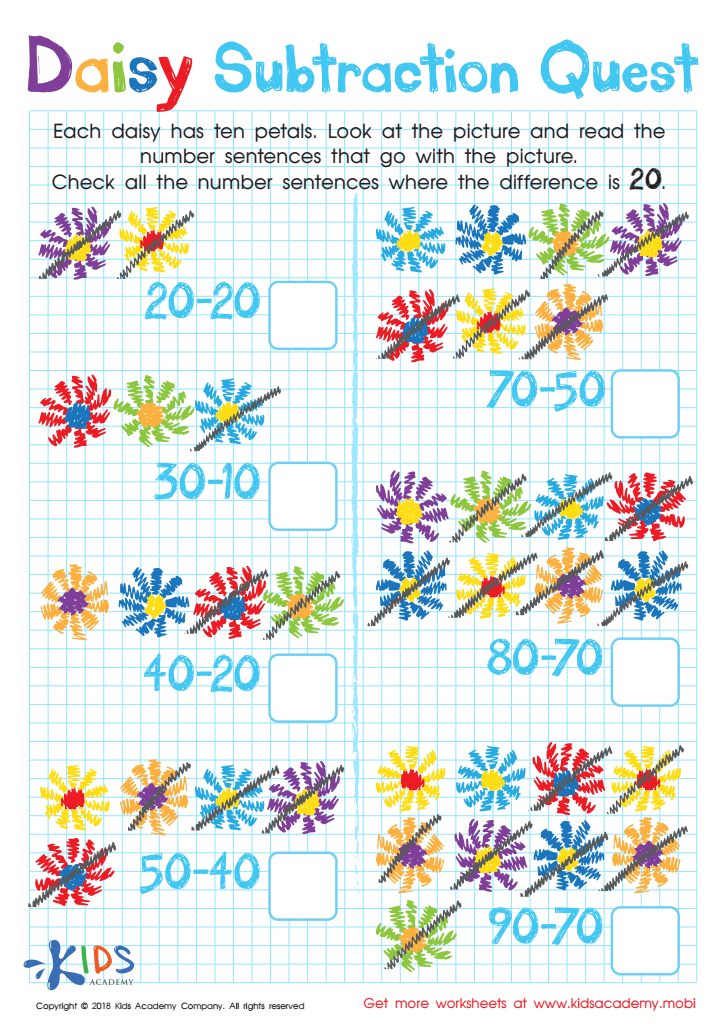
Daisy Subtraction Quest Worksheet
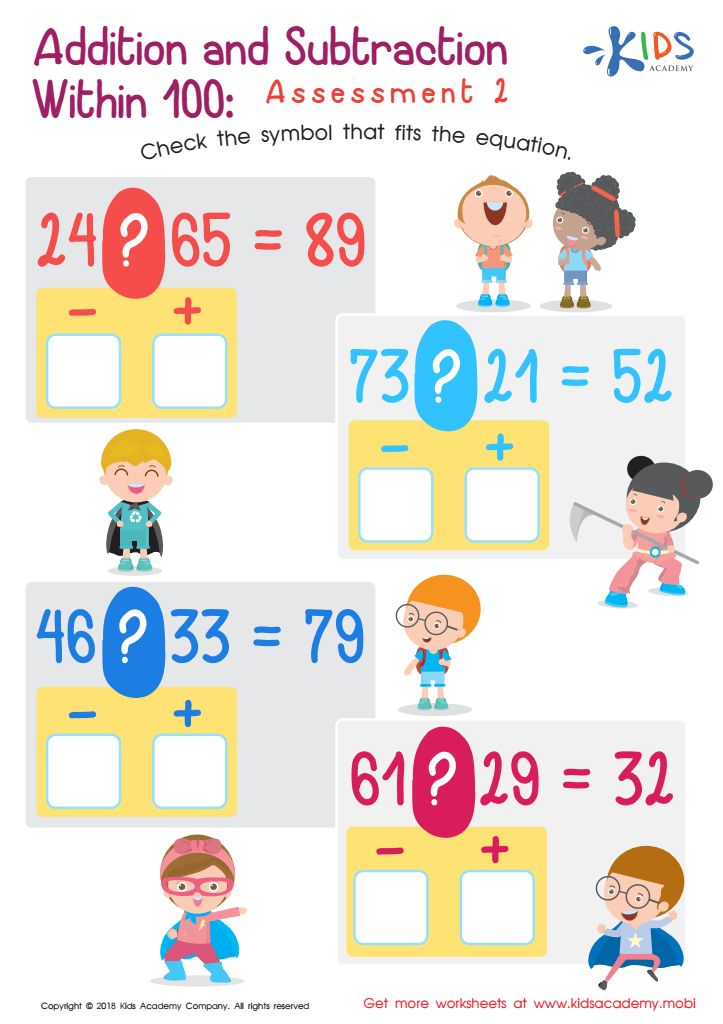
Addition and Subtraction Within 1: Assessment 2 Worksheet
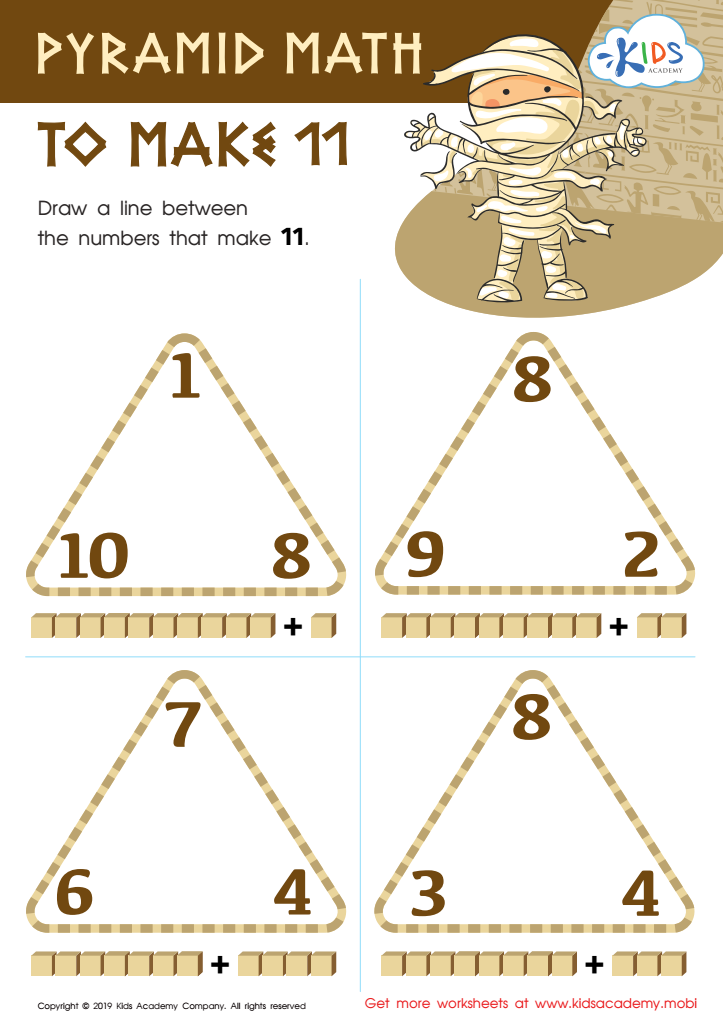
Pyramid Math to Make 11 Worksheet


.jpg)





Understanding number relationships is crucial for young children aged 3 to 7 as it lays the foundation for mathematical thinking and problem-solving skills. During these formative years, children begin to grasp essential concepts like quantity, comparison, and patterns. When parents and teachers prioritize teaching number relationships, they help children develop a mental framework for understanding how numbers interact, which is critical for advanced math concepts later in life.
Moreover, early exposure to number relationships enhances children's ability to recognize patterns and understand mathematical operations, like addition and subtraction, by illustrating how numbers relate to one another. This understanding promotes confidence in math, mitigates potential anxiety, and fosters a positive attitude toward learning.
For educators and parents, engaging children in excellent educational play, such as number games, finger counting, and hands-on activities, makes learning enjoyable while deepening their numerical comprehension. Supporting children's development in number relationships not only contributes to their academic success but also nurtures critical thinking and logical reasoning skills, which are valuable in all areas of life. By prioritizing these foundational skills, adults play an integral role in ensuring children are well-prepared for the academic challenges they will encounter in the future.








