Understanding sizes Math Worksheets for Ages 3-7
4 filtered results
-
From - To
Welcome to our "Understanding Sizes Math Worksheets" page, designed specifically for children ages 3 to 7. These engaging worksheets help young learners grasp fundamental size concepts, including big and small, tall and short, and more! Each activity is crafted to encourage observational skills and provide hands-on learning experiences. With colorful illustrations and fun exercises, kids will enjoy practicing size comparison in an interactive way. Ideal for home, preschool, or kindergarten settings, our worksheets support early math skill development while making learning entertaining and enjoyable. Start exploring today and foster your child’s understanding of sizes in a fun and engaging manner!
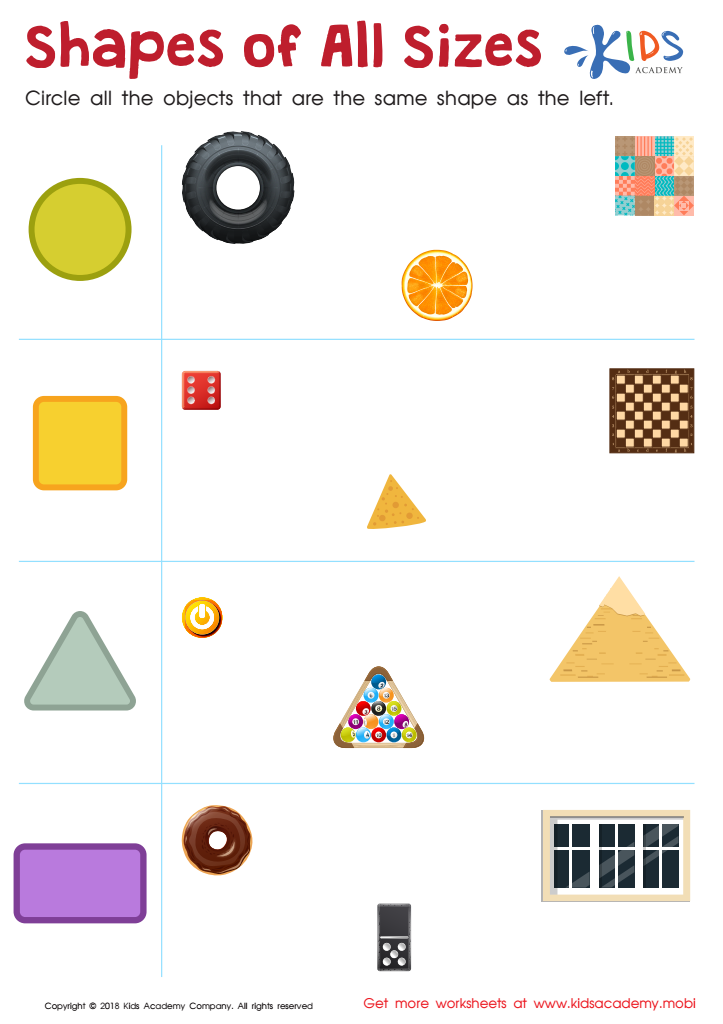
Shapes of All Sizes Worksheet
 Assign to My Students
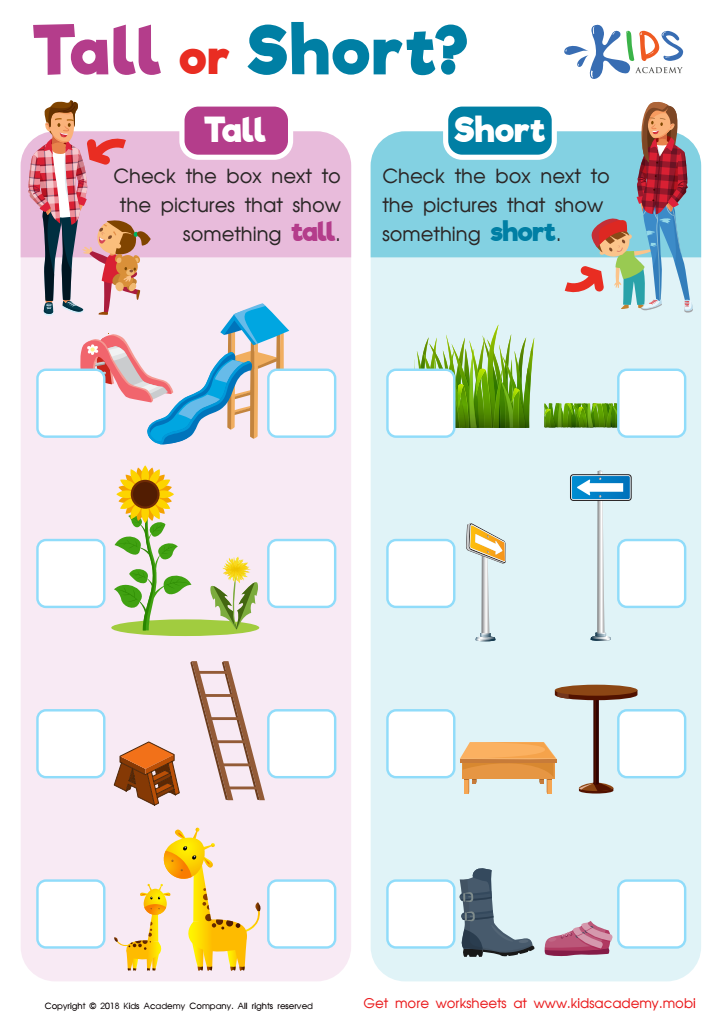
Tall or Short? Worksheet
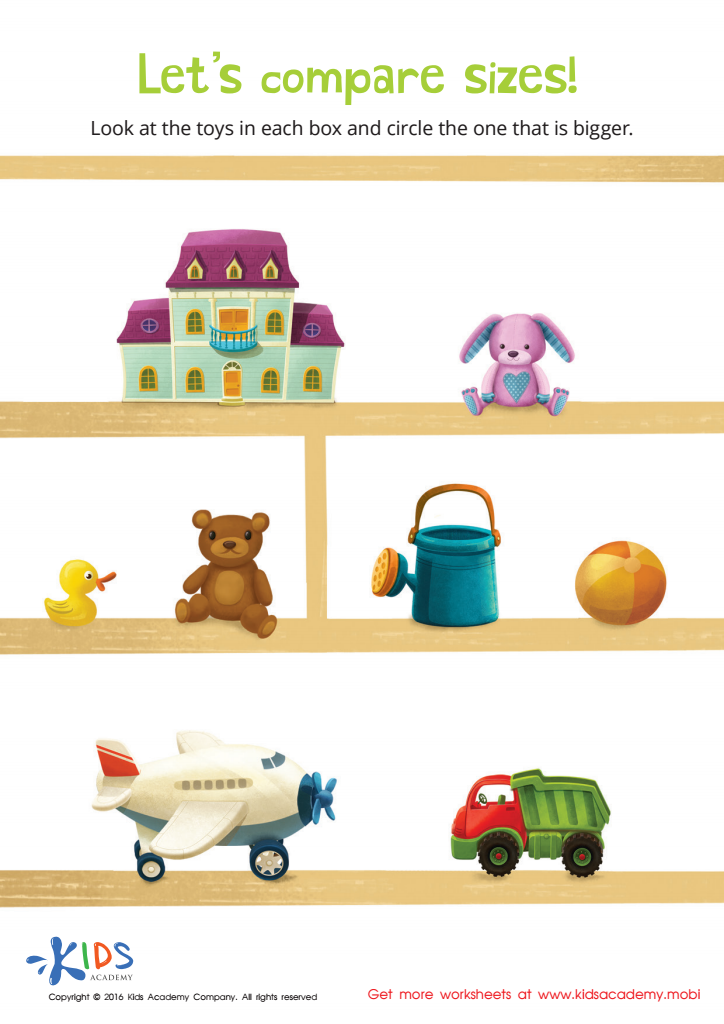
Classifying by Size Sorting Worksheet
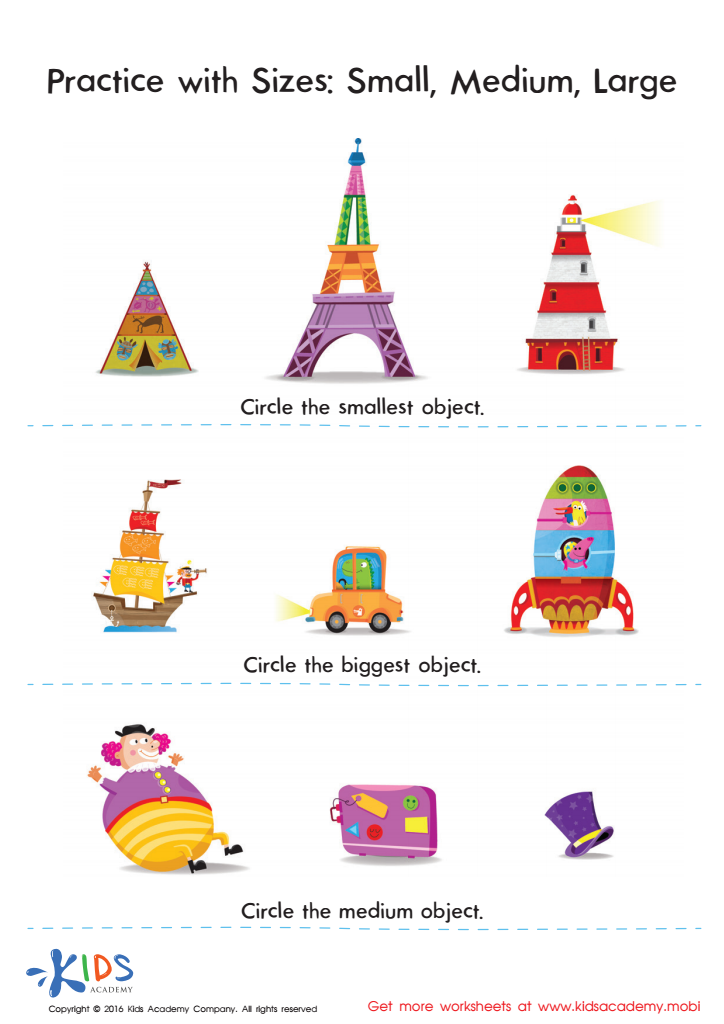






%20(1).jpg)
Understanding sizes is a fundamental concept in early math education that aids children aged 3-7 in developing essential cognitive skills. Teaching children about sizes—big and small, tall and short, wide and narrow—helps them build a solid foundation for more complex mathematical concepts later on. By engaging with sizes, kids learn to classify and compare objects, enhancing their critical thinking and observational skills.
Parents and teachers should care about this area of math because it fosters creativity and problem-solving abilities. For instance, this knowledge not only encourages hands-on exploration but also integrates well with everyday activities, making learning instinctive and enjoyable. Practical experiences, such as sorting toys by size or measuring items during playtime, help children grasp spatial awareness, which is vital across various life scenarios.
Additionally, understanding sizes forms the backbone for future learning in math-related subjects such as geometry and measurement. Establishing a firm grasp of these concepts at an early age can set the stage for academic success. Moreover, areas like social and emotional development can benefit, as engaging children in discussions about size cultivates language skills and enhances their ability to express feelings and ideas, fostering healthier communication. Thus, nurturing this understanding is essential at this developmental stage.








