Understanding word problems Math Worksheets for Ages 3-7
3 filtered results
-
From - To
Welcome to our "Understanding Word Problems Math Worksheets" designed for children ages 3-7! These worksheets provide fun and engaging activities that help young learners develop essential math skills through word problems. By integrating relatable scenarios, our resources inspire critical thinking and enhance comprehension. Each worksheet encourages kids to read carefully, visualize solutions, and apply problem-solving strategies in age-appropriate contexts. With our easy-to-follow format and vibrant illustrations, children will gain confidence and enjoyment in solving mathematical challenges. Support your child’s learning journey and equip them with foundational skills that will serve them well as they progress in their education!
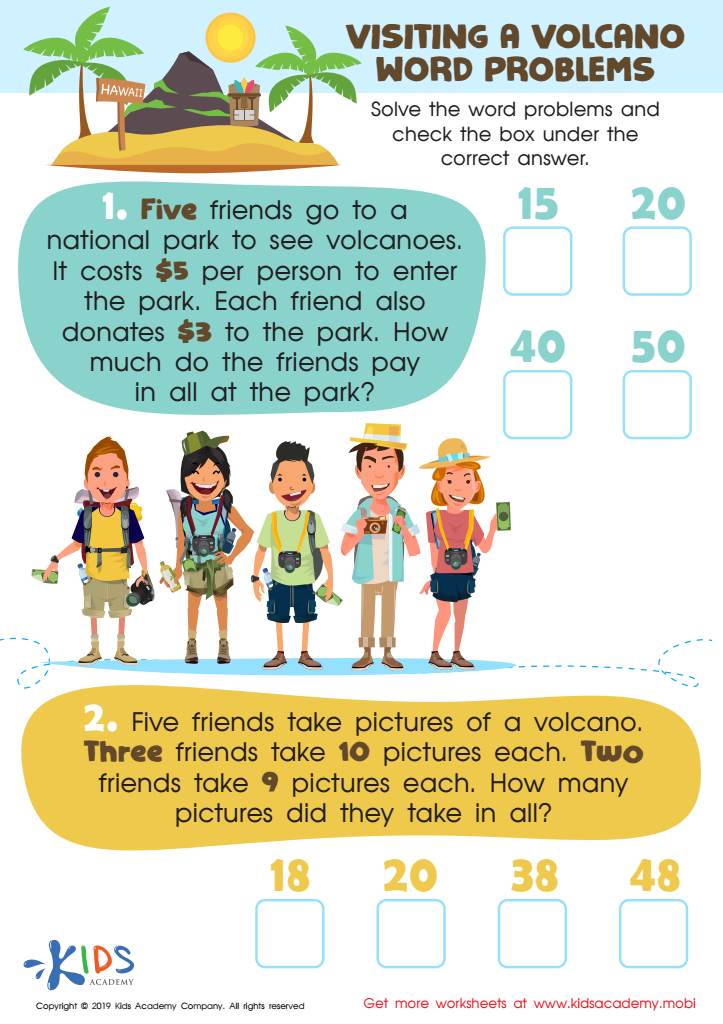
Visiting a Volcano Word Problems Worksheet
 Assign to My Students
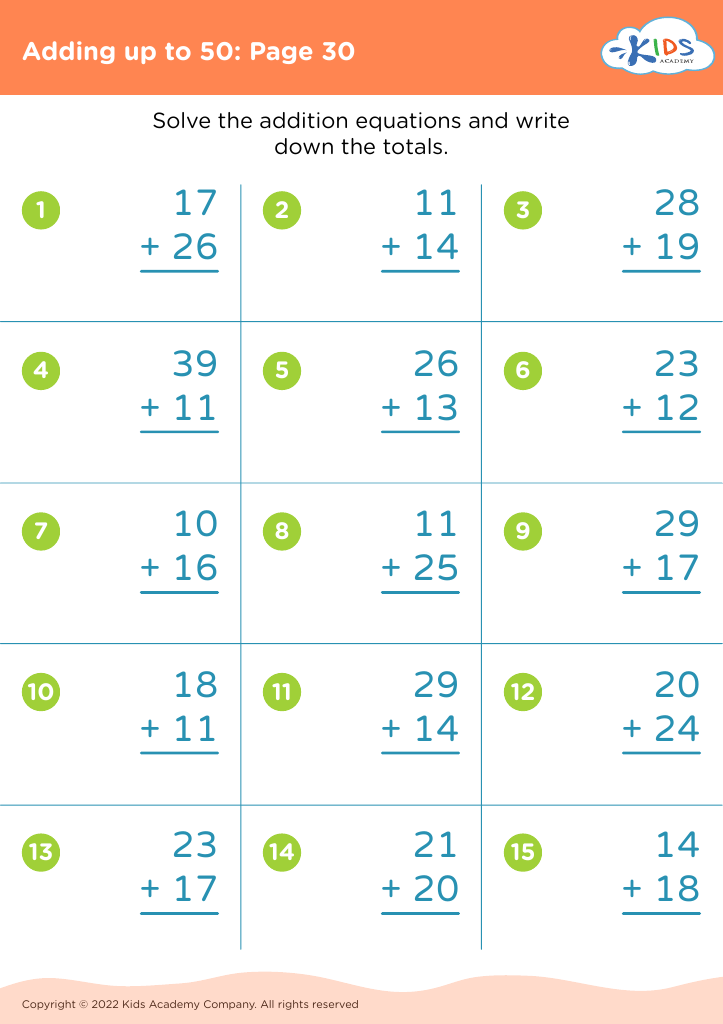
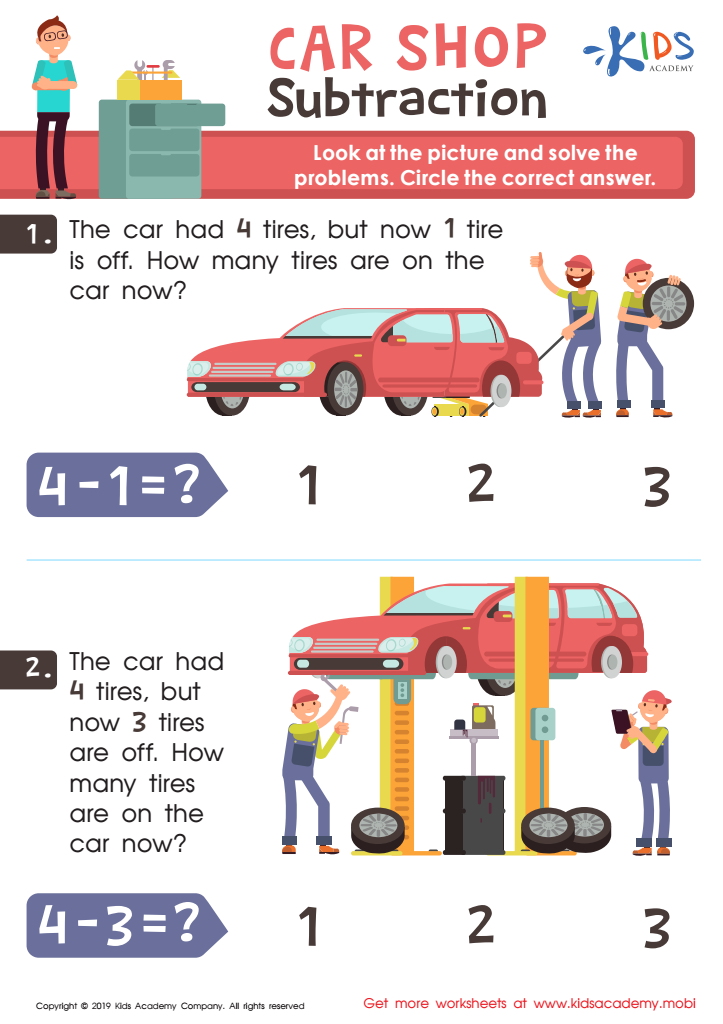
Car Shop Subtraction Worksheet







Understanding word problems in math is crucial for children ages 3-7, as it serves as a bridge between practical problem-solving and the abstract concepts of mathematics. For parents and teachers, fostering this skill lays the groundwork for critical thinking, enhances comprehension abilities, and promotes effective communication.
At this developmental stage, children learn to make sense of information presented in textual form, which is essential in real-world situations. Word problems encourage kids to identify key information and think analytically about how to apply mathematical operations to solve them. This not only makes math more engaging but also imbues students with confidence as they tackle challenges.
Moreover, dealing with word problems helps children develop language skills, as they learn to articulate their thoughts and reasoning, fostering both verbal skills and mathematical vocabulary. Additionally, understanding word problems can significantly improve their performance in future academic pursuits, minimizing anxiety around math as they grow older.
By prioritizing word problems, parents and teachers can cultivate a more holistic approach to learning that integrates language and numeracy, ultimately empowering children to become proficient problem-solvers in both math and everyday life. Encouraging this foundational understanding from a young age will yield lasting benefits as they progress in their education.








