Visual-motor skills Math Worksheets for Ages 3-7
5 filtered results
-
From - To
Enhance your child's math skills and fine motor development with our Visual-Motor Skills Math Worksheets for ages 3-7. These engaging activities cleverly combine math practice with essential motor skills exercises, helping young learners to improve hand-eye coordination, problem-solving abilities, and pencil control. Designed especially for young minds, our vibrant and fun worksheets cover topics such as number tracing, shape recognition, pattern completion, and more. Perfect for home or classroom use, they ensure a comprehensive, enjoyable learning experience. Equip your little one with the foundational skills necessary for academic success and a lifelong love of learning.
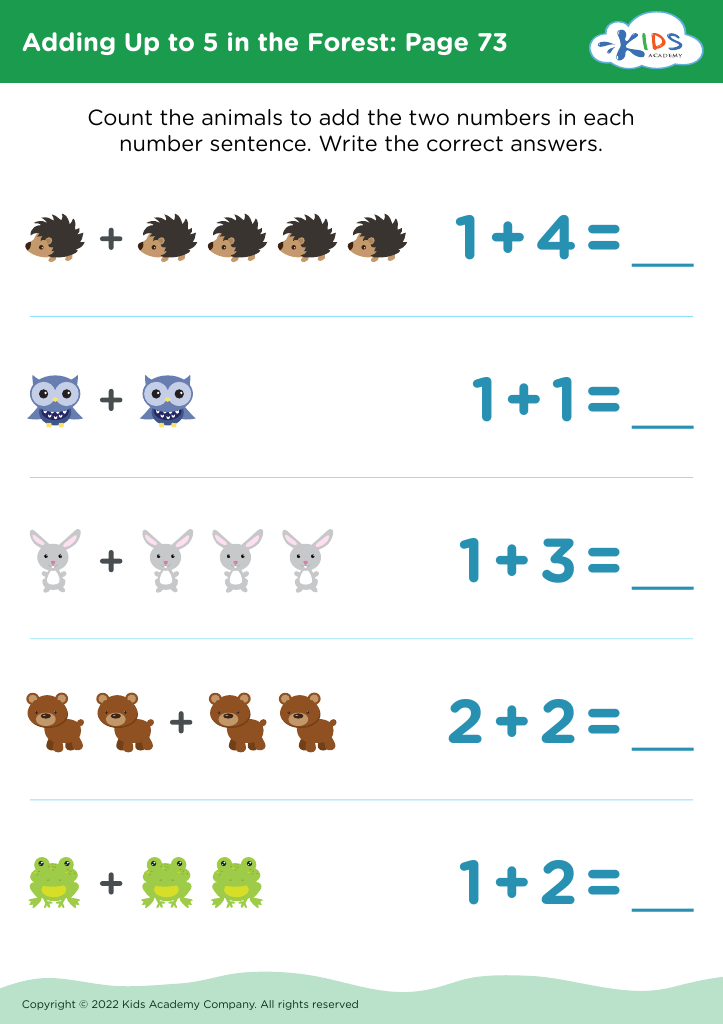
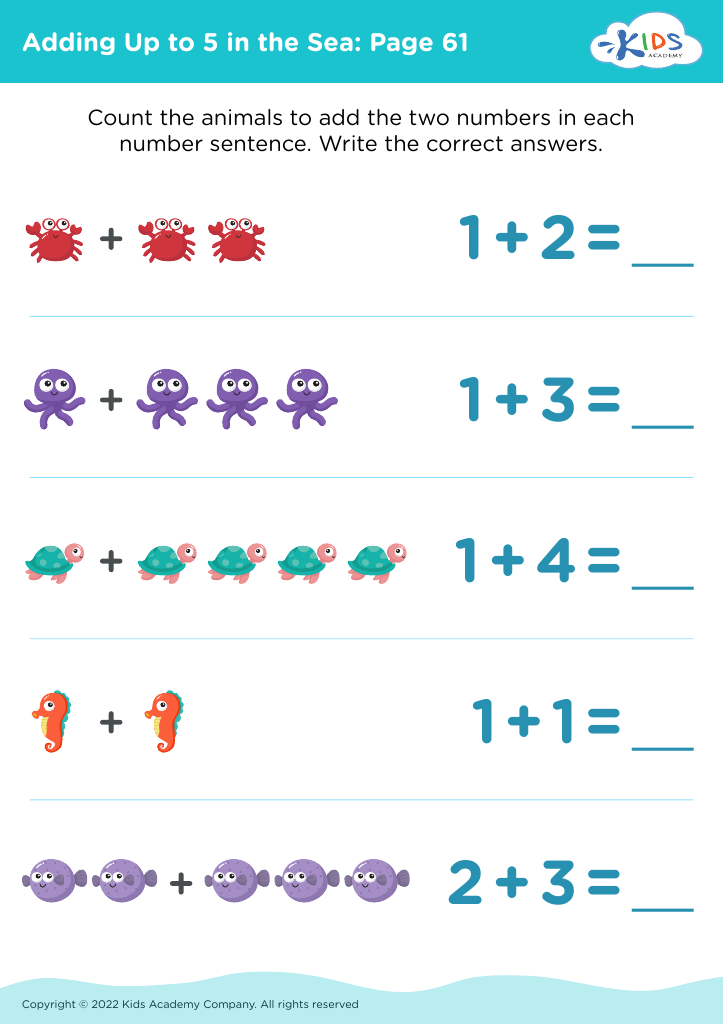
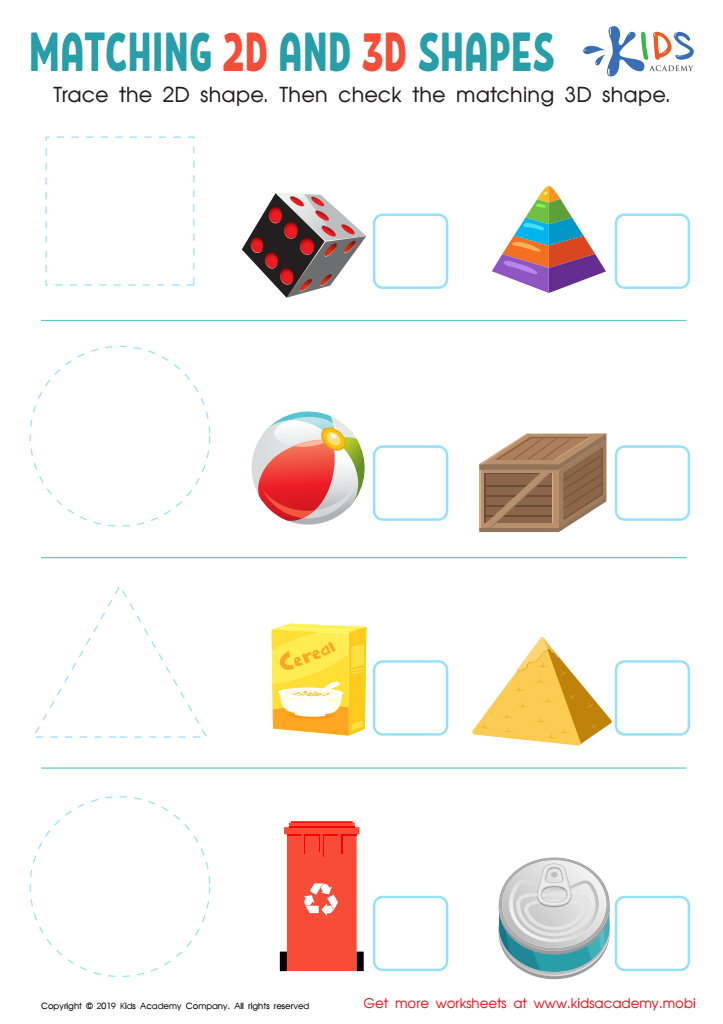
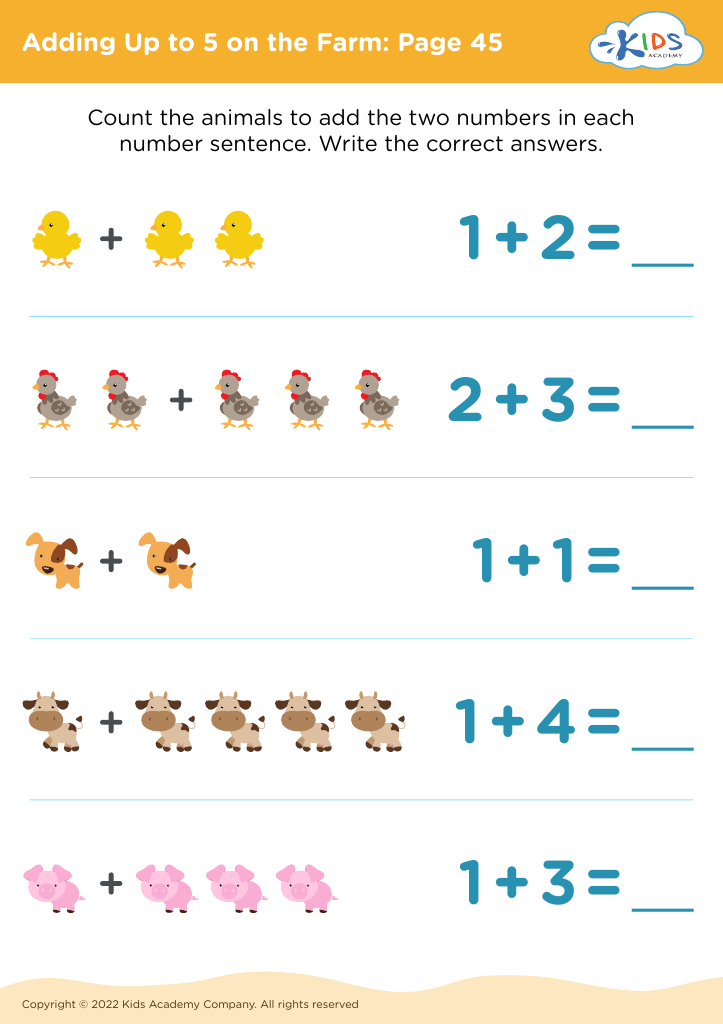
Matching 2D and 3D Shapes Worksheet
 Assign to My Students
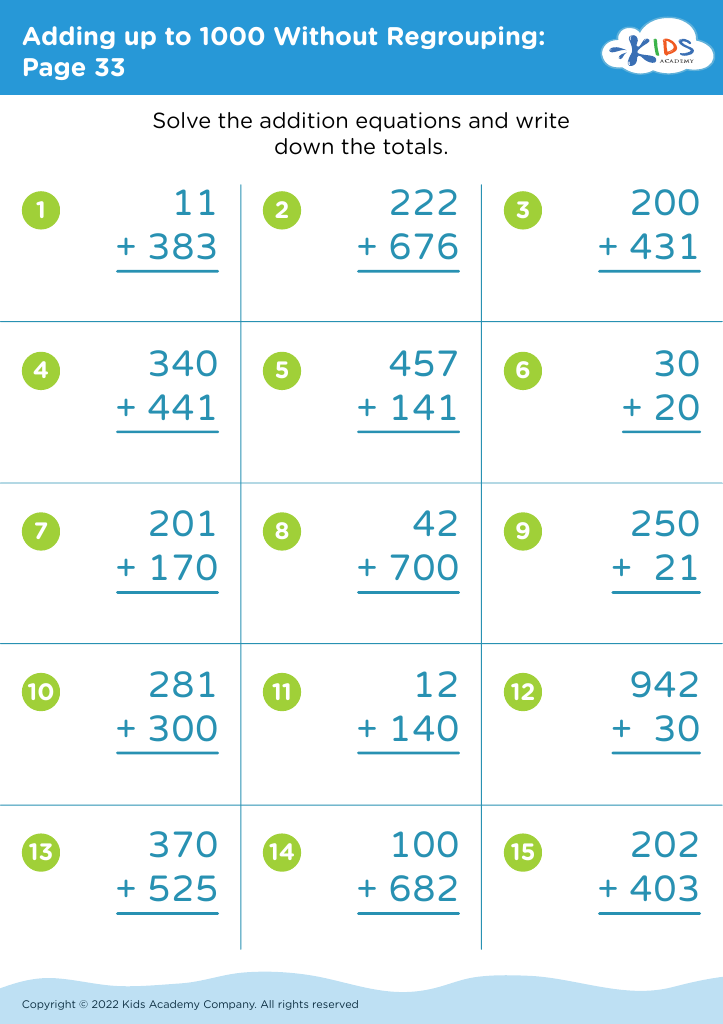








Visual-motor skills play a critical role in early childhood development, particularly when it comes to learning math for children aged 3-7. These skills involve the coordination between visual perception and muscle control, enabling a child to interpret visual information and respond appropriately with motor actions. For young learners, activities such as drawing shapes, tracing numbers, or stacking blocks not only hone their fine motor skills but also lay the foundation for math readiness.
In math, tasks requiring visual-motor integration include recognizing and writing numbers, understanding spatial relationships, and solving simple problems. When children efficiently combine what they see with their motor responses, they can better grasp number concepts, patterns, and sequences, essential for future mathematical reasoning.
Poor visual-motor skills can hinder a child's ability to follow multi-step instructions, recognize different shapes, and keep their work neat and within the lines, often leading to frustration and decreased confidence in math. By focusing on activities that enhance these skills, parents and teachers can make learning math more accessible and enjoyable, setting the stage for a positive attitude toward education. Intervening early ensures that children do not miss the critical window where these foundational skills shape their academic journey and overall development.








