Comparing numbers Measurement Worksheets for Ages 3-7
3 filtered results
-
From - To
Unlock the magic of math for your little ones with our Comparing Numbers Measurement Worksheets designed for ages 3-7! These engaging, age-appropriate activities help young learners grasp essential measuring and comparison skills. With colorful illustrations and fun themes, children will enjoy comparing quantities, sizes, and lengths, enhancing their problem-solving and cognitive abilities. Perfect for early learners, our worksheets bolster critical thinking and boost confidence in math. Ideal for home or classroom use, these printable worksheets cater to varying skill levels, ensuring that every child progresses at their own pace. Empower your child’s math journey today!
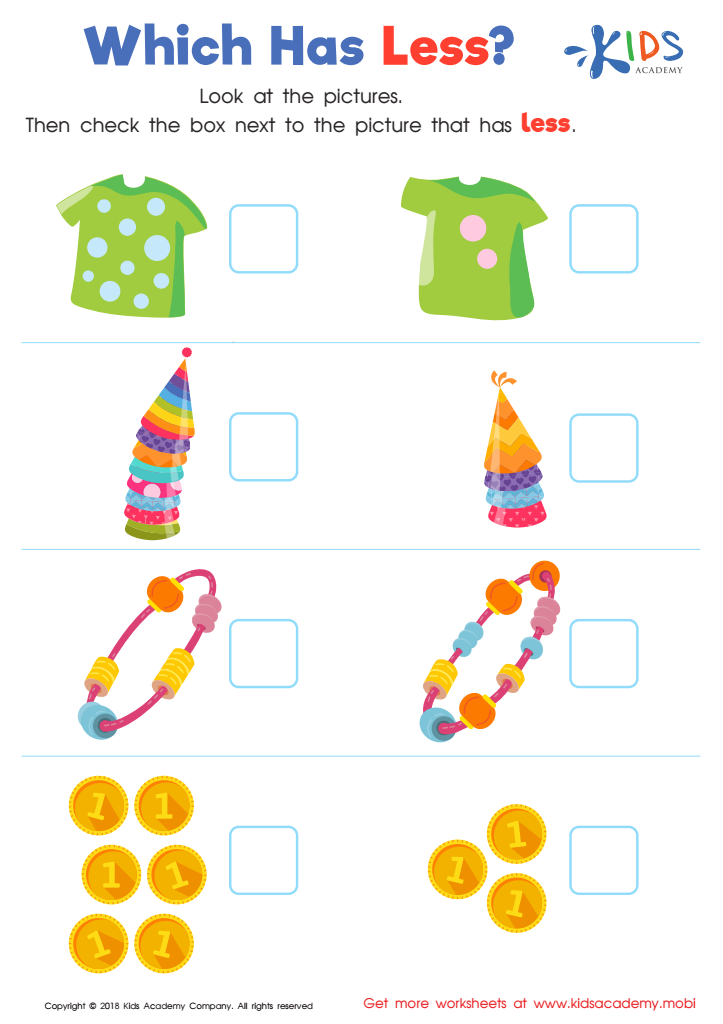
Which Has Less? Worksheet
 Assign to My Students
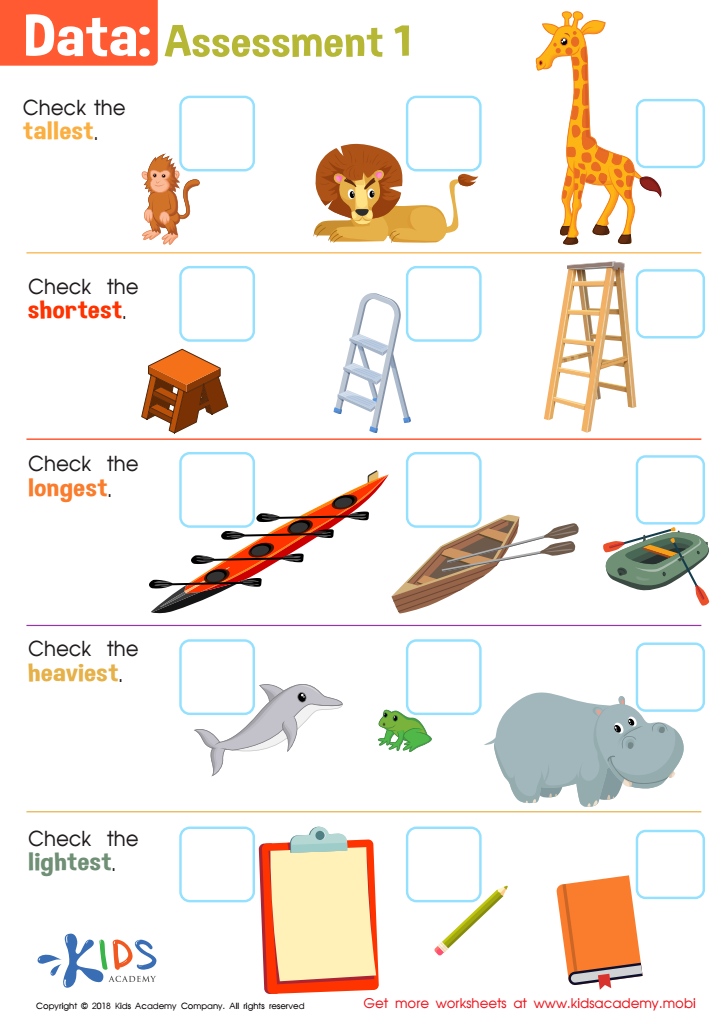
Data: Assessment 1 Worksheet
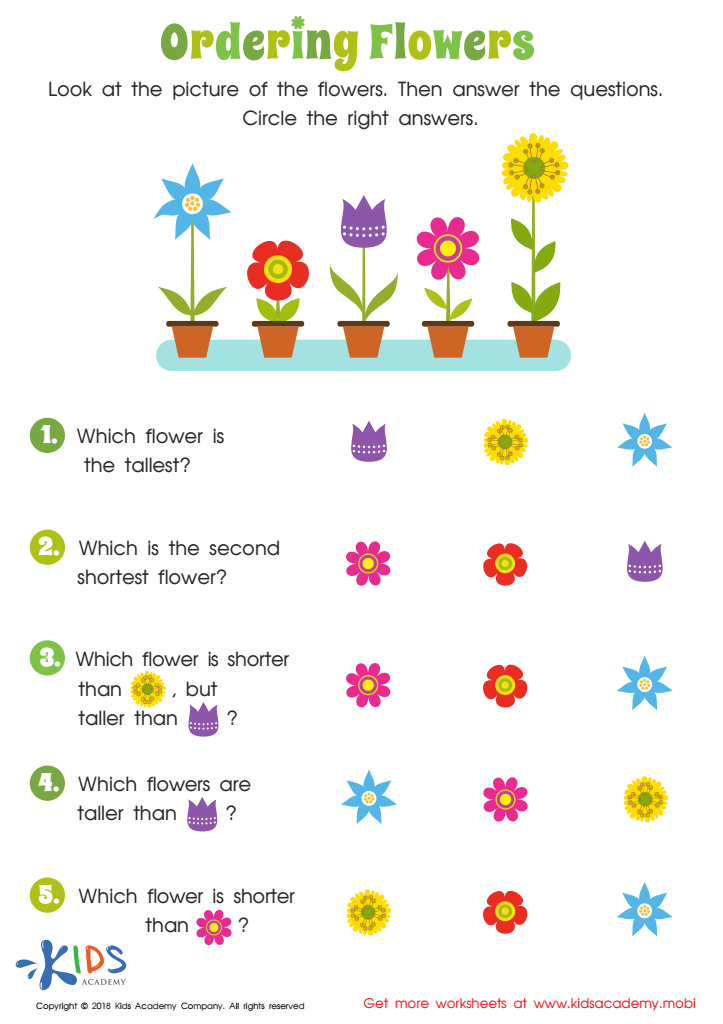
Ordering Flowers Worksheet








Understanding comparing numbers and measurement is crucial for children aged 3-7 as it establishes a strong foundation for more complex mathematical concepts and everyday life skills. During these formative years, young children are developing critical cognitive abilities, and early exposure to basic math helps sharpen their analytical thinking and problem-solving capabilities.
Comparing numbers teaches children the concepts of more than, less than, and equal to, which are fundamental to addition, subtraction, and recognizing mathematical patterns. These skills are also essential for interpreting data and comprehending quantities in daily scenarios, like determining whether they have more blocks than their friend or if they need more apples for juice.
Measurement, including comparing lengths, weights, and volumes, fosters a child's understanding of the physical world. This awareness promotes spatial reasoning, enabling children to better navigate and interact with their environment. For instance, they learn to pour an appropriate amount of water into a cup or figure out if a toy can fit into a box.
Incorporating these concepts into daily activities, games, and discussions makes learning intuitive and fun, ensuring that math is seen as a natural part of life rather than a challenging subject. Caring about these foundational skills not only boosts academic readiness but also cultivates confidence and enthusiasm in young learners, paving the way for lifelong numeracy skills.








