Enhancing Counting Skills Measurement Worksheets for Ages 3-7
3 filtered results
-
From - To
Explore our "Enhancing Counting Skills Measurement Worksheets" designed specifically for children aged 3-7. These engaging worksheets provide a fun and interactive way for young learners to develop essential counting skills through hands-on measurement activities. With vibrant visuals and age-appropriate tasks, your child will delight in counting various objects, understanding measurement concepts, and improving their numerical aptitude. Ideal for preschool and early elementary settings, our resources offer parents and educators valuable tools to reinforce math learning at home or in the classroom. Foster a love for numbers and enhance your child's math foundation with our thoughtfully crafted worksheets today!
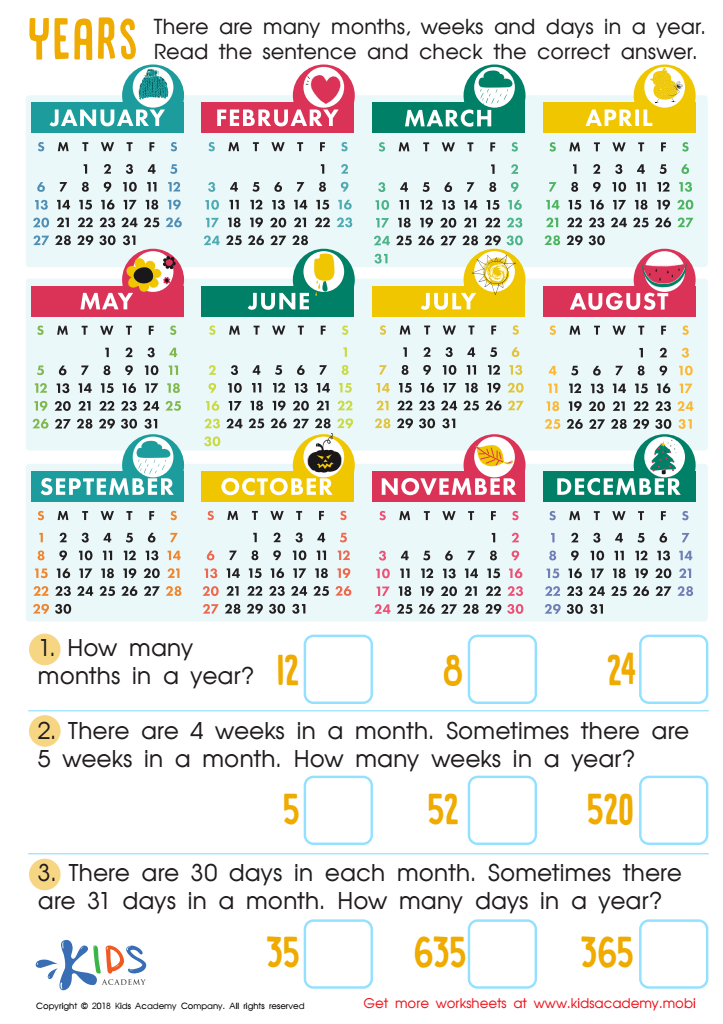
Years Worksheet
 Assign to My Students
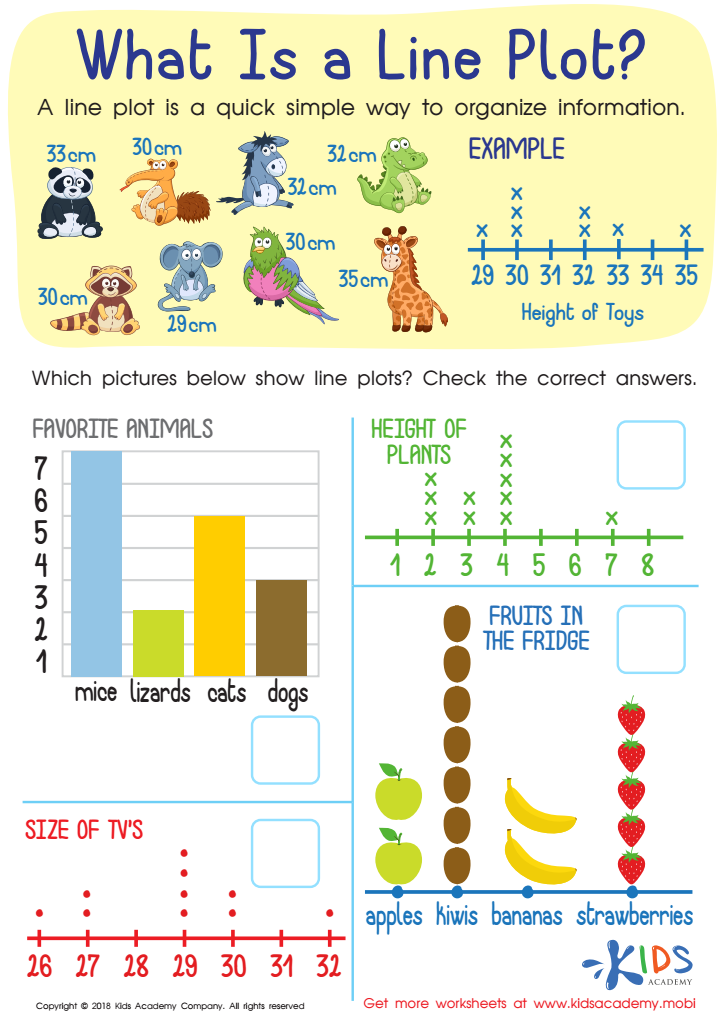
What Is a Line Plot? Worksheet
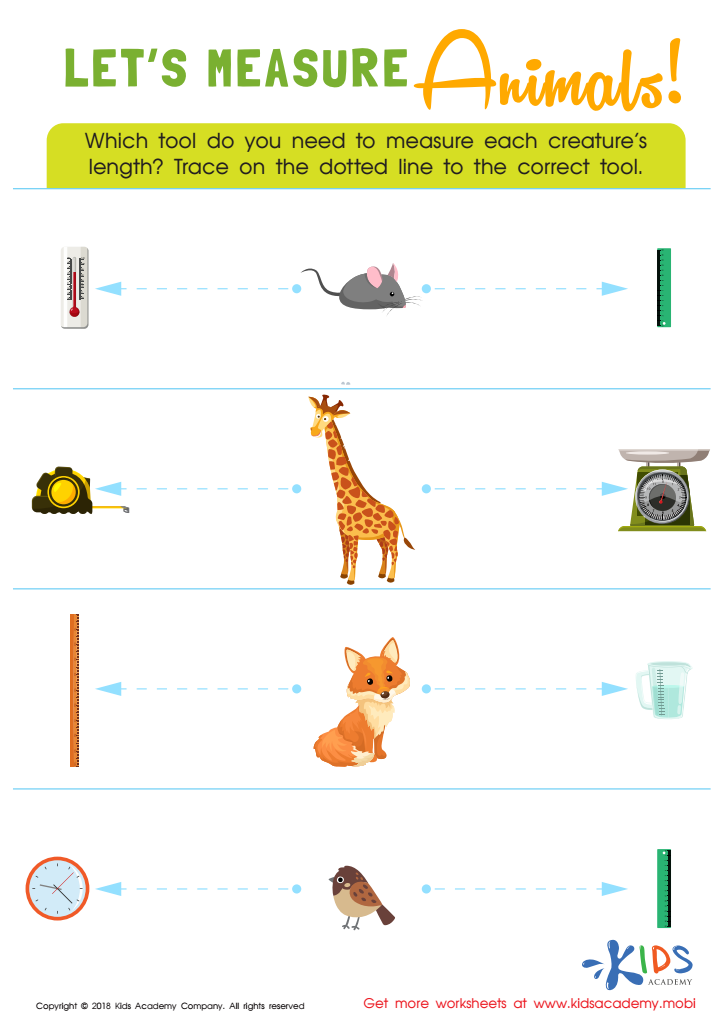
Let's Measure Animals! Worksheet








Enhancing counting skills and measurement for children aged 3-7 is crucial for their cognitive and social development. This foundational phase of learning introduces essential numeracy skills that play a vital role in a child's academic journey. Counting is not merely about recognizing numbers; it involves critical thinking and problem-solving abilities that are essential in everyday life.
For parents and teachers, fostering these skills encourages a sense of confidence and independence in young children. Mastery of counting lays the groundwork for more complex mathematical concepts like addition, subtraction, and even early geometry. Early exposure to measurement concepts—such as length, weight, and volume—promotes understanding of comparison and spatial awareness, skills which extend beyond mathematics into science and daily activities.
Moreover, engaging in counting games and measurement activities together strengthens the bond between children and their caregivers, making learning an enjoyable and interactive experience. It also aligns with educational standards, ensuring children are better prepared for school. By caring about and actively enhancing counting skills and measurement, adults are investing in the holistic development of their children, leading to improved academic outcomes and life skills as they transition into the next stages of their education.








