Pattern recognition Patterns Worksheets for Ages 3-7
5 filtered results
-
From - To
Enhance your child's learning experience with our engaging Pattern Recognition Worksheets designed for ages 3-7. These fun, interactive resources help children develop essential math skills while boosting their cognitive abilities. Our carefully crafted worksheets feature a variety of colorful patterns and simple activities that encourage children to identify, complete, and create patterns. By exploring sequences of shapes, colors, and objects, young learners will improve their reasoning, critical thinking, and problem-solving skills. Ideal for home or classroom use, these worksheets make learning enjoyable and effective. Dive into the world of patterns today and spark your child's creativity and analytical abilities!
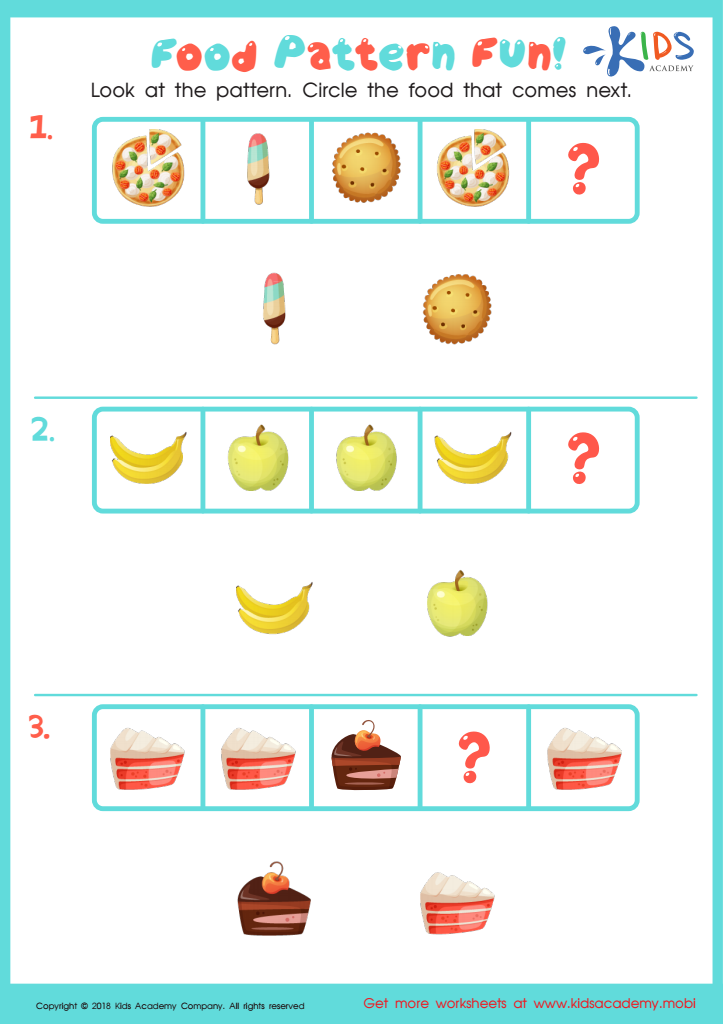
Food Pattern Fun Worksheet
 Assign to My Students
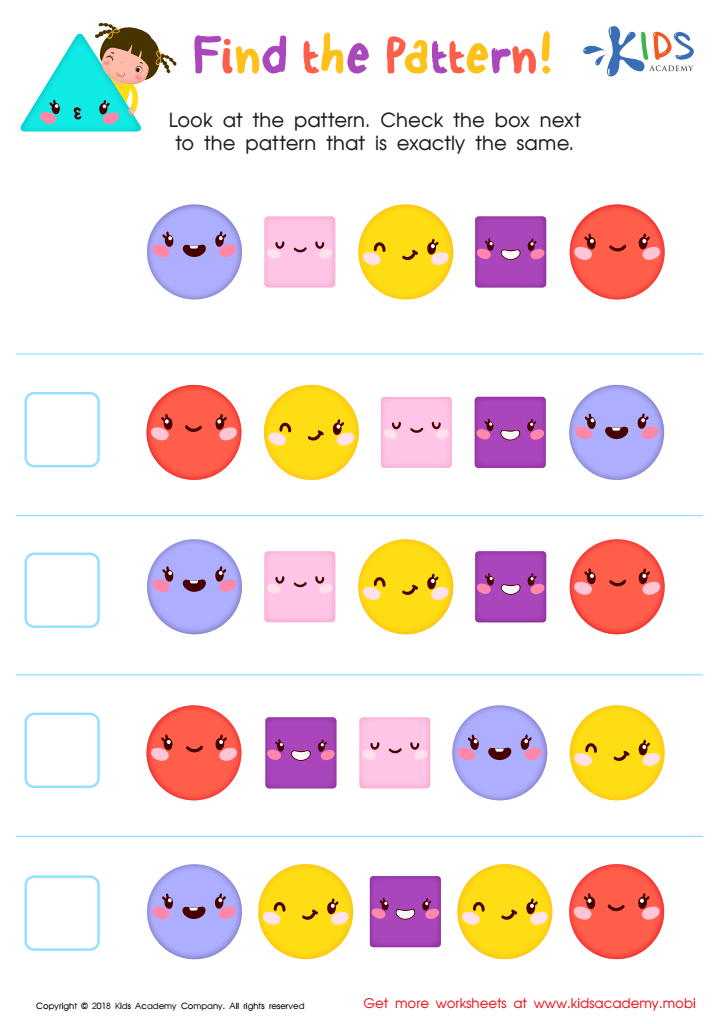
Find the Pattern Worksheet
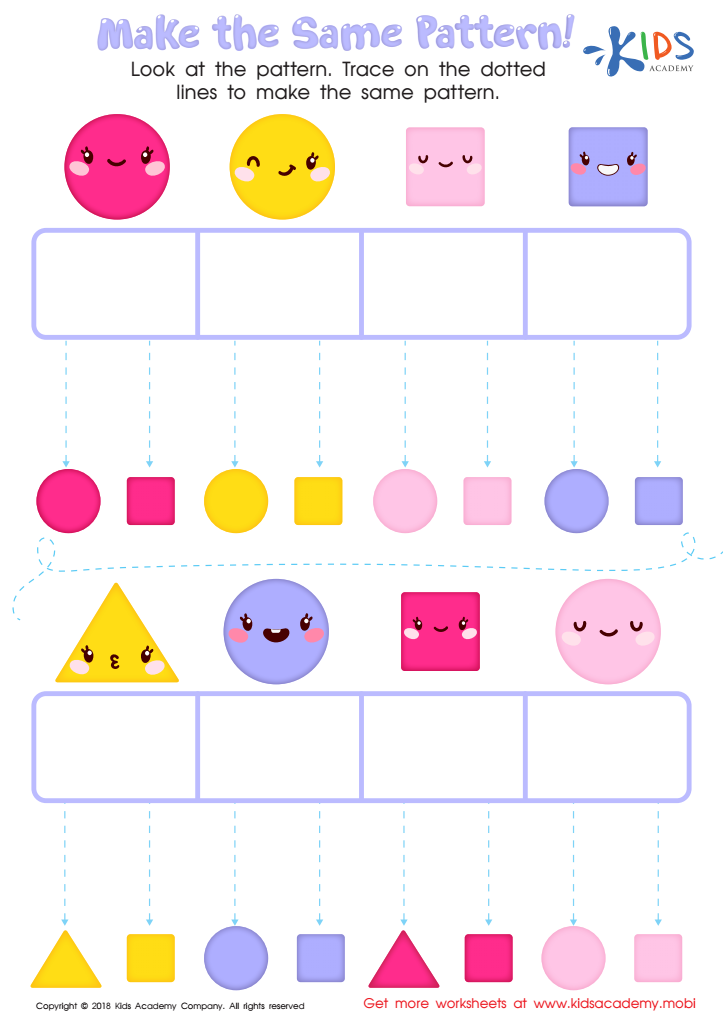
Make the Same Pattern Worksheet
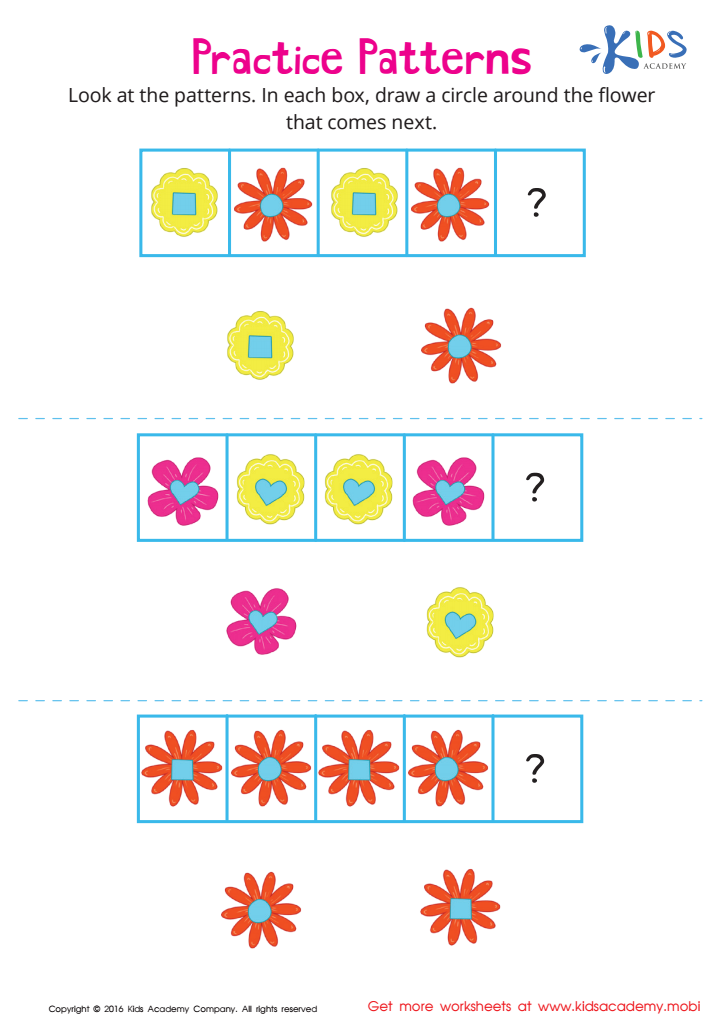
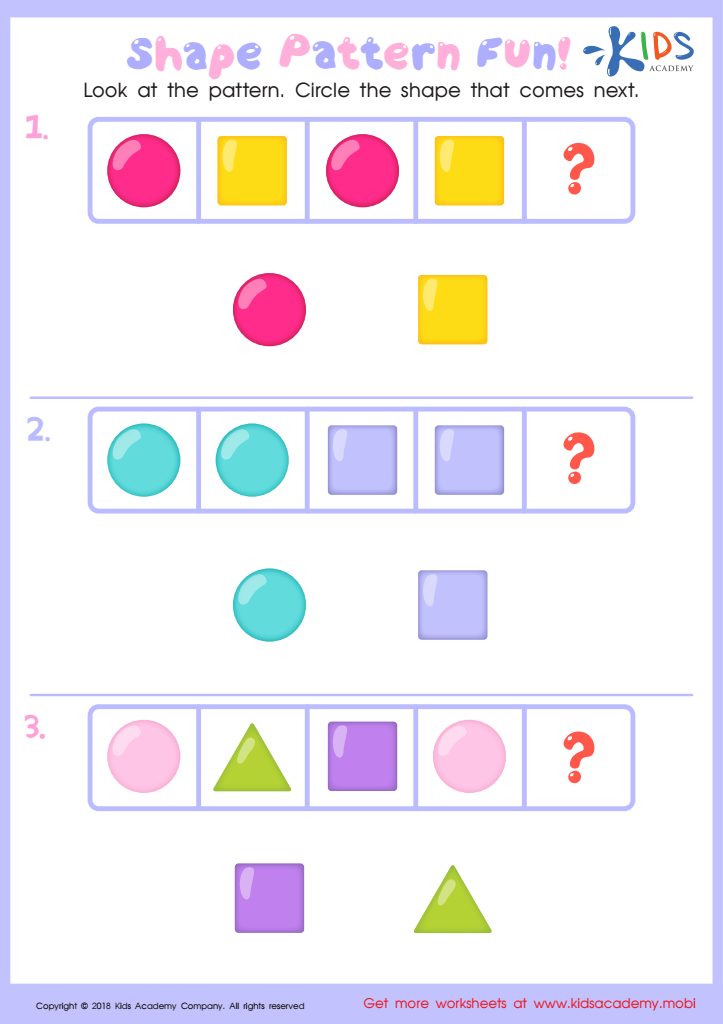
Shape Pattern Fun Worksheet








Pattern recognition is a foundational skill for young learners aged 3-7 that profoundly influences their cognitive, mathematical, and problem-solving abilities. Parents and teachers should prioritize teaching patterns because they serve as the building blocks for more complex concepts in mathematics and logic later on. By recognizing and creating patterns, children develop critical thinking skills and enhance their observational acumen. These skills foster a deeper understanding of relationships and structures, which are essential in both academic and everyday contexts.
Moreover, engaging with patterns can support early literacy as children begin to notice repeated sounds and structures in language. It encourages creativity, as children explore ways to create their own patterns through art, music, and movement. Recognizing patterns also aids in enhancing memory and attention span, which are crucial for successful learning experiences.
Furthermore, instilling pattern recognition at a young age lays the groundwork for a growth mindset, teaching children that challenges can be approached methodically. Overall, pattern recognition isn't just an abstract concept; it's a vital skill that aids in holistic development, prepares children for future learning, and supports their overall cognitive growth. Parents and teachers play a critical role in nurturing this essential competency.








