Problem-Solving Skills Skip Counting Worksheets for Ages 3-7
3 filtered results
-
From - To
Enhance your child's math skills with our Problem-Solving Skills Skip Counting Worksheets, designed for ages 3-7. These engaging and interactive worksheets introduce the concept of skip counting while promoting critical thinking and problem-solving abilities. Perfect for young learners, our resources provide a fun way to build numerical fluency, encourage pattern recognition, and enhance cognitive development. Help your child master skip counting by 2s, 5s, and 10s through colorful illustrations and relatable themes. With a focus on developing essential skills, these worksheets make learning enjoyable and effective. Explore our collection today and set your child on a path to mathematical success!
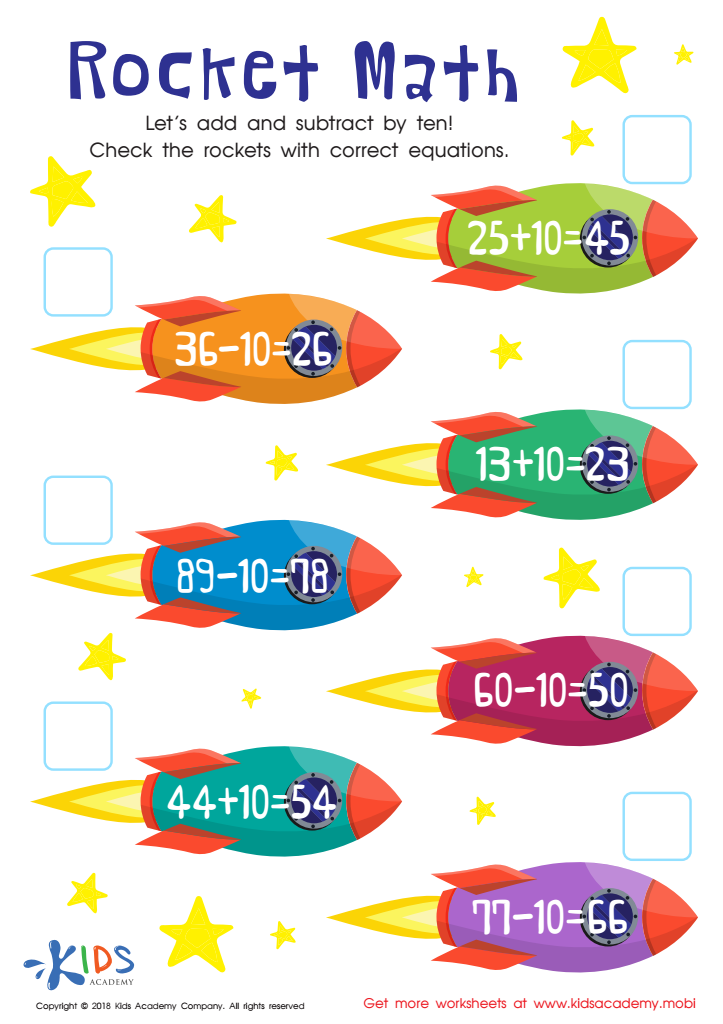
Rocket Math Worksheet
 Assign to My Students
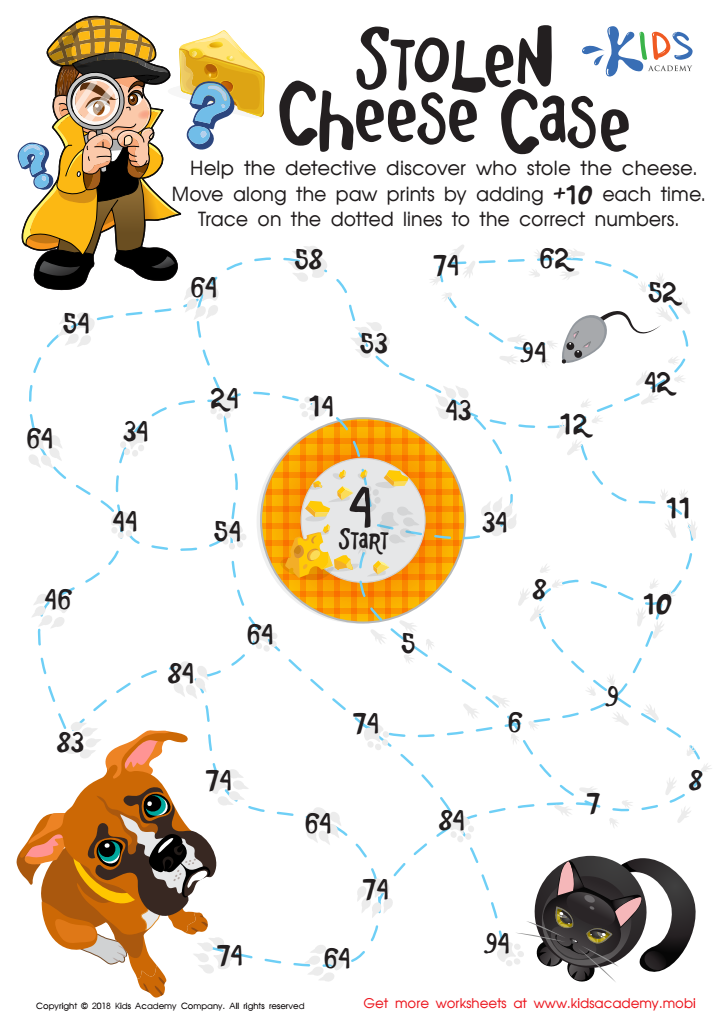
Stolen Cheese Case Maze Worksheet
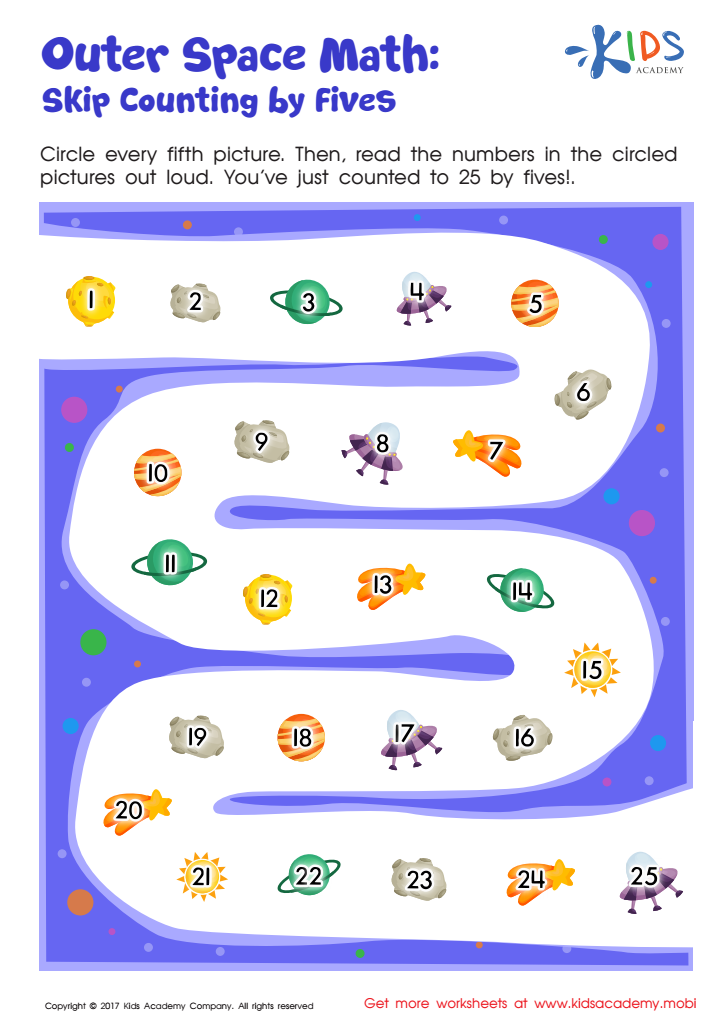
Skip Counting by 5s: Outer Space Math Printable




%20(1).jpg)


.jpg)
Problem-solving skills are essential for children, particularly those aged 3-7, as they form the foundation for critical thinking and mathematics. Skip counting, the process of counting at regular intervals (like by twos, fives, or tens), is a crucial component of early numeracy. When parents and teachers prioritize skip counting, they foster children's ability to identify patterns, enhance number sense, and build a strong mathematical foundation.
Understanding skip counting not only aids in arithmetic but also enhances spatial and sequential reasoning, which are vital skills in everyday problem-solving situations. Engaging children in skip counting through playful activities—like counting objects or playing games—makes the learning process enjoyable and accessible. Moreover, it promotes confidence as they discover different strategies to solve problems, laying the groundwork for future math proficiency.
Additionally, skip counting allows children to visualize relationships between numbers, facilitating mental math skills. When children grasp these concepts early on, they are better equipped to tackle more complex mathematical operations in later years. Ultimately, cultivating strong problem-solving skills through skip counting benefits children's overall cognitive development, preparing them for academic success and everyday life challenges. Thus, supporting this skill in early education should be a priority for parents and teachers alike.








