Sorting skills Sorting Worksheets for Ages 3-7
5 filtered results
-
From - To
Strengthen your child's cognitive development with our engaging "Sorting Skills Sorting Worksheets for Ages 3-7." These expertly designed worksheets help young learners enhance their critical thinking and categorization abilities through fun, hands-on activities. Kids will practice sorting by size, shape, color, and more, improving their problem-solving skills at an early age. Each worksheet provides a variety of sorting tasks that make learning enjoyable and meaningful. Perfect for home practice or classroom use, these worksheets support the development of essential early math and organization skills. Give your child the tools to excel with our Sorting Skills Sorting Worksheets!
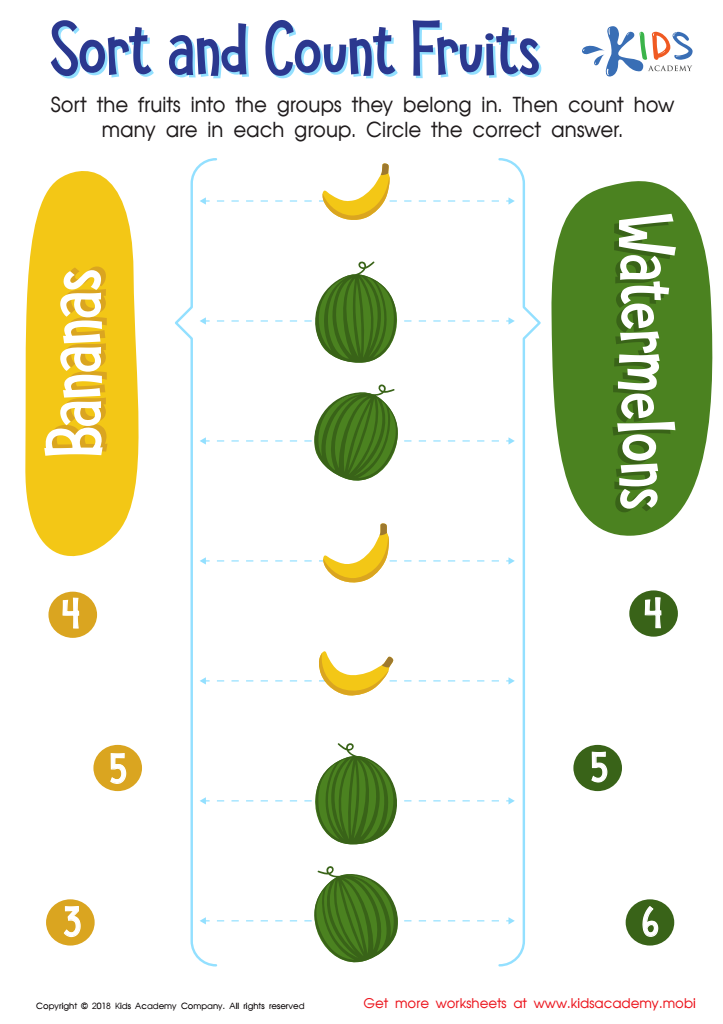
Sort and Count Fruits Worksheet
 Assign to My Students
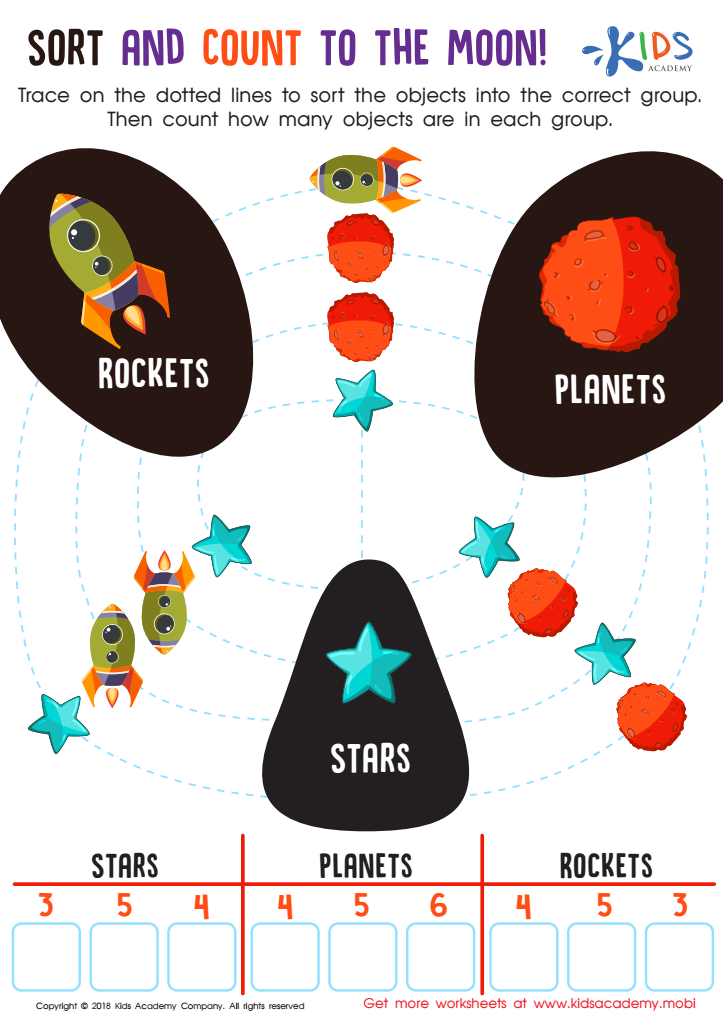
Sort and Count to the Moon Worksheet
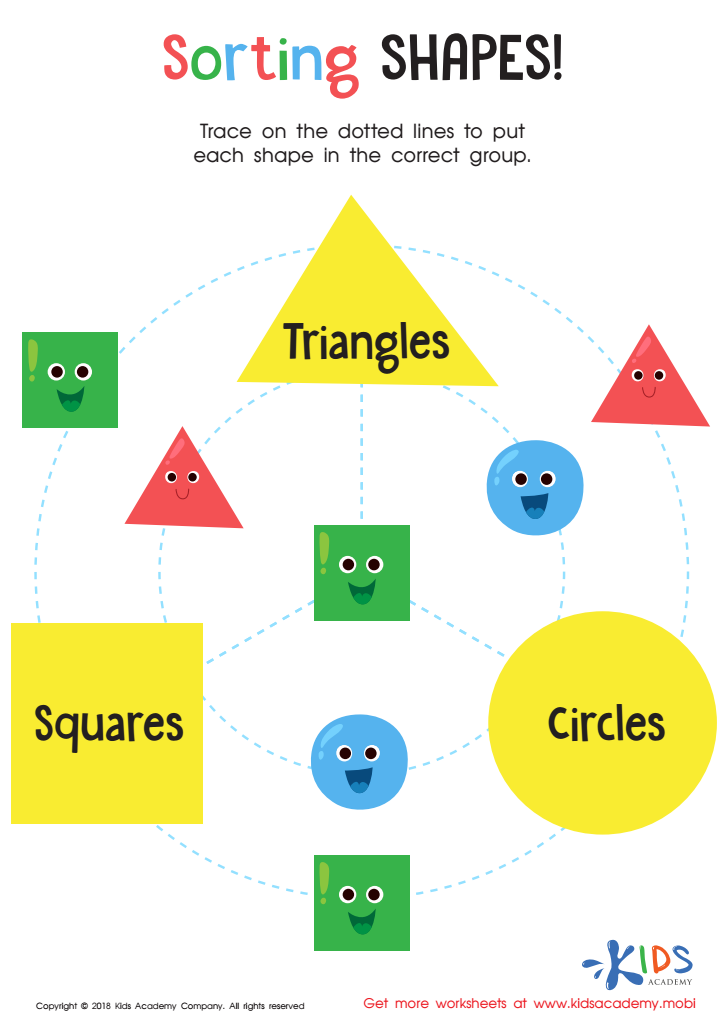
Sorting Shapes - Part 3 Worksheet
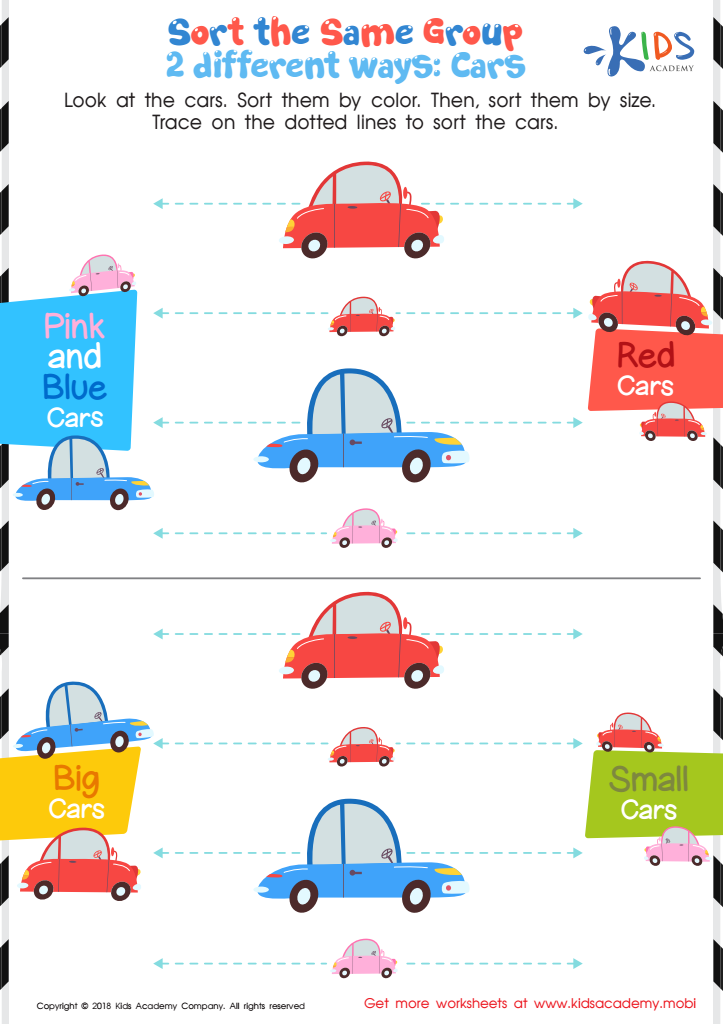
Sort the Same Group 2 Different Ways: Cars Worksheet
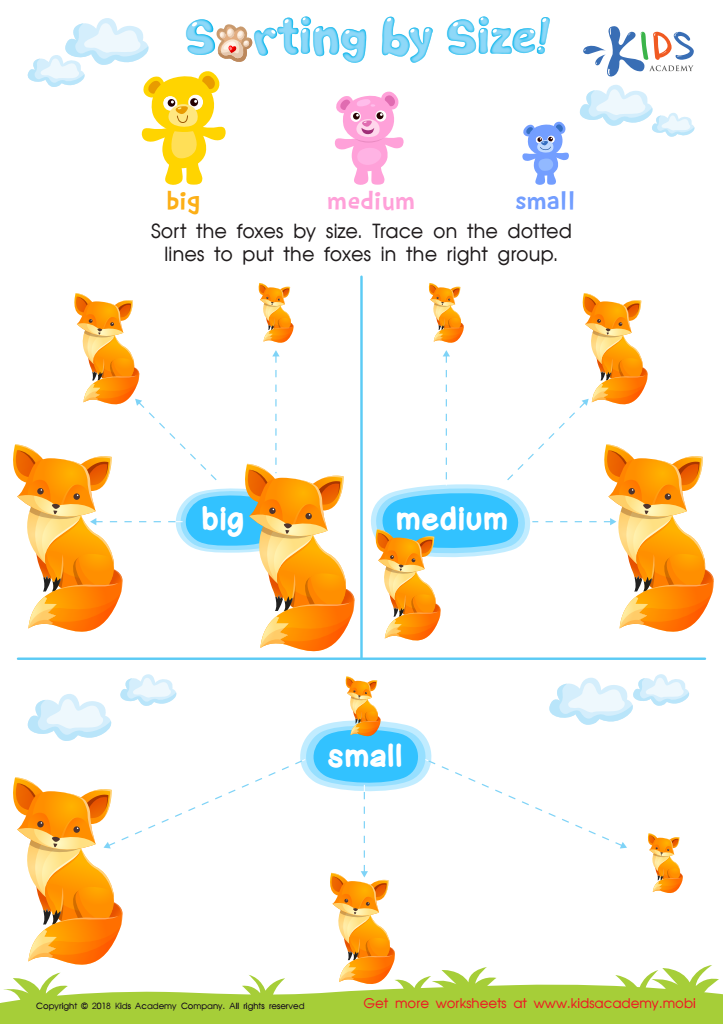
Sorting by Size Worksheet








Sorting skills are fundamental for young children between the ages of 3 to 7 as they form the basis for many cognitive and practical abilities. Parents and teachers should prioritize sorting activities because it enhances a child's ability to analyze, categorize, and organize information, which are skills used in nearly every aspect of learning and daily life.
Firstly, sorting helps develop critical thinking and problem-solving skills. Children learn to observe similarities and differences, categorize objects based on varying attributes like size, color, and shape, and understand complex concepts such as same vs. different. These cognitive skills are foundational for more complex mathematical and scientific reasoning in later years.
Secondly, sorting activities build fine motor skills as children handle and manipulate small objects. This physical manipulation aids in hand-eye coordination and dexterity, essential for tasks such as writing, dressing, and other life skills.
Moreover, sorting also enhances vocabulary and language development. When adults discuss sorting activities and the attributes used, children are introduced to new words and concepts, which expand their language skills and comprehension.
In summary, fostering sorting skills in young children prepares them for academic success, strengthens practical life skills, and supports overall cognitive development. These are crucial building blocks for lifelong learning and development.








