Visual discrimination Sorting Worksheets for Ages 3-7
3 filtered results
-
From - To
Enhance your child's early learning with our Visual Discrimination Sorting Worksheets, specially designed for ages 3-7. These engaging, fun activities help develop critical thinking and observation skills by focusing on differentiating objects based on shapes, colors, and sizes. Perfect for preschool, kindergarten, and early elementary students, our worksheets support cognitive development and prepare children for more advanced math concepts. Tailored for young minds, they provide a solid foundation in visual discrimination, essential for reading and math. Visit Kids Academy to download our high-quality printable worksheets and make learning a joyful experience for your child.
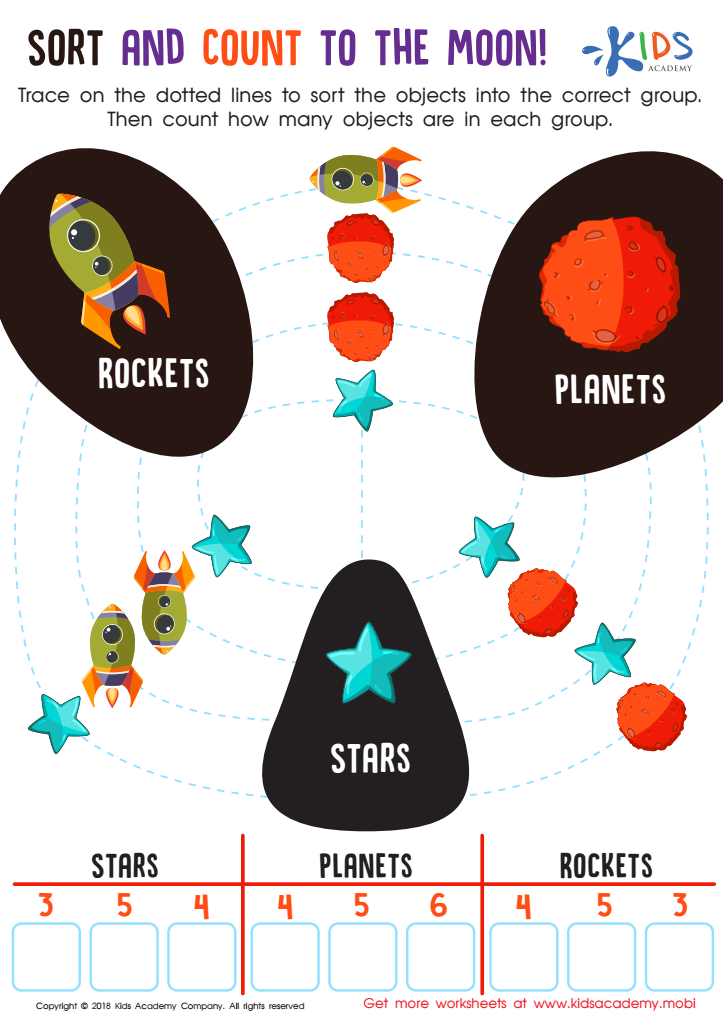
Sort and Count to the Moon Worksheet
 Assign to My Students
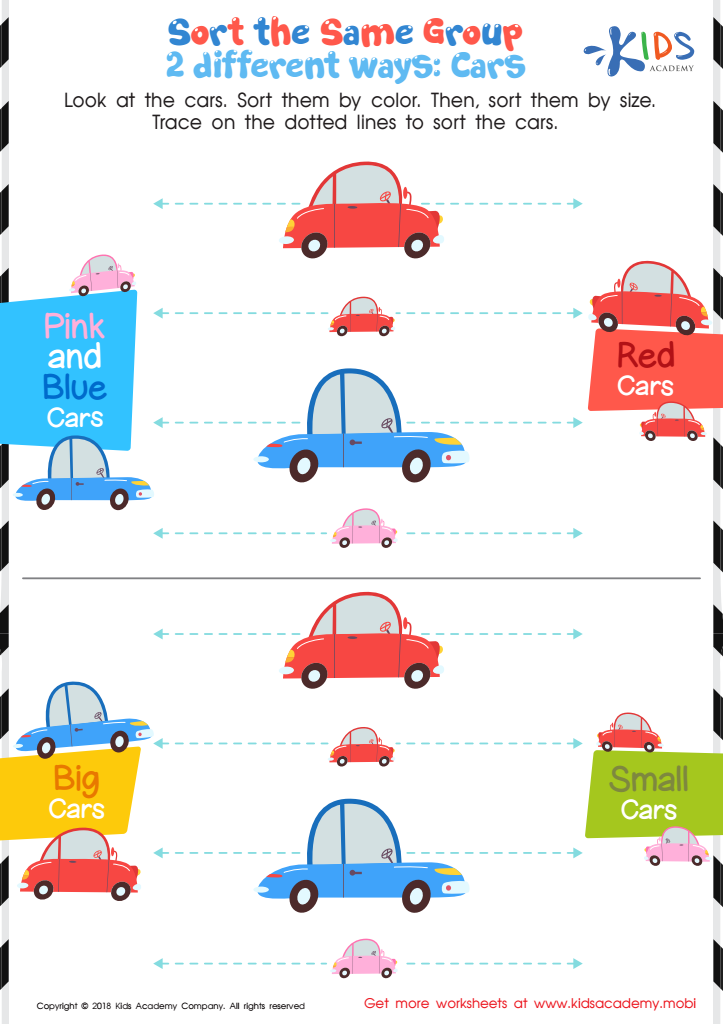
Sort the Same Group 2 Different Ways: Cars Worksheet
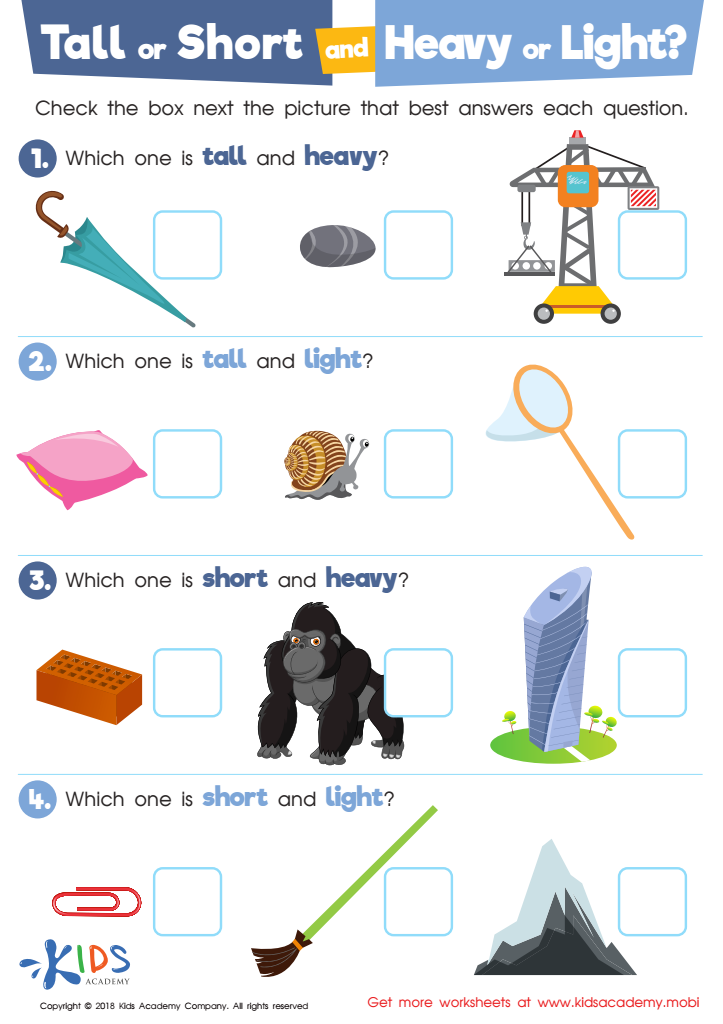
Tall or Short and Heavy or Light? Worksheet








Visual discrimination sorting is a foundational skill for children aged 3-7 that parents and teachers should prioritize in early education. This cognitive ability allows children to distinguish between similarities and differences in shapes, patterns, colors, and sizes, an essential step for academic success and everyday functioning.
First, visual discrimination is crucial for learning to read and write. Recognizing differences in letters (like 'b' vs 'd') or numbers (such as '6' vs '9') directly impacts their literacy and numeracy skills. Without strong visual discrimination, children may struggle with these fundamental tasks, hindering educational progress.
Second, it enhances problem-solving and critical thinking abilities. Sorting objects by attributes encourages children to analyze, categorize, and organize information, which are vital skills for subjects like mathematics and science. For example, sorting blocks by shape or size sets the groundwork for understanding geometric concepts and patterns.
Additionally, visual discrimination improves coordination and fine motor skills. Activities like sorting buttons or puzzle pieces require precise hand-eye coordination, benefiting tasks such as writing or using tools.
Lastly, this skill nurtures observational capabilities and attention to detail, traits important not only in academics but in everyday safety and interactions. Recognizing a familiar face in a crowd or distinguishing a ripe apple from an unripe one are practical applications.
In essence, fostering visual discrimination sorting ensures children develop the cognitive and motor skills essential for holistic growth and successful learning experiences.








