
Counting practice Subtraction Worksheets for Ages 3-7
5 filtered results
Difficulty Level
Grade
Age
-
From - To
Subject
Activity
Standards
Enhance your child's math skills with our engaging Counting Practice Subtraction Worksheets, designed specifically for ages 3-7. These worksheets combine interactive counting exercises with fun subtraction problems, fostering a solid understanding of numbers and their relationships. Our user-friendly format encourages young learners to practice in an enjoyable way, allowing them to grasp essential math concepts at their own pace. Filled with colorful illustrations and a variety of activities, these worksheets will captivate children's attention while they develop critical thinking and problem-solving skills. Start your child's mathematical journey today, and watch them gain confidence in subtraction! Perfect for home or classroom use.
Favorites
With answer key
Interactive
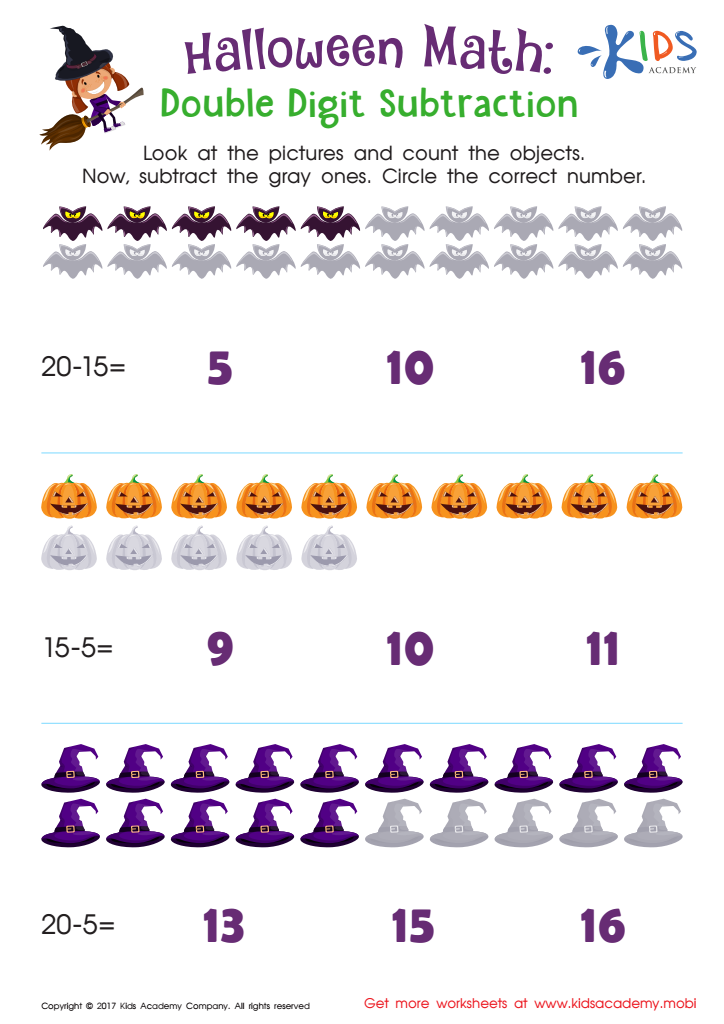
Halloween Math Subtraction Worksheet
Kids can easily understand subtraction by using the visuals provided in this worksheet. Get ready for some fun math!
This Halloween math worksheet uses spooky images to help kids understand subtraction. With it, they can count and solve double digit problems more easily. Get ready for some fun and engaging math practice!
 Assign to My Students
Halloween Math Subtraction Worksheet
Worksheet
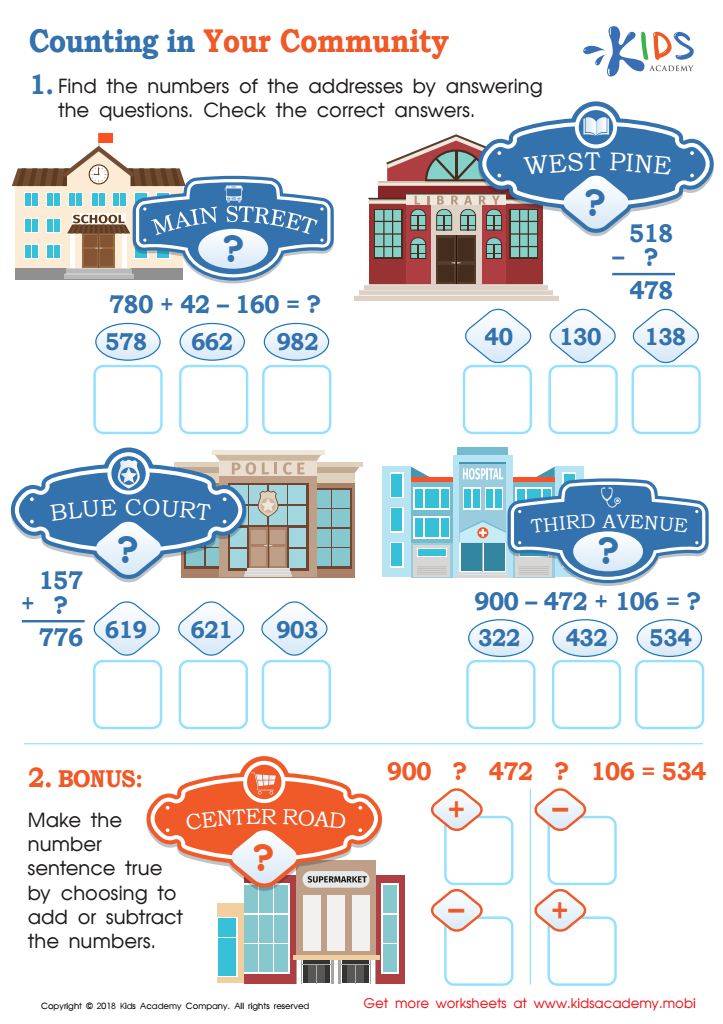
Counting in Your Community Worksheet
Introduce your kids to the idea of a community, where different people and buildings co-exist, each playing their part for the community's progress. Ask them to name the buildings they see in their community. Then work through this worksheet to find the numbers of the addresses by answering the questions. Check the answers once they've solved the equations.
Counting in Your Community Worksheet
Worksheet
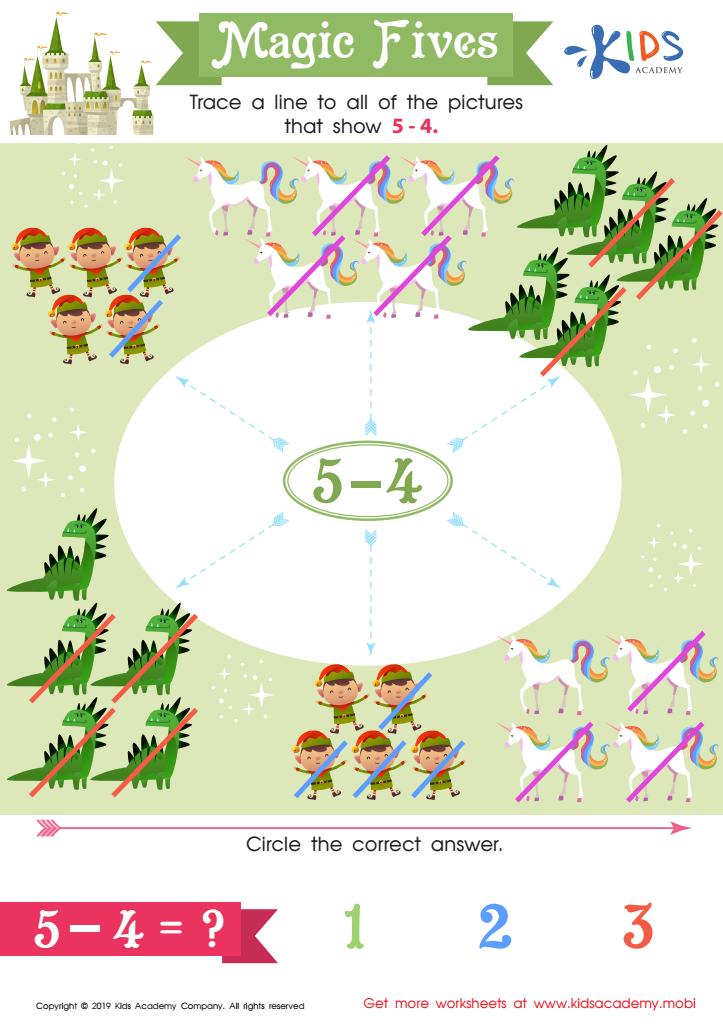
Magic Fives Worksheet
Help your students identify the objects & people in the worksheet. Point to the equation 5 -4 in the center, then get them to count the items and trace a line connecting those that add up to 5 - 4.
Magic Fives Worksheet
Worksheet
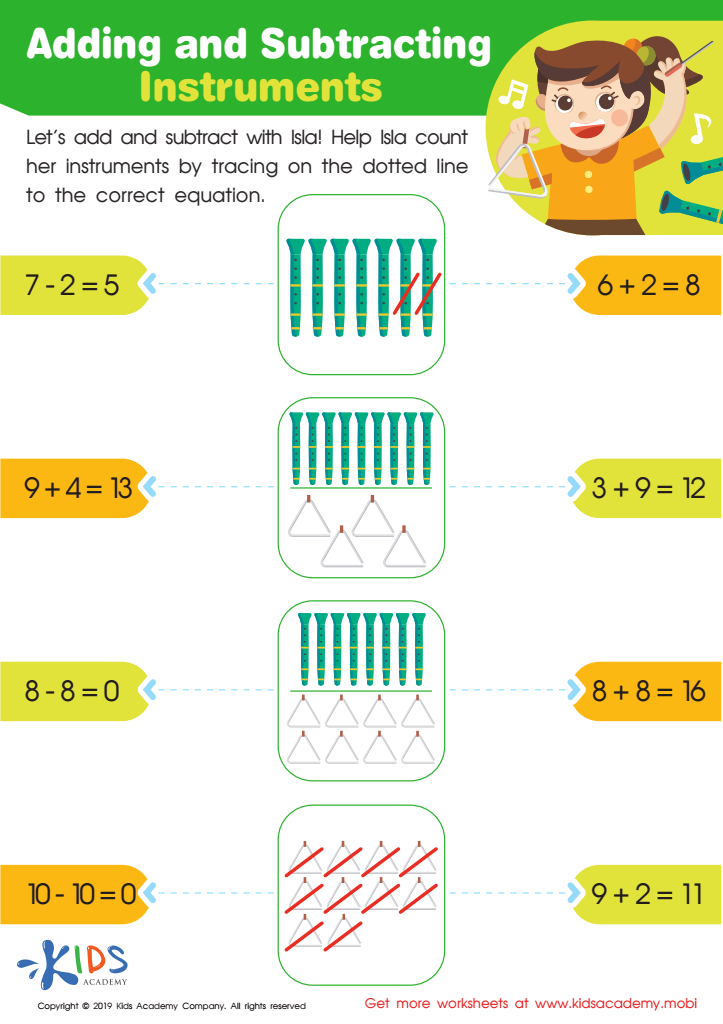
Adding and Subtracting: Instruments Worksheet
Children can help Isla count her musical instruments with this fun worksheet. The downloadable PDF gives them a chance to practice addition and subtraction by connecting pictures to equations. It's also a great way to learn the order of operations.
Adding and Subtracting: Instruments Worksheet
Worksheet
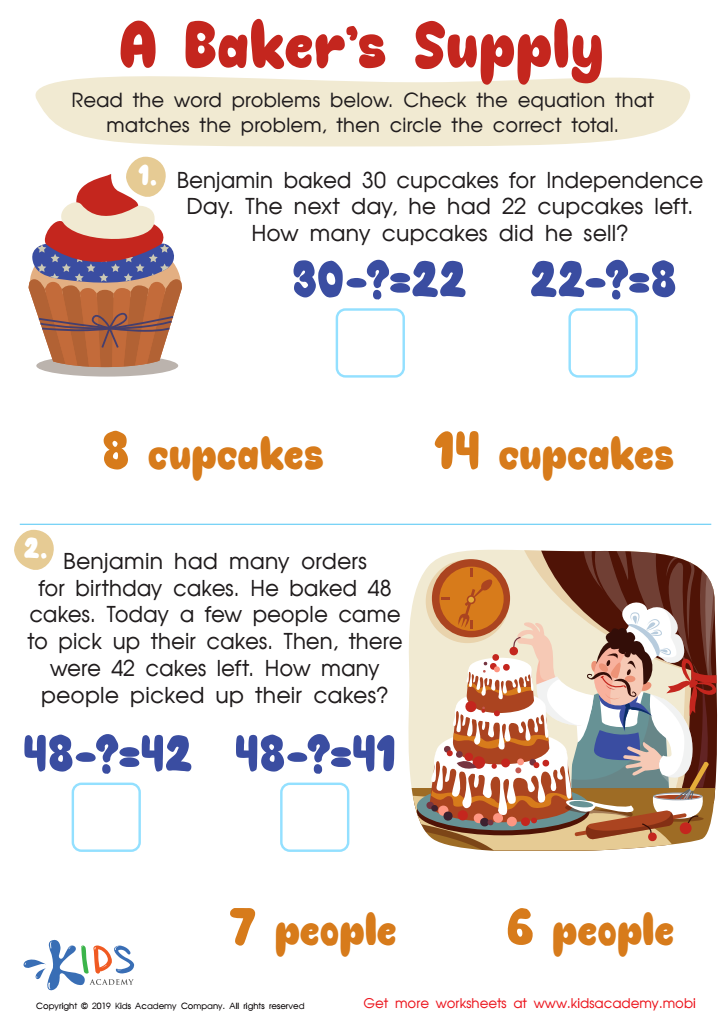
A Baker's Supply Worksheet
A visit to the baker's shop is thrilling! Your kids will love it! From scrumptious goodies to the mouthwatering aroma, it's a magical experience. Ask your kids what they're most eager to see and do. Now, read the word problems in this worksheet to them. Help them choose the correct answer for each problem and circle the correct total.
A Baker's Supply Worksheet
Worksheet
Join Kids Academy for Free
Who is primarily going to use this learning content?







.jpg)
Counting practice and subtraction skills are foundational elements in early childhood education that lay the groundwork for a child's future mathematical understanding. For children aged 3-7, these skills are crucial as they help develop essential cognitive abilities, including problem-solving, logical thinking, and spatial reasoning.
Engaging in counting and subtraction activities promotes numerical fluency, allowing children to recognize patterns and understand quantities, essential for building more complex mathematical concepts later on. In this age range, play-based interactions—such as using toys or everyday objects for counting and simple subtraction—make learning enjoyable and meaningful, fostering a positive attitude towards math.
Moreover, these skills contribute to vital life skills, such as critical thinking and decision-making. Emphasizing counting and subtraction in early education equips children with the ability to navigate everyday situations, like managing money or measuring ingredients in cooking.
Lastly, as children build confidence in their mathematical abilities, they are more likely to engage positively with academic challenges in the future. Parents and teachers should therefore prioritize counting and subtraction practice, recognizing its essential role in shaping confident, capable learners who are well-prepared for advanced stages of education.








