Shape identification Tracing Shapes Worksheets for Ages 3-7
3 filtered results
-
From - To
Shape Identification Tracing Shapes Worksheets for Ages 3-7 are designed to make early geometry fun and engaging! These worksheets help young learners identify and trace various shapes, including circles, squares, triangles, and more. Ideal for preschool and kindergarten settings, they enhance fine motor skills while fostering shape recognition and coordination. With delightful illustrations and user-friendly formats, these activities provide an excellent foundation for future math concepts. Parents and teachers can easily download and print the worksheets, making it convenient for at-home learning or classroom activities. Encourage your child's curiosity and creativity as they explore the world of shapes!
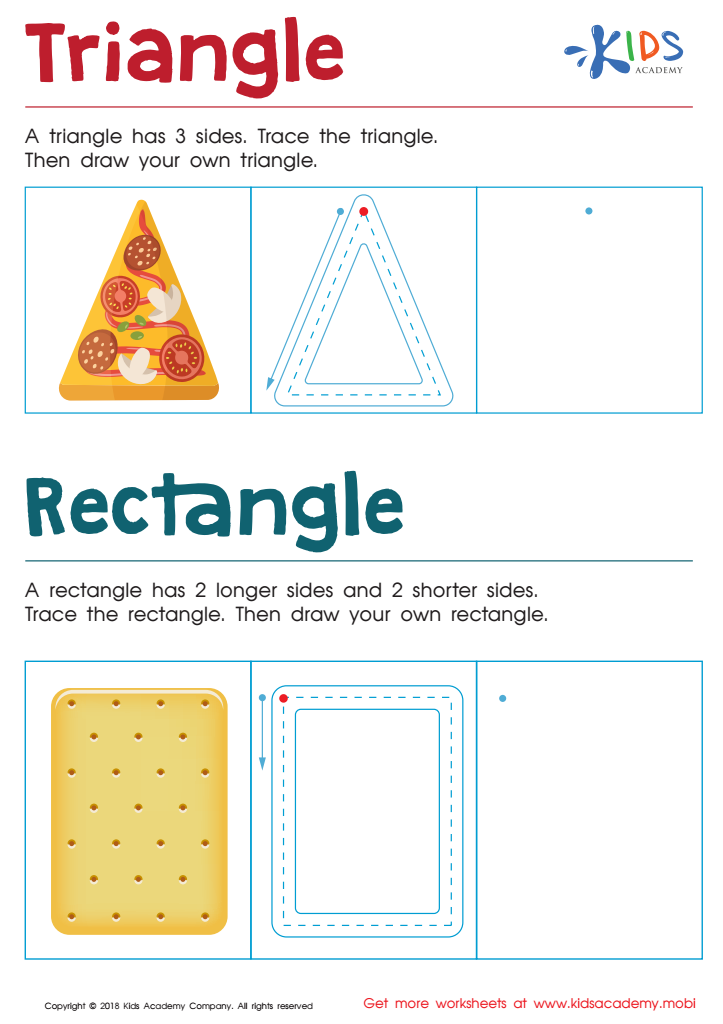
Triangle Rectangle Worksheet
 Assign to My Students
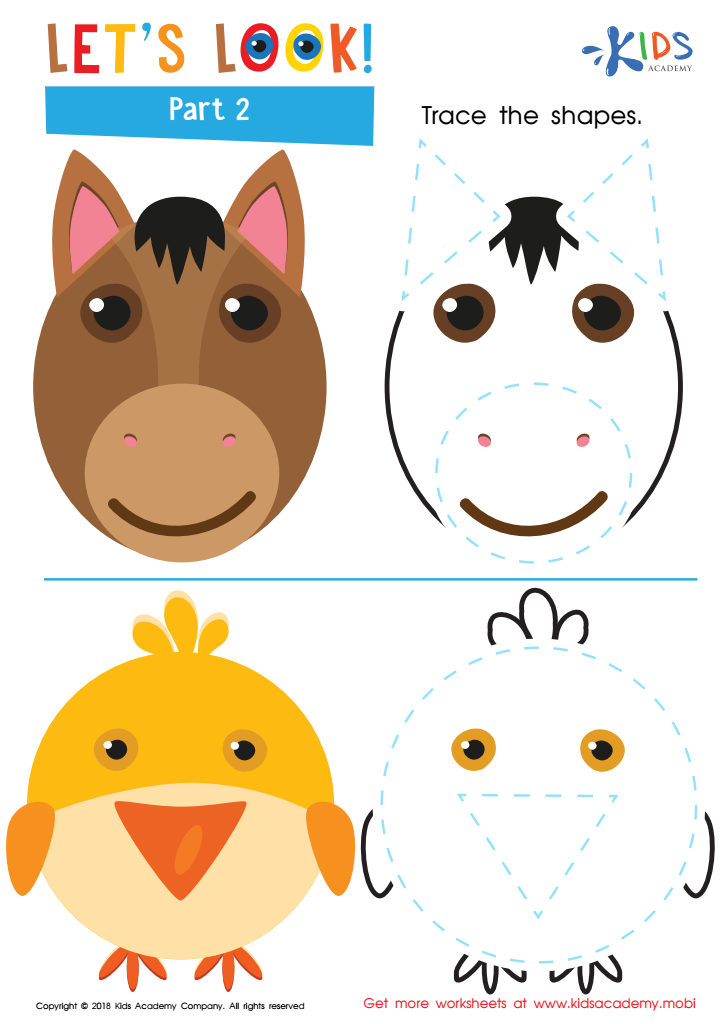
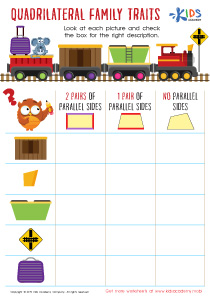
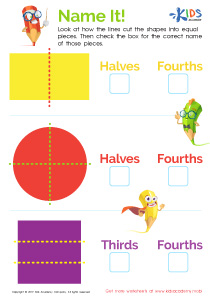
Let's Look! Part 2 Worksheet
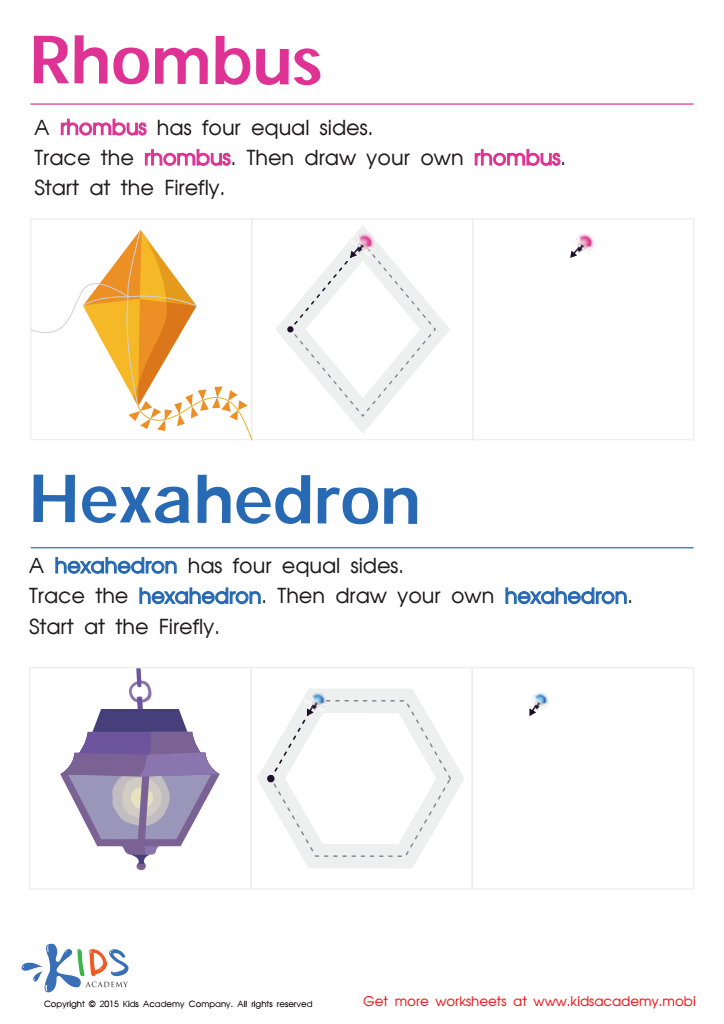
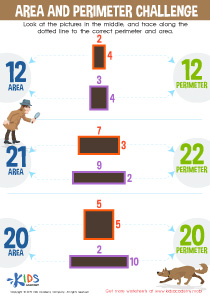
Draw a Rhombus And a Hexahedron Printable








Shape identification and tracing are crucial developmental activities for children aged 3-7, laying the foundation for various key skills. Firstly, recognizing shapes helps enhance children's visual perception, enabling them to understand their environment better. As they identify shapes in everyday objects, they learn to make connections between their surroundings and mathematical concepts.
Tracing shapes provides essential fine motor skill development, crucial for writing and drawing later on. As children practice controlling a pencil or crayon, they build hand-eye coordination and dexterity, enhancing their ability to perform more complex tasks. Additionally, tracing reinforces shape recognition, helping children to internalize features and attributes.
Engaging in these activities supports cognitive development by promoting problem-solving skills and logical thinking. When children categorize shapes, they learn about similarities and differences, which contributes to their understanding of basic math concepts.
Furthermore, shape tracing can be a fun, interactive experience that fosters parent-child or teacher-student bonding. It creates opportunities for conversation, prompting language development as they describe what they see and experience.
Incorporating shape activities into early education not only prepares children for academic success but also enriches their overall development during these formative years. Therefore, parents and teachers should prioritize these engaging learning experiences.