
Handwriting practice Building Vocabulary Worksheets for Ages 3-7
5 filtered results
Difficulty Level
Grade
Age
-
From - To
Subject
Activity
Standards
Enhance your child's vocabulary and handwriting skills with our engaging Handwriting Practice Building Vocabulary Worksheets, designed specifically for ages 3-7. These interactive worksheets are curated to support early reading and writing development through fun, age-appropriate exercises. Kids will learn new words, improve their penmanship, and boost their confidence in writing. Perfect for hands-on learning, whether at home or in the classroom, our worksheets guide young learners on their educational journey by combining vocabulary building with essential handwriting practice. Empower your little ones with the tools they need for a successful start in reading and writing!
Favorites
With answer key
Interactive
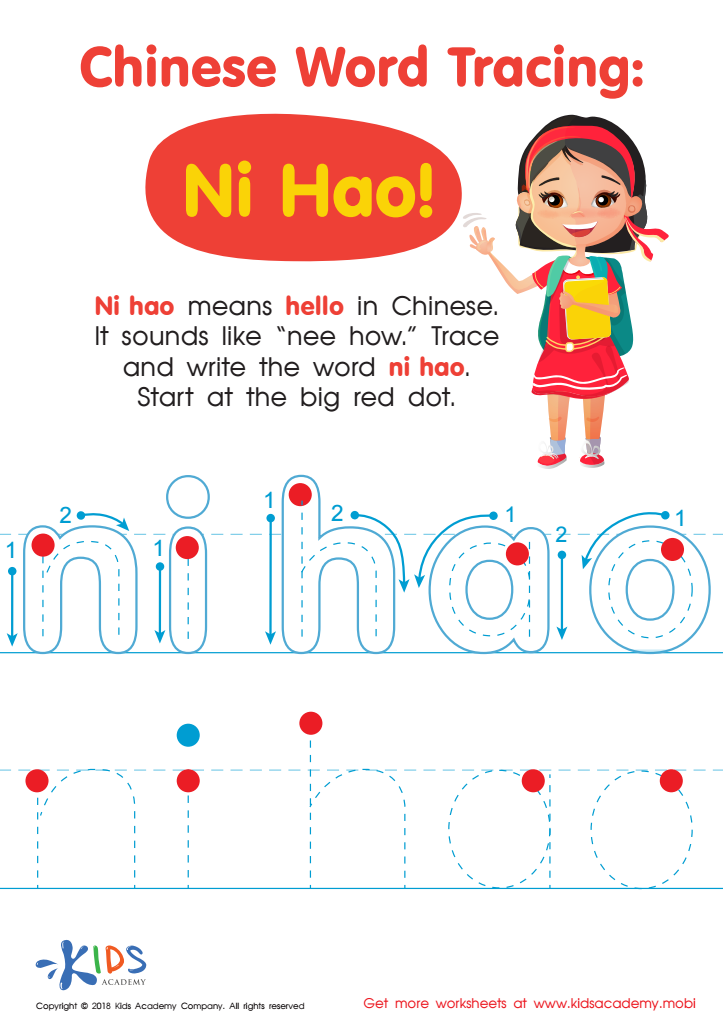
Chinese Word Tracing: Ni Hao Worksheet
Kids can learn to say "Ni hao" with this fun tracing worksheet. The free PDF helps kids write and say the Chinese greeting while also developing fine-motor, handwriting and reading skills. With red guide dots and traceable lines, kids will learn top-to-bottom and left-to-right patterning for fluent reading.
 Assign to My Students
Chinese Word Tracing: Ni Hao Worksheet
Worksheet











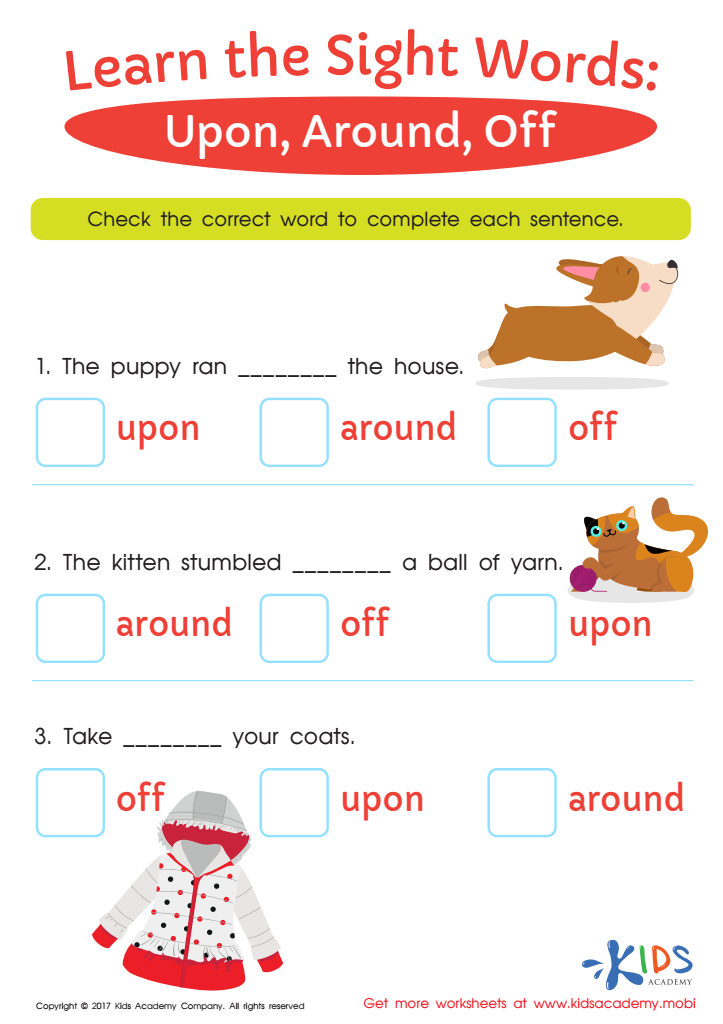
Upon, Around, Off Sight Words Worksheet
Assist your child in mastering prepositions by printing off this worksheet featuring three sight words: upon, around, off. Read the sentences aloud and use the illustrations to demonstrate the meaning of each. Your kid will soon master these words quickly.
Upon, Around, Off Sight Words Worksheet
Worksheet
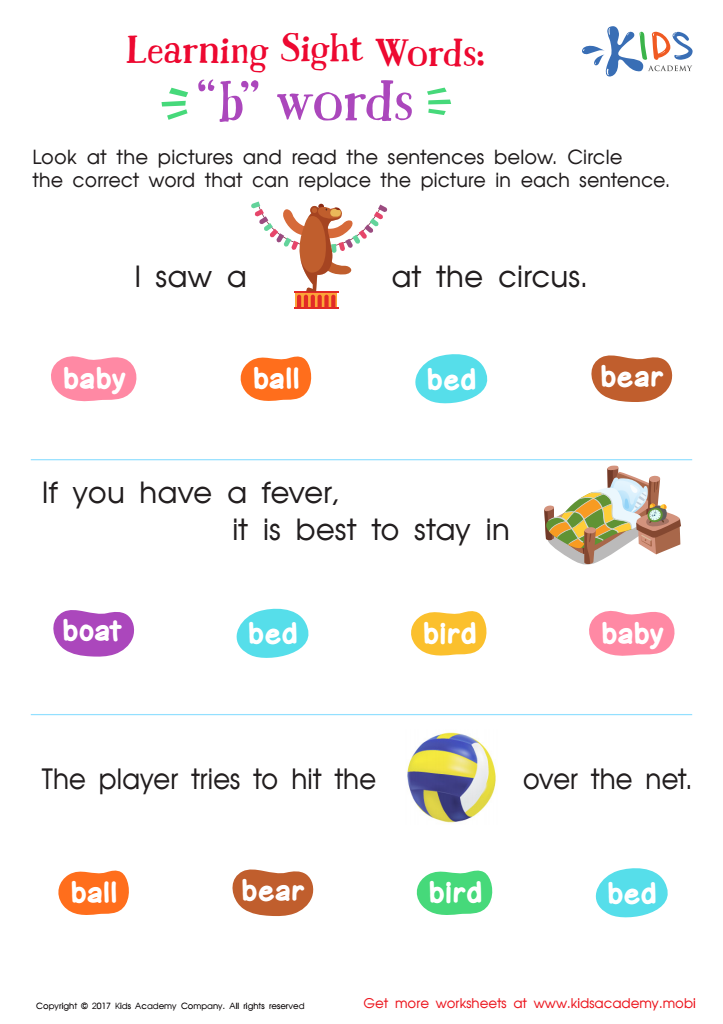
"B" Words Printable Sight Words Worksheet
Kids will learn sight words quickly with this fun worksheet! "B" Words offers guided practice with simple sentences and pictures. Build your child's reading confidence with this helpful worksheet and watch them become a master!
"B" Words Printable Sight Words Worksheet
Worksheet
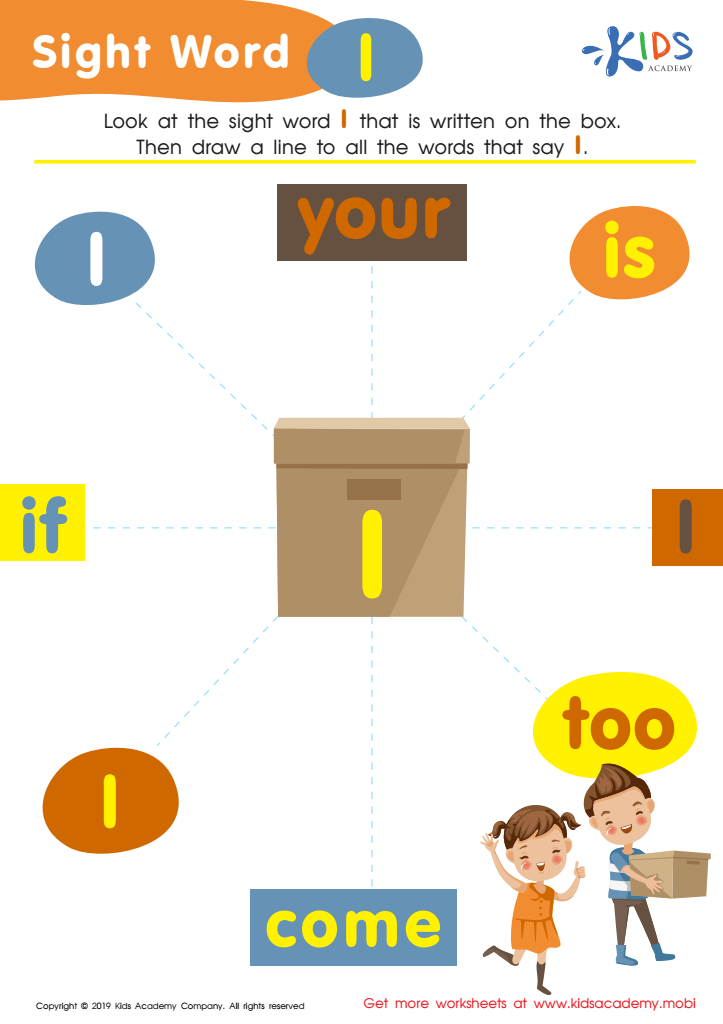
Sight Word I Worksheet
Recognizing the sight word 'I' is harder than it looks! When kids are learning to read, they understand 'I' by its sound, not as a word. This free worksheet gives them practice with 'I', letting them work on their fine motor skills too. They'll join 'I' to shapes containing the same letter. It's a great way to give kids confidence in their reading skills!
Sight Word I Worksheet
Worksheet
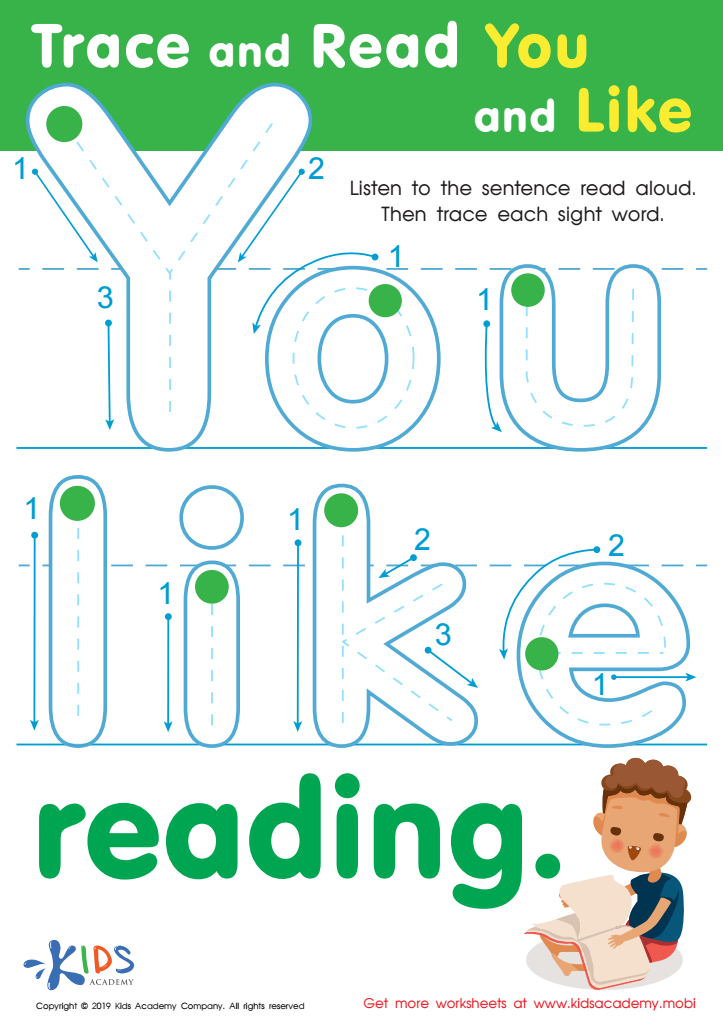
Trace Read You Like Worksheet
Sight words help children become confident and fluent readers. This free worksheet encourages success with basic 'you' and 'like' words. Writing them with traceable lines and green dots shows motion and builds sight word vocabulary. Help your child master the basics and boost their reading progress!
Trace Read You Like Worksheet
Worksheet
Join Kids Academy for Free
Who is primarily going to use this learning content?



.jpg)




Handwriting practice and building vocabulary are critical elements for the development of children aged 3-7. At this formative stage, young brains are remarkably receptive to new information and skills acquisition. Handwriting practice aids in fine motor skill development and eye-hand coordination, which are foundational for many other activities, both academic and everyday life. The physical act of writing also supports cognitive processes and memory retention more effectively than typing on a keyboard at this age.
Building vocabulary is equally crucial, as language development underpins communication skills, reading comprehension, and overall academic success. A rich vocabulary supports a child’s ability to understand and articulate thoughts and emotions effectively, fostering better social interactions and self-expression. It also lays the groundwork for reading proficiency, as children with larger vocabularies find it easier to decode and understand new words they encounter.
Incorporating these practices within a stimulating and supportive environment fosters both enthusiasm for learning and critical foundational skills. Parents and teachers play essential roles in this developmental stage, and through consistent practice, they can nurture confident, articulate, and cognitively robust learners prepared for future educational challenges.
Thus, investing time in handwriting and vocabulary practice is not just about immediate skill acquisition; it is an investment in a child’s long-term cognitive, academic, and social well-being.








