
Improve vocabulary Building Vocabulary Worksheets for Ages 3-7
3 filtered results
Difficulty Level
Grade
Age
-
From - To
Subject
Activity
Standards
Enhance your child's language development with our "Improve Vocabulary Building Vocabulary Worksheets" designed for ages 3-7! These engaging and fun-filled worksheets are perfect for young learners, providing a variety of activities that promote vocabulary expansion. Children will explore new words through colorful illustrations, interactive exercises, and playful games that make learning enjoyable. Each worksheet focuses on essential language skills, encouraging kids to understand meanings, use words correctly, and express themselves confidently. Whether at home or in the classroom, our resourceful materials support early literacy, laying a strong foundation for future reading and communication skills. Boost your child's vocabulary today!
Favorites
With answer key
Interactive
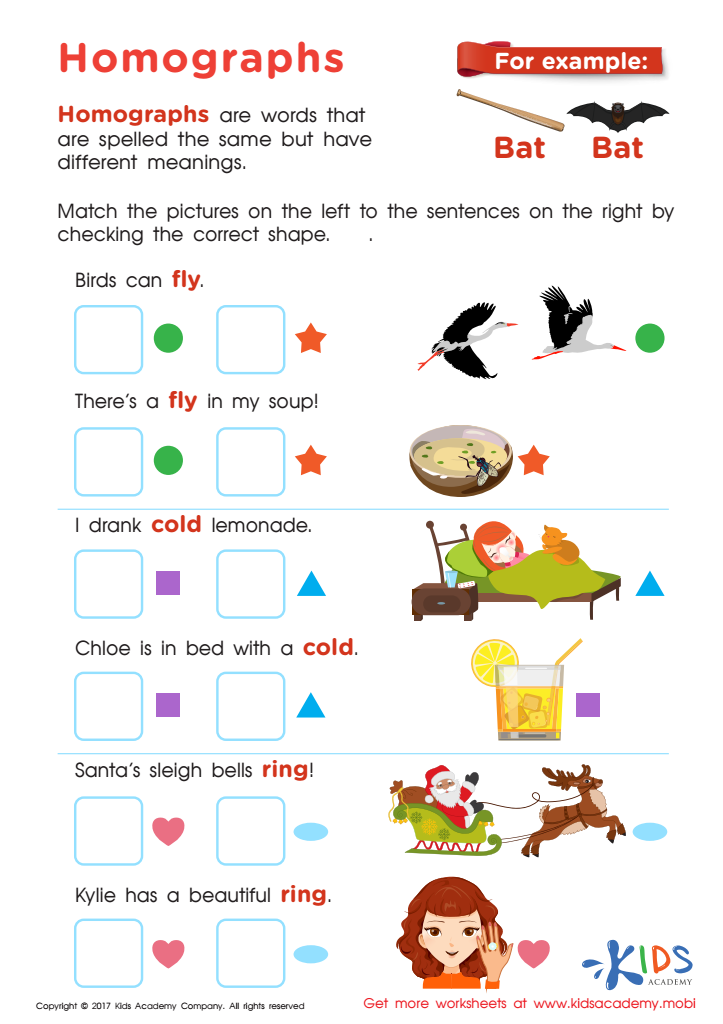
Homographs Free Printable Worksheet
Homographs can be tricky for kids. Help them gain valuable practice with this free printable worksheet. It has a selection of funny words with double meanings, and can be a great learning experience!
 Assign to My Students
Homographs Free Printable Worksheet
Worksheet











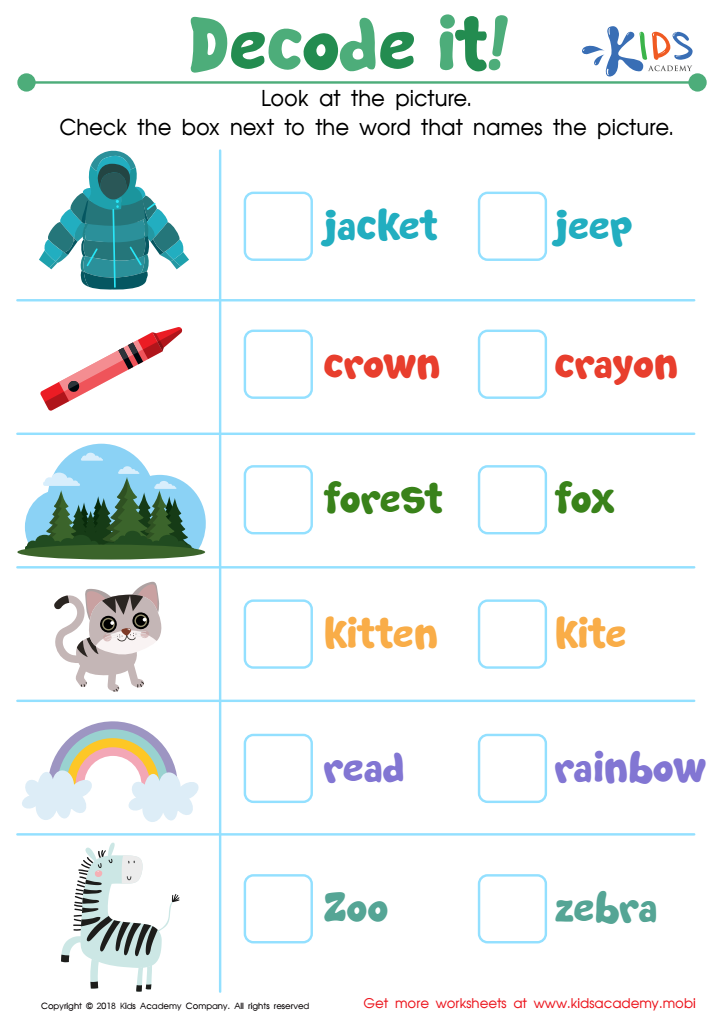
Reading: Decode It Worksheet
Look at the picture and circle the word that names it. This exercise helps kids practice picture cues and decoding words, with the same beginning sound. It builds their fluency and comprehension, giving them the skills to read unfamiliar words.
Reading: Decode It Worksheet
Worksheet
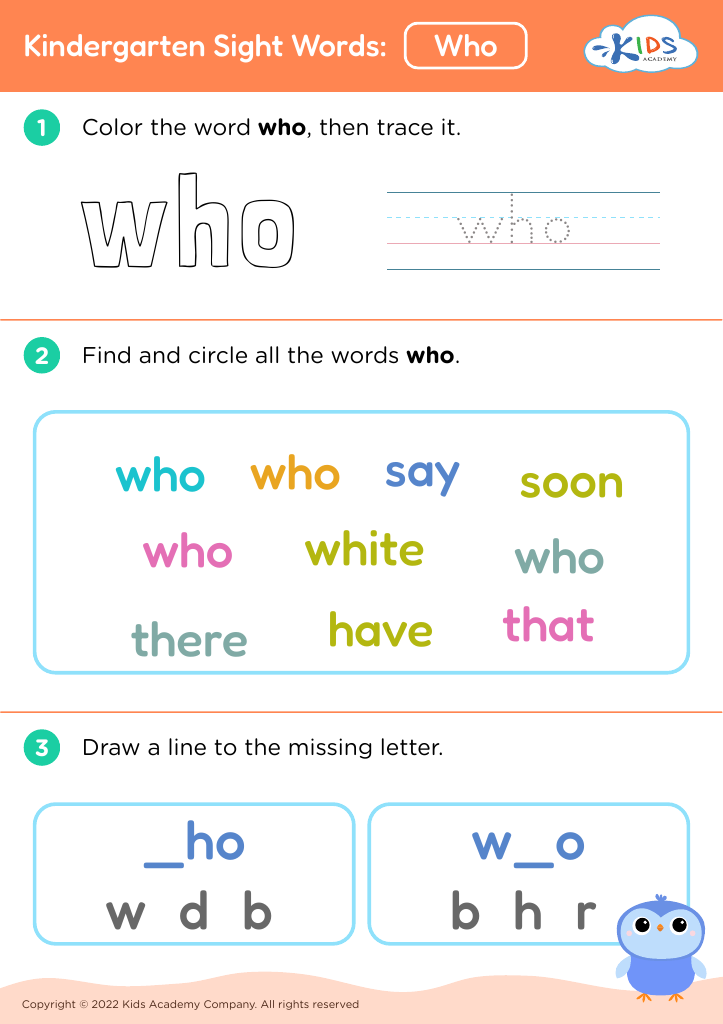
Join Kids Academy for Free
Who is primarily going to use this learning content?







Building vocabulary in children aged 3-7 is crucial for their overall communication skills and cognitive development. At this young age, children are highly receptive to language, and the words they learn shape their understanding of the world. A robust vocabulary not only enhances children's ability to express themselves but also improves their listening and comprehension skills, which are foundational for learning.
Parents and teachers play a vital role in vocabulary development by creating rich language experiences. Engaging children in conversations, reading age-appropriate books, and encouraging play activities can introduce new words in context, making them more memorable. Furthermore, a strong vocabulary is linked to literacy proficiency, which significantly affects academic success in later years.
Additionally, children with an extensive vocabulary are more likely to develop a love for reading and learning, paving the way for lifelong intellectual curiosity. By nurturing vocabulary from an early age, parents and teachers empower children to articulate thoughts, share ideas, and connect socially. Investing in vocabulary development not only enriches a child's linguistic abilities but also enhances their confidence and readiness to face future educational challenges, ultimately fostering well-rounded, effective communicators.








