
Logical thinking Building Vocabulary Worksheets for Ages 3-7
4 filtered results
Difficulty Level
Grade
Age
-
From - To
Subject
Activity
Standards
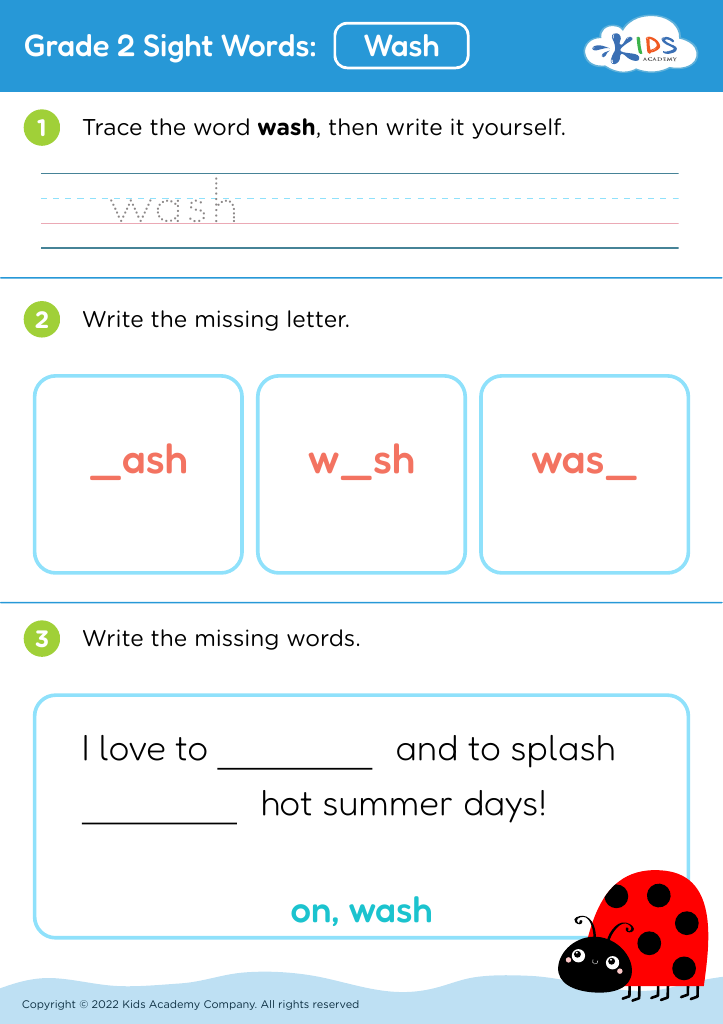
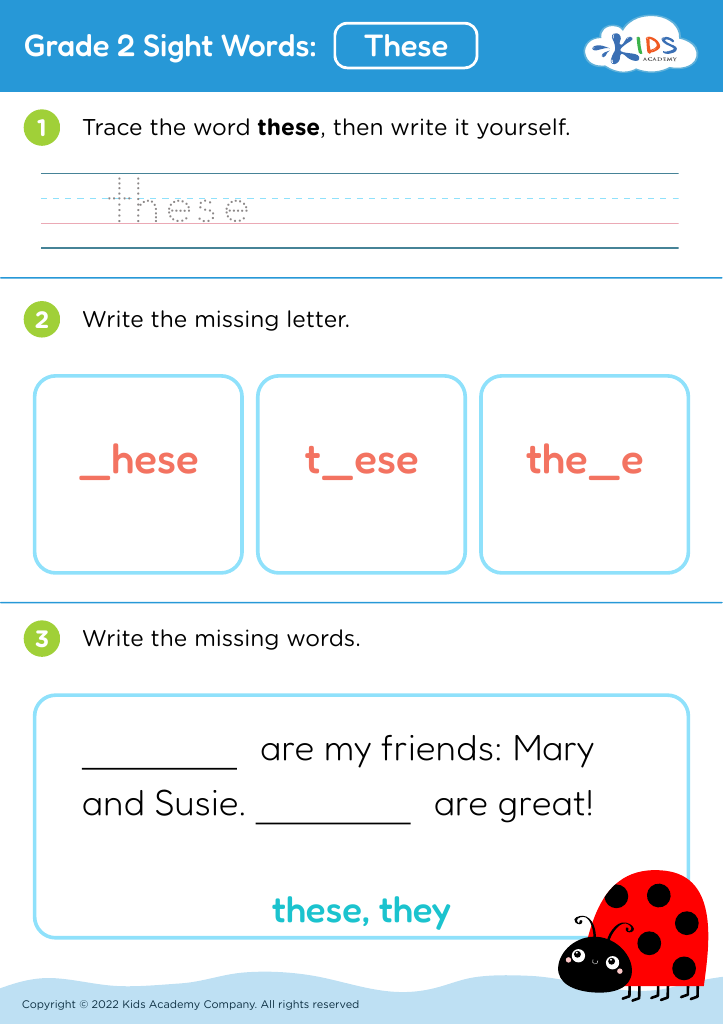
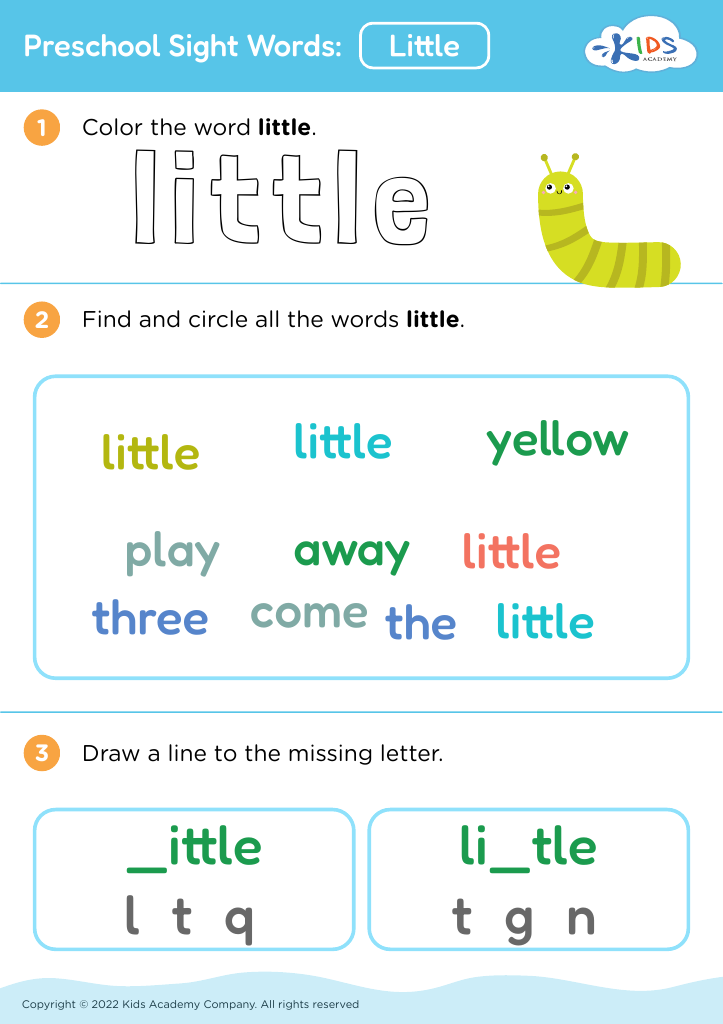
Enhance your child's cognitive development with our Logical Thinking Building Vocabulary Worksheets, specially designed for kids ages 3-7. Our engaging activities seamlessly combine fun and education to stimulate young minds, promoting critical thinking and vocabulary growth. These worksheets not only expand your child's word bank but also improve their reasoning skills through various exercises such as matching, categorizing, and sequencing. Perfect for early learners, our resources support language development and prepare your child for future academic success. Access the perfect blend of learning and play with our reliable, teacher-approved worksheets!
Favorites
With answer key
Interactive
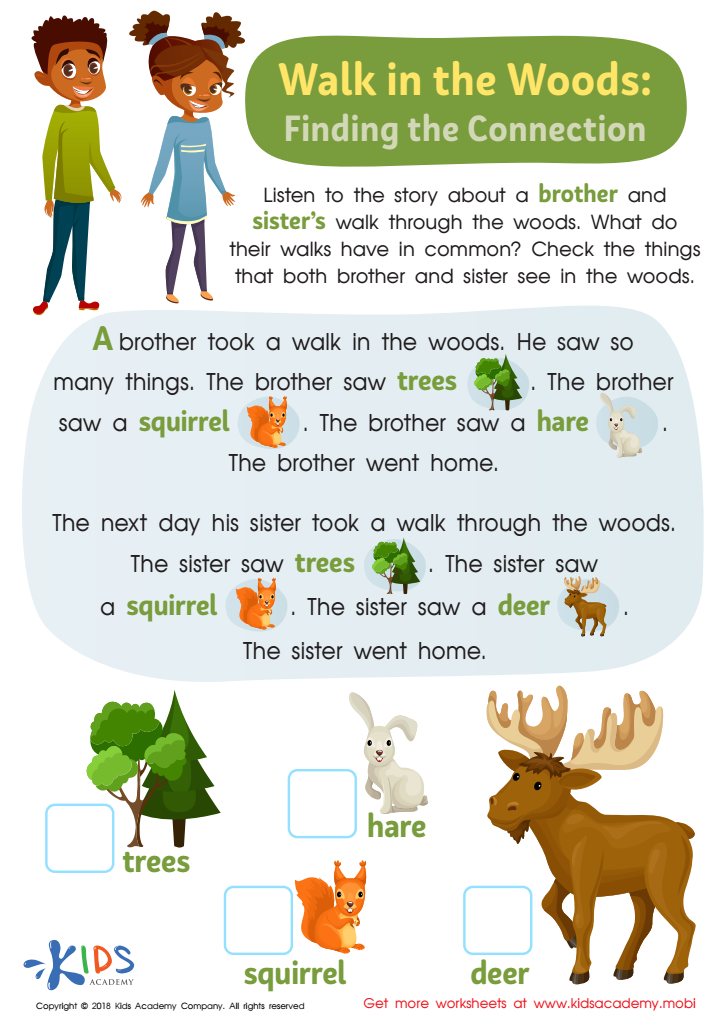
Walk In the Woods: Finding Connections Worksheet
Brother and sister took a walk in the woods to connect with nature and get some exercise. As they went, they noted different things like birds and plants, which they share in this story. Read it to your little ones, and help them check off the items the two saw. It's a great way to learn about nature and enjoy the outdoors.
 Assign to My Students
Walk In the Woods: Finding Connections Worksheet
Worksheet











Join Kids Academy for Free
Who is primarily going to use this learning content?








Parents and teachers should care about building logical thinking and vocabulary in children aged 3-7 because these are foundational skills that support lifelong learning and development. Logical thinking enables young children to understand relationships between objects, ideas, and events. It helps in problem-solving, decision-making, and reasoning, which are essential for academic success and everyday life. For instance, when children can follow a sequence or recognize patterns, they better grasp mathematical concepts and scientific reasoning.
Similarly, a rich vocabulary at an early age boosts language skills, reading comprehension, and communication abilities. Young children are at a prime age for language absorption; introducing new words deepens their understanding of the world and enhances their ability to express thoughts and emotions effectively. Vocabulary building also underpins literacy skills, as a broad vocabulary helps children decode and make sense of written texts more easily.
Investing in these skills sets the stage for confident, articulate, and thoughtful individuals. Activities like storytelling, interactive play, puzzles, and games can seamlessly integrate these skills into daily routines. When parents and teachers emphasize logical thinking and vocabulary development, they are helping children build the cognitive tools they need to succeed in school and beyond.








