Vocabulary Enrichment Building Vocabulary Worksheets for Ages 3-7
3 filtered results
-
From - To
Welcome to our Vocabulary Enrichment worksheets, designed specifically for children ages 3-7! These engaging resources aim to enhance language skills through fun, interactive activities that capture young learners' imaginations. Our worksheets focus on building a rich vocabulary foundation, featuring colorful illustrations, matching exercises, and word games tailored to young minds. Each activity encourages creativity and critical thinking while making learning enjoyable. Empower your child with the language skills they need for effective communication and academic success. Explore our selection today to inspire a lifelong love for words and elevate their vocabulary development in an exciting way!
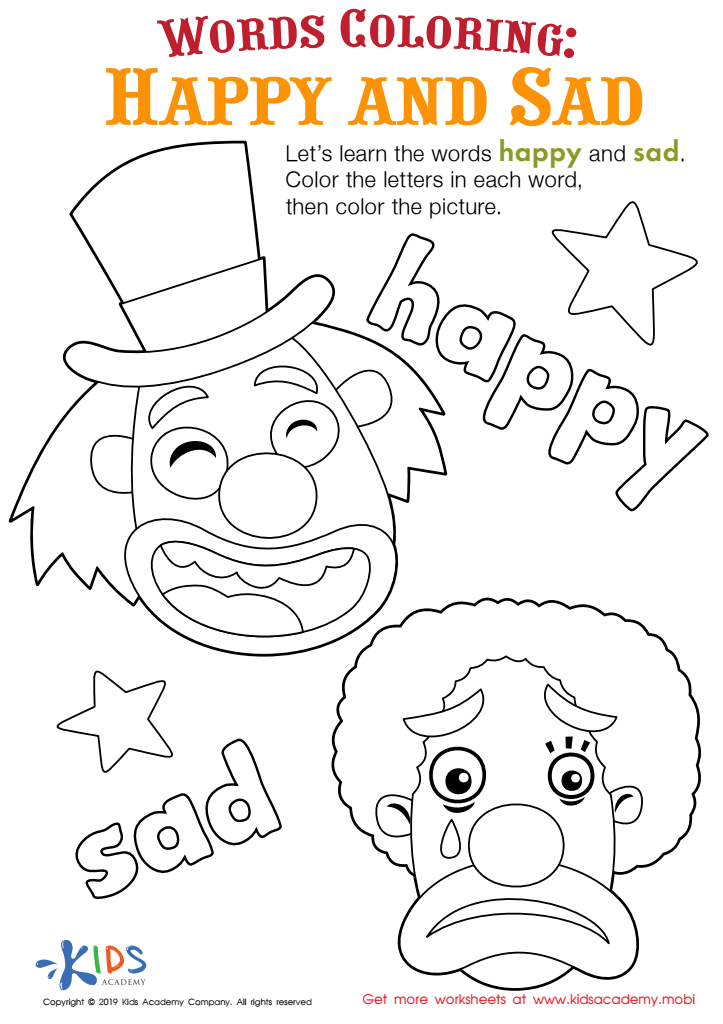
Happy and Sad Words Coloring Worksheet
 Assign to My Students











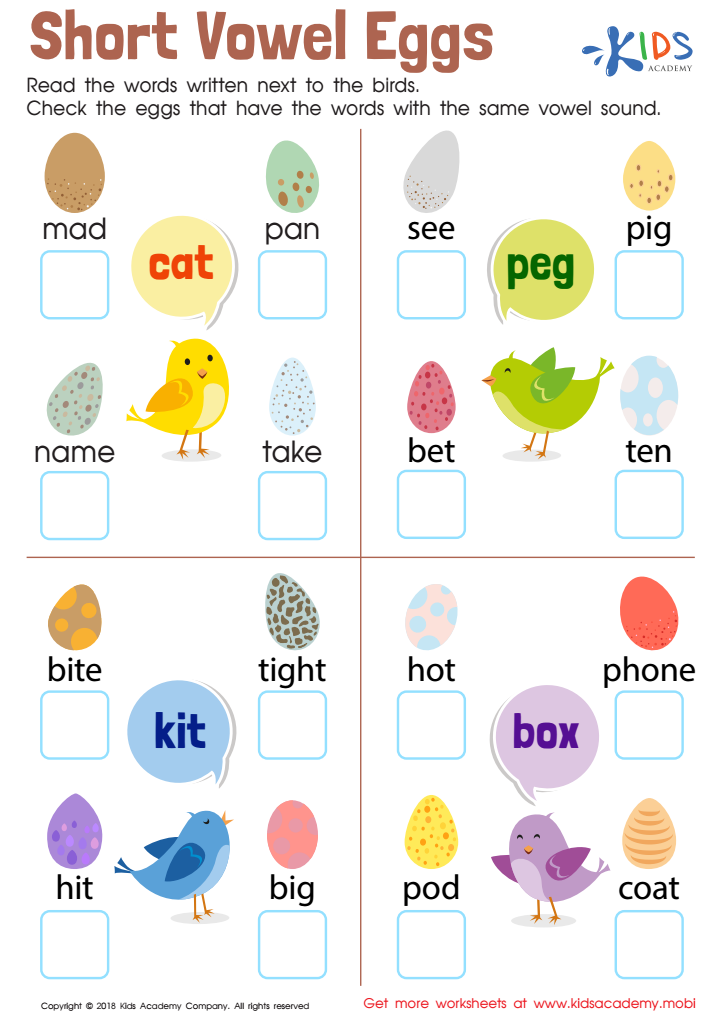
Short Vowel Eggs Worksheet








Vocabulary enrichment is crucial for children aged 3-7 as it lays the foundation for effective communication and academic success. At this stage, children are rapidly acquiring language skills, making it an ideal time for parents and teachers to introduce new words and concepts. A robust vocabulary enhances reading comprehension, enabling children to understand and enjoy stories and informational texts more deeply. This understanding fosters a love for reading, which is essential for lifelong learning.
Furthermore, a rich vocabulary supports cognitive development. It encourages critical thinking and helps children express their thoughts, feelings, and ideas more clearly. As they learn new words, children can articulate complex concepts, making it easier for them to engage in conversations and articulate their understanding of the world around them.
Additionally, strong vocabulary skills can positively influence academic performance across subjects, as language is integral in science, math, and social studies. For low-income households, vocabulary exposure is often limited, widening the achievement gap; therefore, targeted enrichment strategies can level the playing field.
By prioritizing vocabulary enrichment, parents and teachers empower children with the tools needed for communication, problem-solving, and social interaction, ultimately shaping confident learners ready to thrive in school and beyond.








