
Coloring skills Reading Worksheets for Ages 3-7
5 filtered results
Difficulty Level
Grade
Age
-
From - To
Subject
Activity
Standards
Enhance your child's reading journey with our engaging Coloring Skills Reading Worksheets designed for ages 3-7. These fun worksheets combine creativity and literacy, making learning enjoyable. Each worksheet encourages children to color characters and scenes while improving their reading comprehension and vocabulary. By integrating coloring with reading exercises, kids will develop fine motor skills and enhance their enthusiasm for learning. Explore a variety of themes and captivating illustrations that will captivate your young learners. Perfect for parents and educators alike, these worksheets provide a delightful way to support early reading skills while sparking imagination and artistic expression! Download today and start the adventure!
Favorites
With answer key
Interactive
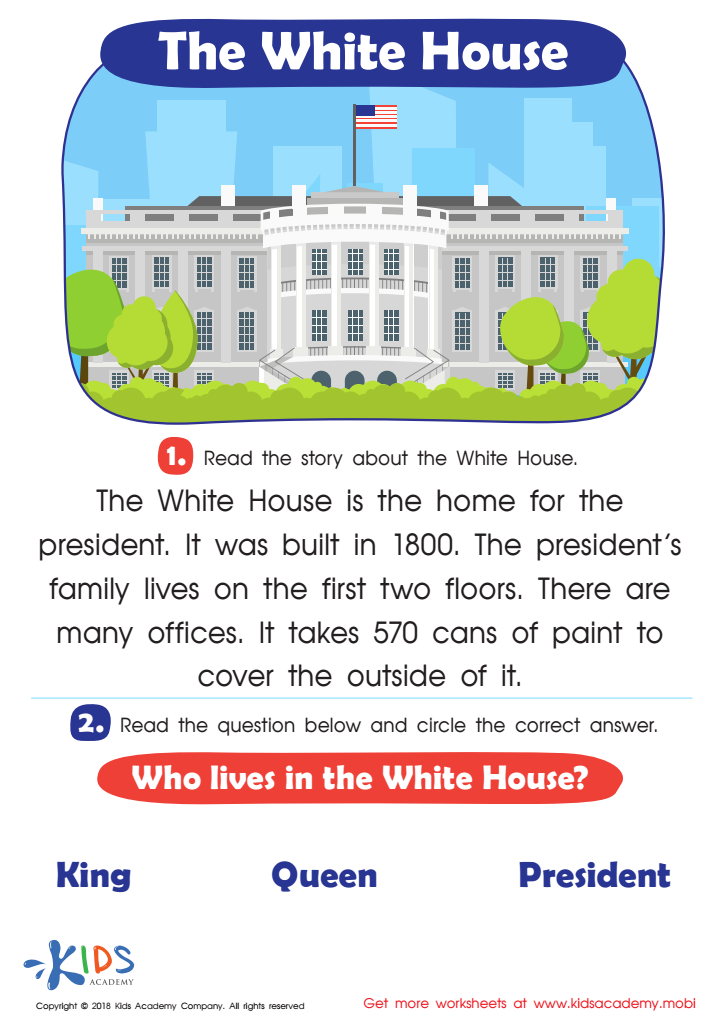
White House Worksheet
Read stories to your students to teach them new words, and about the White House. Before reading, ask your kindergartners what they already know. Then read short sentences for them to learn about the building the U.S President resides in.
White House Worksheet
Worksheet
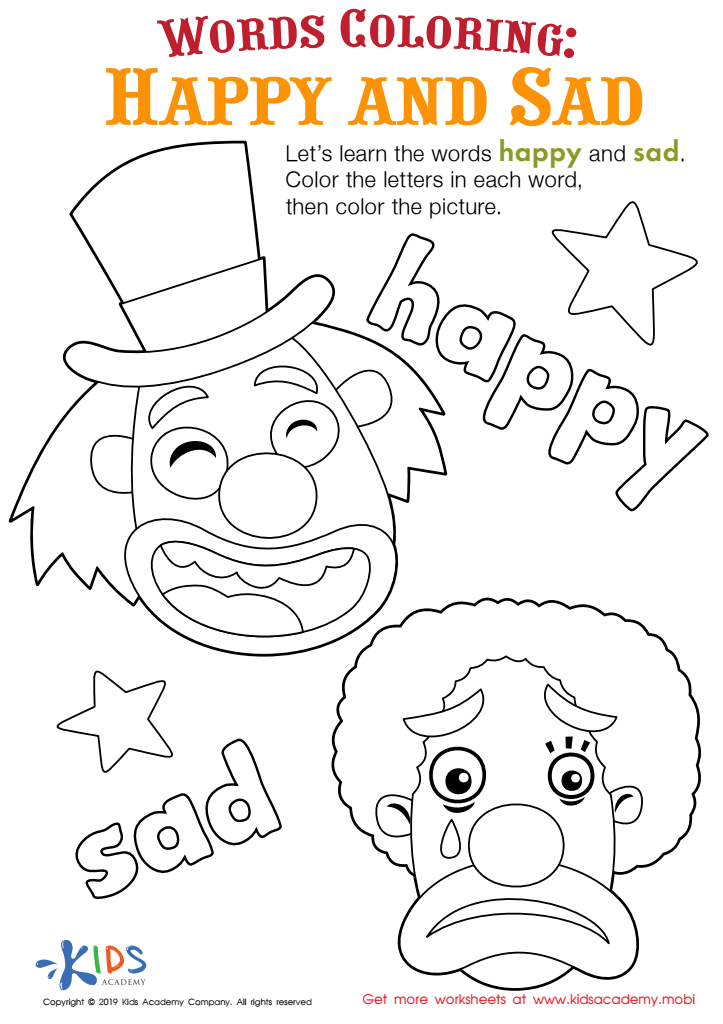
Happy and Sad Words Coloring Worksheet
Help students understand emotions by using this fun worksheet. It features smiling and sad clowns and the words 'happy' and 'sad'. Read the words with your students, then have them color the clowns and the emotion words. This PDF is an effective way to teach kids how to express how they feel.
Download (PDF)
 Assign to My Students
Assign to My Students
Happy and Sad Words Coloring Worksheet
Worksheet
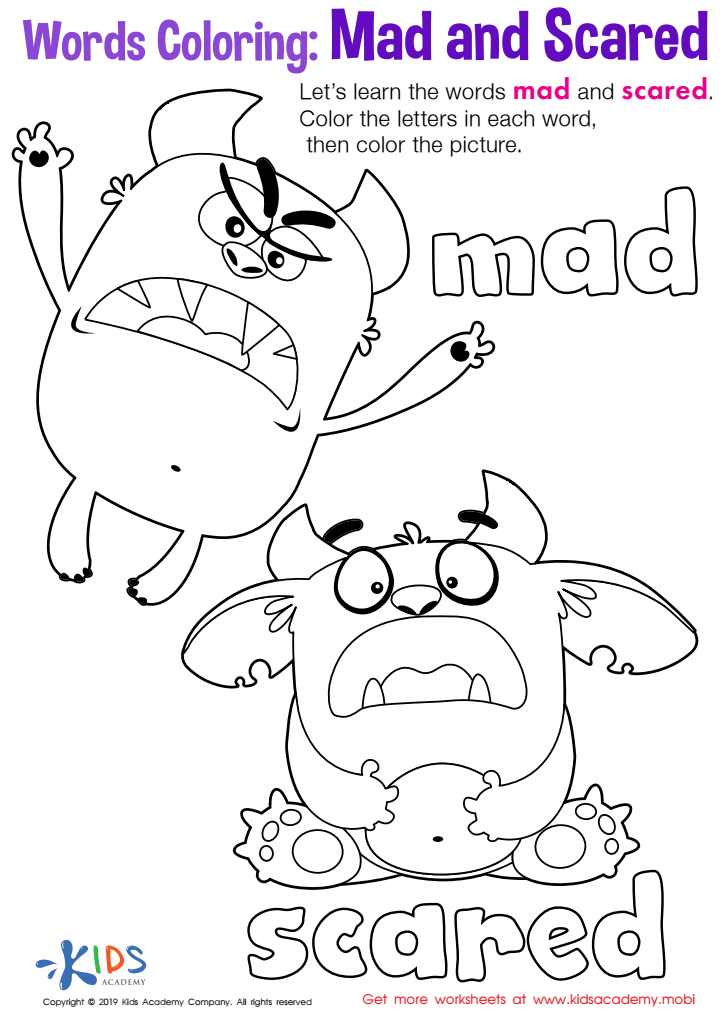
Mad and Scared Words Coloring Worksheet
This worksheet teaches "mad" and "scared" with fun monster pictures to color. Helping students learn by sight, it encourages sharing what makes them feel those strong emotions. Perfect for social studies, it expands student's vocabulary in an entertaining way.
Download (PDF)
Assign to My Students
Assign to My Students
Mad and Scared Words Coloring Worksheet
Worksheet
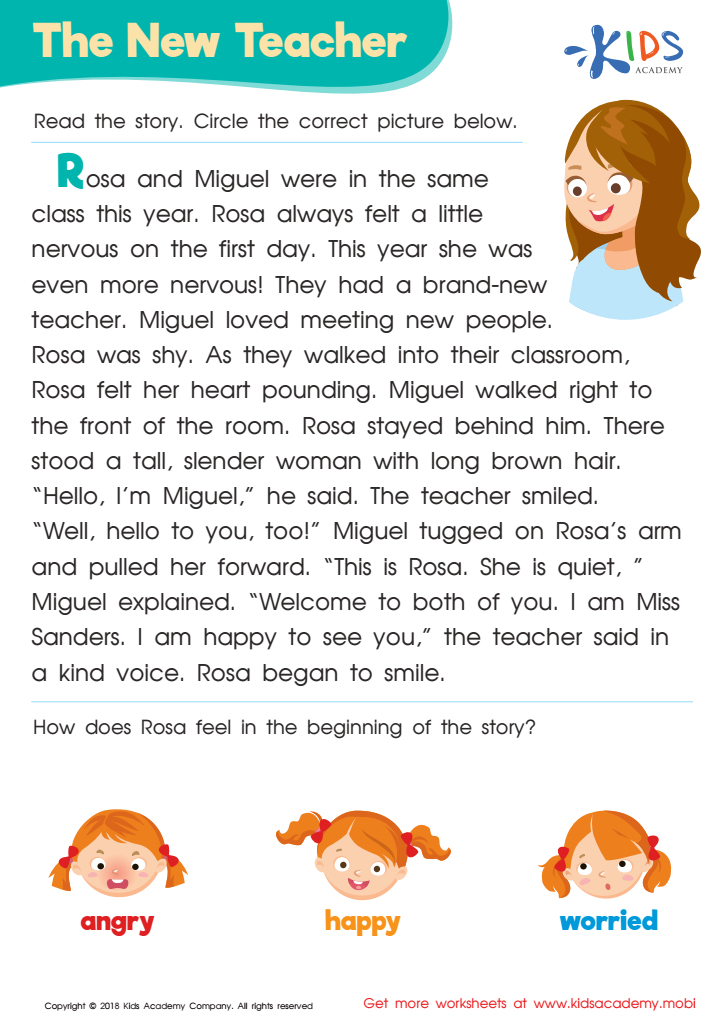
The New Teacher Worksheet
Encourage your kids to write their own short story before doing this exercise. It's about Rosa and Miguel on their first day of school, meeting their teacher. Read the story aloud and ask them to focus on Rosa's feelings. Then, help them circle the correct picture for the question.
The New Teacher Worksheet
Worksheet
Join Kids Academy for Free
Who is primarily going to use this learning content?








Coloring skills are vital for children aged 3-7 as they significantly contribute to their overall development and readiness for reading. Engaging in coloring activities fosters fine motor skills, which are essential for holding a pencil and forming letters. As children manipulate crayons or markers, they enhance their hand-eye coordination, which is critical for writing.
Moreover, coloring serves as a creative outlet that inspiring artistic expression and boosting cognitive development. It allows children to explore colors, shapes, and patterns, facilitating their ability to recognize and categorize visual information—skills that are foundational for reading. A well-developed understanding of colors and shapes can aid in distinguishing letters and words.
Additionally, coloring encourages focus and concentration, essential cognitive skills for reading comprehension. When children immerse themselves in a coloring task, they learn patience and persistence, which are crucial when tackling books. Coloring also integrates concepts like following instructions and understanding sequences, further enhancing their literacy skills.
For parents and teachers, supporting coloring activities means promoting a multi-faceted approach to learning that lays a strong groundwork for reading. Engaging children in these creative processes can build their confidence, enthusiasm, and readiness to embrace literacy as they progress in their educational journeys.








