
Drawing skills Reading Worksheets for Ages 3-7
3 filtered results
Difficulty Level
Grade
Age
-
From - To
Subject
Activity
Standards
Unleash your child's creativity with our "Drawing Skills Reading Worksheets for Ages 3-7"! These engaging and educational worksheets combine the joy of art with essential reading skills, designed specifically for young learners. Each worksheet encourages children to draw pictures inspired by the stories they read, nurturing both artistic expression and comprehension. Perfect for preschool through early elementary, our resources support cognitive development, fine motor skills, and a love for reading. Ideal for parents and educators alike, explore our diverse, age-appropriate activities to enhance your child's learning journey today!
Favorites
With answer key
Interactive
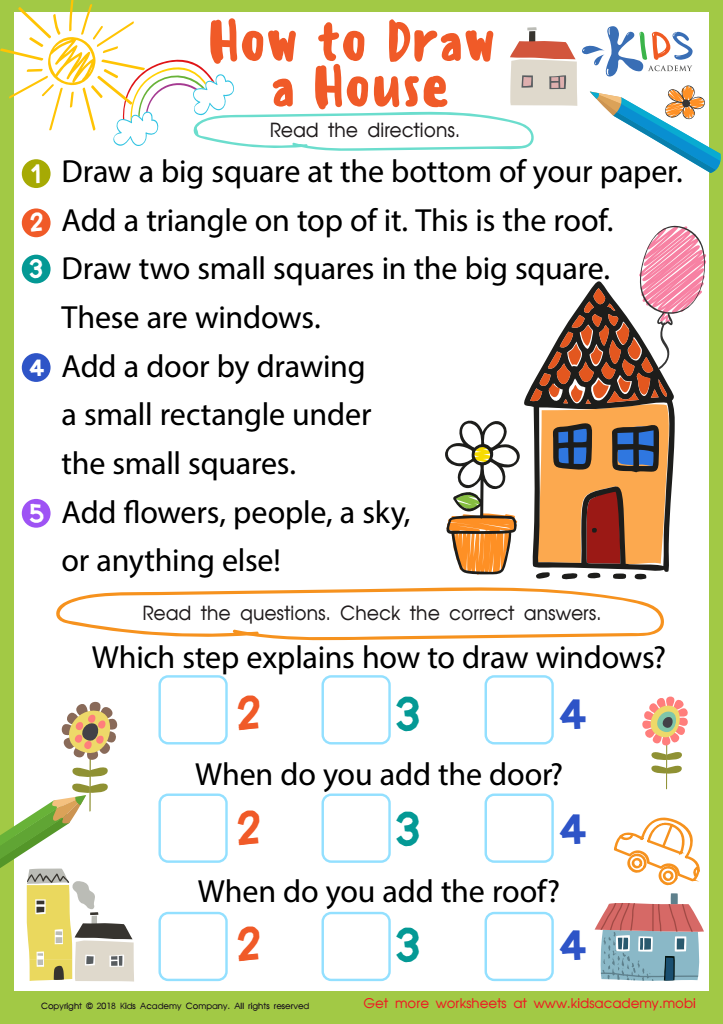
How to Draw House Worksheet
Does your child love to draw? Why not try teaching them some easy tricks? Get them to follow directions on this worksheet and learn how to draw a house. Read the questions at the end and ensure they get the answers right. Your kids will surely love it!
 Assign to My Students
How to Draw House Worksheet
Worksheet
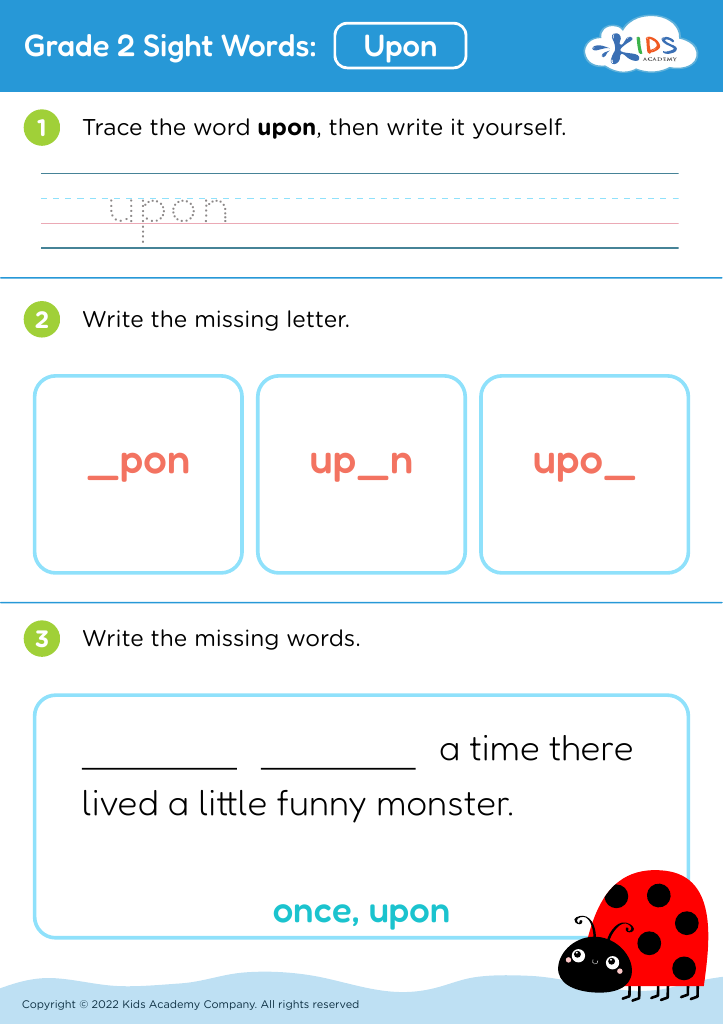
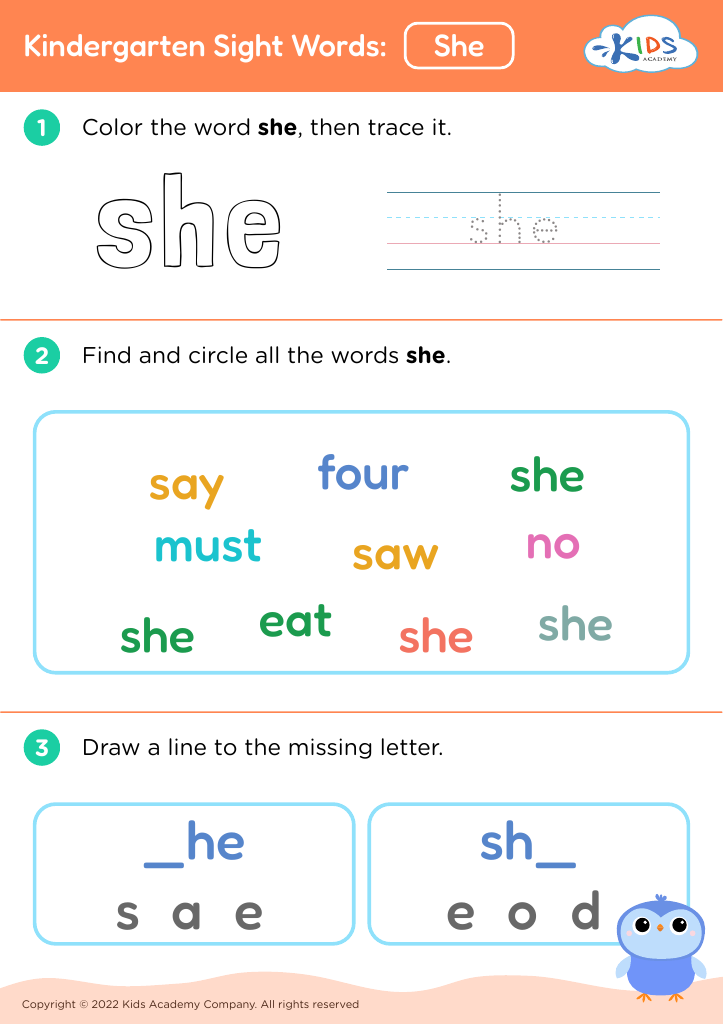
Join Kids Academy for Free
Who is primarily going to use this learning content?



.jpg)




Drawing and reading skills are critical components of early childhood development, making them significant for ages 3 to 7. From a cognitive perspective, drawing boosts fine motor skills, hand-eye coordination, and spatial awareness. When children manipulate crayons or brushes, they practice control and creativity, necessary for tasks like writing.
Drawing also enhances emotional expression. Young children often lack the verbal abilities to articulate their feelings. Drawing offers an alternative medium to express emotions, promoting psychological well-being. Moreover, when parents or teachers engage with children's drawings, it strengthens bonds, enabling valuable emotional connection and communication.
Reading, on the other hand, is vital for language development. Early exposure to books enriches vocabulary, comprehension, and pronunciation. It sparks imagination, enhances listening skills, and stimulates curious minds, laying a foundation for lifelong learning. Reading with children fosters a love for stories and knowledge, making them more likely to continue reading independently as they grow.
Additionally, both drawing and reading improve concentration, patience, and perseverance. Crucially, these activities encourage creativity and curiosity, key traits necessary for problem-solving and innovation later in life. Therefore, nurturing drawing and reading skills in early childhood not only aids immediate developmental milestones but also equips children with essential tools for their future academic and personal success.








