
Understanding habitats Reading Worksheets for Ages 3-7
3 filtered results
Difficulty Level
Grade
Age
-
From - To
Subject
Activity
Standards
Enhance your child’s reading and comprehension skills with our “Understanding Habitats Reading Worksheets for Ages 3-7.” These engaging and age-appropriate worksheets introduce young learners to various animal habitats, helping them understand where different animals live and why. Perfectly designed to blend reading and science, kids will enjoy activities that encourage curiosity and learning about the natural world. ideal for early grade students, each worksheet includes colorful illustrations and simple texts designed to spark children’s interest and aid in developing their reading skills. An invaluable resource for parents and teachers to support early literacy and environmental awareness.
Favorites
With answer key
Interactive
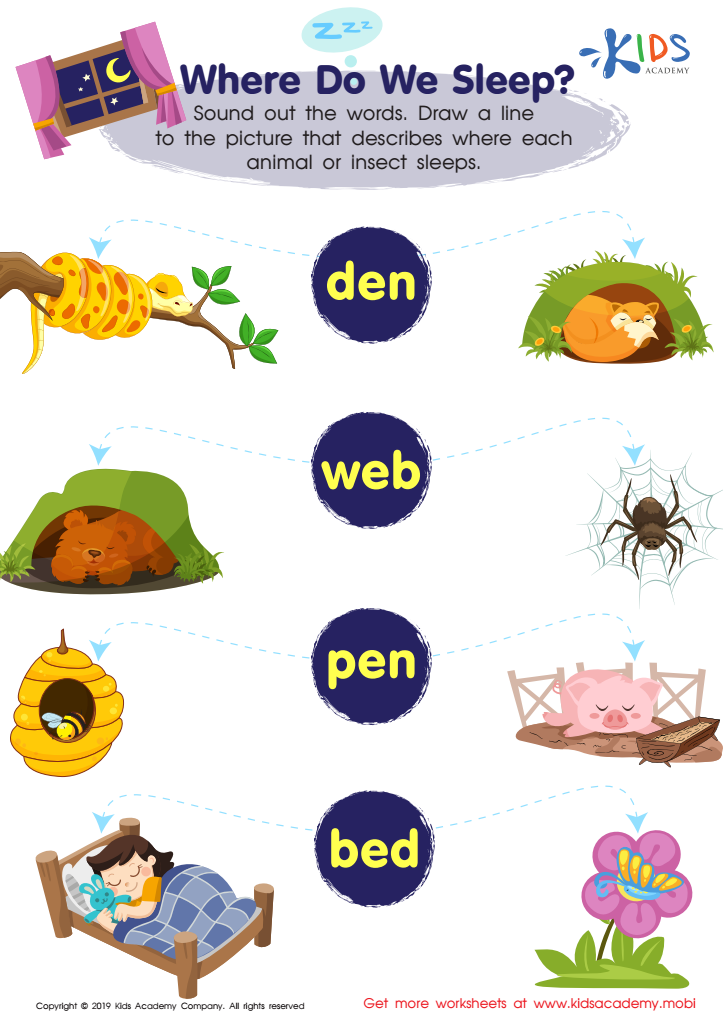
Where Do We Sleep Worksheet
Help your kids understand the importance of a safe space with this activity: Ask them to draw a line connecting the different animals and insects to the words that describe where they sleep. Remind them that everyone needs a sanctuary to rest – like the animals and insects in this printout.
 Assign to My Students
Where Do We Sleep Worksheet
Worksheet
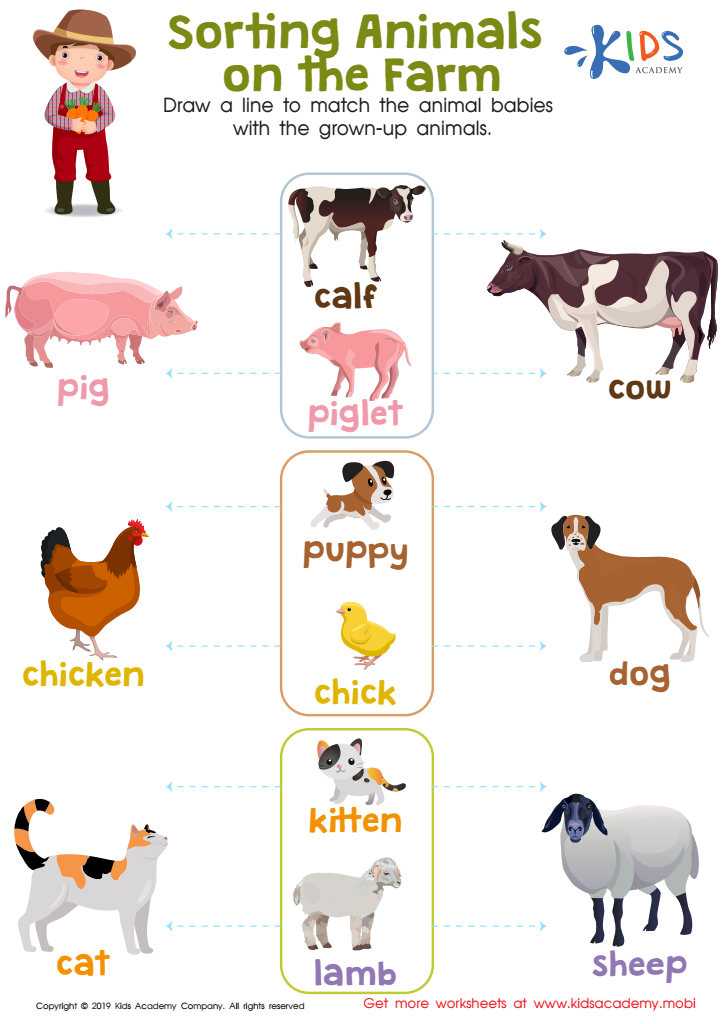
Sorting Animals on the Farm Worksheet
This PDF worksheet engages preschoolers in a fun activity to match Mama farm animals with their babies, strengthening their sorting and patterning skills. They'll learn to recognize rules and relationships, while gaining familiarity with animal-related words.
Sorting Animals on the Farm Worksheet
Worksheet
Join Kids Academy for Free
Who is primarily going to use this learning content?








Understanding habitats through reading is essential for young children, particularly for ages 3-7, as it forms a cornerstone for learning about the natural world and our environment. At this formative stage, children are naturally curious and eager to explore new concepts. Through reading about different habitats – such as forests, oceans, deserts, and tundras – they're introduced to diverse ecosystems and the myriad of life forms that inhabit them. This early exposure lays the foundation for environmental awareness, fostering a sense of respect and appreciation for nature.
Moreover, learning about habitats supports cognitive development. By identifying and comparing the characteristics of various environments, children enhance their critical thinking and categorization skills. It also aids in language development, as they encounter and learn new vocabulary related to plants, animals, and ecological concepts.
Furthermore, stories about habitats often incorporate elements of storytelling that can improve listening and comprehension skills. Shared reading sessions encourage bonding and discussions between parents or teachers and children, creating meaningful connections and enhancing social and emotional development.
By understanding habitats early on, children are more likely to grow into environmentally responsible individuals who care about conservation and biodiversity. Thus, incorporating habitat-focused reading is an investment in nurturing informed, conscious, and empathetic future citizens.








