Understanding suffixes Reading Worksheets for Ages 3-7
5 filtered results
-
From - To
Welcome to our "Understanding Suffixes" reading worksheets, specifically designed for children ages 3-7! These engaging worksheets introduce young learners to the concept of suffixes, helping to expand their vocabulary and enhance reading skills. Children will enjoy fun and interactive activities that encourage them to recognize and use common suffixes, such as "-ed," "-ing," and "-ly." Our thoughtfully crafted exercises promote literacy development through playful learning, making it easier for little ones to grasp the meaning and function of suffixes in words. Perfect for classrooms or home practice, these worksheets pave the way for confident readers and eager learners.
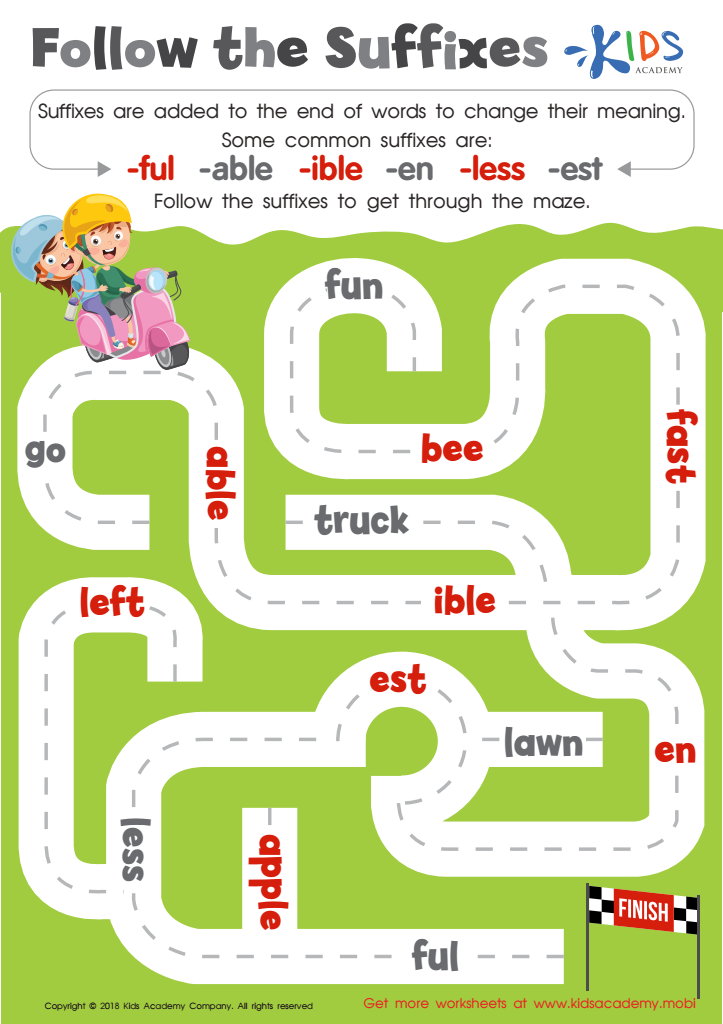
Reading: Follow the Suffixes Worksheet
 Assign to My Students
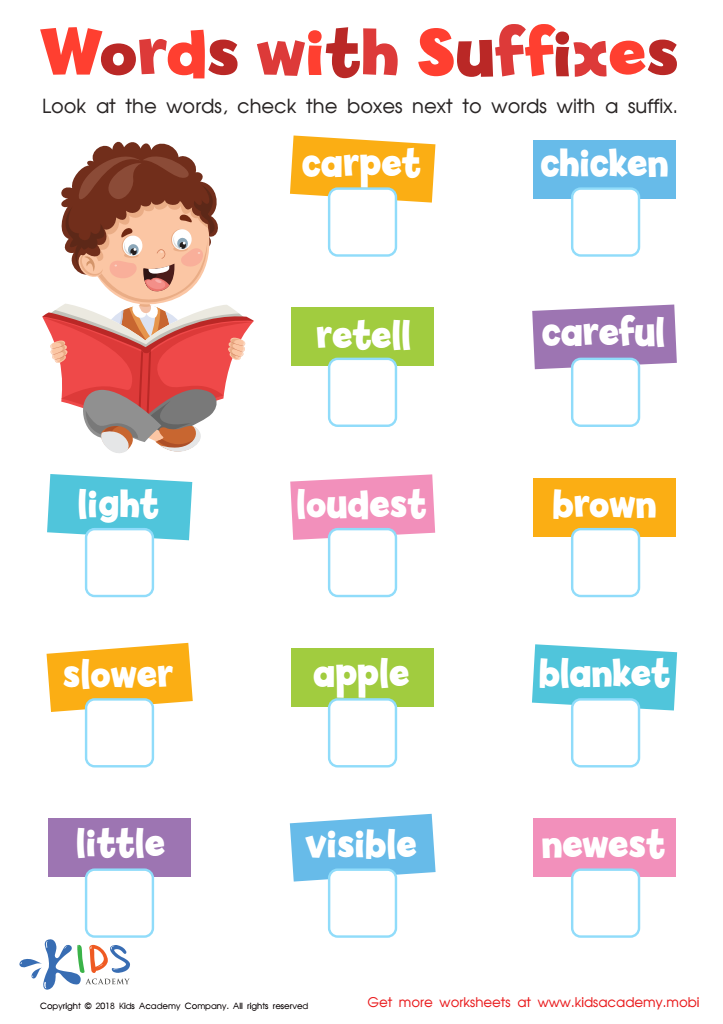
Reading: Words With Suffixes Worksheet
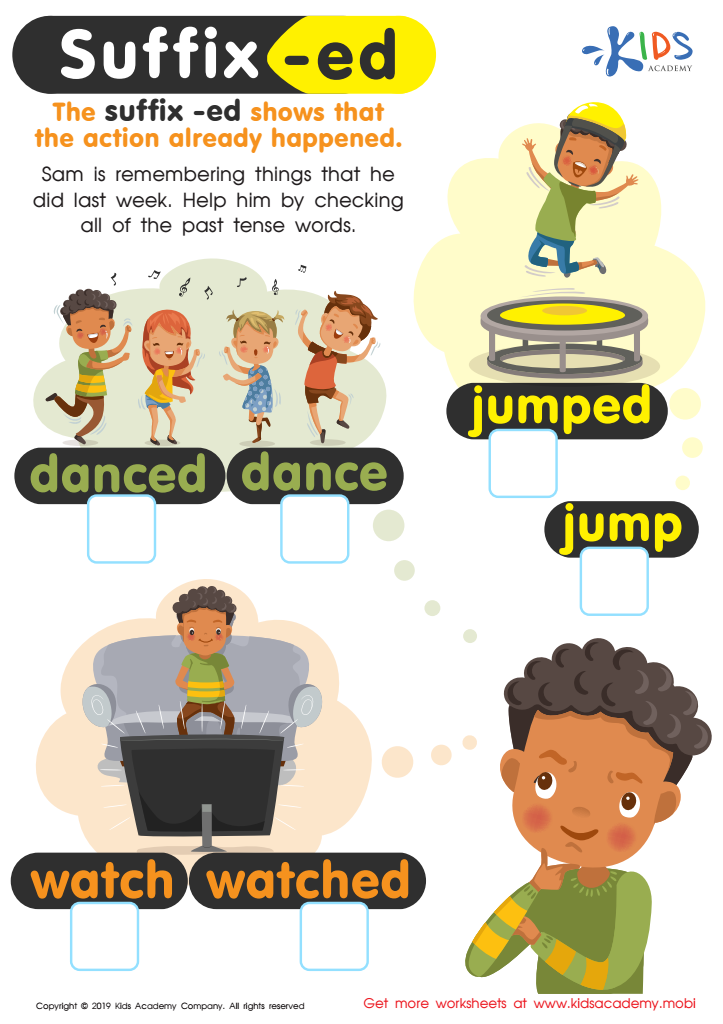
Suffix-ed Worksheet
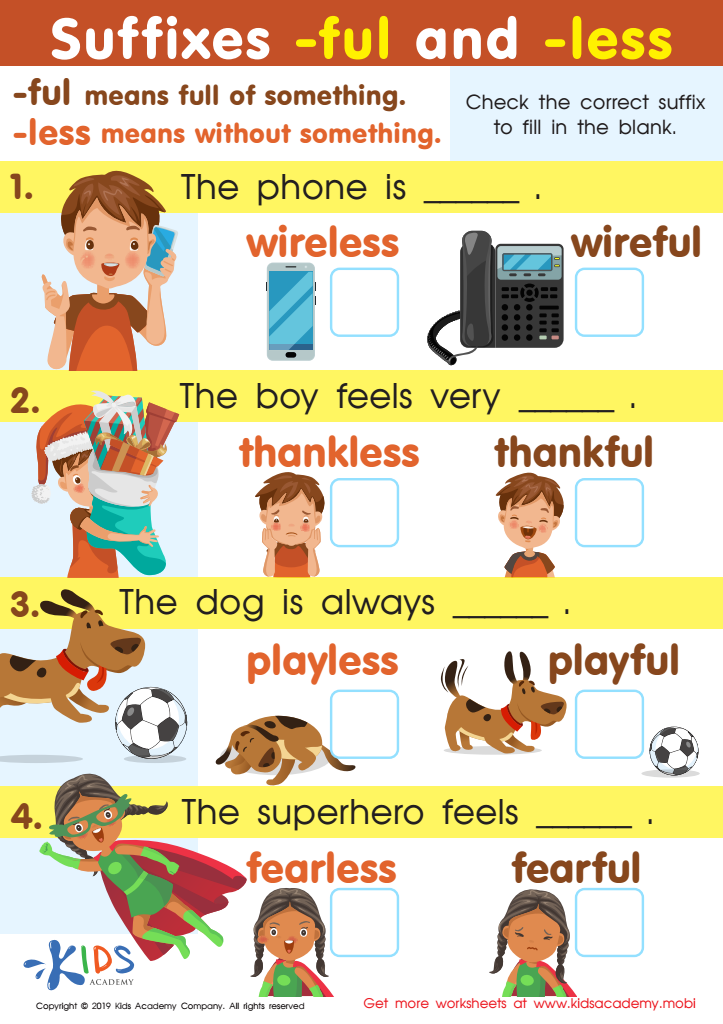
Suffixes –ful and –less Worksheet
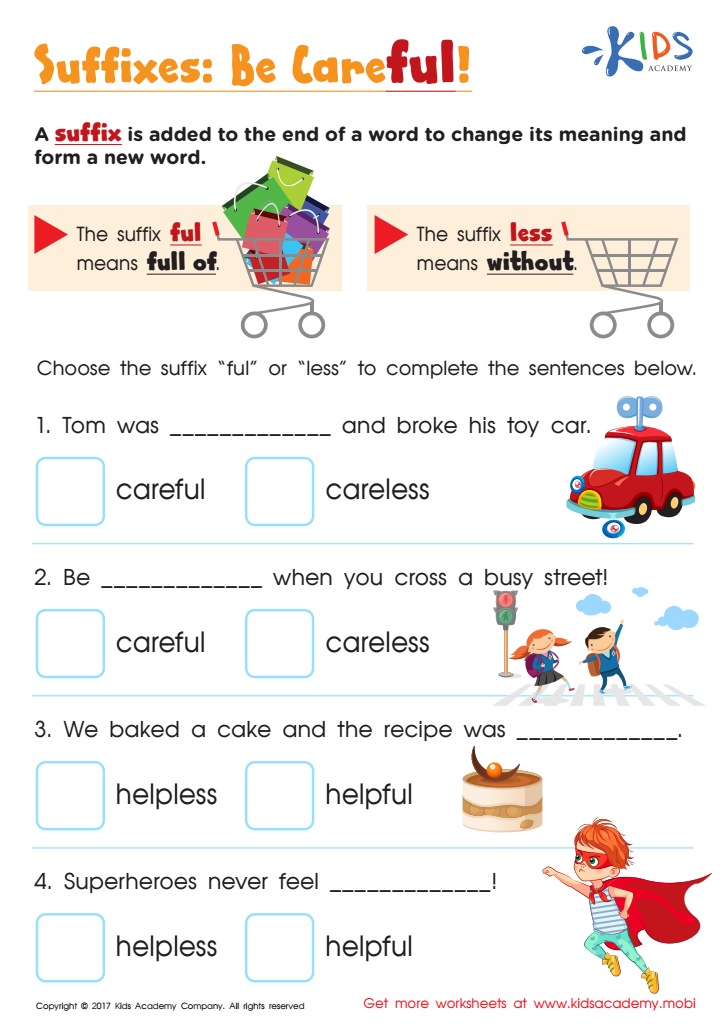
Suffixes Ful and Less Worksheet








Understanding suffixes is crucial for young readers aged 3-7 as it lays a strong foundation for vocabulary development and reading comprehension. Suffixes are essential word parts that can alter the meaning or function of a word. For instance, adding “-ing” to “play” transforms it into “playing,” changing the context and enabling children to grasp action concepts. This morphological awareness helps children decipher new words independently, fostering confidence in their reading abilities.
Moreover, recognizing suffixes aids in word grouping and understanding related concepts. When kids learn that adding “-er” creates a noun that indicates someone who performs an action (like “teacher” from “teach”), they enhance their linguistic understanding, enabling richer conversations and writing. This skill significantly boosts literacy, transforming reading from a mechanical process into an engaging, meaningful interaction with text.
Furthermore, engaging with suffixes promotes critical thinking as children explore how words can evolve and adapt in different contexts. For teachers and parents, emphasizing suffixes in reading not only makes learning fun and interactive but also equips children with the tools necessary for academic success. In a world where reading is foundational across educational disciplines, fostering this understanding early sets the stage for lifelong literacy skills.








