Boost your child's analytical skills with our engaging Reading Fiction Worksheets designed specifically for ages 3 to 7! These worksheets promote critical thinking as young learners explore characters, plot, and themes in various stories. Through interactive activities, children will practice making connections, predicting outcomes, and drawing conclusions—all essential skills for effective comprehension. Our beautifully illustrated worksheets capture children's imaginations while providing a fun and educational experience. Ideal for parents and educators looking to enhance reading development, these resources nurture curiosity, creativity, and a love for storytelling. Start your child’s journey to becoming an insightful reader today with our dynamic and supportively crafted materials!

Check out this FREE Trial Lesson on Reading Fiction for age 3-7!

Describe Connection Between Two Events/ Pieces of Information in a Text

Favorites
With answer key
Interactive
  • 3-7
  • Analytical skills
  • Reading Fiction
Finding the Details and Connections: Assessment 2 Worksheet

Finding the Details and Connections: Assessment 2 Worksheet

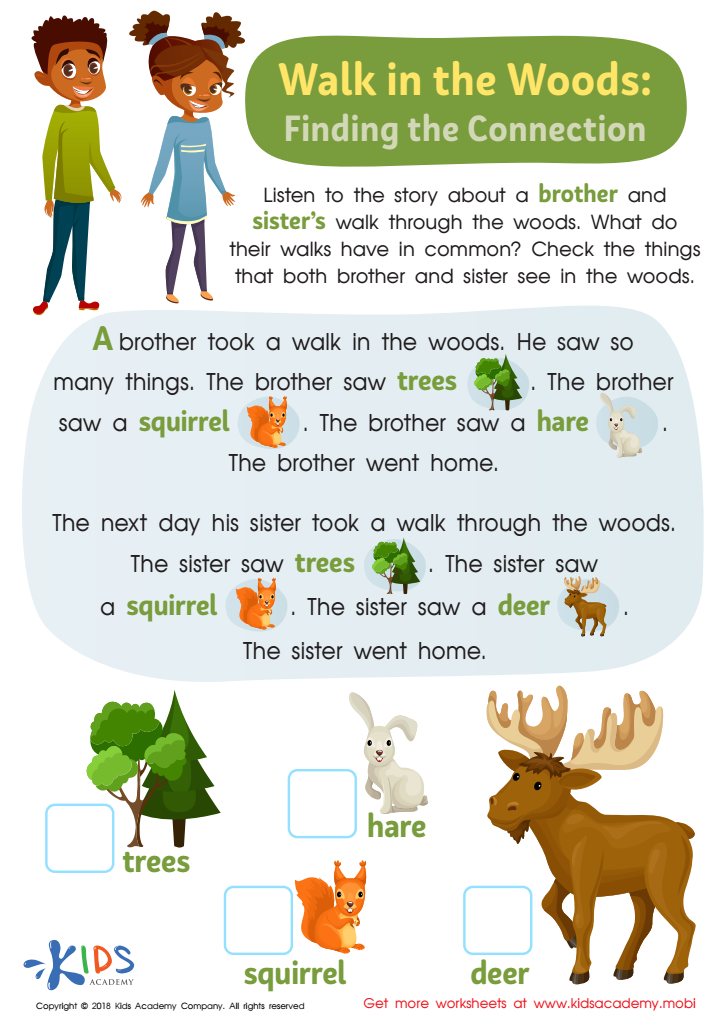
Does your child love animals? If you have pets, they'll relate to the text in this worksheet. Read it aloud to them and help them answer the simple questions by circling yes or no. The story is about a dog and cat living on a farm. Let your child read it aloud to you if they can.
Finding the Details and Connections: Assessment 2 Worksheet
Worksheet
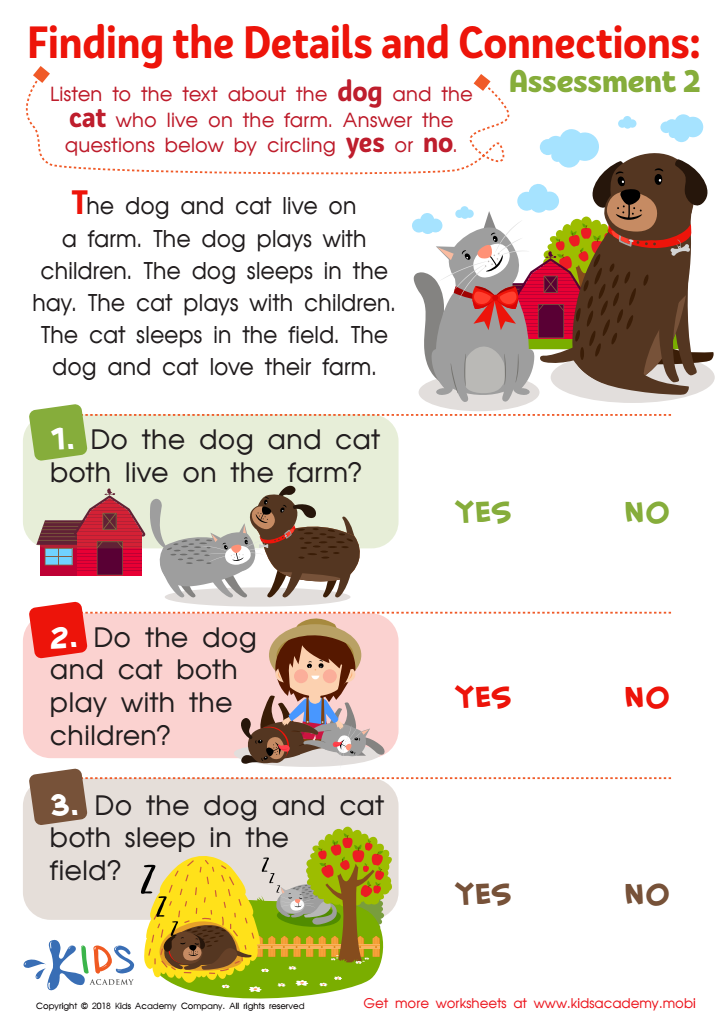
Walk In the Woods: Finding Connections Worksheet

Walk In the Woods: Finding Connections Worksheet

Brother and sister took a walk in the woods to connect with nature and get some exercise. As they went, they noted different things like birds and plants, which they share in this story. Read it to your little ones, and help them check off the items the two saw. It's a great way to learn about nature and enjoy the outdoors.
Walk In the Woods: Finding Connections Worksheet
Worksheet
Questions About Stories: Assessment 2 Worksheet

Questions About Stories: Assessment 2 Worksheet

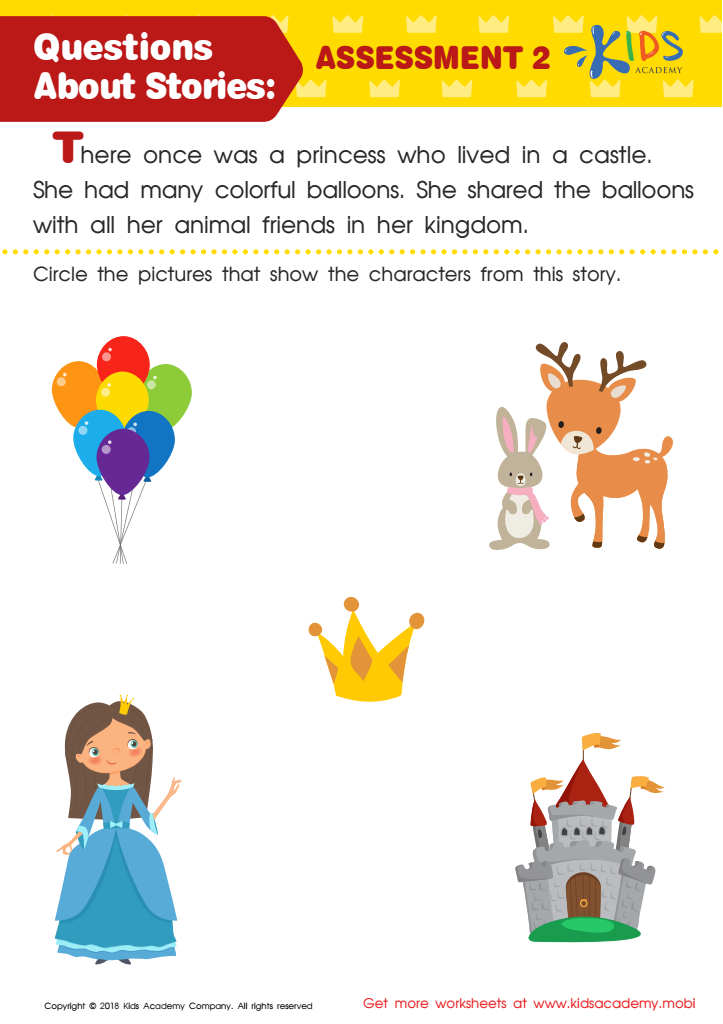
Talk to your child about what a princess is and what activities they associate with that word. Then, read the story to them and help them identify characters in the pictures. Look out for details and ask them questions to ensure they understand.
Questions About Stories: Assessment 2 Worksheet
Worksheet
Finding the Details and Connections: Assessment 1 Worksheet

Finding the Details and Connections: Assessment 1 Worksheet

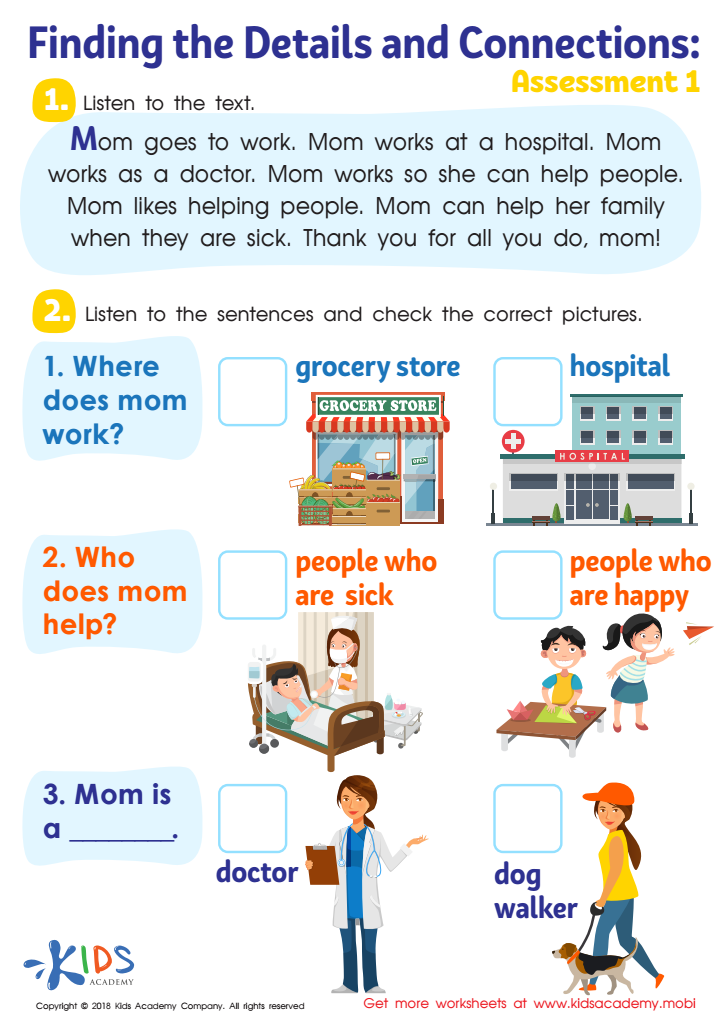
Ask your students what their parents do for a job. Do they know what profession their mom is in and where she works? Professionals have places they go to do their job. In this task, Mom goes to a hospital and is a doctor. Read the text and help them check the right pictures.
Finding the Details and Connections: Assessment 1 Worksheet
Worksheet
Questions About Stories: Assessment 1 Worksheet

Questions About Stories: Assessment 1 Worksheet

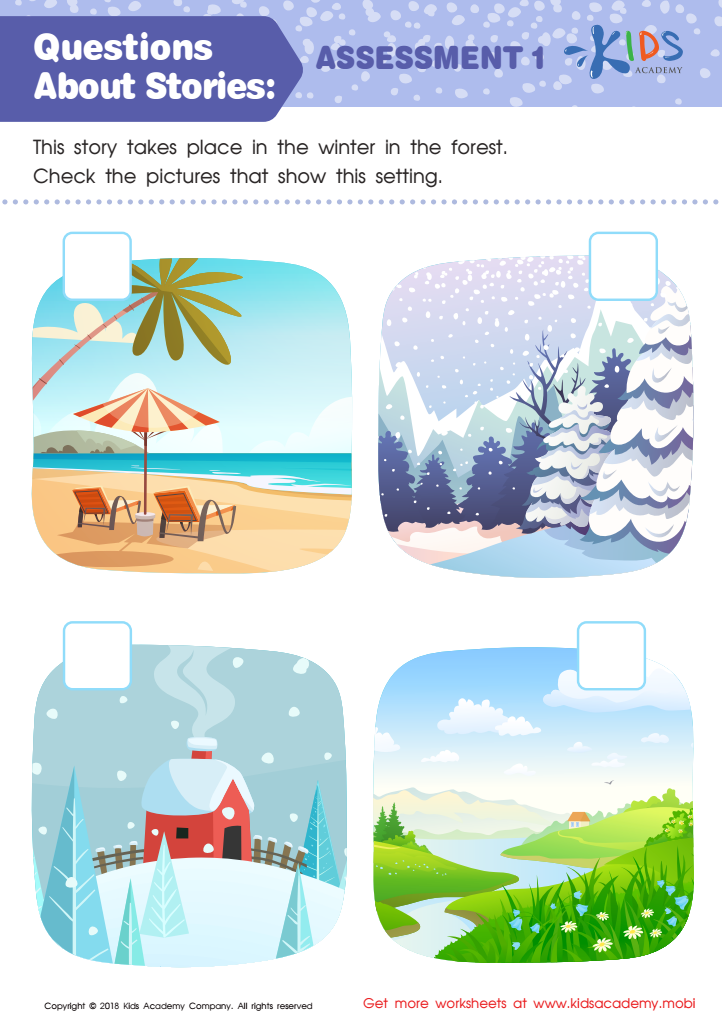
Winter brings snow, cold, short days, and darkness. Schools can even close due to heavy snow. Ask your child what their favourite winter activities are and what color they associate with 'winter'. This worksheet takes place in a winter forest. Look at the 4 pictures with your child, and help them identify which one shows the correct setting.
Questions About Stories: Assessment 1 Worksheet
Worksheet
Rapunzel Characters Worksheet


Rapunzel Characters Worksheet

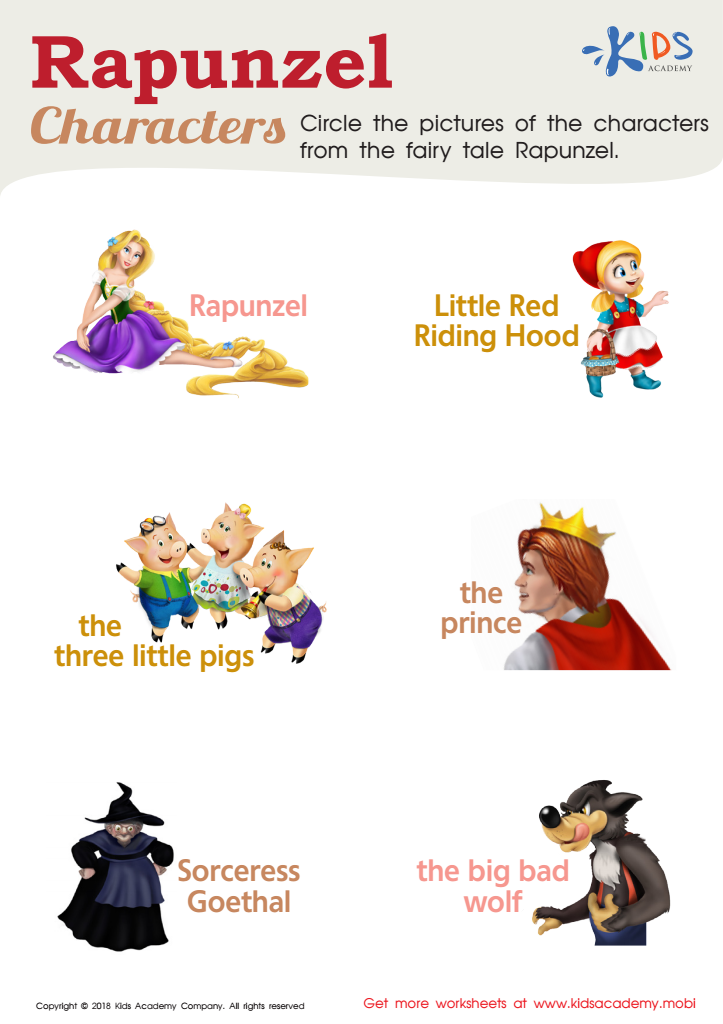
This fun and colourful worksheet is perfect to see what your kids have learned from story time. Test their knowledge with a Rapunzel-themed exercise! Ask them to circle the pictures of the characters from the fairy tale. Helping them to remember the lessons taught in the stories you have read.
Rapunzel Characters Worksheet
Worksheet


Analytical skills gained through reading fiction are crucial for children aged 3-7, and parents or teachers should pay close attention to this developmental aspect. At this stage, children are not just learning to read but also to think critically. Fictional stories present various scenarios, characters, and moral dilemmas that encourage young readers to analyze motivations, predict outcomes, and understand different perspectives.

Engaging with stories helps children practice reasoning and inference, as they decide why a character acted a certain way or how a problem might be resolved. This formative stage also promotes creativity, as children visualize narratives and articulate their thoughts. Moreover, discussing storylines fosters communication skills, inviting children to express opinions and ask probing questions.

By nurturing analytical skills through fiction, adults help children develop empathy, as they connect with diverse characters and understand differing viewpoints. These skills are not just essential for academic success but also lay the groundwork for effective decision-making, problem-solving, and social interaction later in life. Thus, fostering analytical thinking through reading is a strategic investment in a child’s cognitive and emotional growth. Parents and teachers who prioritize this will equip children with lifelong skills essential for navigating both educational and social landscapes.