Cognitive Development Reading Fiction Worksheets for Ages 3-7
4 filtered results
-
From - To
Enhance your child's cognitive development with our expertly crafted reading fiction worksheets designed for ages 3-7. These engaging activities are tailored to stimulate young minds, bolstering critical thinking, comprehension, and imaginative skills. Each worksheet seamlessly introduces fictional narratives, guiding children through story elements while sharpening their ability to process and analyze information. Perfect for both preschoolers and early elementary students, our resources support developmental milestones through fun, educationally rich exercises. Discover a world where learning meets creativity and watch your child’s cognitive abilities flourish with each turn of the page. Elevate young readers' skills today!
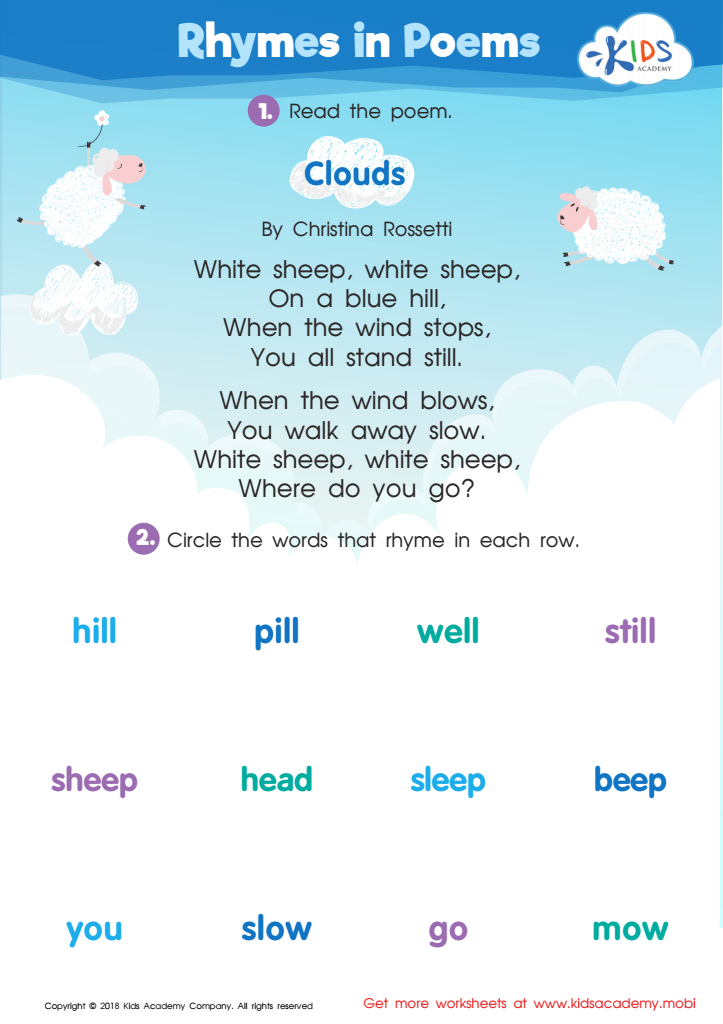
Rhymes in Poems Worksheet
 Assign to My Students
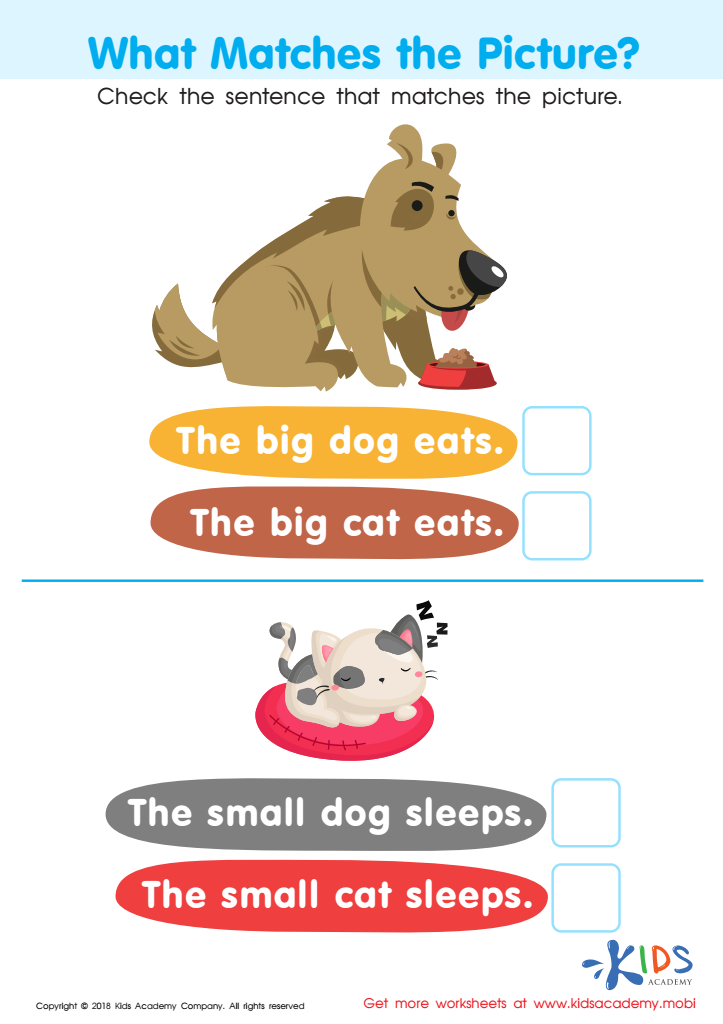
What Matches the Picture? Worksheet
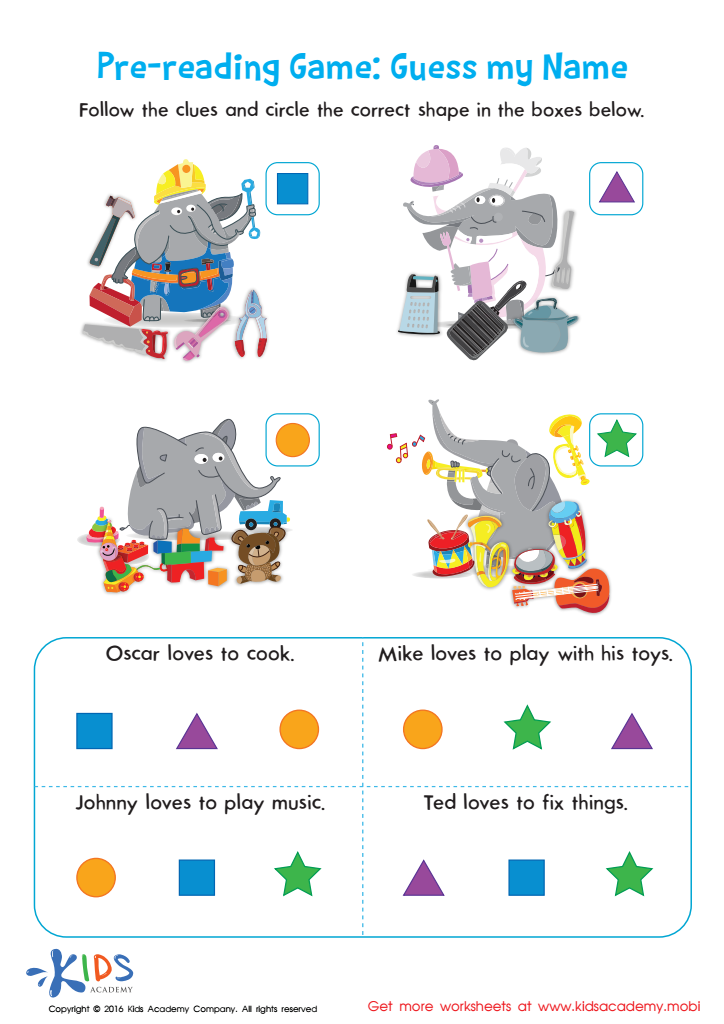
Pre Reading Worksheet Guess My Name
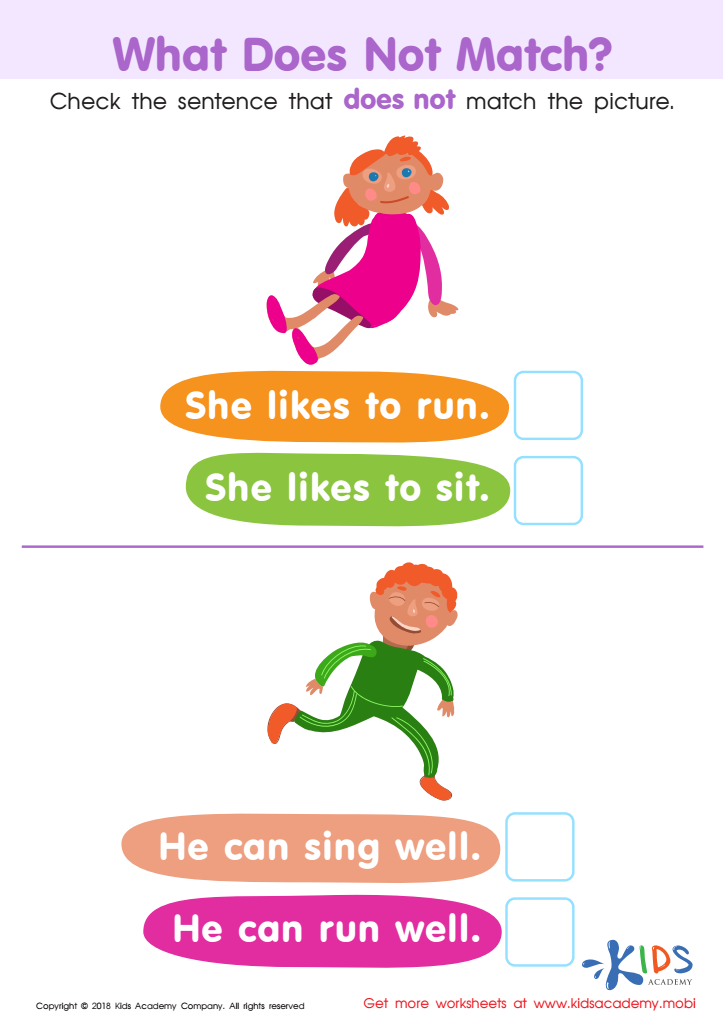
What Does Not Match? Worksheet



.jpg)



Cognitive development in early childhood lays the foundation for lifelong learning and intellectual growth. Reading fiction during the formative years between ages 3 and 7 plays a crucial role in this process. Firstly, reading fiction stimulates the imagination, encouraging children to think creatively and understand different perspectives, a key component of cognitive empathy. This helps in developing social awareness and emotional intelligence.
Furthermore, fiction introduces complex language, enriching vocabulary and enhancing comprehension skills. As children listen to stories, they grasp sentence structures, narrative patterns, and grammar nuances, which improves their own communication abilities. Additionally, engaging with a story requires children to remember details, follow plot sequences, and predict outcomes, thus sharpening memory retention and critical thinking skills.
Moreover, reading fiction at a young age fosters concentration and discipline. Sitting still and listening attentively to a story teaches patience and improves their ability to focus on tasks, an essential skill for academic success. It also creates opportunities for bonding, as parents and teachers who read to children provide a shared experience that deepens relationships and promotes a love for learning.
In summary, investing time in reading fiction with young children not only supports their cognitive development but also nurtures their emotional growth, language abilities, attention span, and problem-solving skills, setting a strong foundation for their future education and personal development.








