Contextual understanding Reading Fiction Worksheets for Ages 3-7
3 filtered results
-
From - To
Enhance your child's reading skills with our Contextual Understanding Reading Fiction Worksheets, designed for ages 3-7. These engaging worksheets encourage young learners to explore and comprehend stories in context, fostering critical thinking and vocabulary development. Children will enjoy interactive activities that stimulate their imagination while improving their ability to grasp the meaning behind words and sentences within different contexts. Ideal for classroom use or at-home learning, these worksheets promote early literacy and help children make connections between text and real-life experiences. Download our customizable printables today and inspire a lifelong love for reading in your little ones!
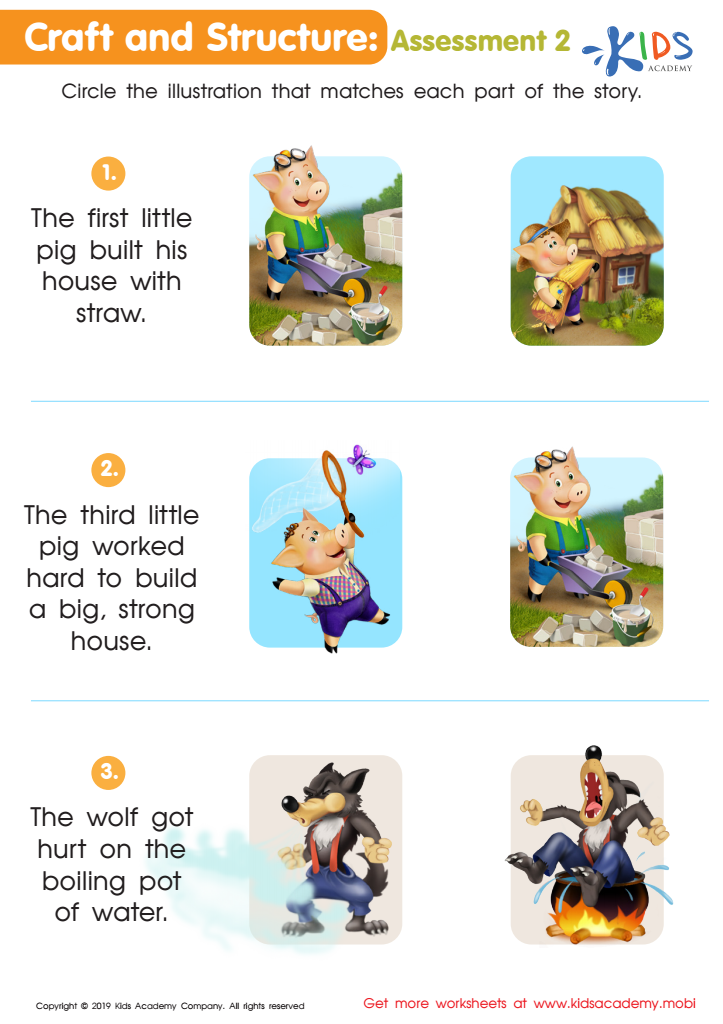
Craft and Structure: Assessment 2 Worksheet 2
 Assign to My Students
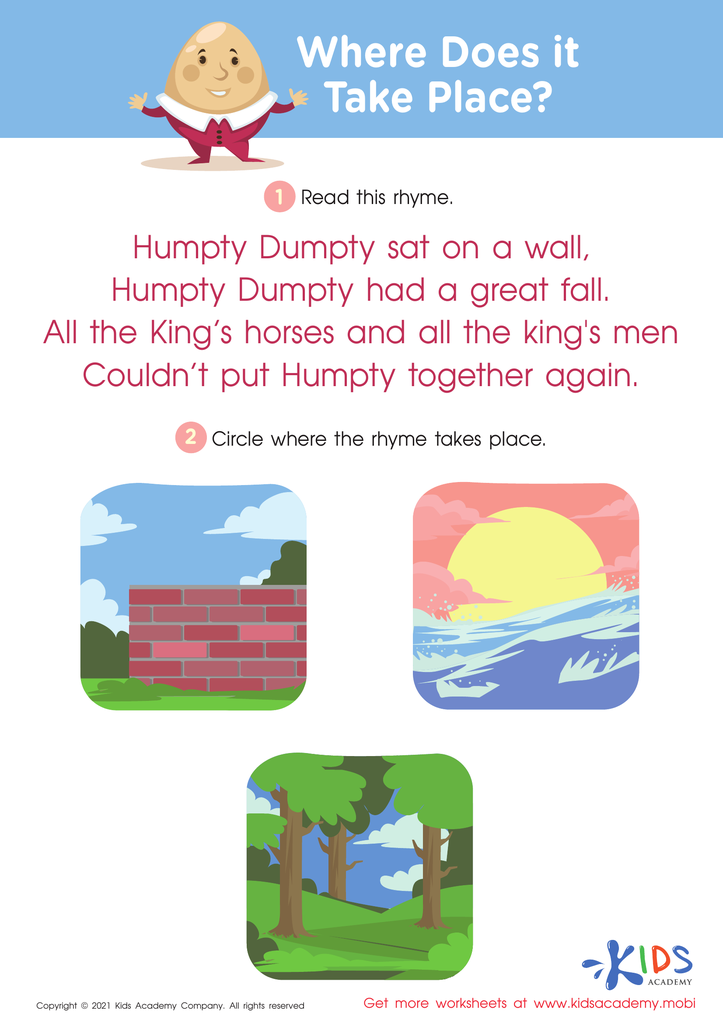
Where Does It Take Place? Worksheet
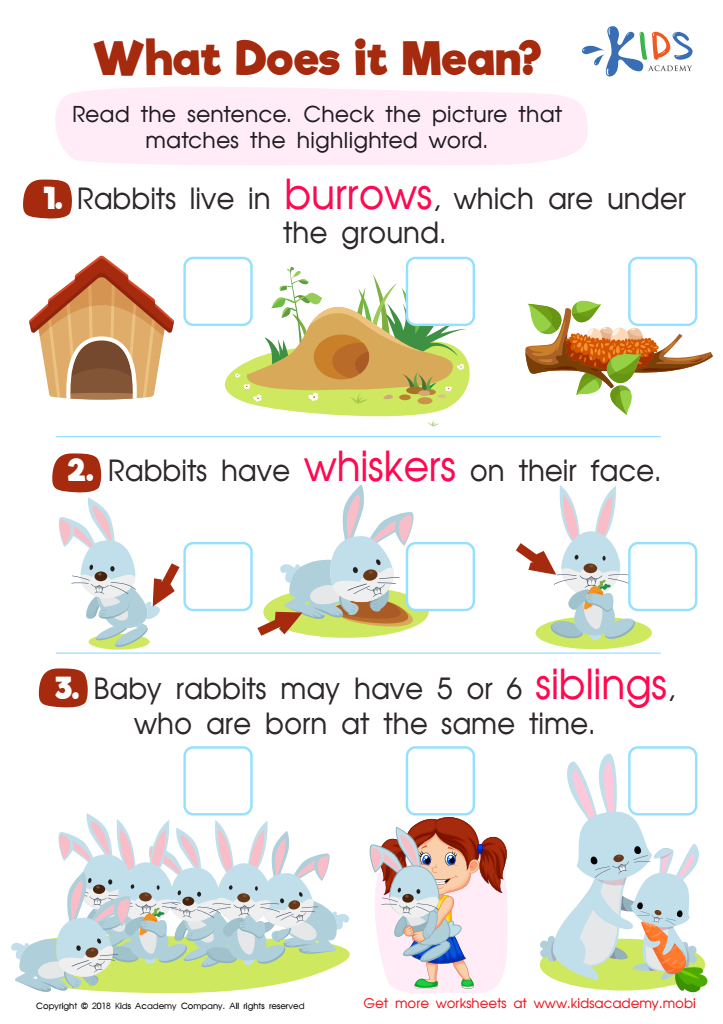
What Does It Mean? Worksheet




.jpg)



Contextual understanding in reading fiction is crucial for young children aged 3-7 as it goes beyond mere comprehension of words. When parents and teachers foster this skill, they help children make connections between narratives and their real-world experiences, enriching their emotional and cognitive development. For instance, as children engage with stories, they learn to recognize feelings, motivations, and cultural contexts, which enhance empathy and social awareness.
Moreover, contextual understanding promotes critical thinking. Children begin to interpret characters’ actions and predict outcomes, skills that are foundational for advanced literacy and problem-solving later in life. Engaging with diverse texts allows children to explore different viewpoints, nurturing open-mindedness and creativity.
Additionally, parents and teachers play a vital role by creating reading environments where questions and discussions are encouraged, making narratives relatable and meaningful. By involving children in conversations about the plot, settings, and characters, adults can scaffold their understanding and reflect their thoughts back to them.
Ultimately, emphasizing contextual understanding helps form a solid foundation for lifelong reading habits, making literary exploration an integral part of early learning experiences. Recognizing the relevance of stories helps cultivate not just proficient readers but also thoughtful, empathetic individuals ready to engage with the world around them.








