
Creativity enhancement Reading Fiction Worksheets for Ages 3-7
3 filtered results
Difficulty Level
Grade
Age
-
From - To
Subject
Activity
Standards
Unlock your child's imagination with our "Creativity Enhancement Reading Fiction Worksheets" designed for ages 3-7. These engaging worksheets encourage young learners to explore their creativity while enhancing reading comprehension skills through imaginative stories. Each activity fosters critical thinking, artistic expression, and storytelling abilities, allowing children to visualize and innovate as they interact with fictional narratives. Perfect for parents and educators seeking to inspire a love of reading, these worksheets make learning fun and interactive. Help your child develop essential skills and nurture their creativity today with our thoughtfully crafted resources tailored for early learners!
Favorites
With answer key
Interactive
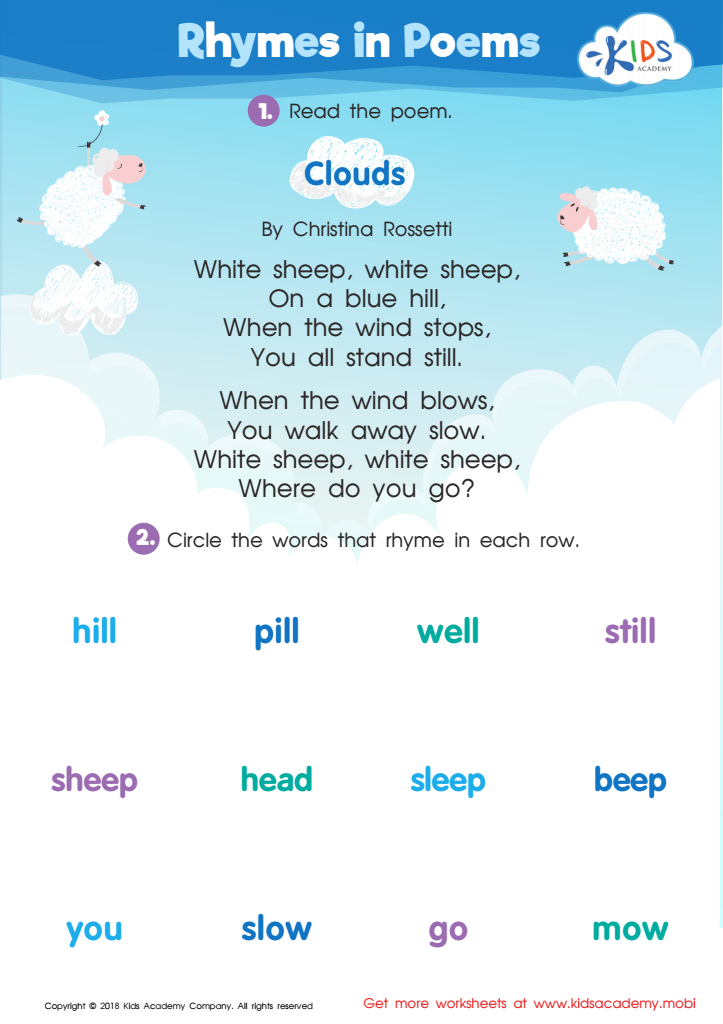
Rhymes in Poems Worksheet
Poems are lovely works of literature; some with rhymes, and some without. This poem for kids is full of rhymes and tells the tale of a sheep. Read it aloud to your kids, then help them circle the rhyming words.
Rhymes in Poems Worksheet
Worksheet
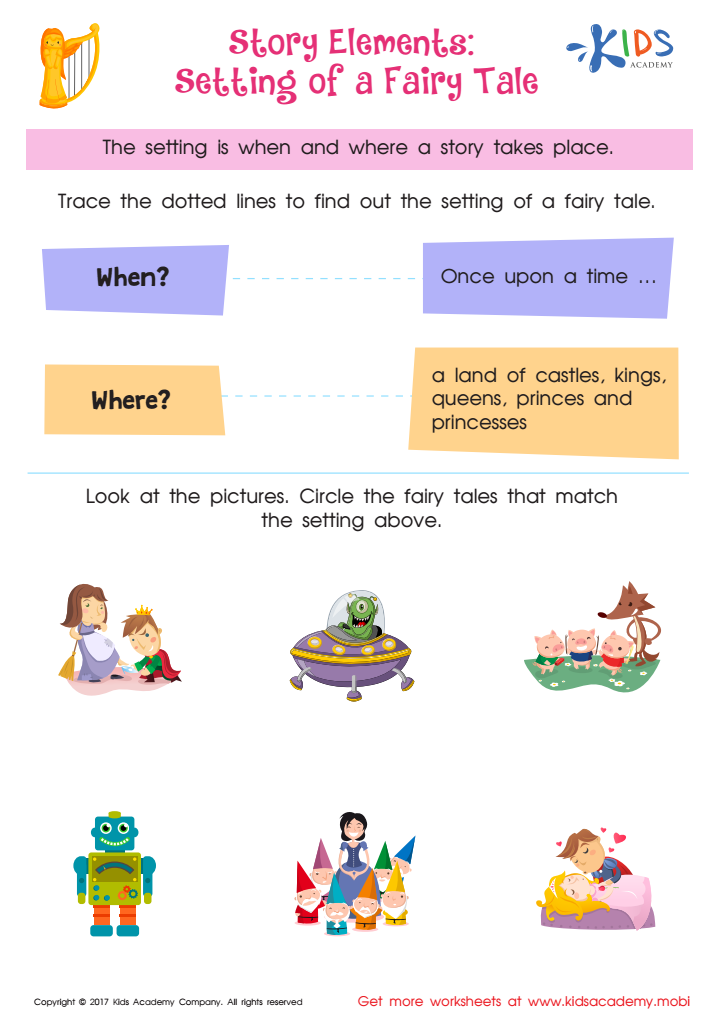
Story Elements: Setting of a Fairy Tale Printable
Help your child learn to analyze stories starting with setting. Use Story Elements worksheet to break down setting into two parts. This will help your child recognize setting quickly and understand its importance in the plot.
Story Elements: Setting of a Fairy Tale Printable
Worksheet
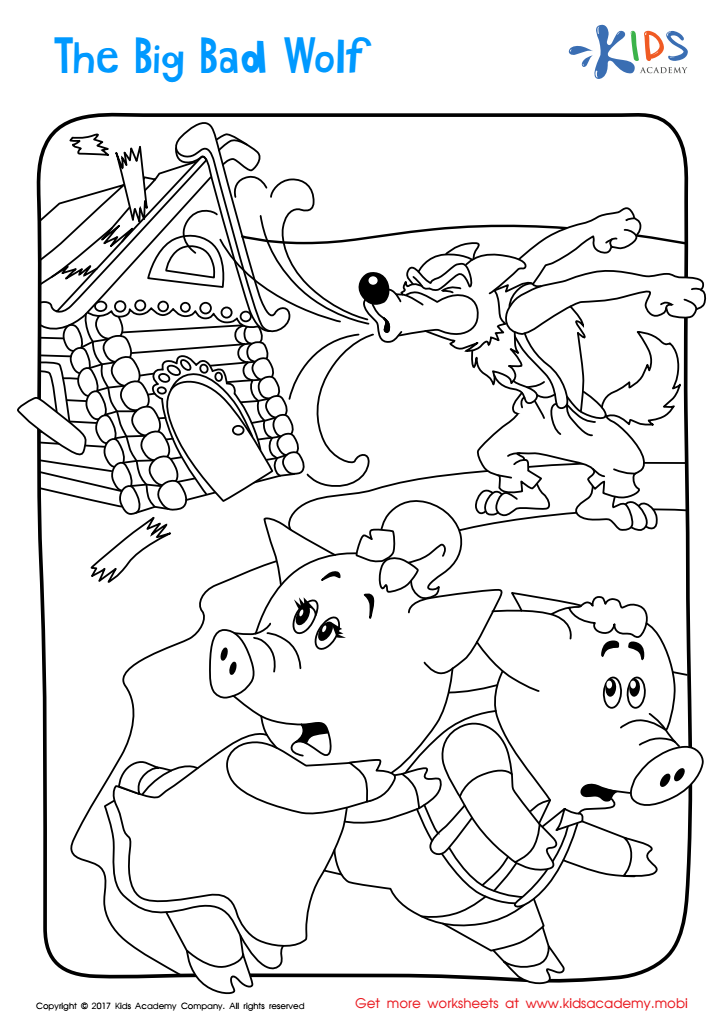
Big Bad Wolf Printable Coloring Page
Let your child have fun coloring the Big Bad Wolf blowing down the little pig's house! This printable coloring page introduces the classic tale, helping to develop reading comprehension skills.
Download (PDF)
 Assign to My Students
Assign to My Students
Big Bad Wolf Printable Coloring Page
Worksheet
Join Kids Academy for Free
Who is primarily going to use this learning content?








Creativity enhancement through reading fiction for ages 3-7 is crucial for young children's development. During these formative years, children's brains are highly plastic, and exposure to imaginative stories fosters cognitive growth. When parents or teachers prioritize reading fiction, they cultivate rich vocabulary and language skills, which are the foundations of effective communication.
Moreover, fiction allows children to explore diverse perspectives, encouraging empathy and emotional intelligence. As they identify with various characters and situations, they learn to navigate their own feelings and those of others. This imaginative play stimulates critical thinking, as children ponder "what if" scenarios, enhancing their problem-solving abilities.
Additionally, storytelling can strengthen the parent-child or teacher-student bond. Shared reading experiences create opportunities for discussions about moral dilemmas, challenges, and relationships, fostering deeper connections.
Furthermore, creativity is linked to the ability to innovate and adapt, skills that are increasingly valuable in a fast-changing world. By engaging young learners in fiction, caregivers not only enhance creativity but provide a foundation for life-long learning, making it imperative for parents and teachers to invest time and resources into reading fiction for children in this age group.








