Moral understanding Reading Fiction Worksheets for Ages 3-7
4 filtered results
-
From - To
Explore our delightful collection of Moral Understanding Reading Fiction Worksheets, thoughtfully designed for children ages 3-7. These printable worksheets from Kids Academy encourage young learners to delve into captivating stories that subtly teach essential moral values. Each activity aims to enhance reading skills while prompting discussions about kindness, honesty, empathy, and fairness. Perfect for both classroom use and at-home learning, our worksheets foster critical thinking and emotional development through engaging narratives and fun exercises. Help your child build a strong moral foundation while they embark on exciting literary adventures. Discover the joy of learning with Kids Academy today!
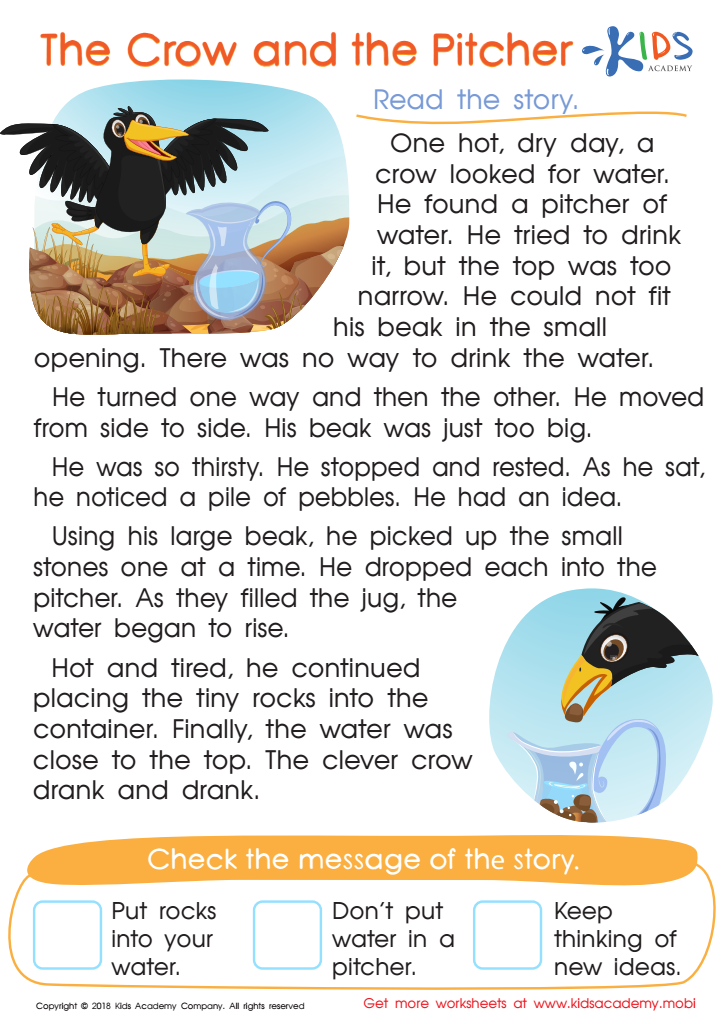
The Crow and the Pitcher Worksheet
 Assign to My Students
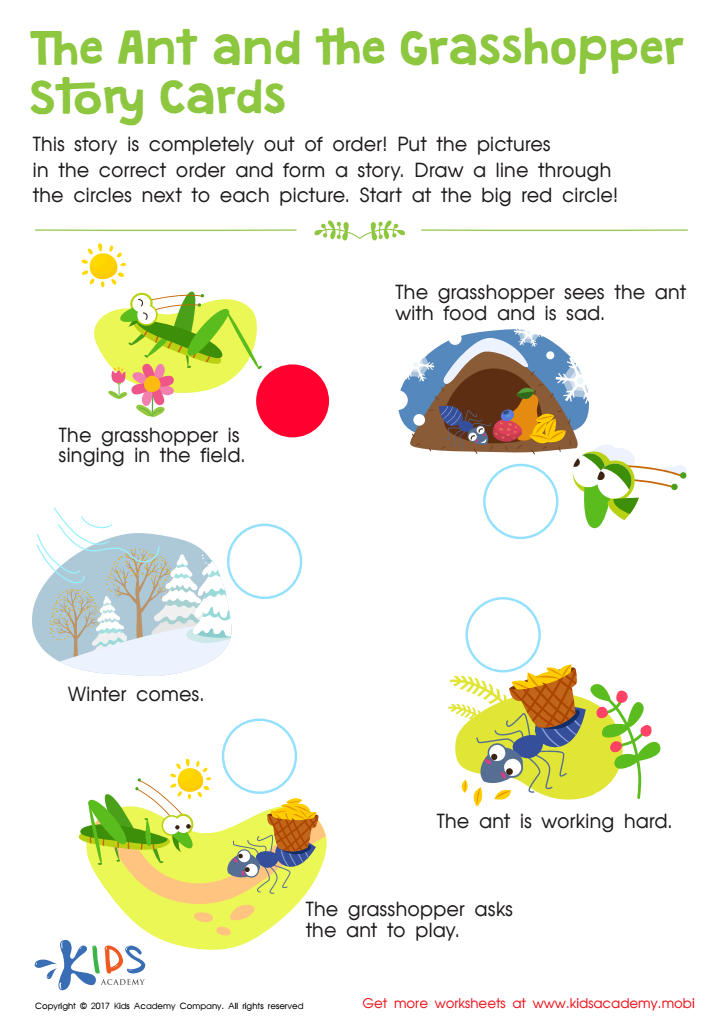
The Ant and The Grasshopper Worksheet
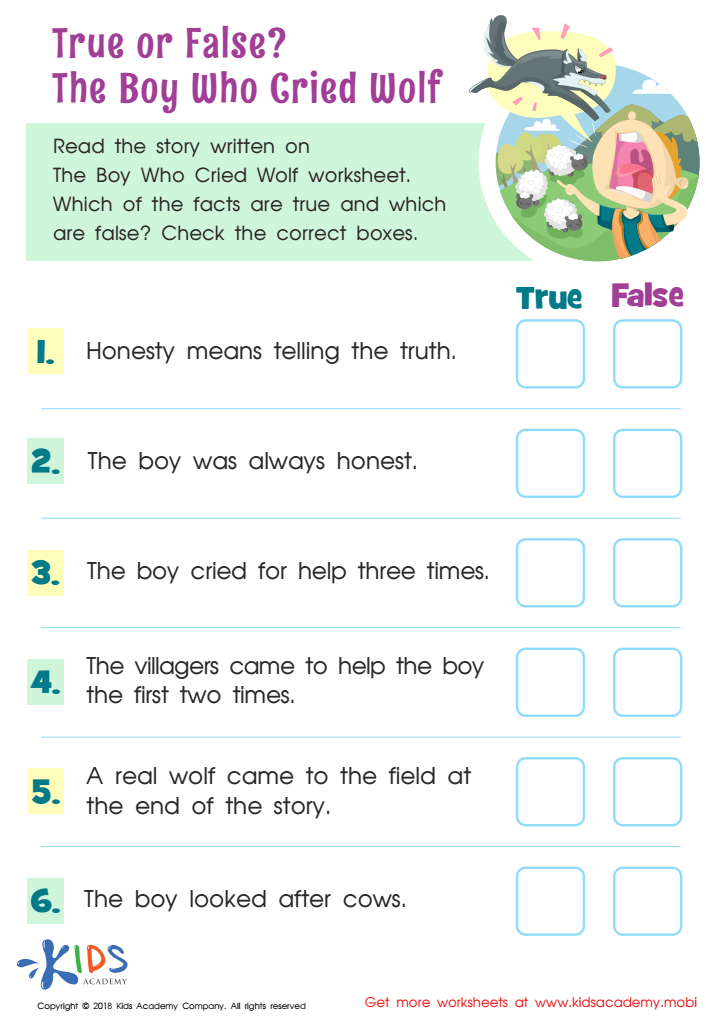
True or False? The Boy Who Cried Wolf Worksheet
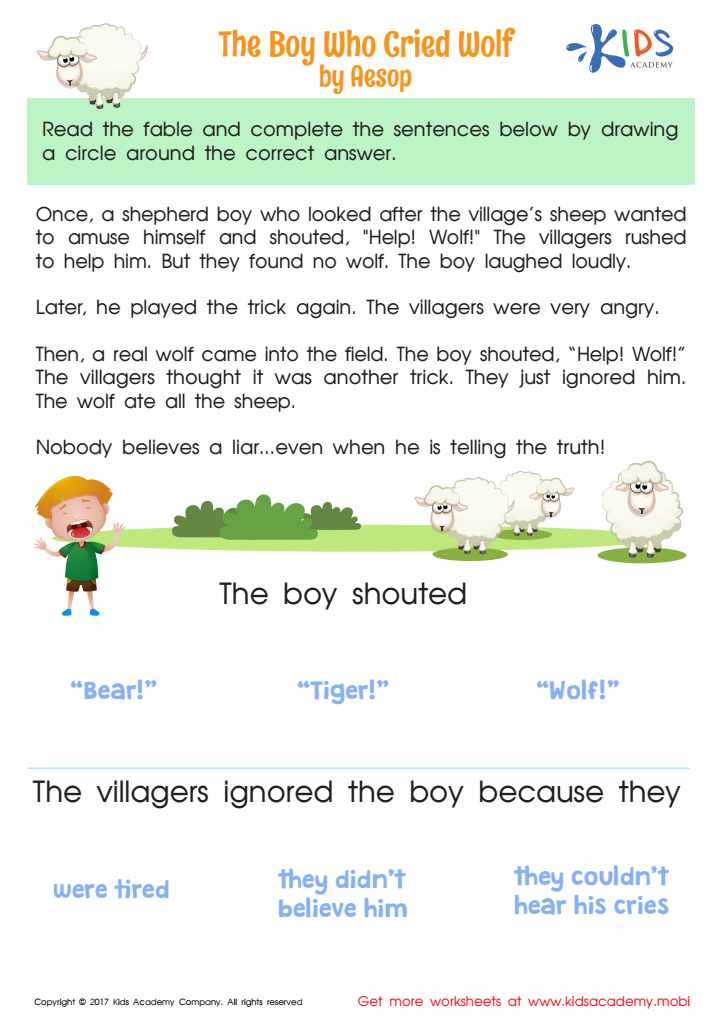
The Boy Who Cried Wolf Worksheet



.jpg)




Parents and teachers should care about moral understanding through reading fiction for children aged 3-7 because these early years are crucial for shaping a child's moral compass and empathy. Fictional stories offer a captivating way to introduce complex moral concepts in a simple, relatable manner. As children identify with characters and experience different scenarios vicariously, they learn to distinguish between right and wrong, fair and unfair.
Moral lessons embedded in stories can help children understand the consequences of actions, fostering a sense of responsibility. For instance, tales about sharing, honesty, and kindness reinforce the importance of these values in real-life situations. Additionally, witnessing characters navigate ethical dilemmas nurtures critical thinking and decision-making skills in young minds.
Furthermore, stories that exemplify diversity and inclusion teach children to respect and appreciate differences, promoting empathy and compassion. This early exposure helps them develop a more inclusive worldview, reducing prejudices as they grow.
Lastly, reading time fosters a strong bond between the child and the adult, providing a safe space for discussions about morals and values. Through these interactions, children feel supported and understood, which is fundamental for their emotional and moral development. Therefore, investing in moral understanding through fiction is essential for nurturing well-rounded, empathetic individuals.








