Story analysis Reading Fiction Worksheets for Ages 3-7
5 filtered results
-
From - To
Introduce young learners to the world of storytelling with our Story Analysis Reading Fiction Worksheets designed for ages 3-7. These worksheets, available on Kids Academy, blend fun with educational activities that foster crucial reading skills. Children will engage in interactive tasks that sharpen their ability to identify key story elements like characters, settings, and plots. By practicing prediction, sequencing, and recalling details, kids build a strong foundation for reading comprehension and critical thinking. Colorful and age-appropriate, our worksheets make story analysis an exciting adventure, turning every reading session into an opportunity for discovery and learning growth.
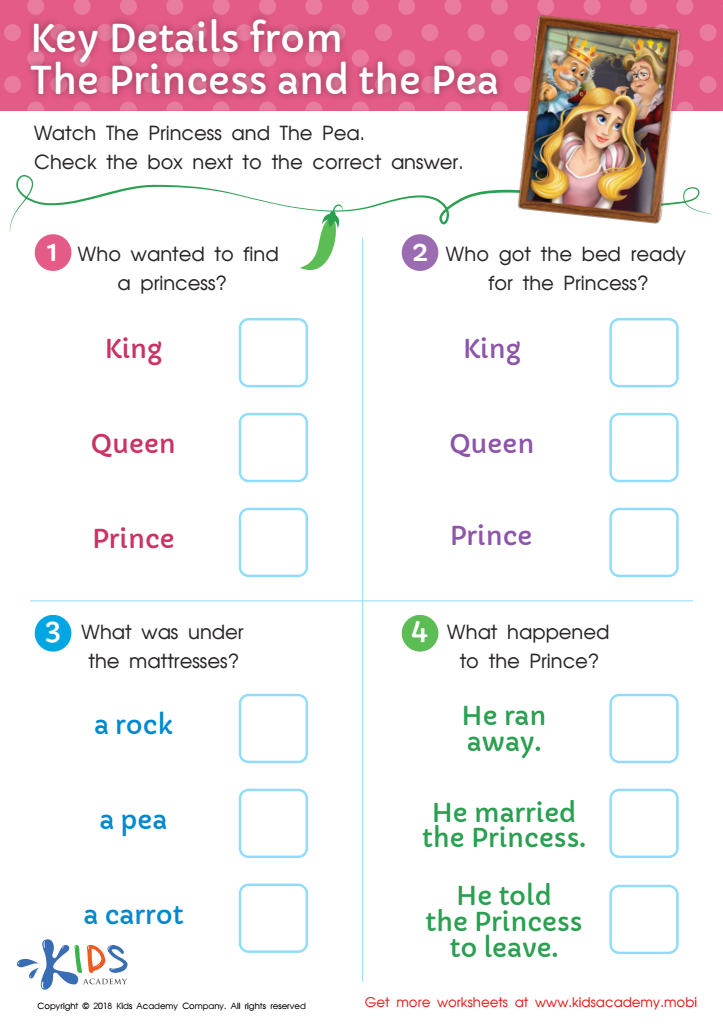
Key Details from the Princess and the Pea Worksheet
 Assign to My Students
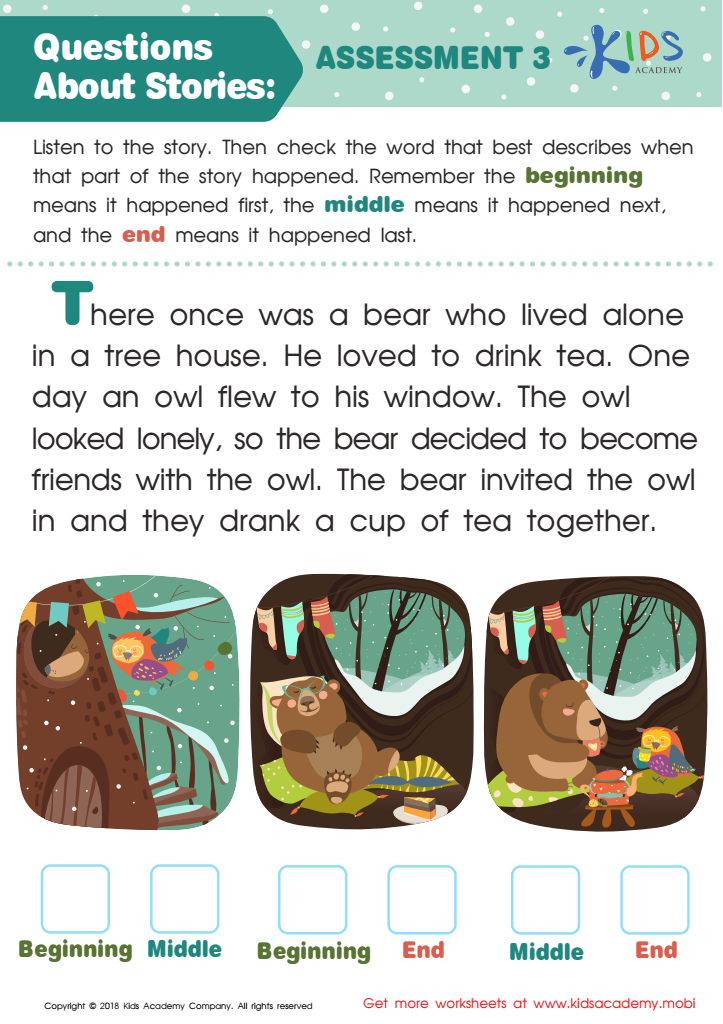
Questions About Stories: Assessment 3 Worksheet
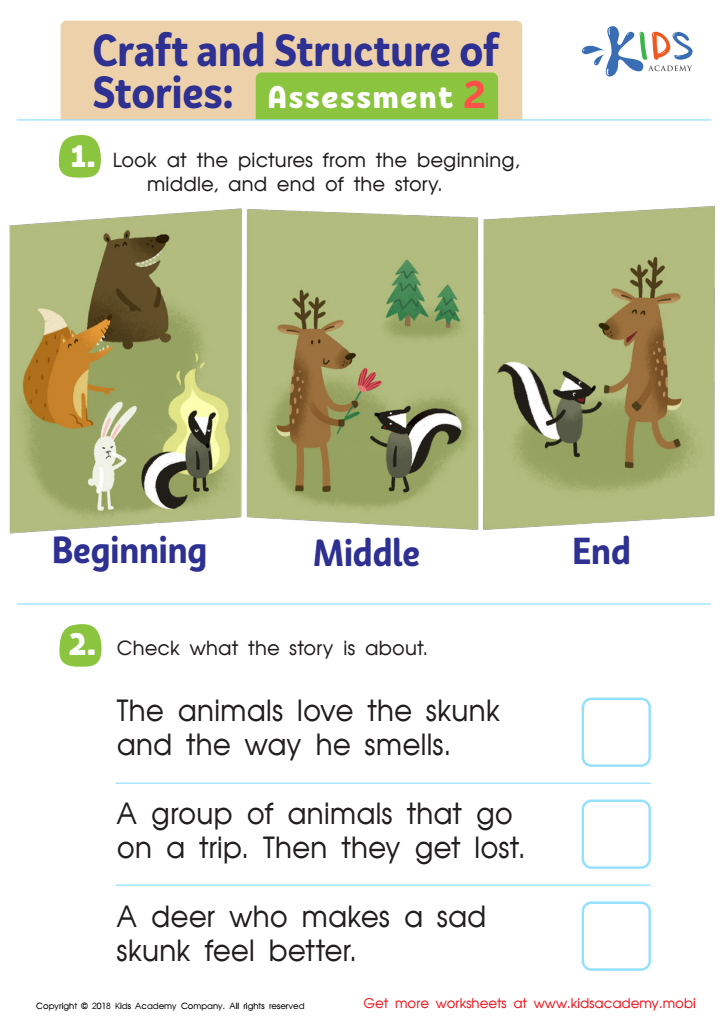
Craft and Structure of Stories: Assessment 2 Worksheet
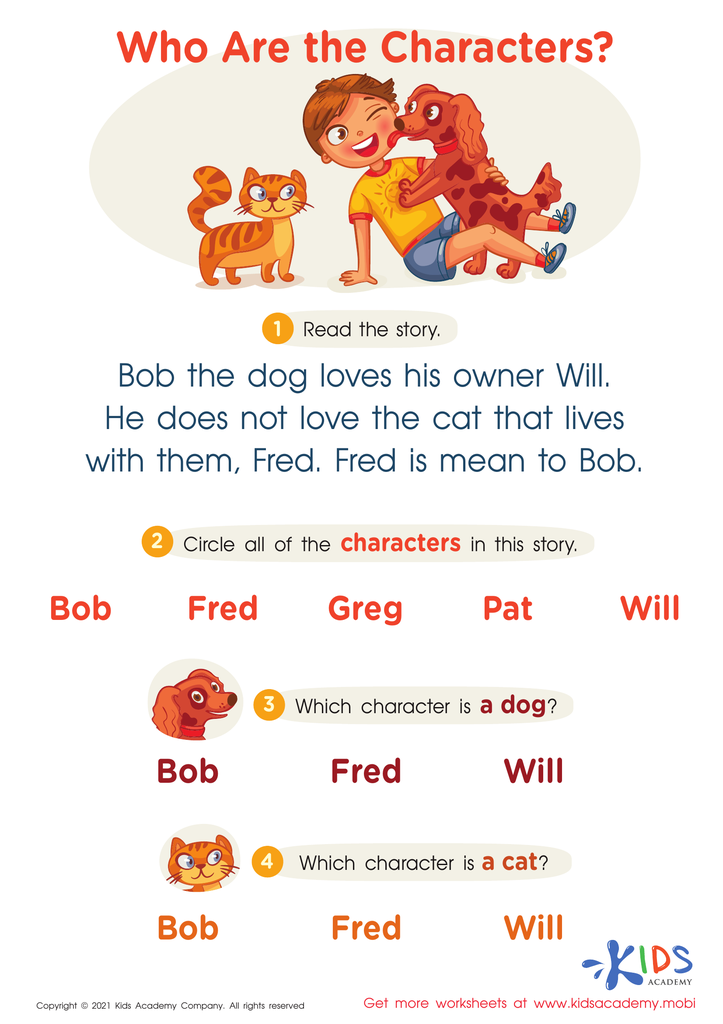
Who Are the Characters? Worksheet
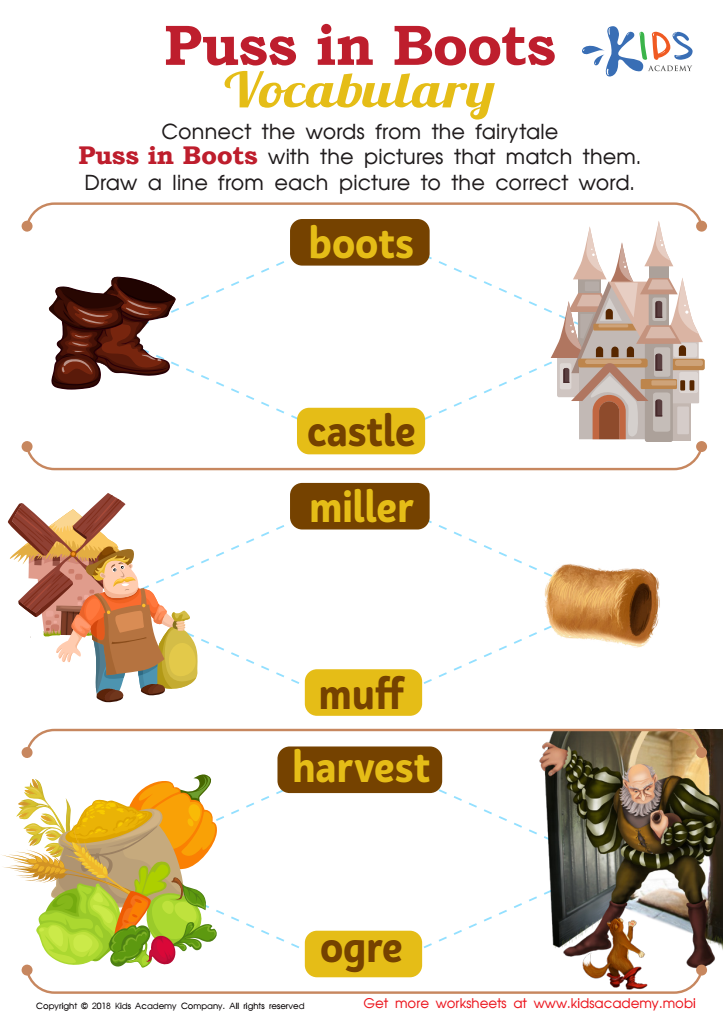
Puss in Boots Vocabulary Worksheet








Reading fiction and engaging in story analysis are critical activities for young children aged 3-7, providing a robust foundation for their cognitive, emotional, and social development. At this stage, children are like sponges, and the stories they absorb can profoundly shape their worldview, comprehension skills, and moral framework.
Firstly, reading fiction enhances language development. With exposure to varied vocabulary, sentence structures, and literary devices, children naturally acquire a richer vocabulary and stronger communication skills. This early literary exposure lays the groundwork for effective writing and speaking abilities in later years.
Emotionally, fiction introduces children to diverse emotions and situations, helping them develop empathy. When children analyze stories, they learn to understand characters' motivations and feelings, which supports emotional intelligence. They begin to grasp complex human behaviors and the consequences of actions.
Socially, story analysis encourages critical thinking and discussion. Asking questions like "Why did the character do that?" or "What could they have done differently?" helps children learn to express their thoughts and respect differing viewpoints. It also encourages creative thinking and problem-solving, transferable skills valuable throughout their academic journey and beyond.
In summary, engaging with and analyzing fiction allows young children to develop fundamental language, emotional, and social skills, making it an invaluable part of early education.








