Improving math skills Sight Words Worksheets for Ages 3-7
4 filtered results
-
From - To
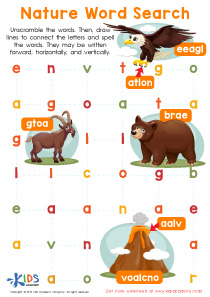
Boost your child's learning with our "Improving Math Skills Sight Words Worksheets" designed for ages 3-7! These engaging worksheets seamlessly combine math practice with essential sight word recognition, helping young learners build foundational skills that are crucial for their academic success. Each worksheet fosters cognitive development through fun activities that encourage critical thinking and problem-solving. Children will improve their math abilities while enhancing their vocabulary, making learning an enjoyable experience. Perfect for parents and educators, our resources support a well-rounded approach to early education. Start enhancing your child's skills today with our interactive and educational worksheets!
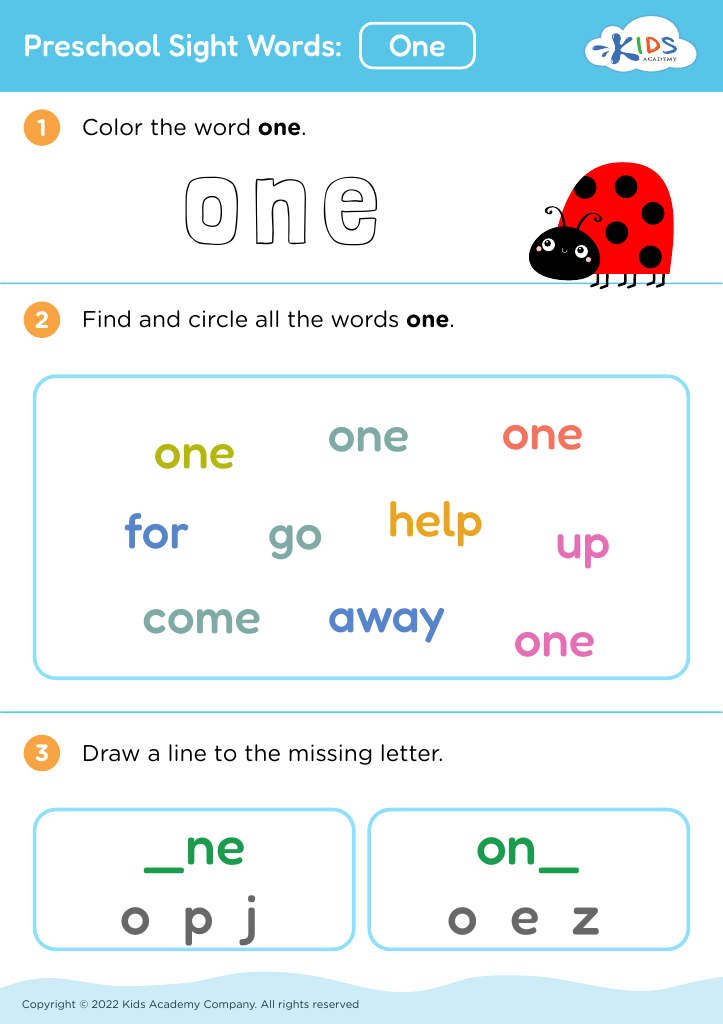







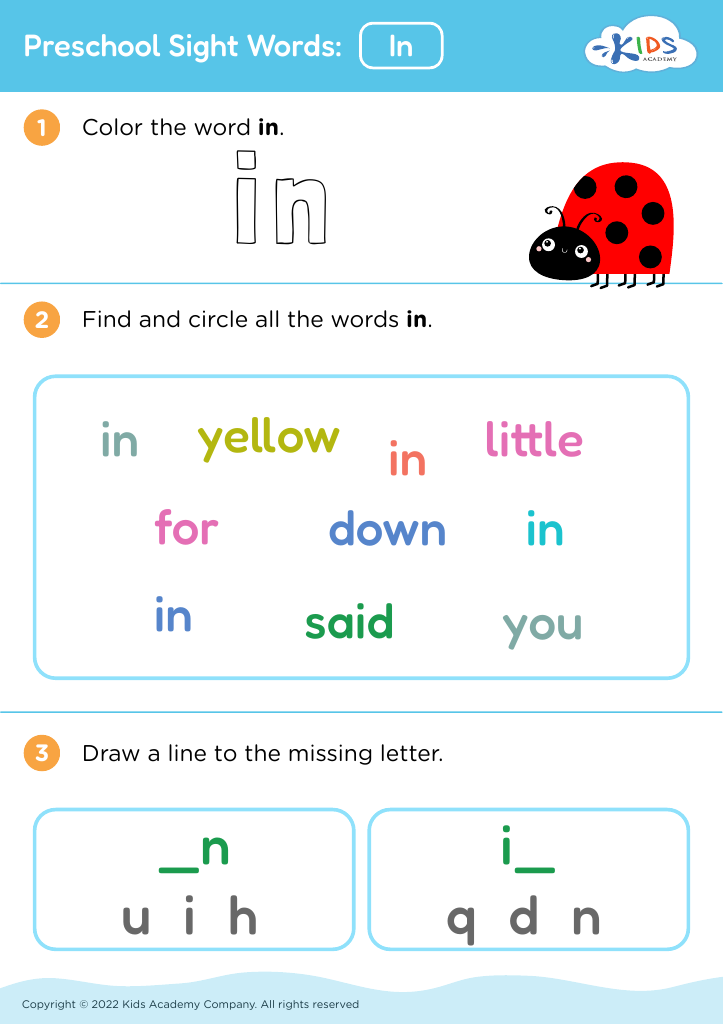
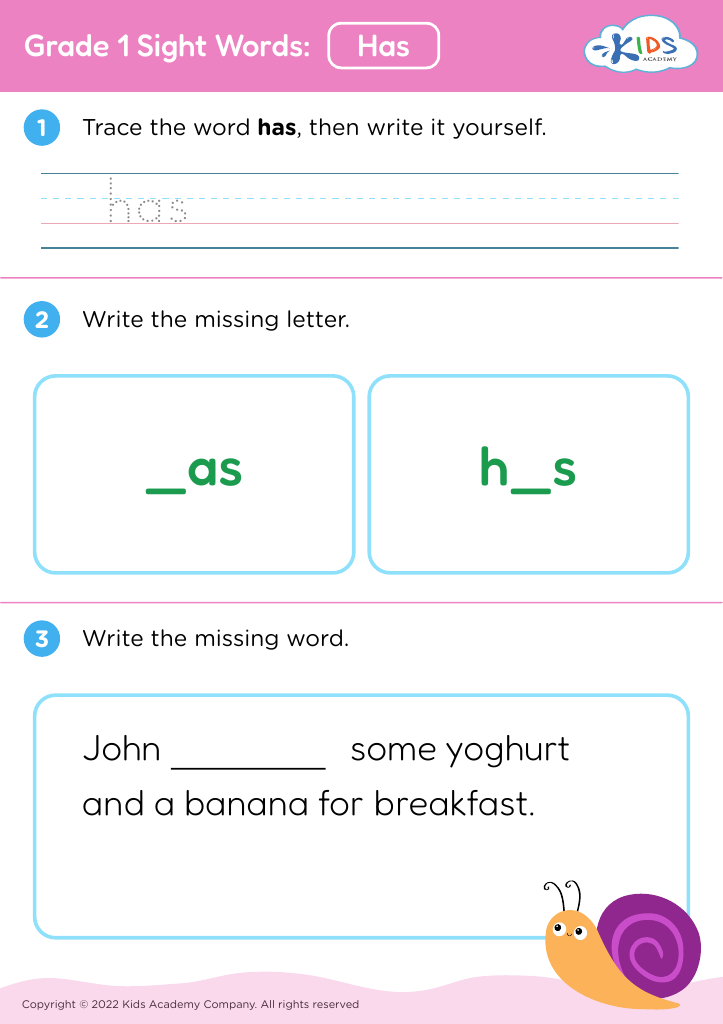
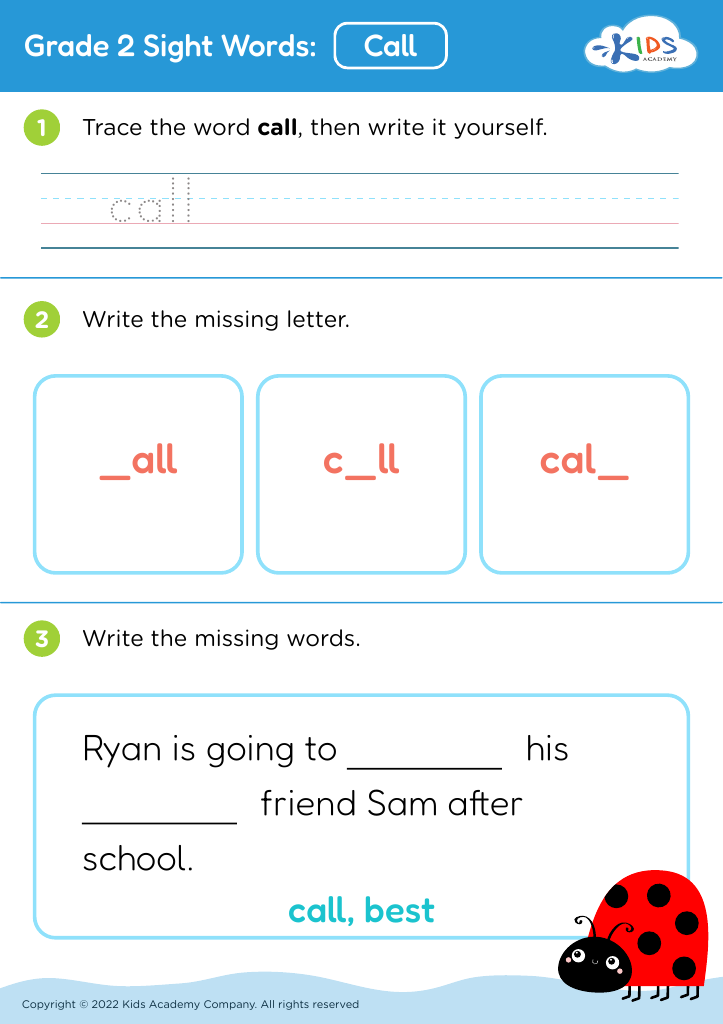








Improving math skills and sight words in children aged 3-7 is crucial for their cognitive development and foundational learning. At this stage, children are like sponges, eagerly absorbing information and developing critical thinking abilities. Early exposure to math concepts fosters logical reasoning, problem-solving skills, and numerical fluency, which are essential for their academic journey. When educators and parents prioritize math skills, they equip children with the tools they need to succeed in higher-level math in later years.
Sight words, on the other hand, serve as the building blocks for reading. Mastering these words allows young learners to improve their reading fluency and comprehension, giving them confidence in their literacy skills. This, in turn, enhances their ability to engage with math problems that involve reading instructions or word problems.
Moreover, integrating math skills and sight word recognition promotes a holistic approach to learning. It creates opportunities for interdisciplinary activities that can keep children engaged and motivated. Teachers and parents play a pivotal role in cultivating a positive learning environment at home and school, ultimately helping children build a strong academic foundation that supports lifelong learning. By investing time and resources into improving these skills, caregivers help set children on a path toward success.