Understanding fractions Sight Words Worksheets for Ages 3-7
47 filtered results
-
From - To
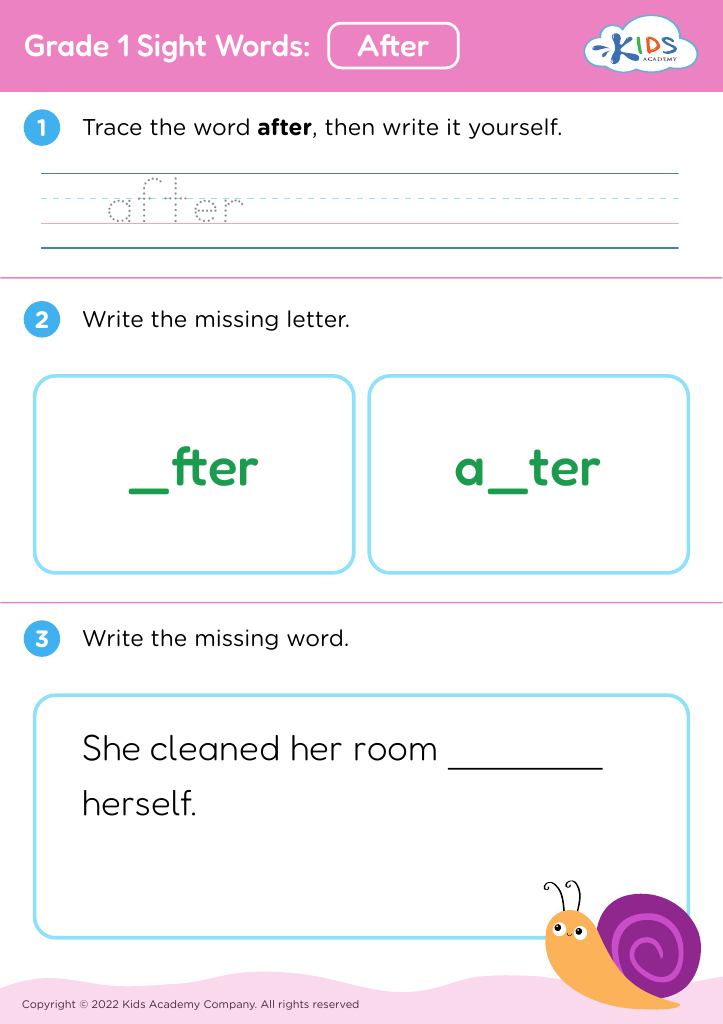
Enhance your child's early math skills with our "Understanding Fractions Sight Words Worksheets for Ages 3-7" at Kids Academy. Specially designed for young learners, these printable sheets make learning fractions fun and interactive. By combining sight words and fraction concepts, our worksheets help children grasp basic math principles while boosting their reading proficiency. Each activity is thoughtfully crafted to engage little minds through colorful visuals and hands-on exercises, laying a strong educational foundation. Perfect for both classroom and home use, these worksheets support parents and teachers in nurturing a love for learning in their students. Explore and download today!



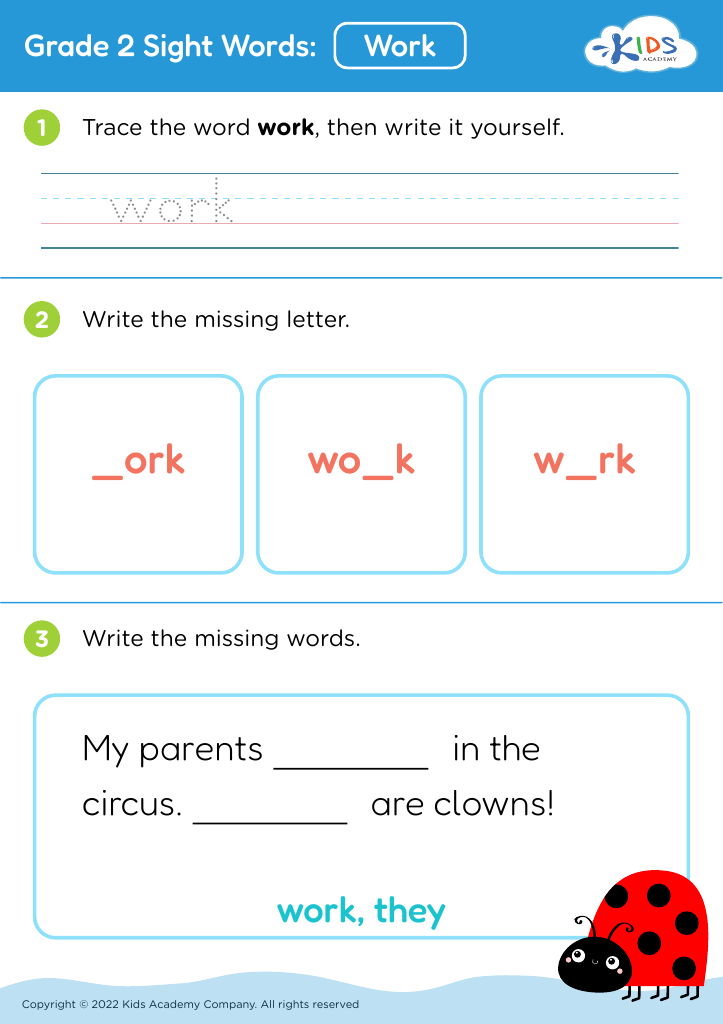
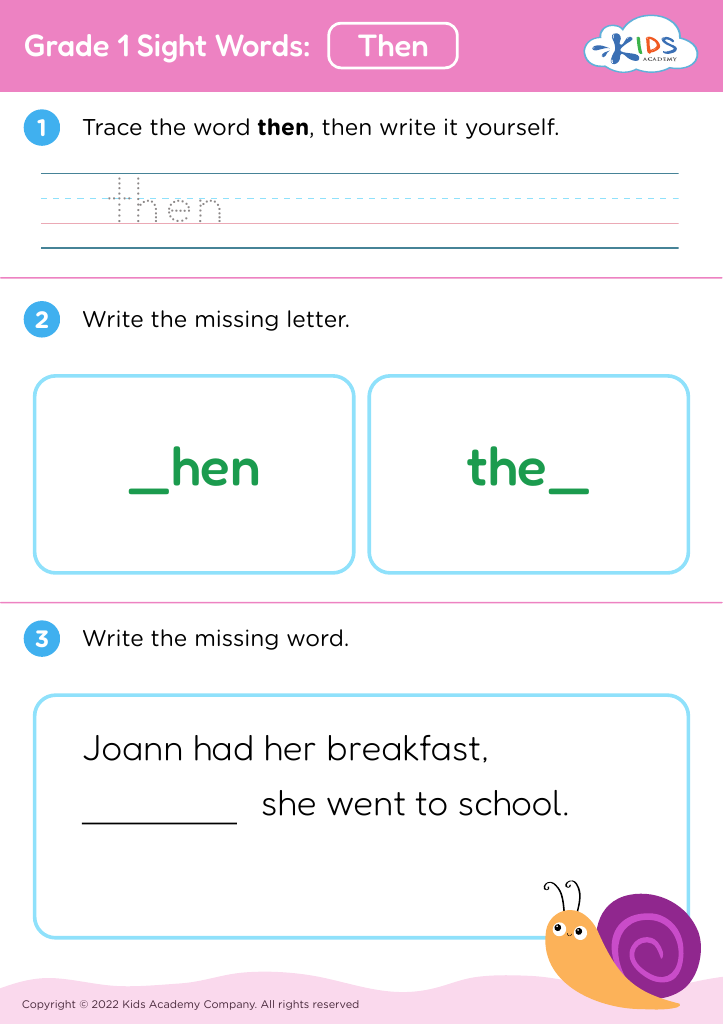
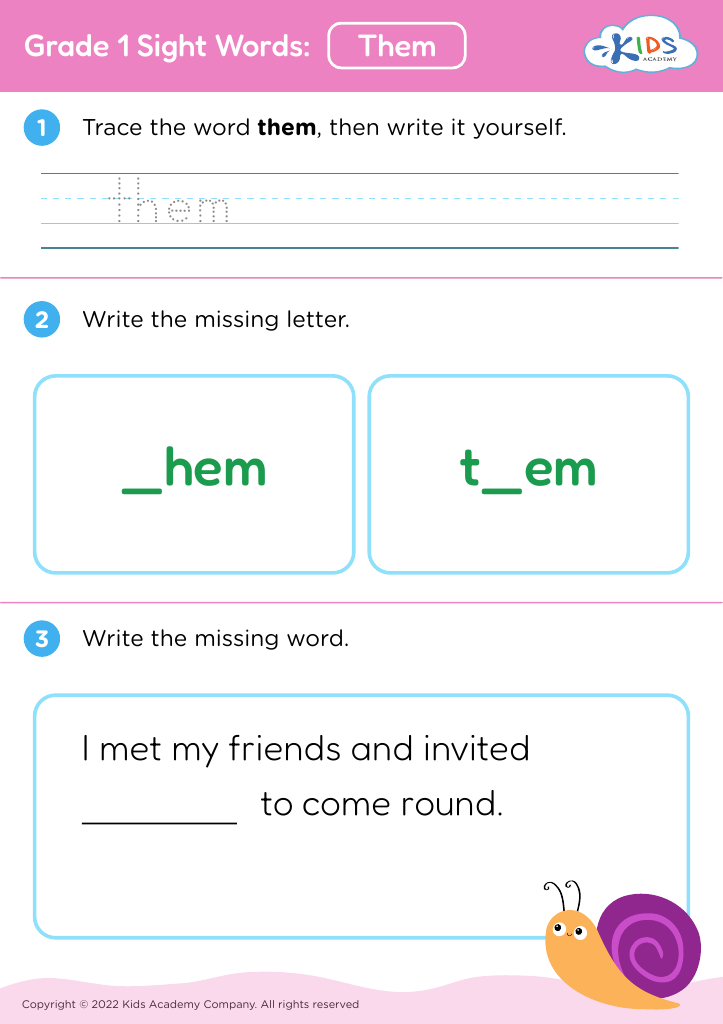
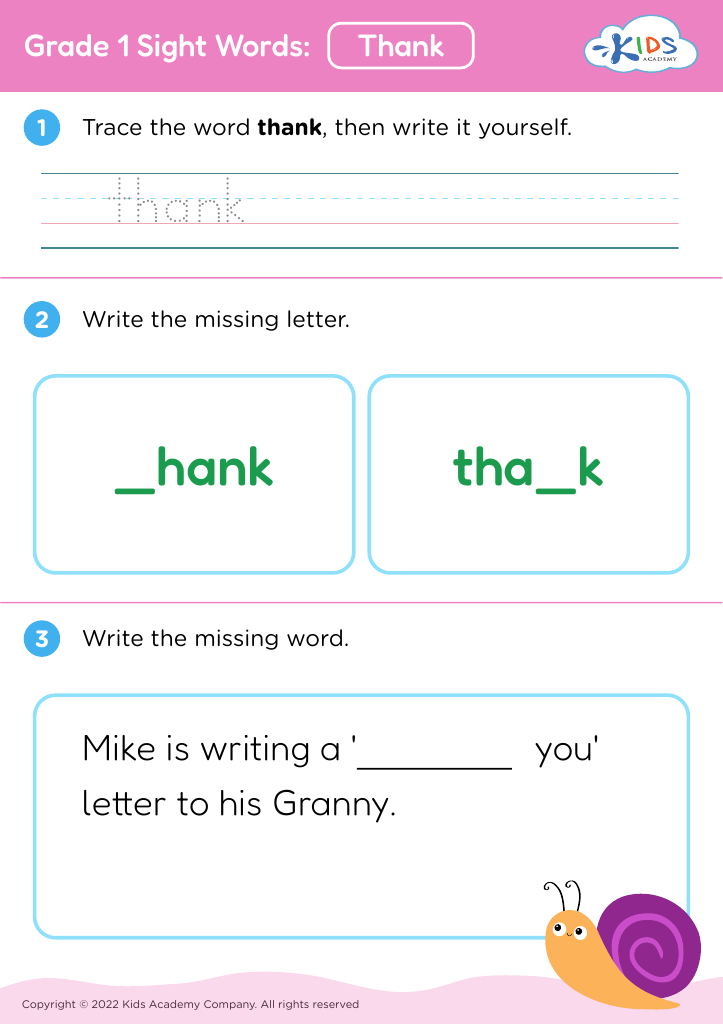
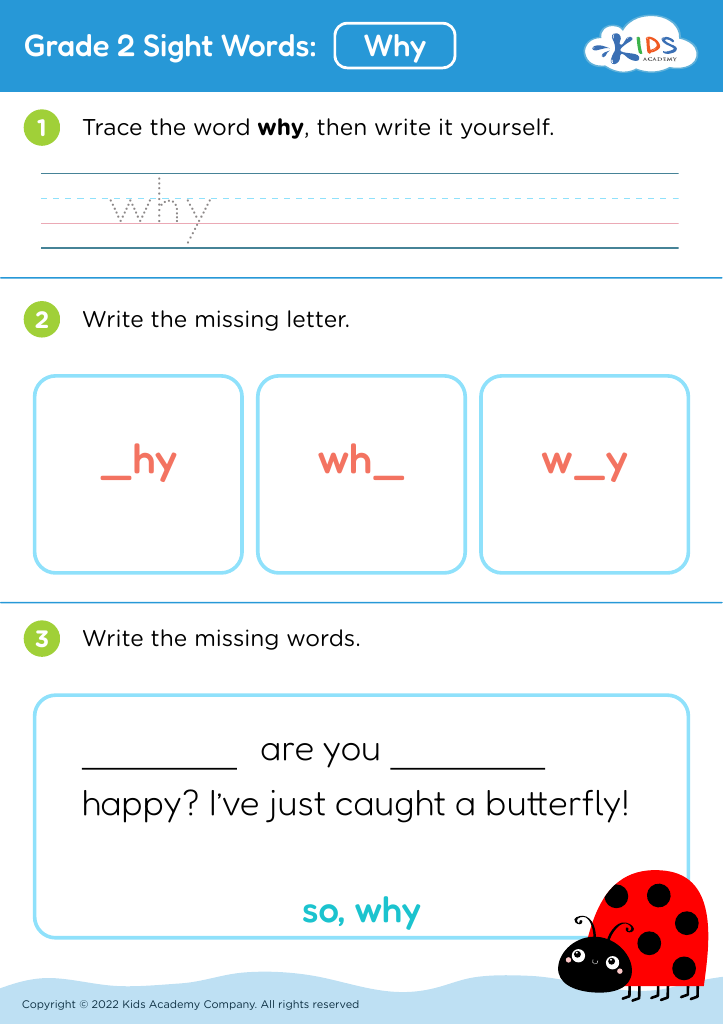
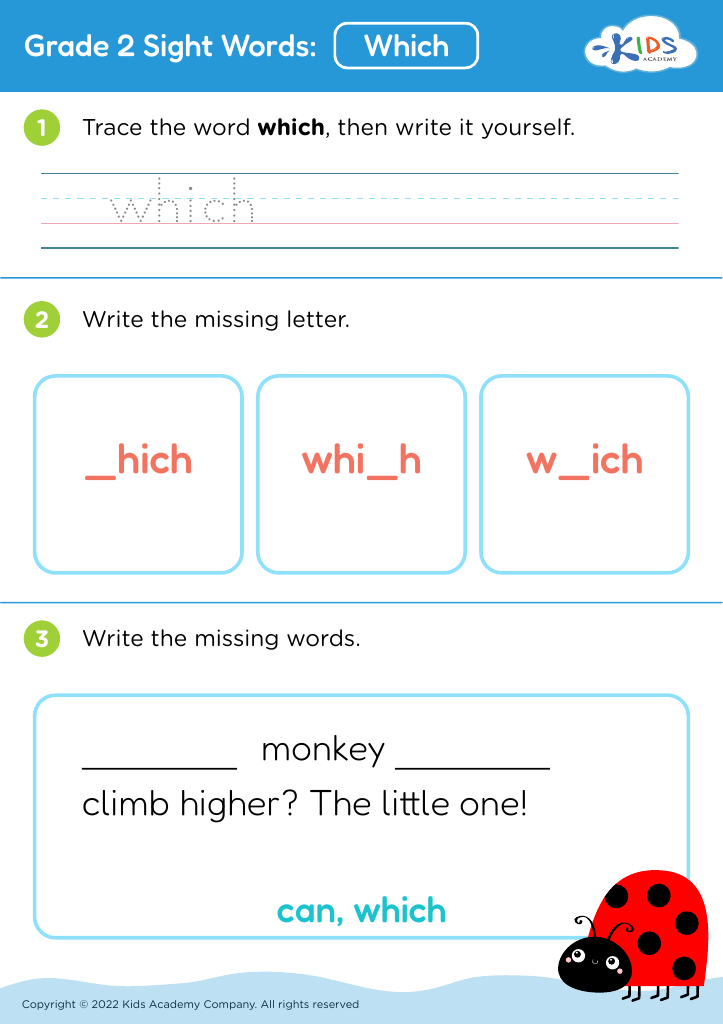
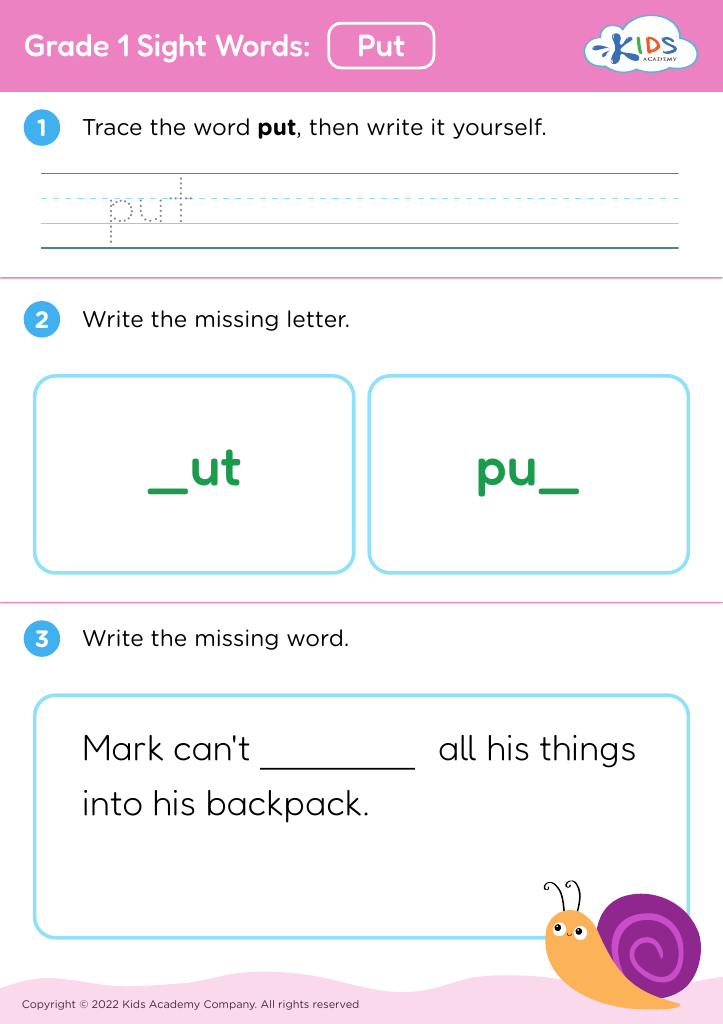
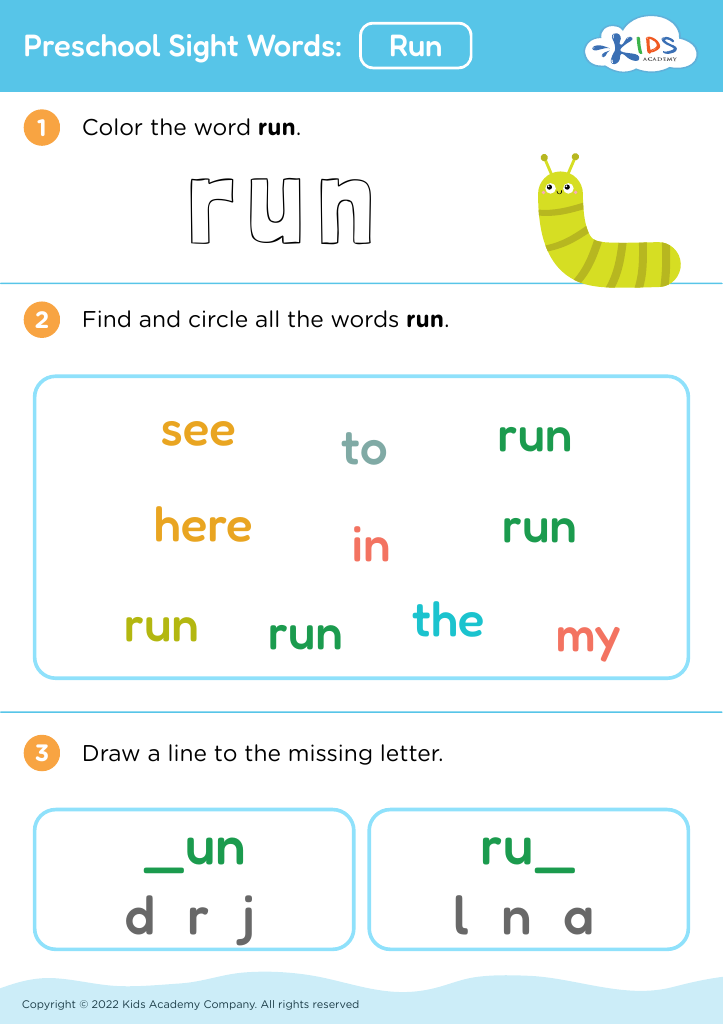
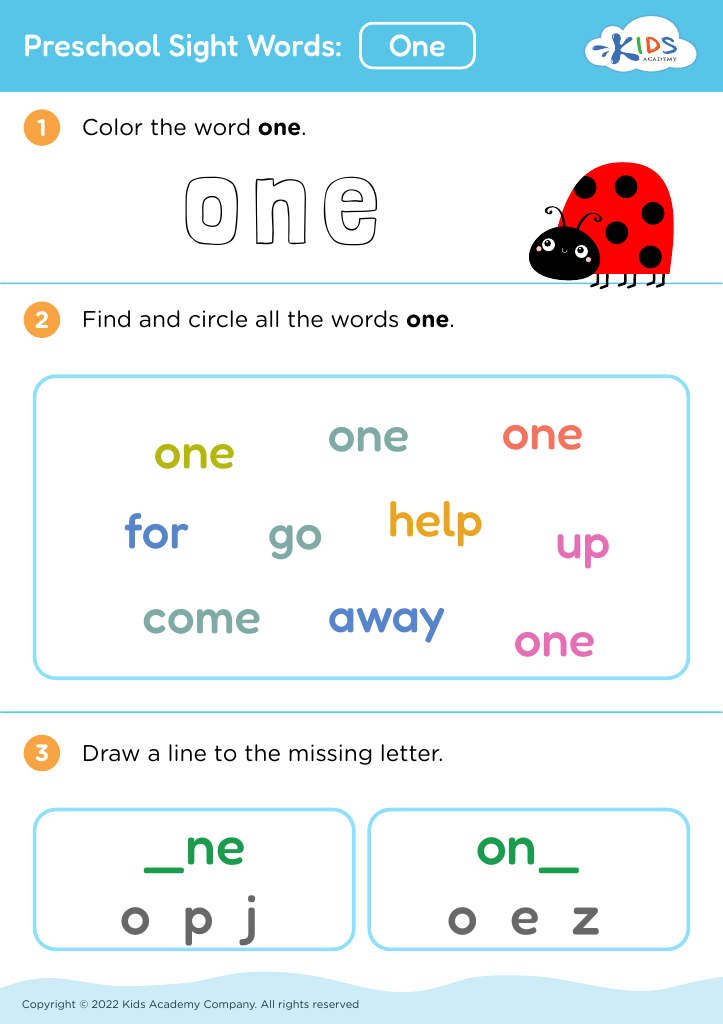
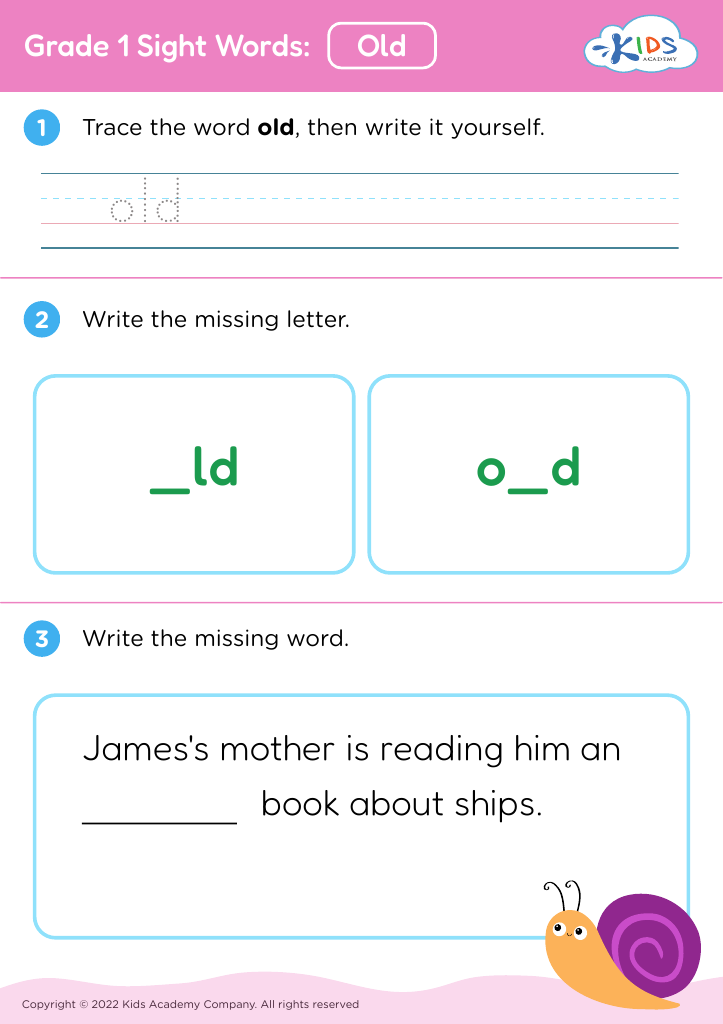
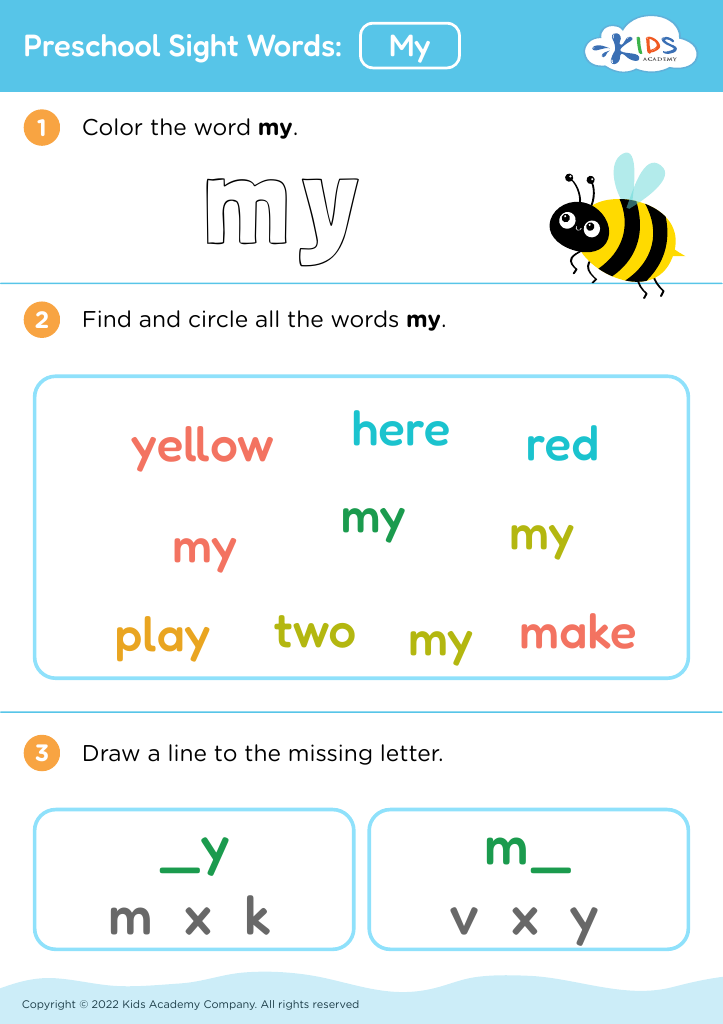
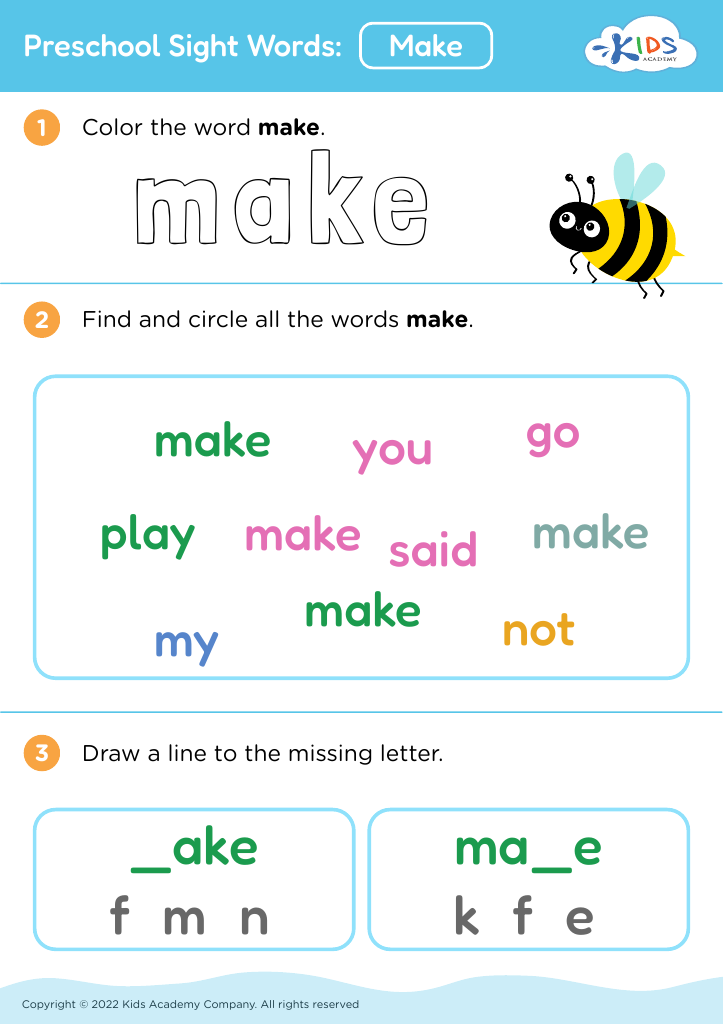
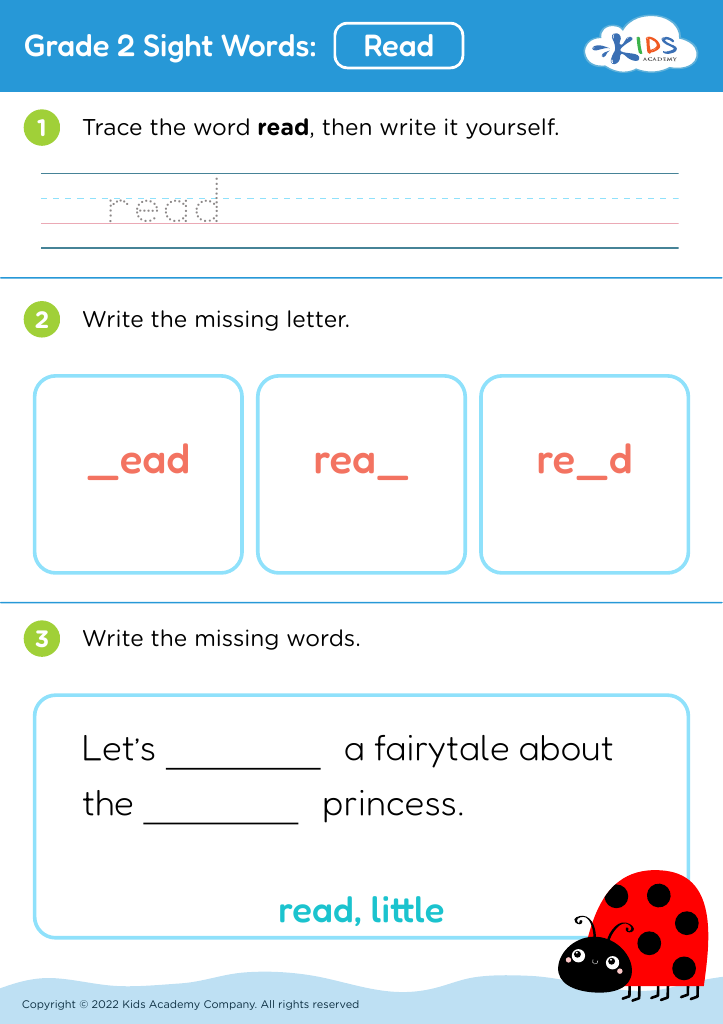
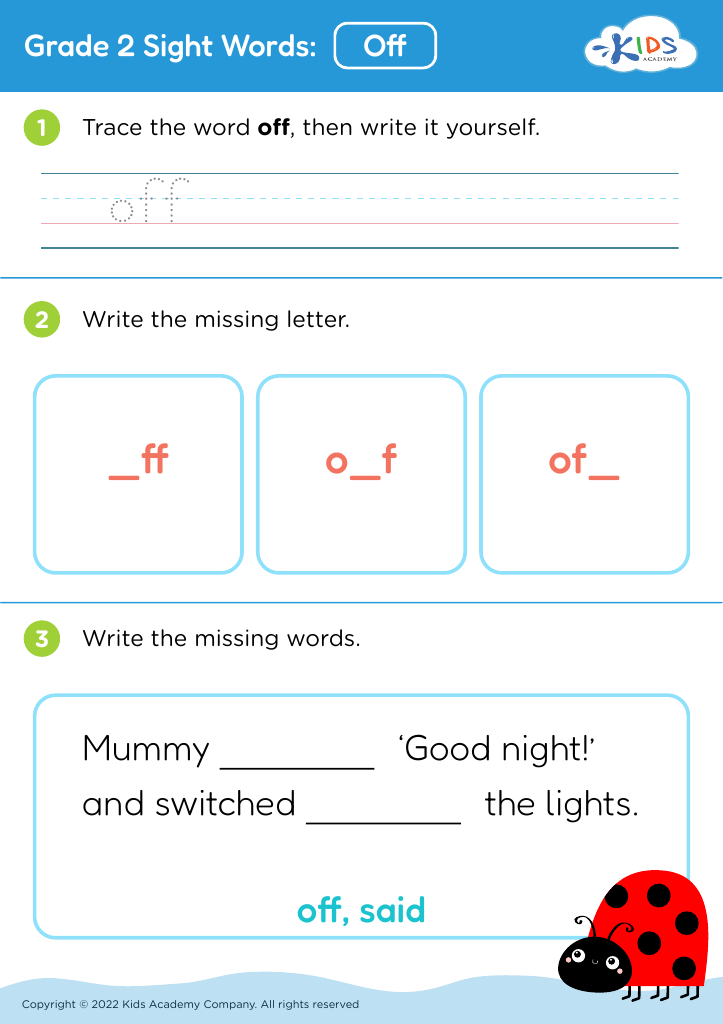
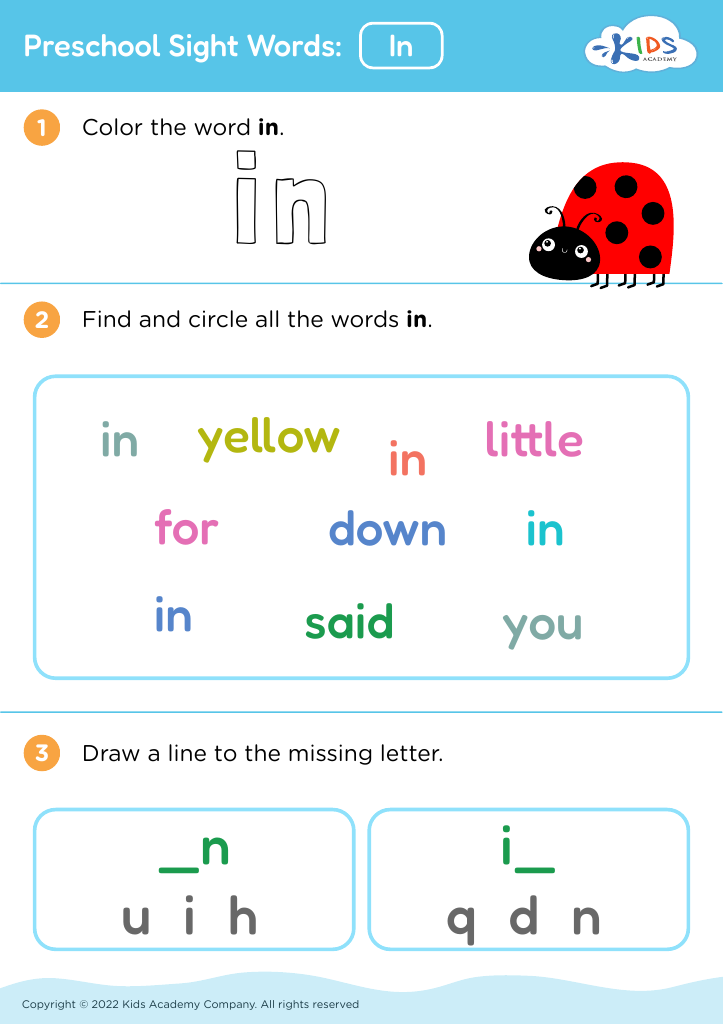
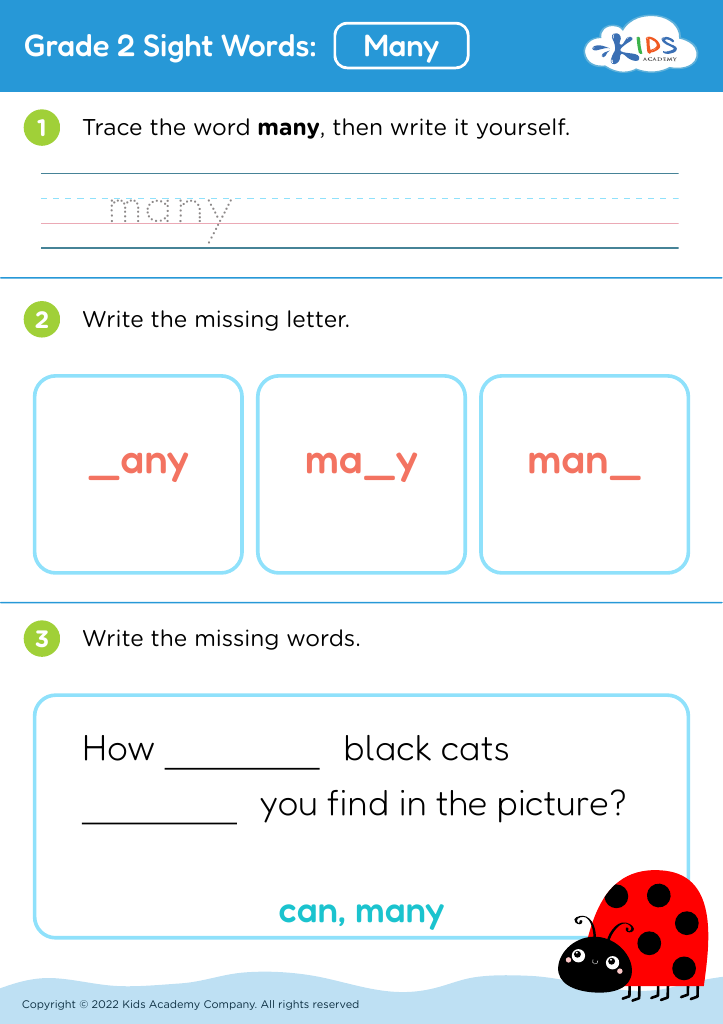
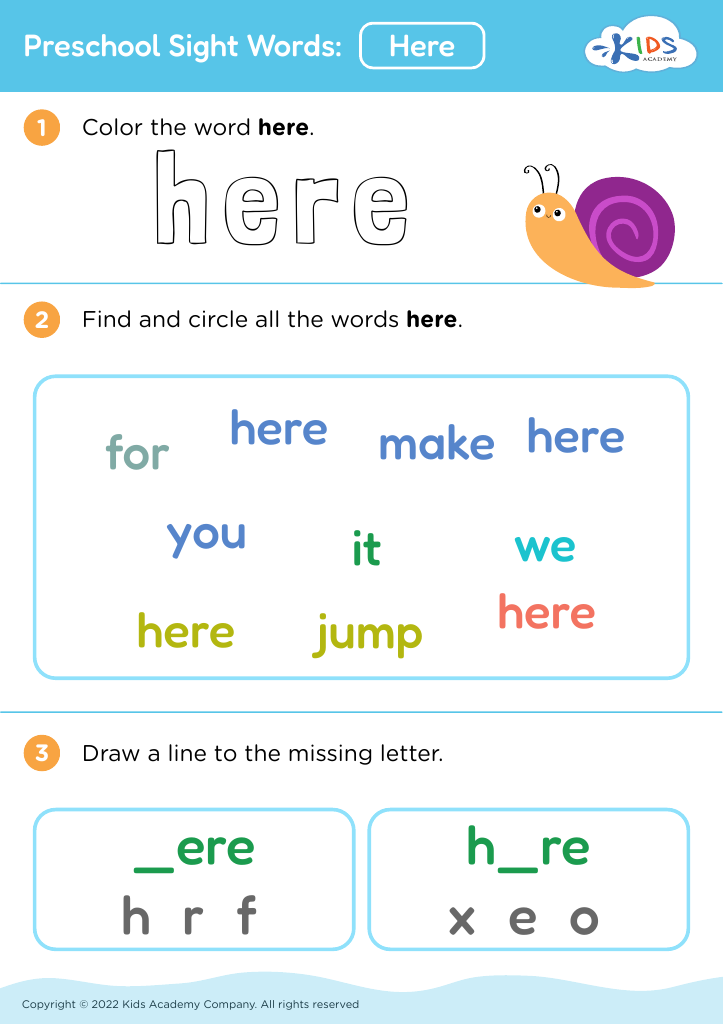
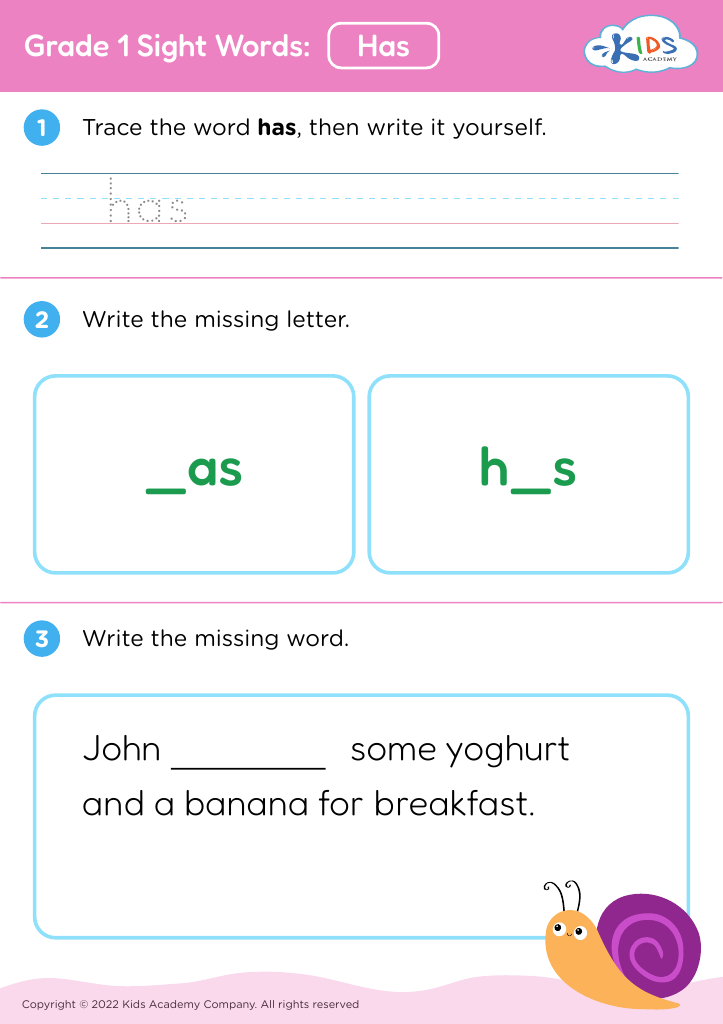
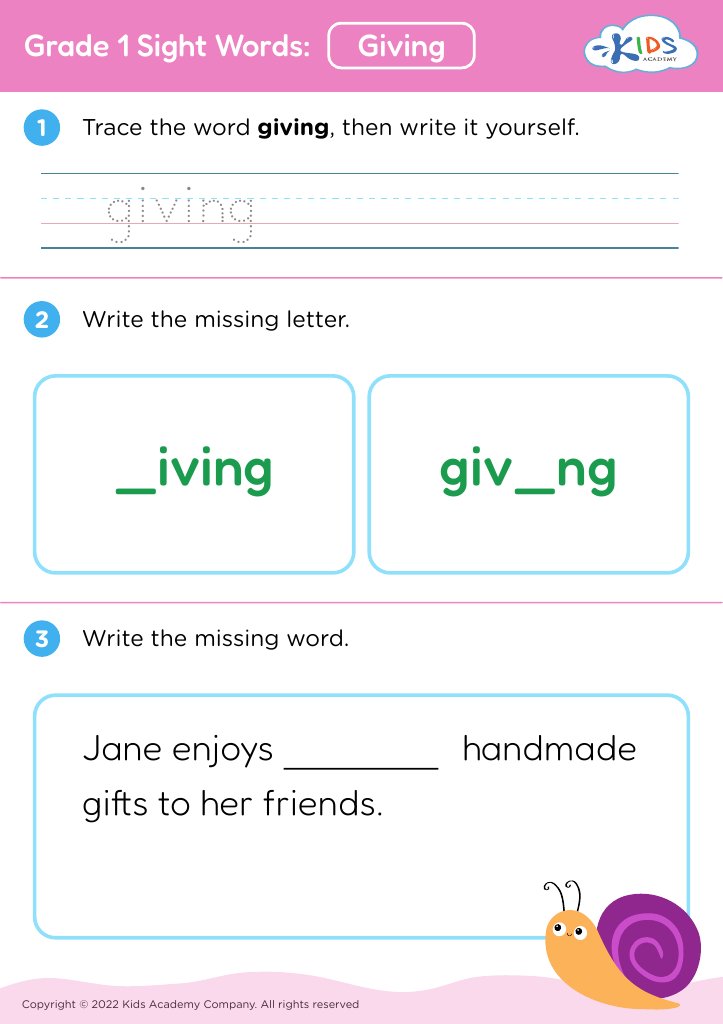
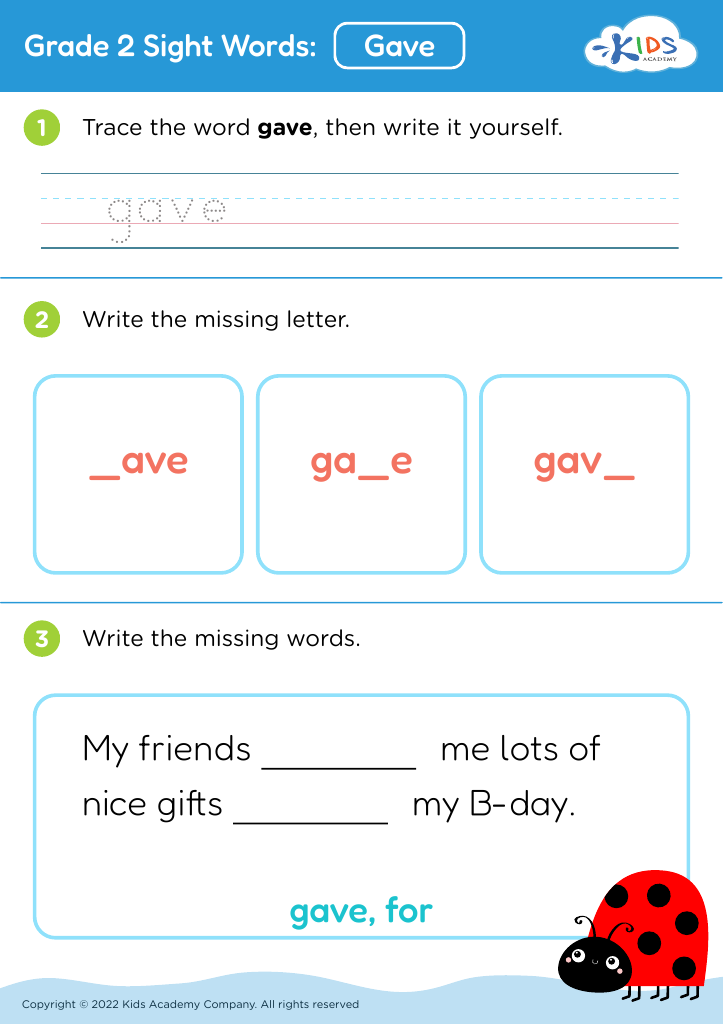
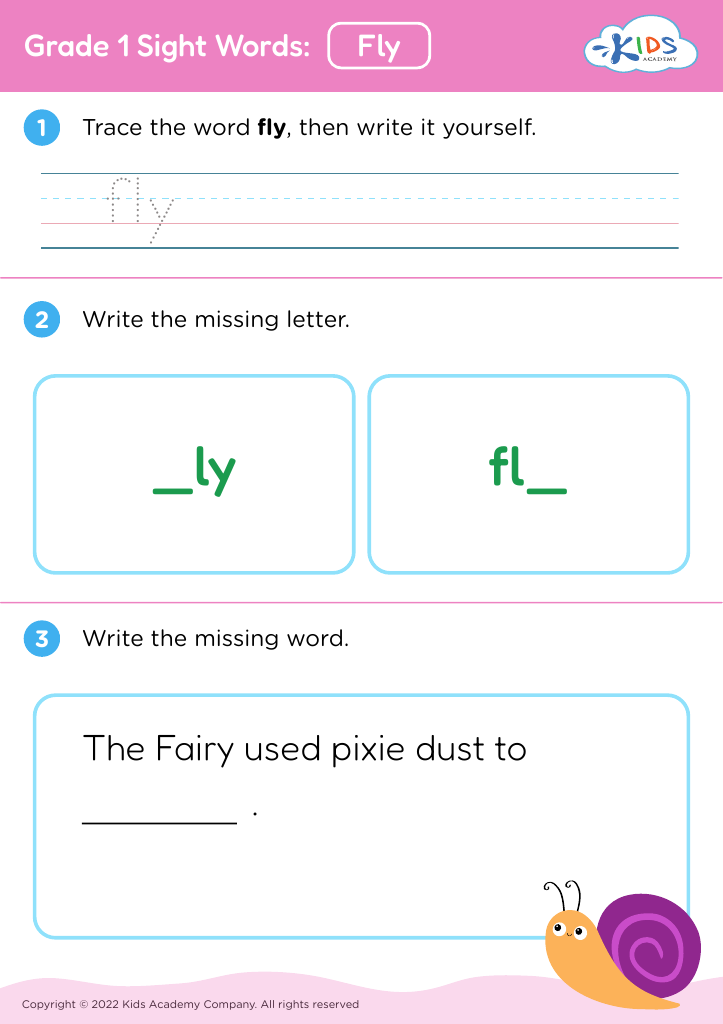
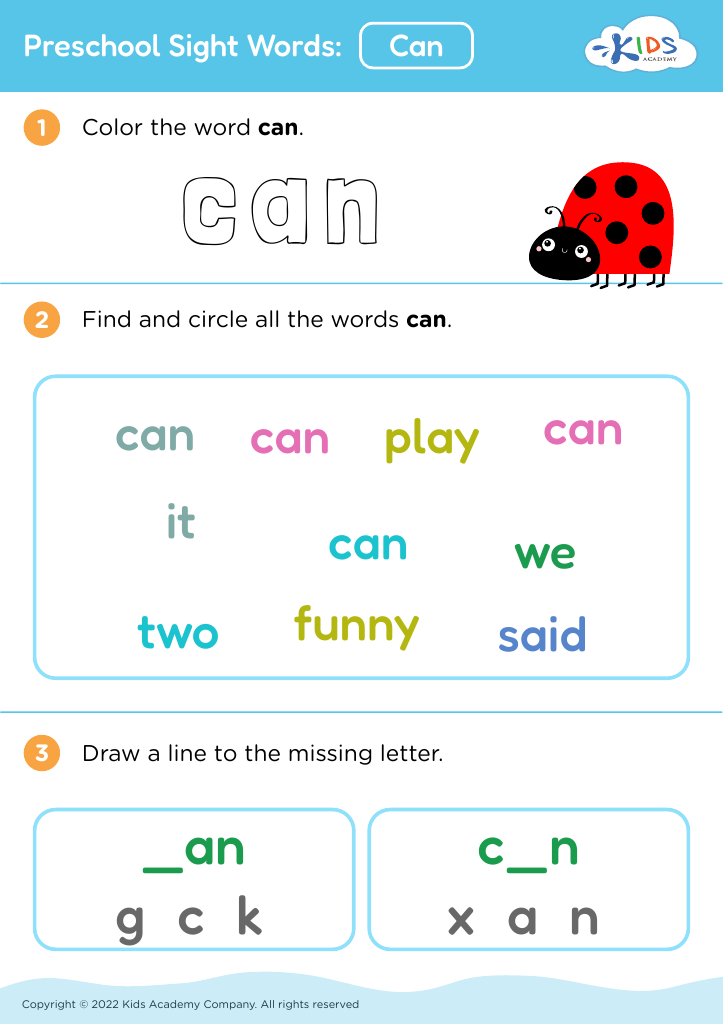
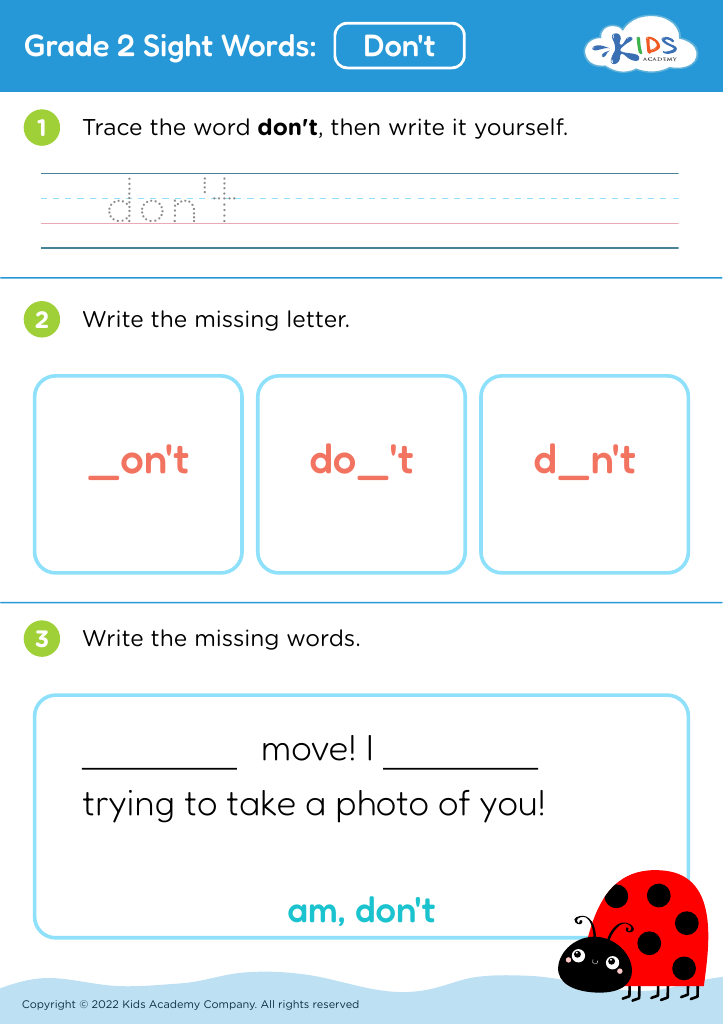







Understanding fractions and sight words for children ages 3-7 lays a crucial foundation for future academic success, thus parents and teachers should prioritize these areas. Sight words are common words that children should recognize instantly without having to sound them out. Mastery of sight words helps develop reading fluency, which is vital for overall literacy and comprehension. Proficient reading skills in early grades are linked to better academic performance in later years and foster a lifelong love for reading.
On the other hand, basic fractions introduce essential mathematical concepts, such as part-whole relationships, division, and proportions. Understanding fractions at an early age builds a foundation for more complex math topics encountered in higher grades, such as algebra and geometry. It also enhances problem-solving skills and logical thinking.
Engaging young children with sight words and basic fractions through games, visual aids, and interactive activities makes learning a fun and integral part of their natural environment. By focusing on these fundamental concepts, parents and teachers can support the development of critical cognitive skills that contribute to a child's intellectual growth, self-confidence, and ability to tackle new challenges independently. Early mastery in these areas often predicts future academic success in reading, math, and beyond.