Categorization skills Animals Worksheets for Ages 3-7
4 filtered results
-
From - To
Enhance your child's learning experience with our engaging Categorization Skills Animals Worksheets designed for ages 3-7! Perfect for early learners, these worksheets introduce fundamental concepts of categorization through the exciting world of animals. Children will enjoy sorting animals by types, habitats, and characteristics, fostering critical thinking and analytical skills. Our user-friendly design and vibrant illustrations keep young minds motivated and eager to learn. Whether used at home or in the classroom, these resources contribute to key developmental milestones in science and biology. Download your free worksheets today and inspire a love for animals and learning in your child!
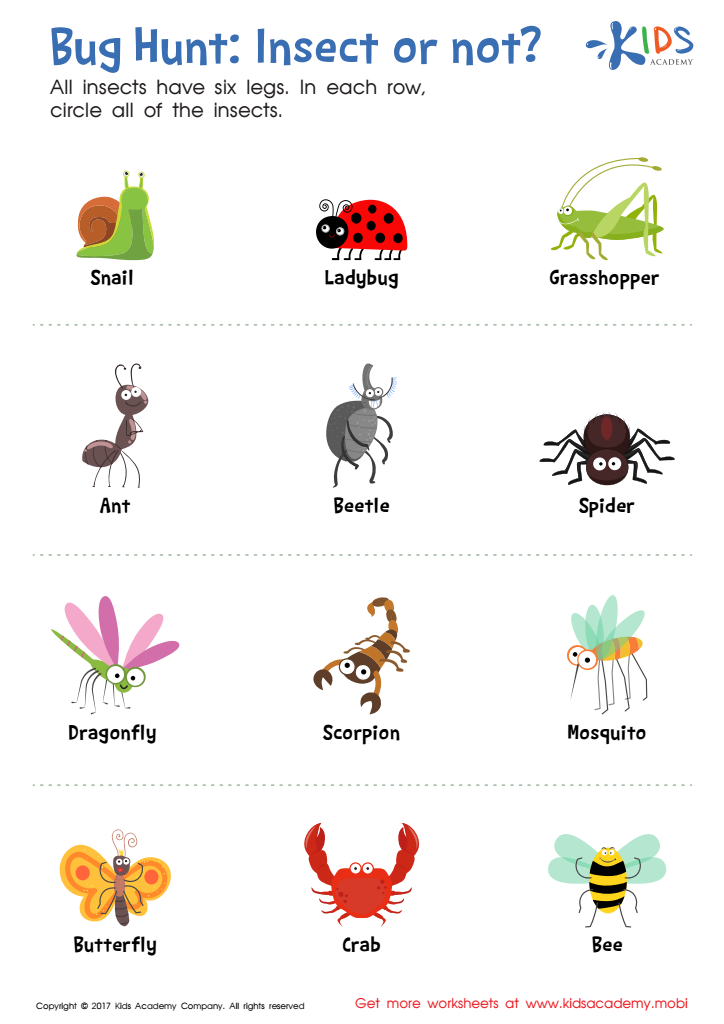
 Assign to My Students
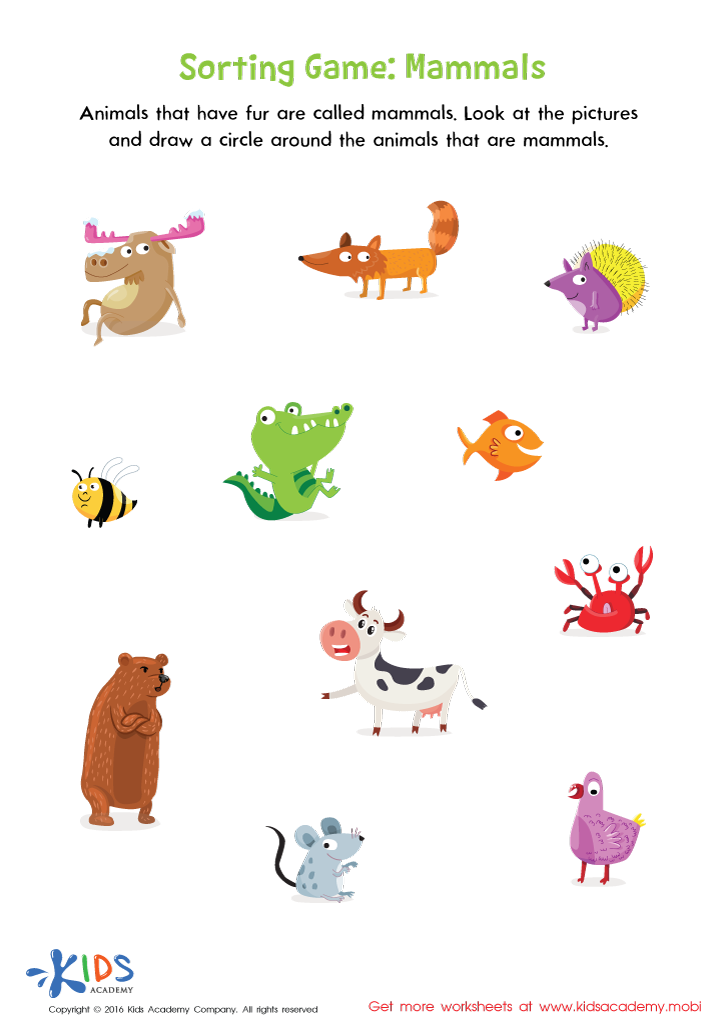
Mammals Sorting Worksheet
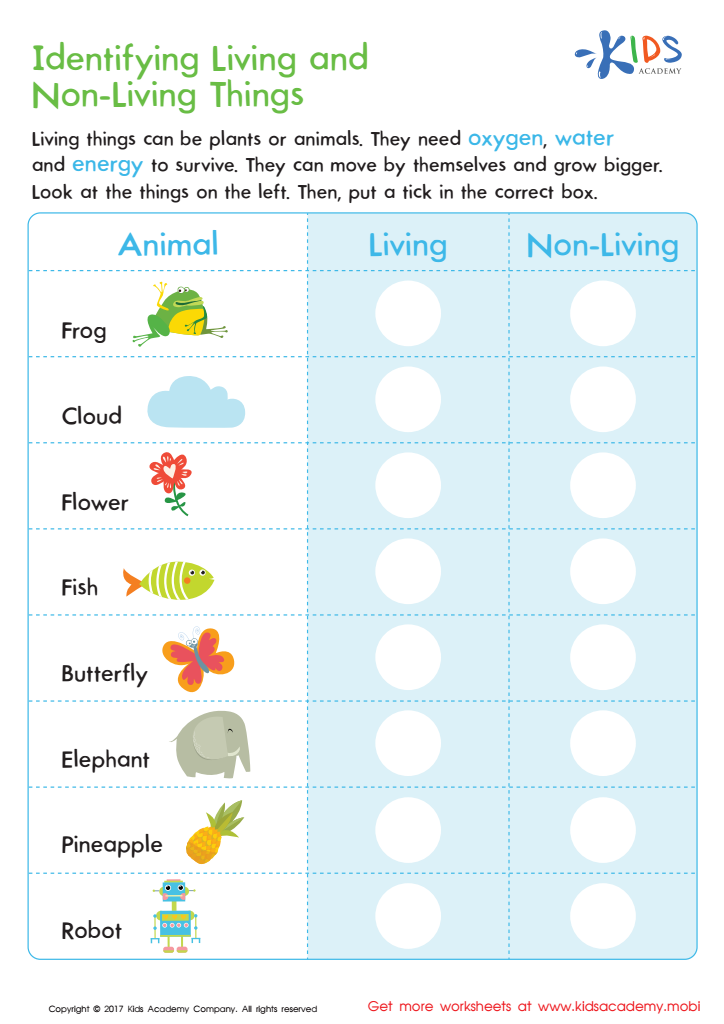
Identifying Living or Non–living Worksheet
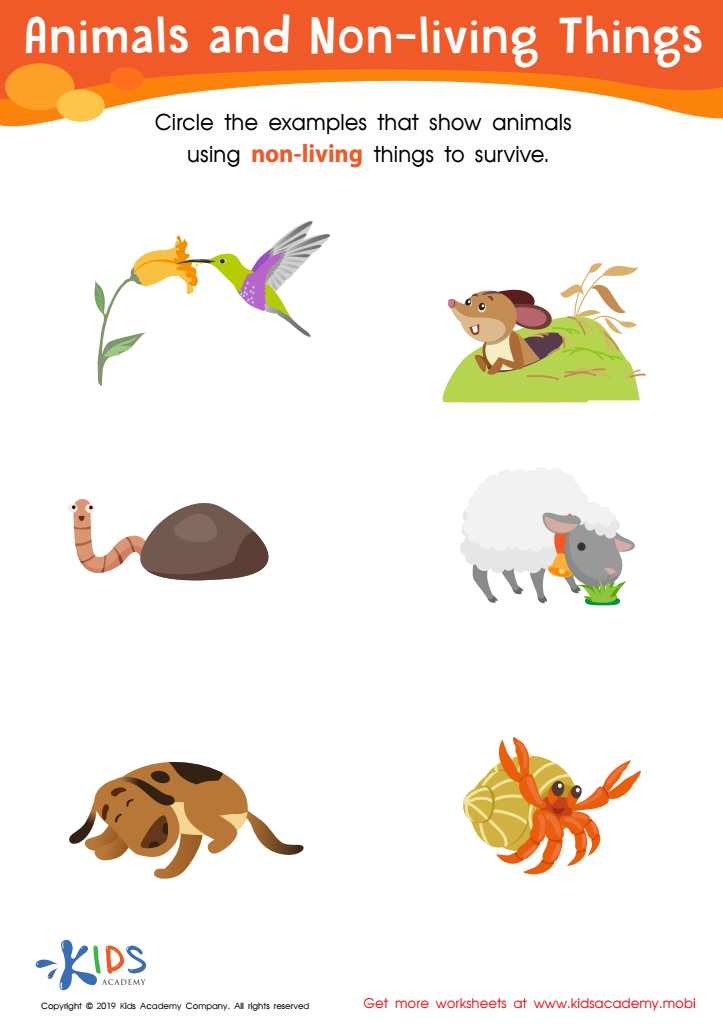
Animals and Non-Living Things Worksheet








Categorization skills are vital for children aged 3-7, particularly when it comes to understanding animals. These skills help children group animals based on shared characteristics, such as habitat, size, or diet, fostering critical thinking and cognitive development. By learning to categorize, children enhance their ability to make connections between concepts, leading to a deeper understanding of the natural world.
Parents and teachers should care because categorization lays the groundwork for later learning. It supports foundational skills in science, language, and mathematics, encouraging investigative questions like “What do mammals have in common?” or “How are birds different from reptiles?” Furthermore, animal categorization can enhance children's vocabulary as they learn new words associated with different species and their traits.
Engaging children in categorization activities also promotes social skills through group work, where they can share ideas and collaborate. Additionally, it can inspire environmental awareness by highlighting the importance of biodiversity and conservation at a young age. Overall, fostering categorization skills in young learners cultivates curiosity and lifelong learning habits, making it an essential focus for both parents and educators.