Vocabulary development Animals Worksheets for Ages 3-7
4 filtered results
-
From - To
Enhance your child's vocabulary with our "Vocabulary Development Animals Worksheets" designed for ages 3-7. These engaging, educational worksheets introduce young learners to a world of animals while building essential language skills. Each printable sheet features fun and interactive activities, including matching, labeling, and tracing, to help kids recognize animal names, sounds, and habitats. Perfect for home or classroom use, these worksheets foster curiosity and a love of learning through playful exploration. Support your child's early literacy journey and expand their animal knowledge with our carefully crafted resources that make learning exciting and enjoyable.
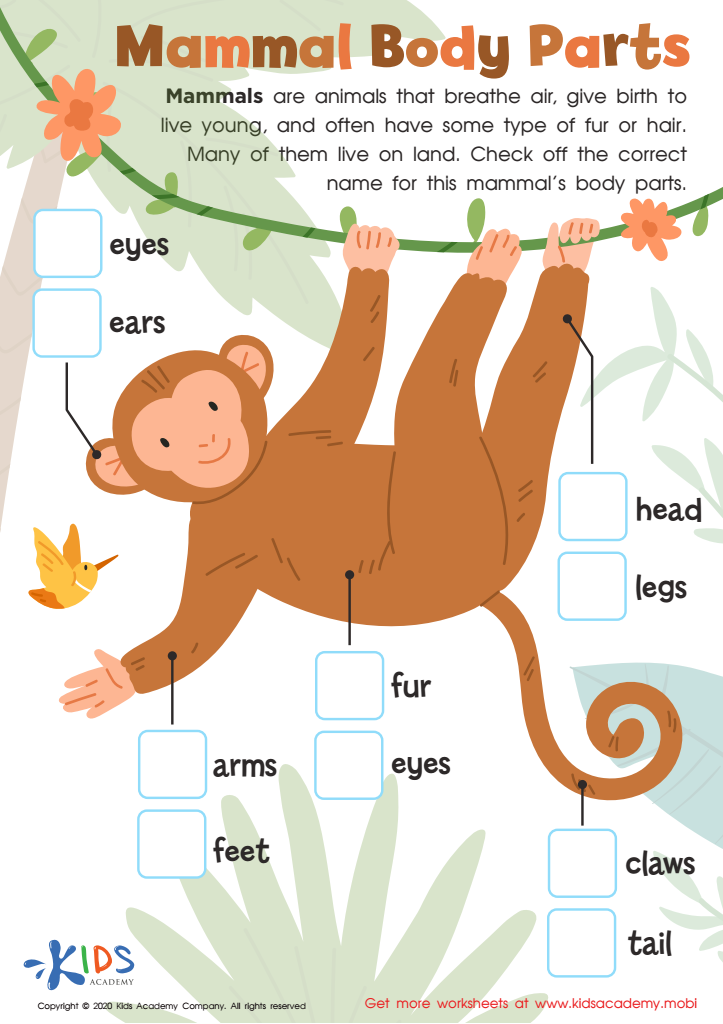
Mammal Body Parts Worksheet
 Assign to My Students
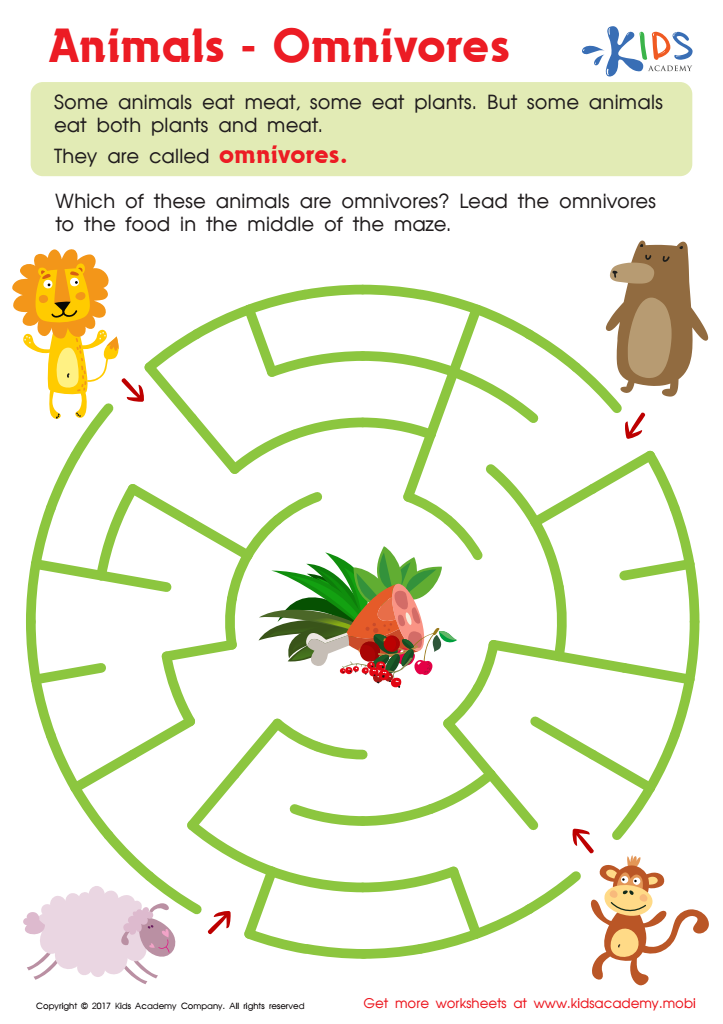
Omnivores Animals Worksheet
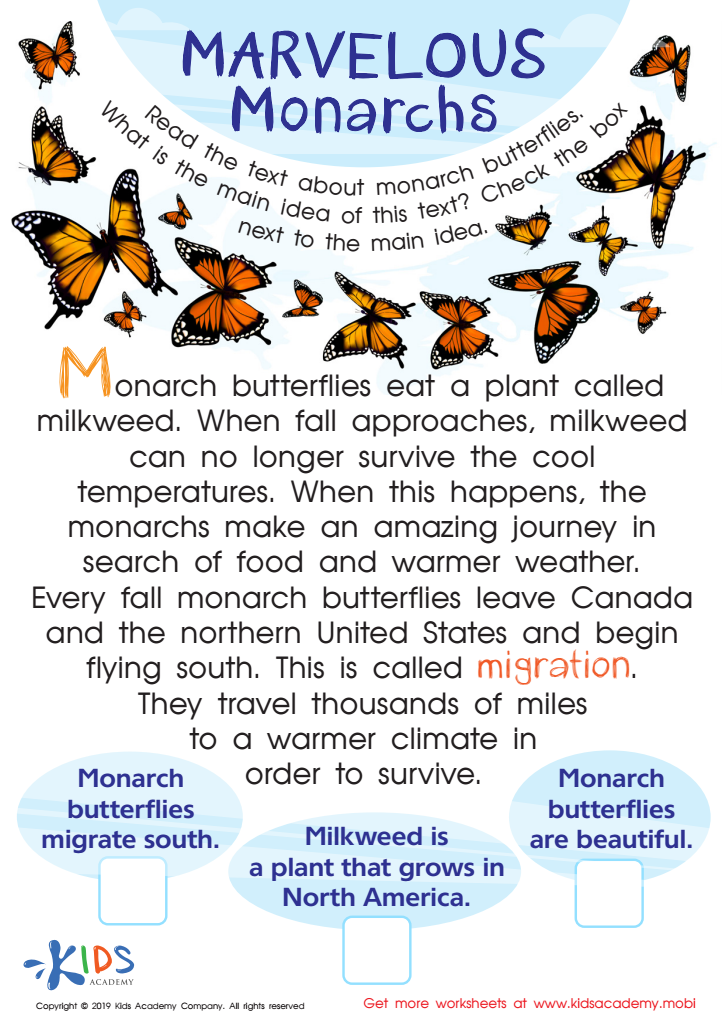
Marvelous Monarchs Worksheet
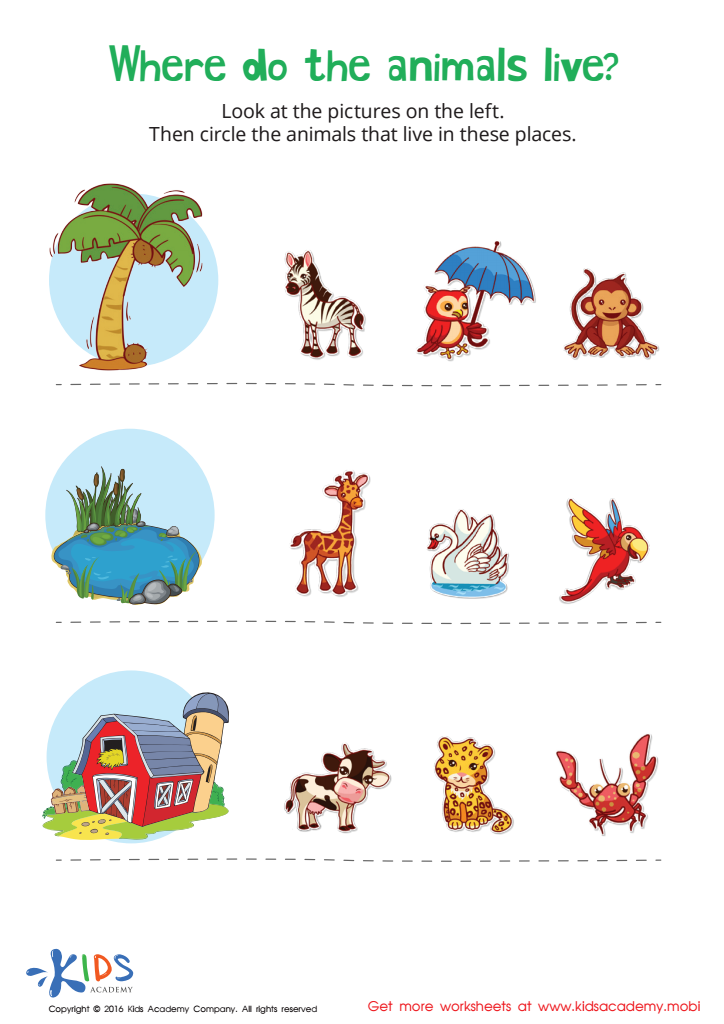
Where Animals Live Worksheet




%20(1).jpg)


Vocabulary development is crucial for children aged 3-7 due to its significant impact on overall language and learning abilities. At this developmental stage, children's brains are like sponges, capable of absorbing new information rapidly. Parents and teachers play pivotal roles in cultivating a rich vocabulary environment, especially focused on engaging topics such as animals, which naturally fascinate young children.
Understanding animal names and their characteristics not only aids in vocabulary expansion but also fosters cognitive skills like categorization, memory, and comprehension. Discussing animals introduces children to new words, descriptive terms, and scientific concepts, promoting both their intellectual and language growth.
Moreover, early vocabulary building is deeply intertwined with future academic success. Children who possess a rich vocabulary enter school better prepared to decode texts, comprehend stories, and engage critically with content. They also are more proficient in verbal expression, enabling them to communicate thoughts, ask questions, and seek clarification, which are essential skills for effective learning and social interaction.
Including animal vocabulary makes learning fun and relatable; children often emulate animal sounds, engage in pretend play, and exhibit genuine curiosity about nature. These activities not only reinforce language skills but also nurture a lifelong love for learning and nature exploration. Therefore, a focus on animals during early vocabulary development sets a strong foundation for educational and communicative proficiency.








