Enhancing observation skills Community Worksheets for Ages 3-7
3 filtered results
-
From - To
Enhance your child's observation skills with our carefully designed community-focused worksheets for ages 3-7. These engaging, age-appropriate activities are tailored to develop keen observation and critical thinking skills. As children explore different community roles and settings, they’ll learn to identify key details and enhance their cognitive abilities. Fun and educational, our worksheets provide a hands-on approach to understanding everyday environments, all while fostering a love for learning. Perfect for preschoolers and early elementary students, these resources support both in-class and at-home learning. Equip your child with the tools they need to become astute observers of the world around them!
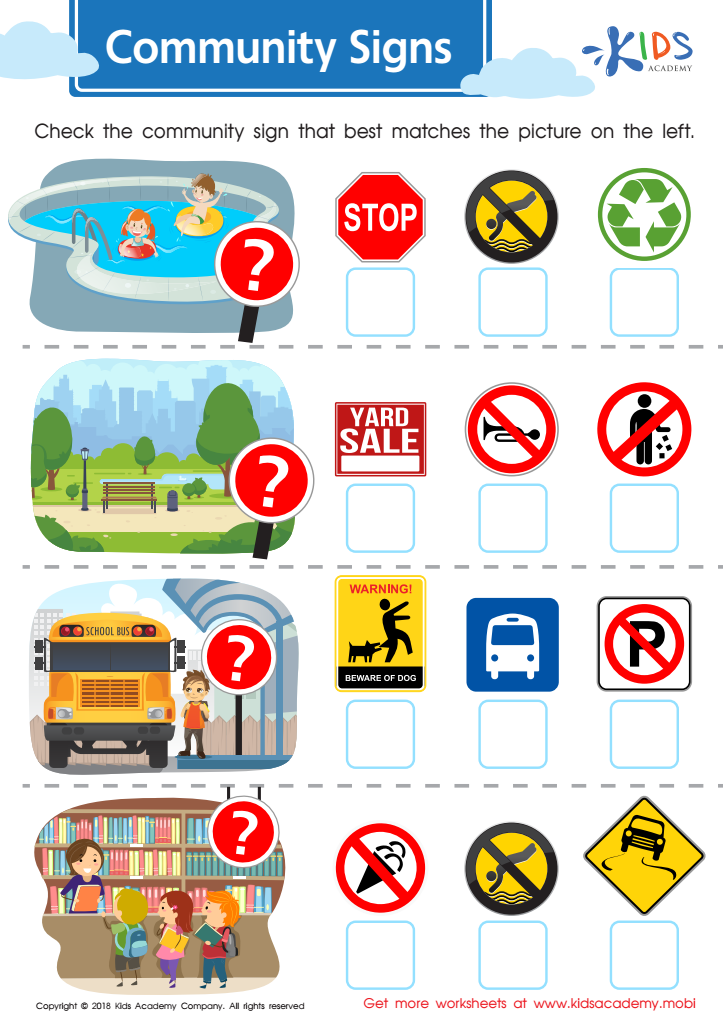
Community Signs Worksheet
 Assign to My Students
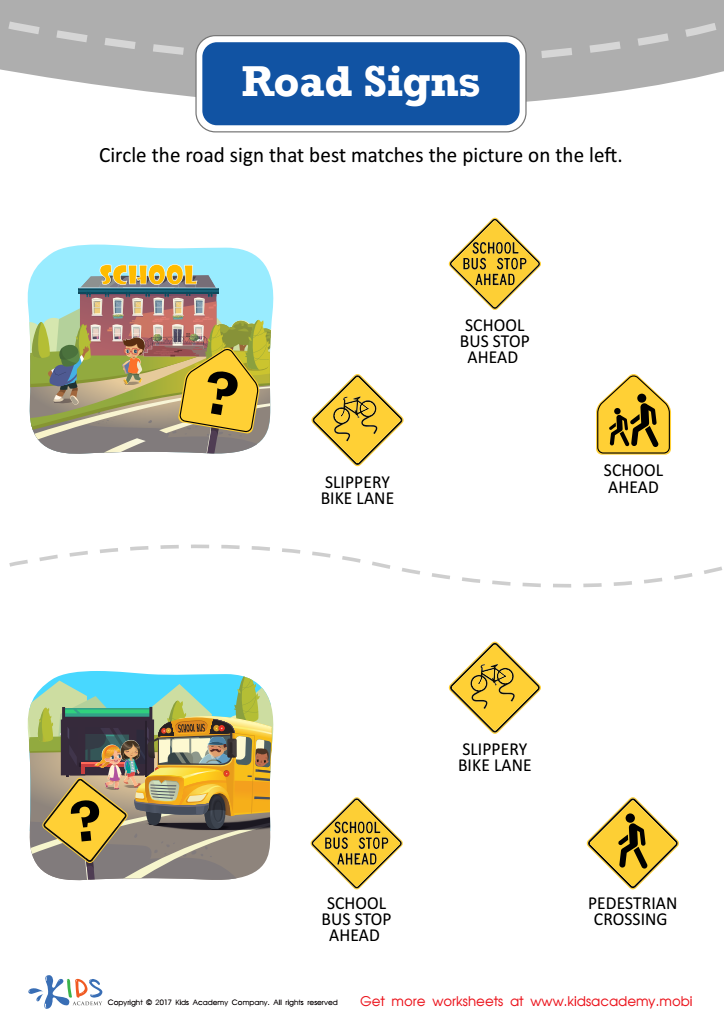
Road Signs (Part 1) Worksheet
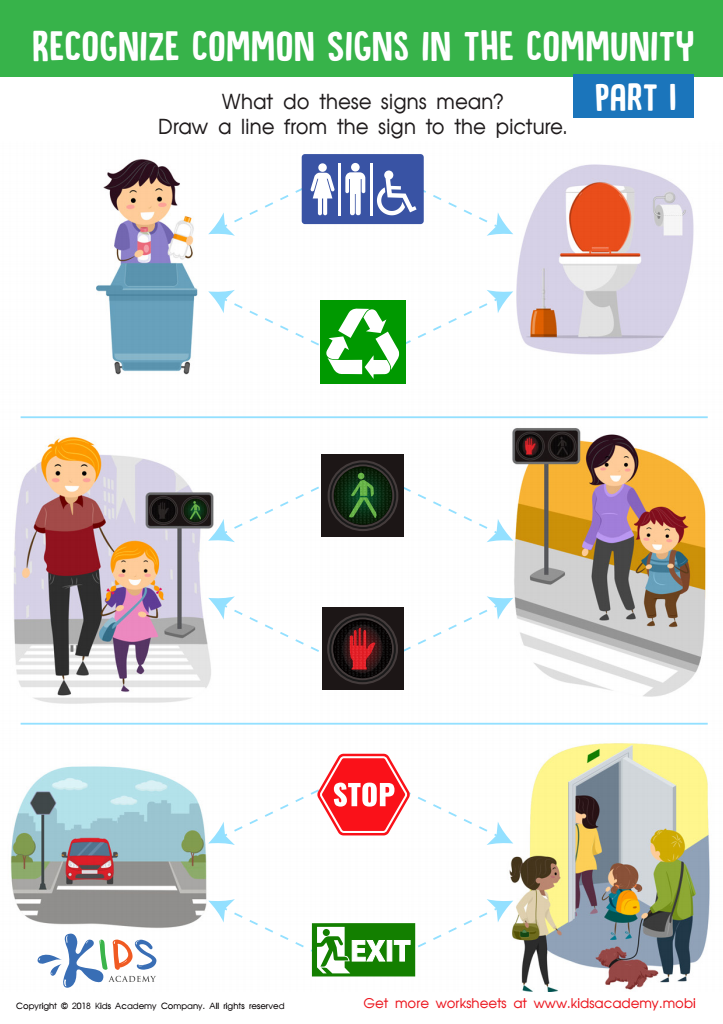
Recognize Common Signs: Part 1 Worksheet








Parents and teachers play a crucial role in developing observation skills in children aged 3-7, an age where the foundation of cognitive and social abilities is established. Enhancing observation skills in young children helps in several essential ways. Firstly, it bolsters cognitive development as children learn to notice details, patterns, and differences in their environment. This sharpens their ability to understand, remember, and process information, laying the groundwork for academic success in subjects like science and mathematics.
Enriching observation skills also enhances language development. By encouraging children to describe what they observe, they expand their vocabulary and improve their ability to articulate thoughts and questions. This is critical for effective communication and literacy.
From a social perspective, observing attentively helps children understand social cues and behaviors, which fosters empathy and cooperation. They learn to notice and respond to others' emotions and needs, building essential interpersonal skills for interacting positively with peers and adults.
Moreover, nurturing observation skills can instill a lifelong love of learning and curiosity. Children become more engaged and inquisitive, leading to active and self-directed learning both inside and outside the classroom.
In essence, prioritizing the development of observation skills in the early years equips children with the cognitive, social, and emotional tools necessary for overall growth and success.








