Spatial awareness Community Worksheets for Ages 3-7
5 filtered results
-
From - To
Discover our engaging Spatial Awareness Community Worksheets designed for children ages 3-7! These thoughtfully crafted activities help young learners develop crucial spatial skills through fun and interactive exercises. Our worksheets encourage children to explore concepts like direction, position, and distance while fostering their understanding of community environments. With vibrant illustrations and relatable scenarios, your child will love enhancing their coordination and spatial reasoning abilities. Perfect for both home and classroom use, these worksheets support early development, promoting confidence and creativity. Dive into the exciting world of spatial awareness and nurture your child’s learning journey today! Ideal for educators and parents alike.
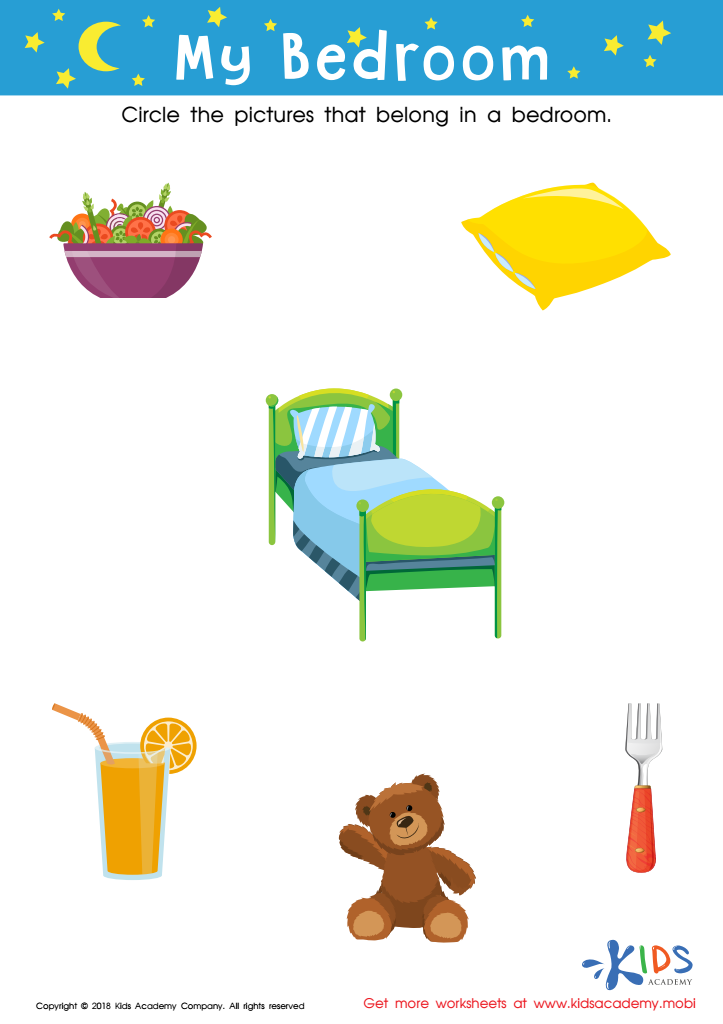
My Bedroom Worksheet
 Assign to My Students
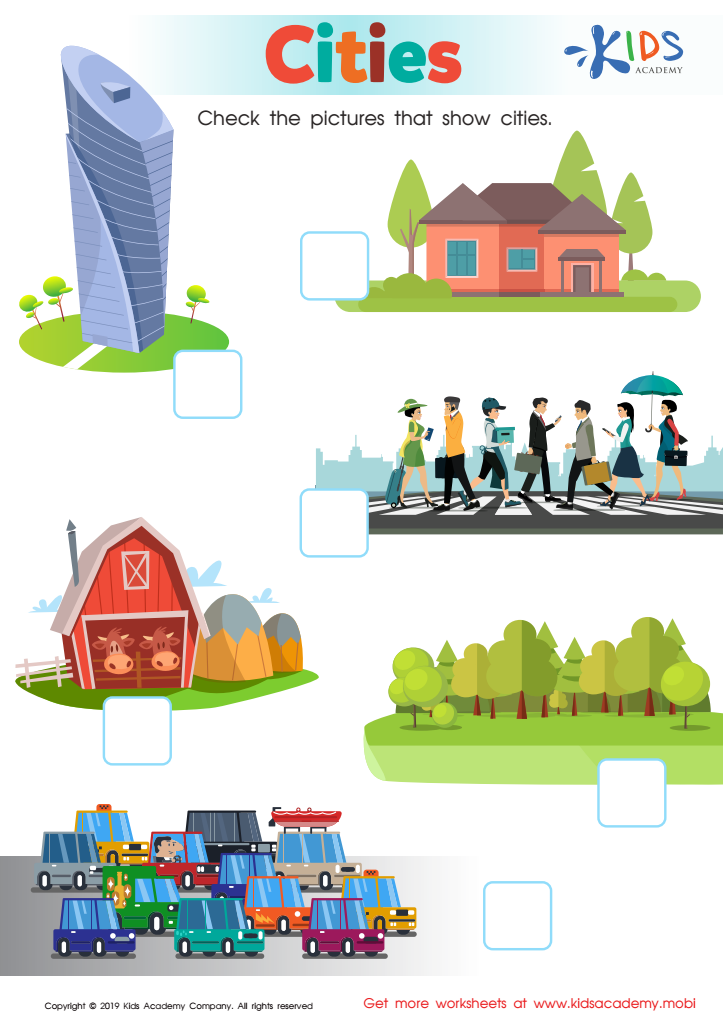
Cities Worksheet
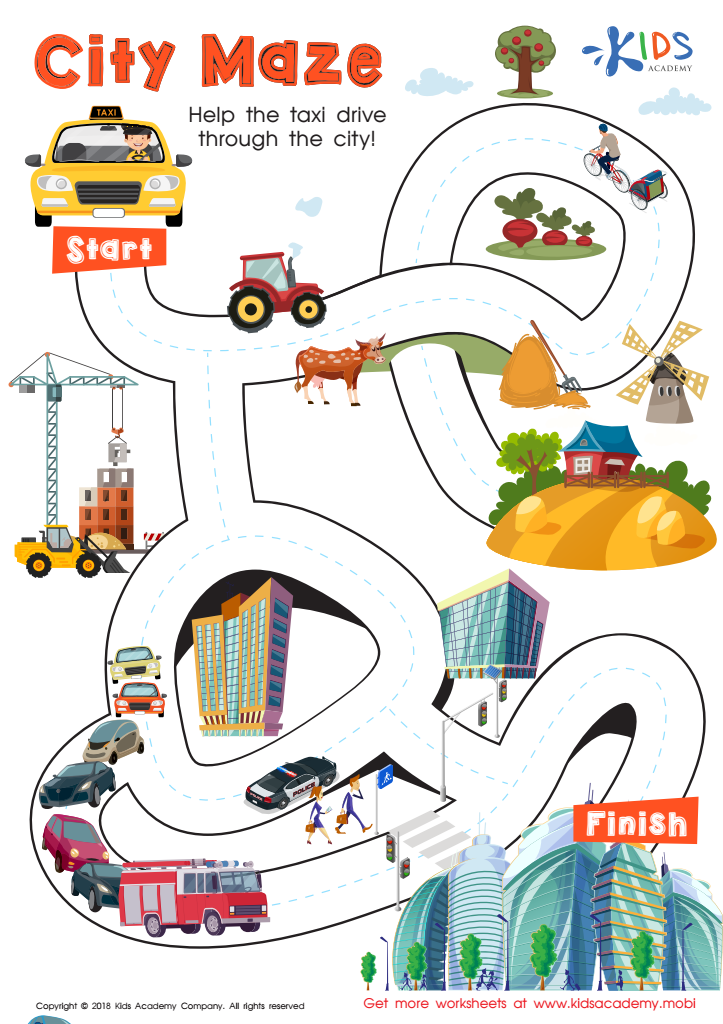
City Maze Worksheet
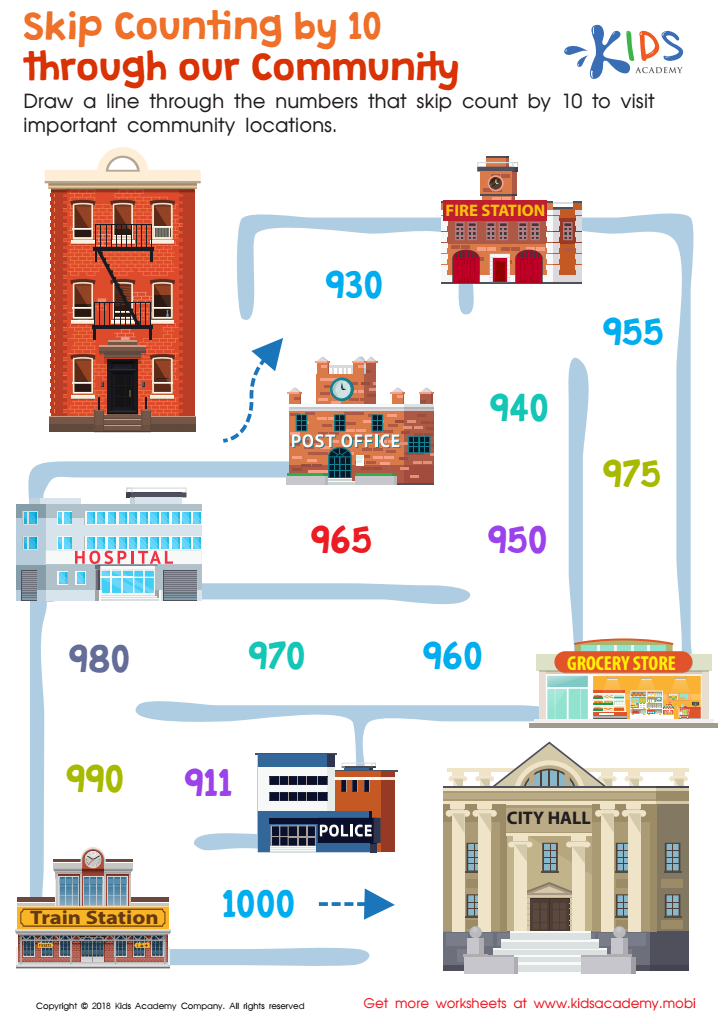
Skip Counting by 10 Through Our Community Worksheet
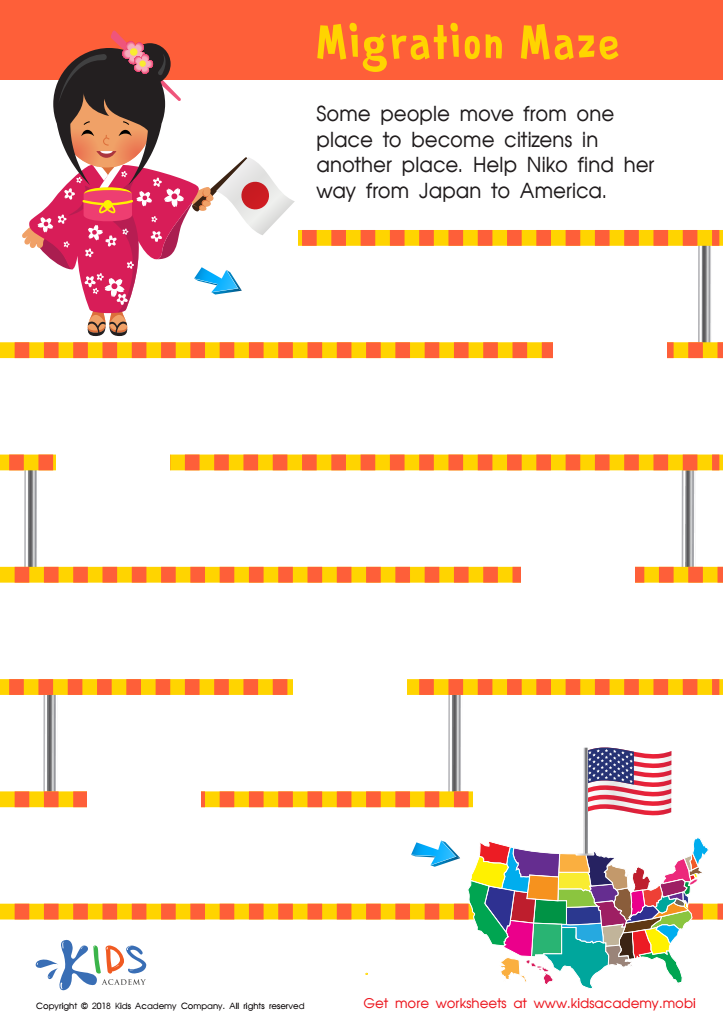
Migration Maze Worksheet








Spatial awareness is a critical foundational skill that plays a significant role in a child's overall development and learning. For parents and teachers of children aged 3-7, fostering spatial awareness is essential for several reasons. Firstly, spatial awareness enhances cognitive skills such as problem-solving, visualization, and critical thinking, which are pivotal during early education. When children learn to navigate their environments and understand how objects relate to each other, they develop a sense of confidence and independence.
Moreover, spatial awareness is closely tied to mathematical understanding. Concepts like geometry and measurement often require an internal sense of space, so nurturing these skills early can give children a head start in math literacy. Additionally, spatial awareness positively influences physical abilities, aiding in coordination and gross motor skill development.
Engaging in activities that promote spatial awareness—such as puzzles, building blocks, and simple games—encourages creativity and social interaction among peers. Supporting initiatives like Spatial Awareness Community programs can further enhance these skills, providing a collaborative environment for children to learn together. Ultimately, emphasizing spatial awareness helps children not only in their academic pursuits but also in appreciating and interacting with the world around them, laying the groundwork for lifelong learning.








