Cultural awareness World Around Us Worksheets for Ages 3-7
3 filtered results
-
From - To
Explore our "Cultural Awareness World Around Us Worksheets" designed for children aged 3-7. These engaging resources help young learners discover the rich tapestry of global cultures, traditions, and customs. Through fun, interactive activities, children will enhance their understanding of diversity and develop empathy towards different communities. Each worksheet encourages creativity and critical thinking, making learning enjoyable and effective. By introducing topics like festivals, foods, and languages from around the world, parents and educators can foster a sense of belonging and respect for others. Start your child's journey towards a broadened worldview today with these essential educational tools!
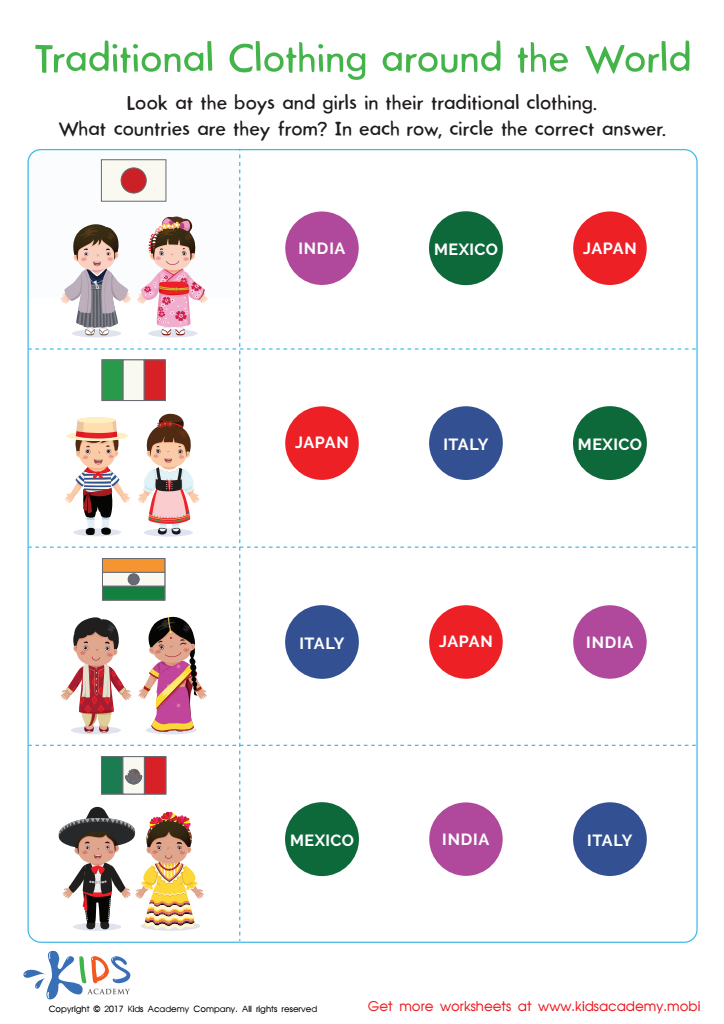
Traditional Clothing Worksheet
 Assign to My Students
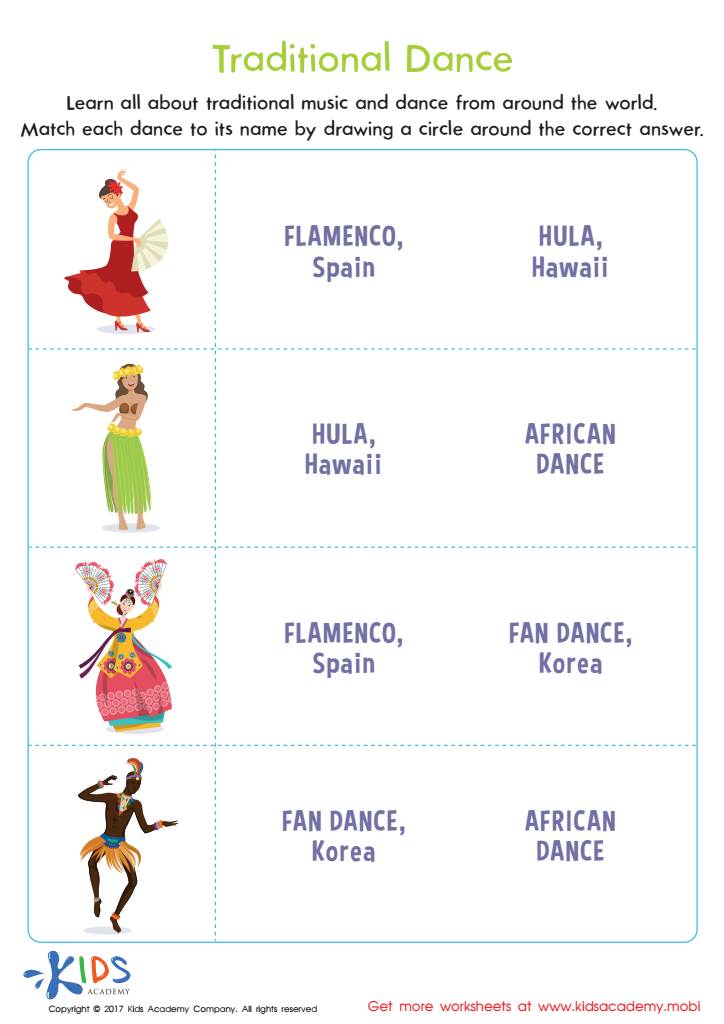
Traditional Dance Printable
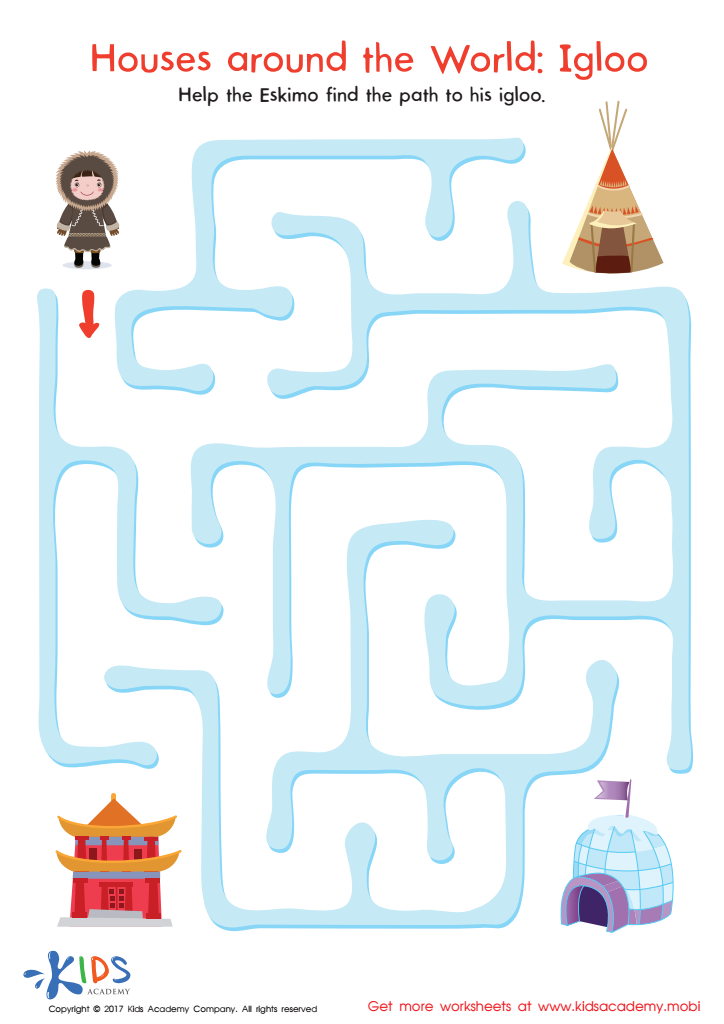
Houses Around the World: Igloo Printable




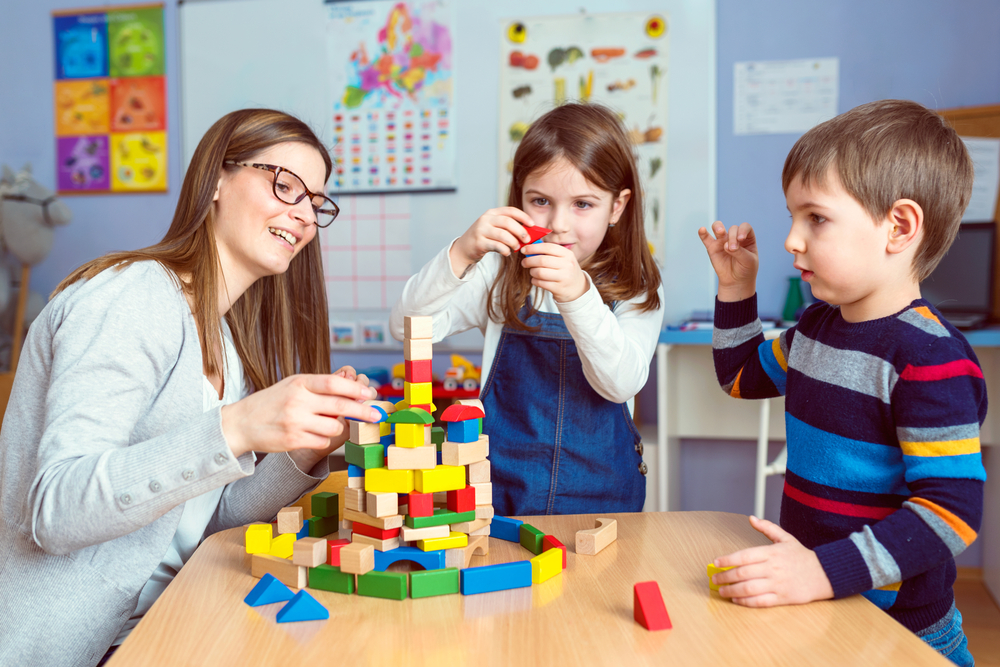



Cultural awareness is crucial for children aged 3-7 as it lays the foundation for empathy, respect, and appreciation of diversity. At this young age, children are impressionable and open to learning about the world around them. By introducing them to various cultures, parents and teachers can cultivate a sense of curiosity, helping children understand that differences are valuable and enrich our communities.
As children engage with diverse narratives, traditions, and perspectives, they develop social skills that aid in forming meaningful relationships with peers from varying backgrounds. This exposure also enhances their critical thinking, as they learn to appreciate and honor different viewpoints. Furthermore, discussing cultural awareness in early education can help counteract biases and stereotypes, fostering inclusivity and harmony.
In a globally interconnected world, cultural awareness prepares young learners for future interactions in diverse settings, whether in school or later in life. Educators and parents who prioritize this create a nurturing environment that promotes acceptance, emotional intelligence, and global citizenship. Ultimately, instilling cultural awareness early empowers children to become compassionate, informed individuals who respect and celebrate the rich tapestry of humanity around them. This holistic approach enriches their educational experience and equips them for a diverse world.